[0012] In a first embodiment, non-shrink
oxygen barrier packaging articles are provided that comprise a
myoglobin blooming agent to maintain or promote desirable coloration of a meat product. The myoglobin blooming agent can comprise a molecule that interacts with the myoglobin present on the surface of the meat product to produce a color change and / or to maintain a favorable color in the meat product. Preferably, the myoglobin blooming agent is a compound that provides a
nitric oxide ligand for binding to myoglobin, to promote or maintain a favorable red color on the meat surface. Preferably, the myoglobin blooming agent is selected from the group consisting of:
nitrogen heterocycles, Fremy's salt,
nitrate salts having the formula (MNO3),
nitrite salts having the formula (MNO2), and combinations thereof, wherein the counter
ion (M+) is selected from the group consisting of: alkali metals, alkaline earth metals, transition metals, protonated primary, secondary or
tertiary amines,
quaternary amines, and
ammonium.
Nitrate or nitrite salts are particularly preferred myoglobin blooming agents. It is also contemplated that the myoglobin blooming agent is a
nitrogen heterocycle selected from the group consisting of: nicotinic acid,
nicotinamide, salts and esters thereof, and combinations thereof. The
food contact portion of the packaging articles preferably includes a suitable concentration of the myoglobin blooming agent to induce or preserve a desirable color on the
surface layer of a fresh meat product. The packaging articles can have any suitable packaging
web structure, but it is essential that the myoglobin blooming agent be on, or in, or able to migrate to, a
food contact portion. The packaging web may be a
monolayer or a multilayer film, a
monolayer or a multilayer sheet, or combinations thereof, and have a free shrink as measured before
thermoforming at 90° C. of at less than 10% in the
machine direction and less than 10% in the transverse direction. Preferably, the packaging webs have a free shrink as measured before
thermoforming at 90° C. of less than 5% in each of those directions. Preferably, the
monolayer and multilayer film has a thickness of less than 10 mil, and the monolayer and multilayer sheet has a thickness of at least 10 mil, more preferably, between 10 mil and 50 mil, most preferably, between 10 mil and 30 mil. In one aspect, the packaging webs comprise a
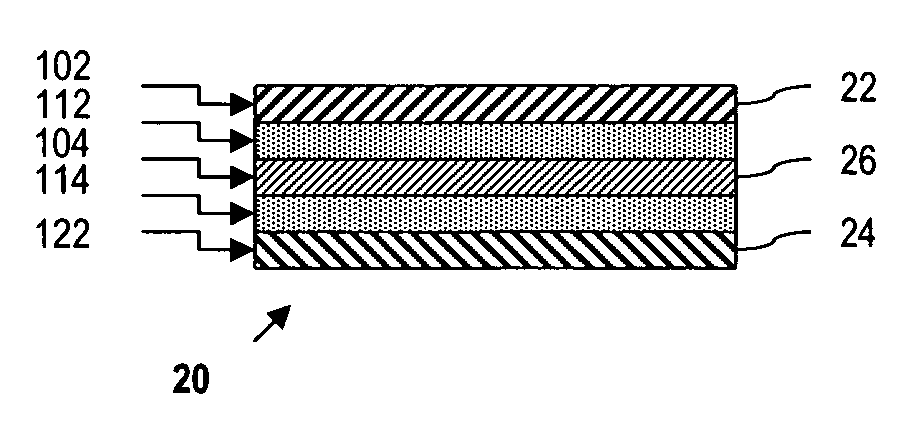
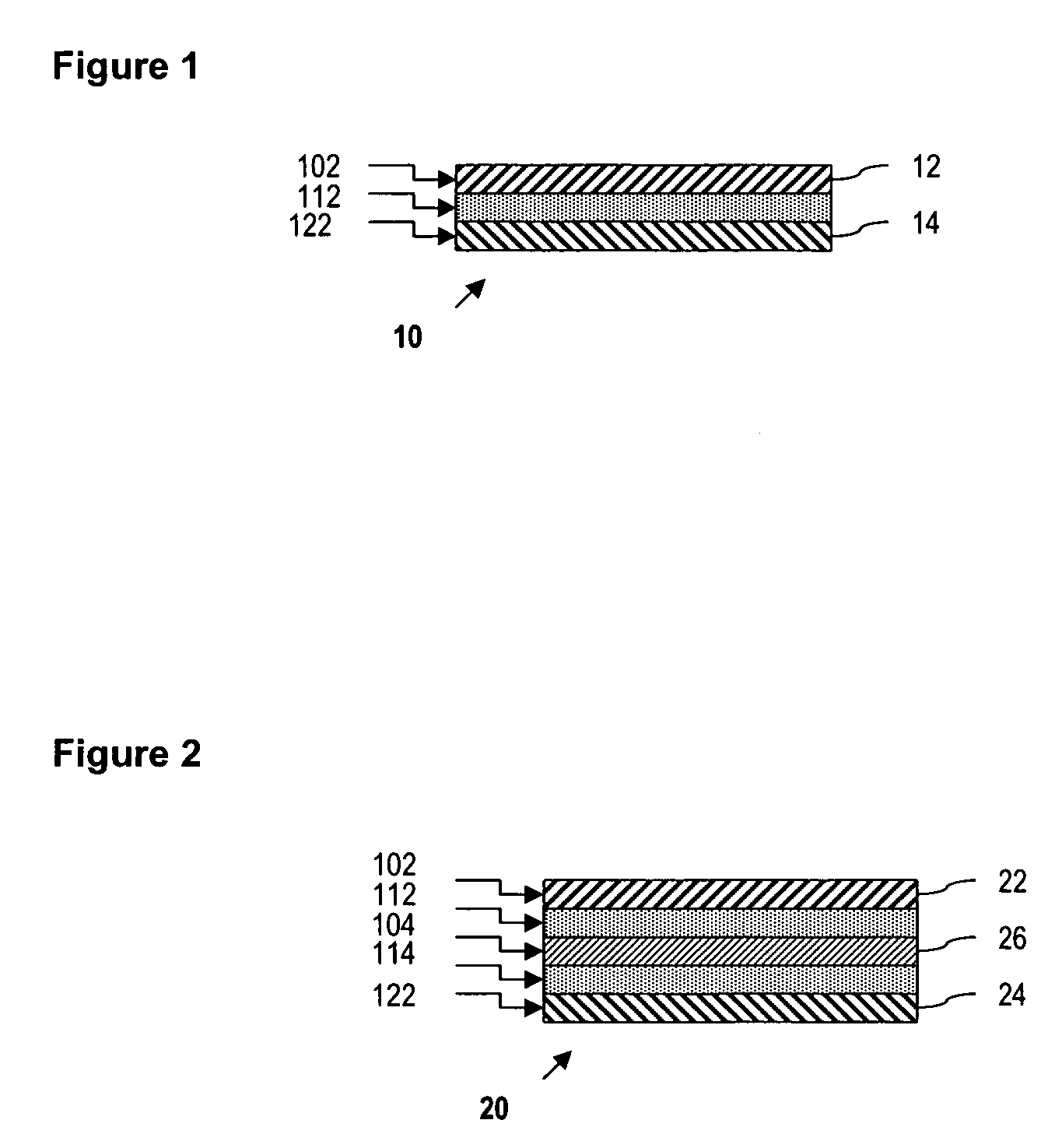
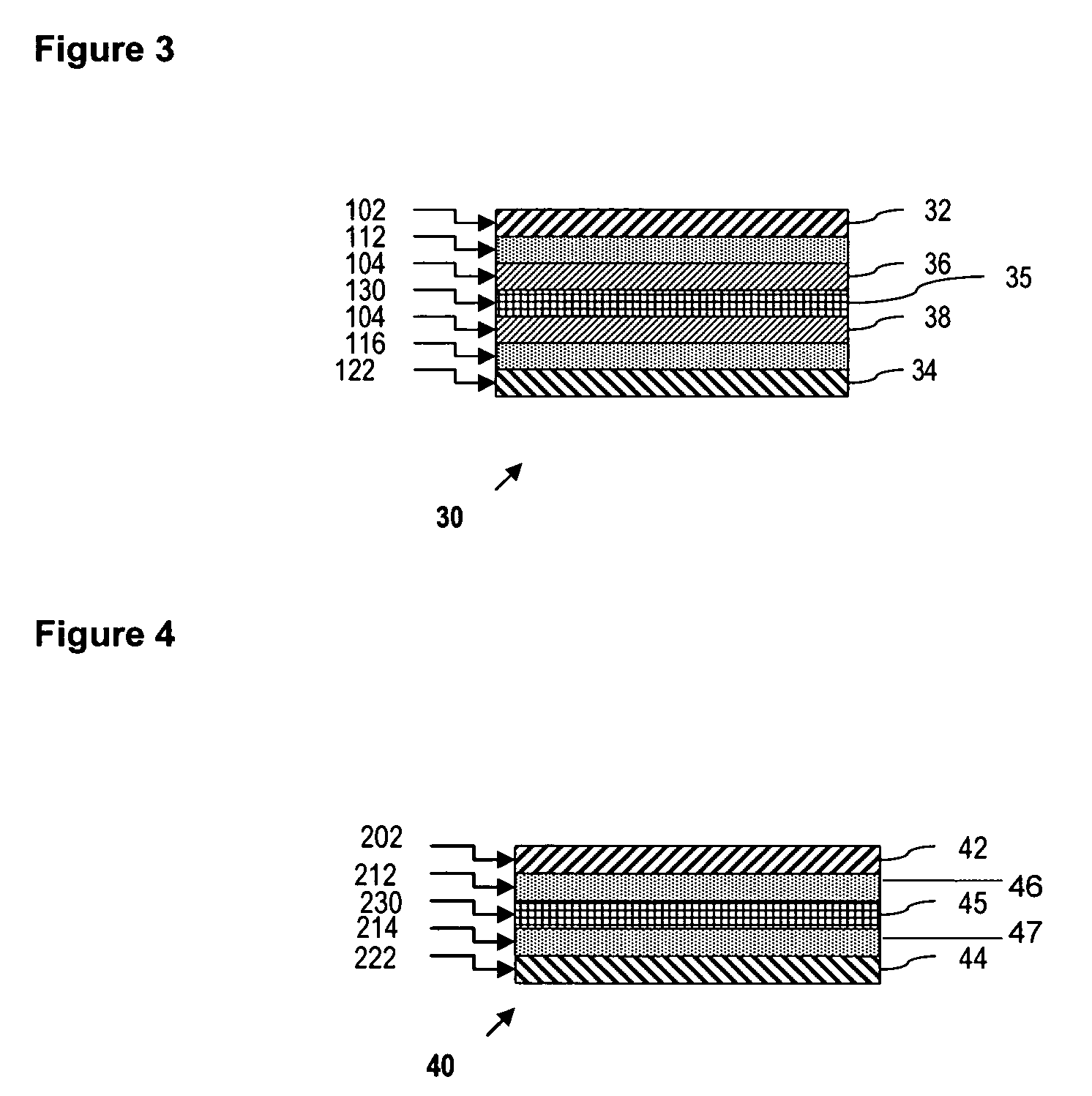
sealant layer comprising a myoglobin blooming agent. The monolayer and multilayer packaging webs can further comprise an
oxygen barrier. The
oxygen barrier may be incorporated into the web as one or more film or sheet
layers. An
oxygen barrier layer can comprise any suitable material, such as EVOH, PVDC, PVOH,
polyamide,
nanocomposite, aluminum,
polyester,
polyacrylonitrile or a combination thereof, and is preferably positioned between the first and second
layers. Advantageously, at least a portion of the web is transparent to permit viewing (after packaging) of at least a portion of a myoglobin containing food product. Preferably, the inventive packaging web has good optical properties such as low
haze, high gloss and good transparency. Beneficially, the film may also bear
graphics, indicia, printing, or other information.
[0015] Beneficially, a food product comprising myoglobin, preferably having a
moisture content of at least 5% by weight and less than 1% by weight
sodium chloride, may be provided for packaging less than 20 days post-mortem, preferably less than 12 days post-mortem, and more preferably 6 days, 3 days, 2 days, 24 hours or less post-mortem. Preferably, a meat product is contacted by a packaging material comprising a food contact surface having a myoglobin blooming agent, which may preferably be present in an amount of between about 0.001 mg / in2 and about 0.900 mg / in2 or which may be present on the surface in an amount of up to 10 μmoles / inch2 or higher, preferably from about 0.01 to 10 μmoles / inch2. Use of amounts on the surface greater than 10 μmoles / inch2 may provide an undesirable
depth of penetration and use of amounts less than 0.01 μmoles / inch2 may be insufficient to convert enough myoglobin to cause a visibly perceptible color change, but this will be dependent upon such parameters as choice of the particular type of myoglobin containing food such as poultry versus pork versus beef and also upon variations within a particular type such as dark
cutting meat versus light
cutting meat. Other parameters such as the amount of available myoglobin also affect the amount of myoglobin blooming agent needed to achieve the desired effect. It will be appreciated that greater or lesser amounts may be used depending upon process and other parameters chosen as long as the desired
color effect is produced and the actual amount for a particular application and parameters may be determined without undue experimentation. It is expected that the amount most often used will typically fall within the above range. Also preferably, the packaging maintains the food product in a reduced oxygen
package environment, i.e., having a reduced
gaseous oxygen partial pressure. The reduced oxygen package may comprise an
oxygen barrier layer having an
oxygen transmission rate of less than about 310 cm3 / m2 / 24 hours measured at 0%
relative humidity and 23° C. Advantageously, the package is hermetically sealed and minimizes or eliminates
oxygen transfer across the film and / or tray thickness.



 Login to View More