Monitoring heparin by microelectronic devices

a microelectronic device and heparin technology, applied in biochemistry apparatus and processes, laboratory glassware, instruments, etc., can solve the problems of not accurately assessing the actual heparin concentration, unsuitable for non-transparent samples like blood, and act value not being an accurate indicator of blood heparin levels

a microelectronic device and heparin technology, applied in biochemistry apparatus and processes, laboratory glassware, instruments, etc., can solve the problems of not accurately assessing the actual heparin concentration, unsuitable for non-transparent samples like blood, and act value not being an accurate indicator of blood heparin levels

US20070212786A1Inactive Publication Date: 2007-09-13MANALIS SCOTT +6

Image

Smart Image Click on the blue labels to locate them in the text.
Viewing Examples
Smart Image
  • Monitoring heparin by microelectronic devices
  • Monitoring heparin by microelectronic devices
  • Monitoring heparin by microelectronic devices

Examples

Experimental program
Comparison scheme
Effect test

Embodiment Construction

[0021] The methods and devices of the present invention can combine biology, chemistry, and physics and engineering to detect and monitor biomolecules. For example, biology is utilized as a recognition system, chemistry for surface functionalization, and physics and engineering for transducers and / or instrumentation to pick up and / or analyze a signal.

[0022] Heparin is currently one of the most essential and powerful anticoagulants, and the most widely used drug for the prevention of blood clotting. Monitoring heparin levels in blood is vital during and after surgeries, and therefore it is essential to enable real-time detection and measurement. Current methods to monitor heparin are indirect, slow, nonspecific, and sometimes unreliable.

[0023] Heparin is a linear polysaccharide consisting of uronic acid-(1→4)-D-glucosamine repeating disaccharide subunits. The disaccharide subunits are heavily N-sulfate, O-sulfate and N-acetyl groups bring an overall high negative charge. Variable p...

the structure of the environmentally friendly knitted fabric provided by the present invention; figure 2 Flow chart of the yarn wrapping machine for environmentally friendly knitted fabrics and storage devices; image 3 Is the parameter map of the yarn covering machine
Login to View More

PUM

PropertyMeasurementUnit
surface potentialaaaaaaaaaa
pHaaaaaaaaaa
Login to View More

Abstract

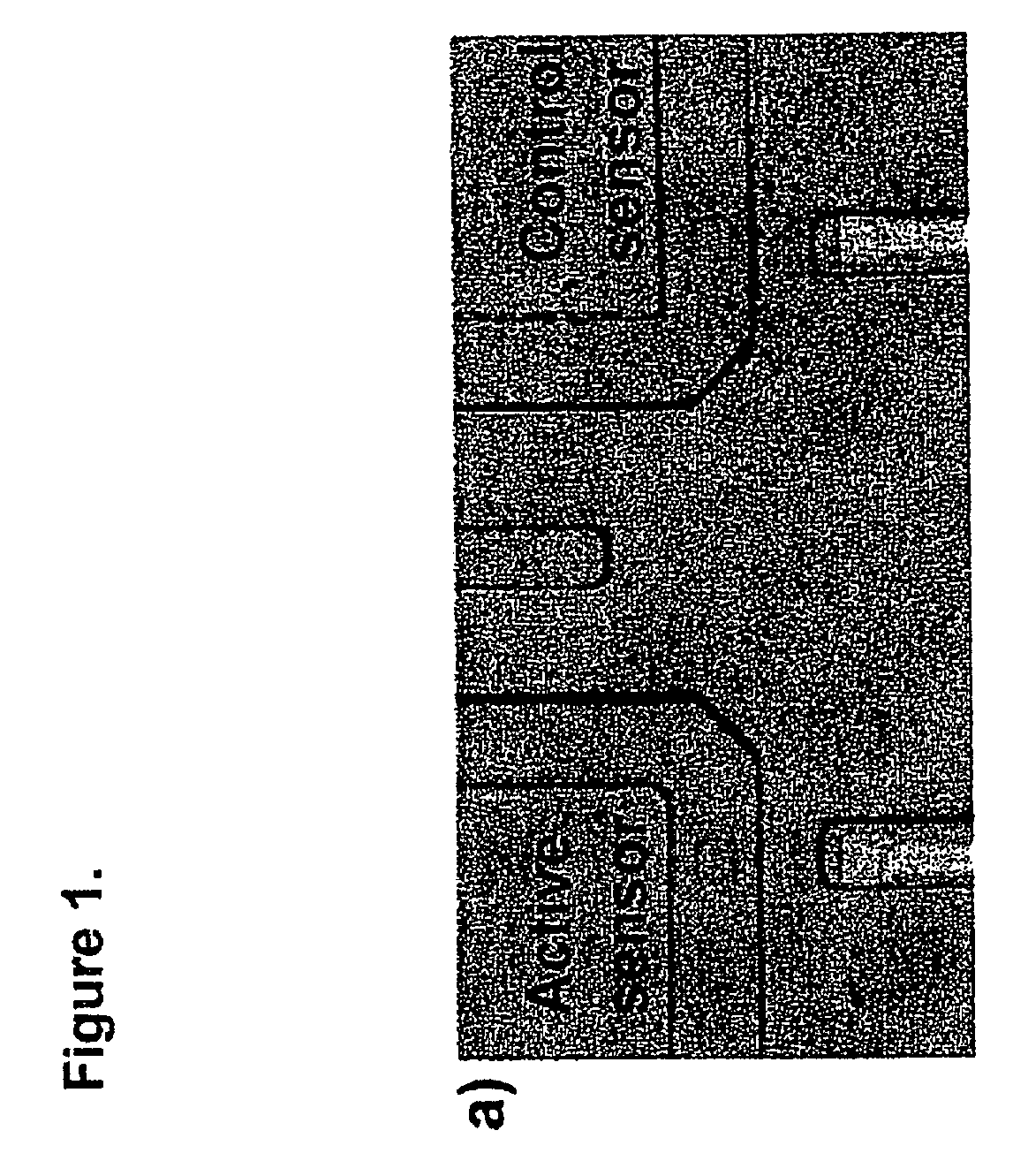
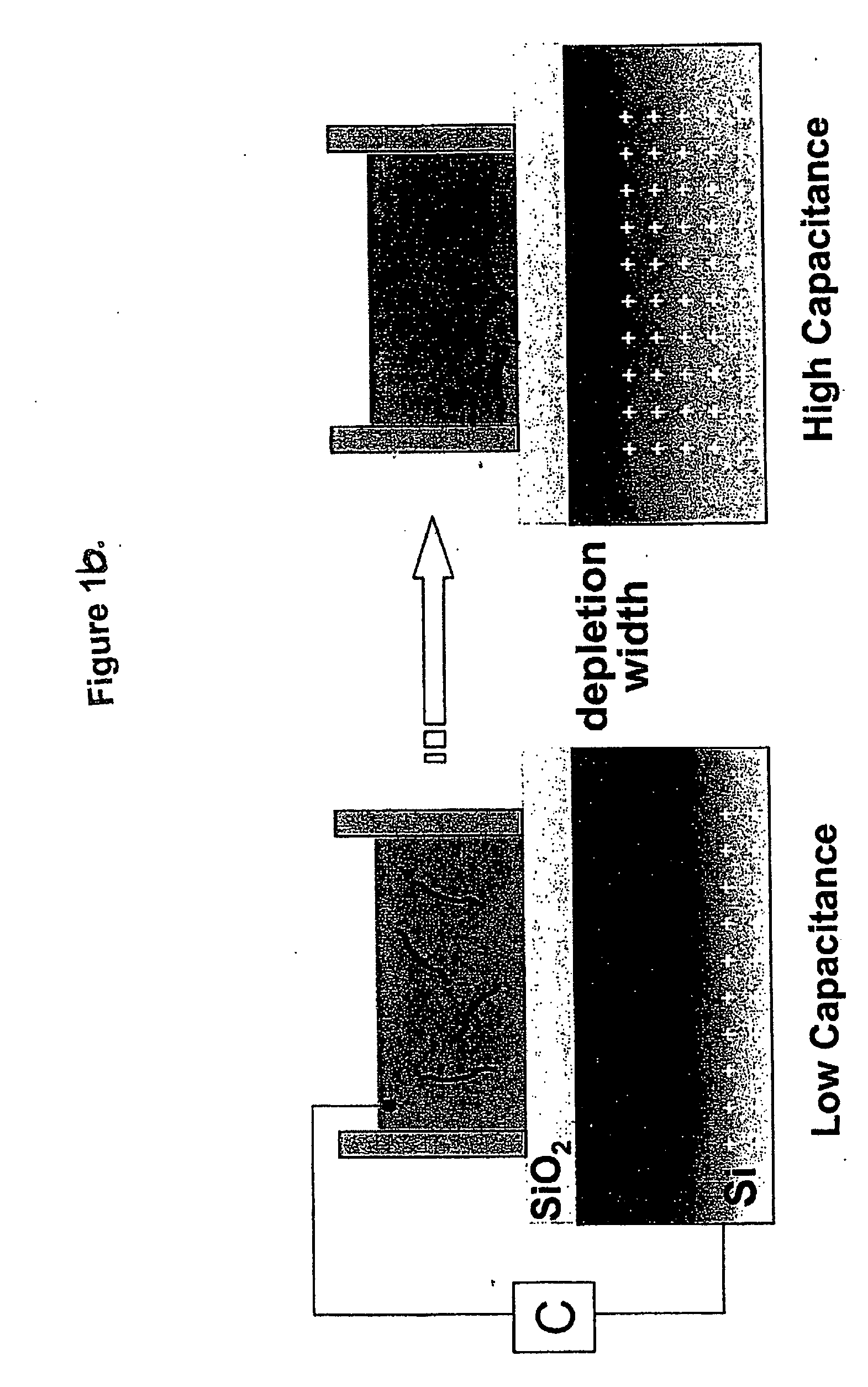
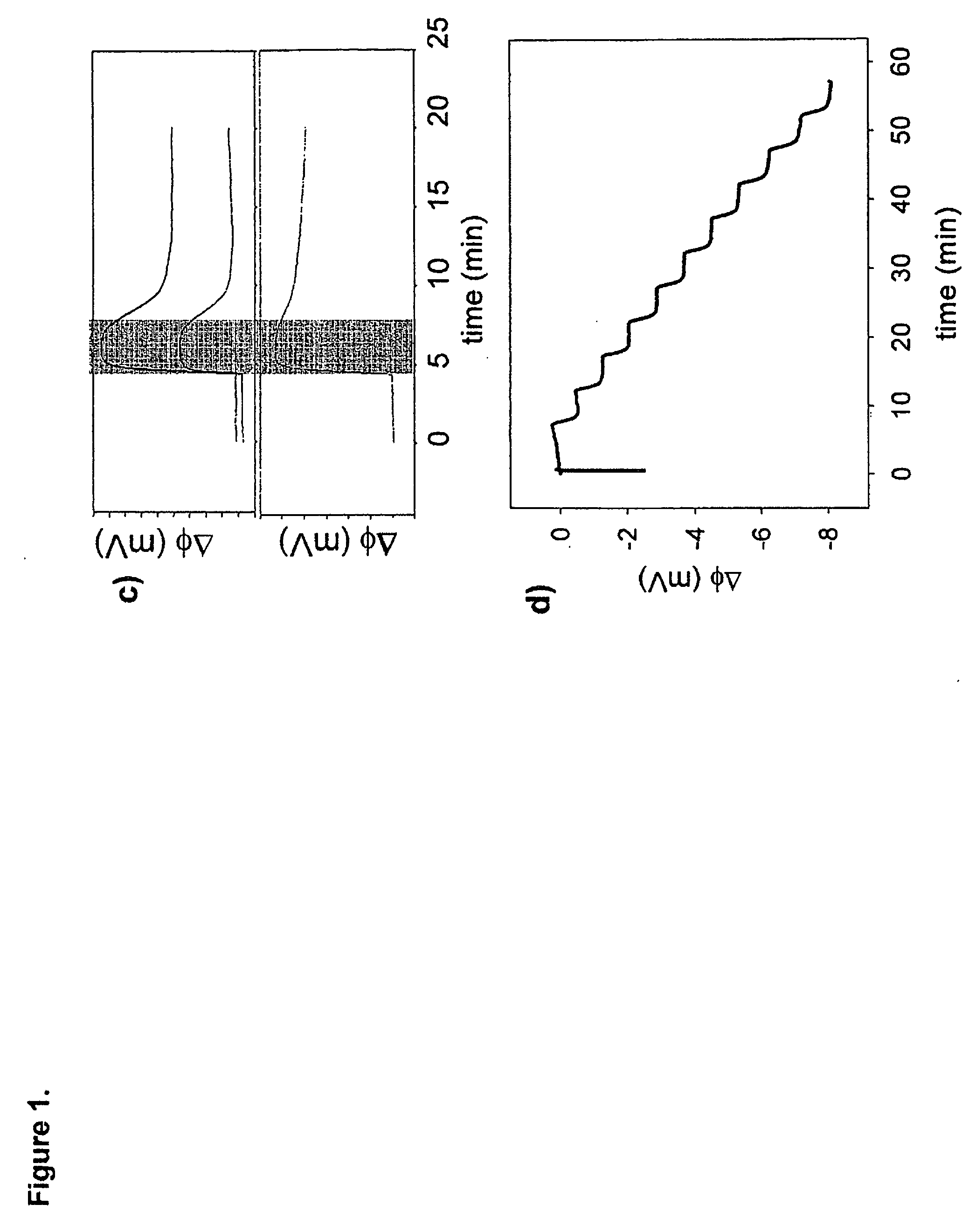
In one aspect, the present invention provides a device and method for real-time, direct detection of heparin in buffer and in serum comprising a microfluidic field-effect device as an affinity biosensor. The sensor is based on an electrolyte-insulator-silicon structure, and is manufactured by a standard high-yield silicon microfabrication process. The binding of heparin to the sensor surface induces a change in the insulator-electrolyte surface potential, which is measured as a change in sensor capacitance. To ensure the binding selectivity, protamine and antithrombin III are used as affinity probes.

Description

PRIORITY INFORMATION [0001] This application claims priority to U.S. Provisional Application No. 60 / 722,023, filed Sep. 29, 2005.BACKGROUND OF THE INVENTION [0002] Heparin has been used clinically as an anticoagulent for over 60 years, and it is second to insulin as a natural therapeutic agent. Other biological activities of heparin include release of lipoprotein lipase and hepatic lipase, inhibition of complement activation, inhibition of angiogenesis and tumor growth, and antiviral activity. The biological activities of heparin result from its interaction with proteins, the most well-characterized being its interaction with antithrombin III (ATIII), a serine protease inhibitor that mediates the anticoagulant activity of heparin. [0003] In a clinical setting, it is critical to maintain heparin levels that are sufficient to prevent thrombosis but avoid risks of bleeding. Considering that more than half a billion doses of heparin are used annually, there have been intensive efforts t...

Claims

the structure of the environmentally friendly knitted fabric provided by the present invention; figure 2 Flow chart of the yarn wrapping machine for environmentally friendly knitted fabrics and storage devices; image 3 Is the parameter map of the yarn covering machine
Login to View More

Application Information

Patent Timeline
13 Sep 2007
Publication
US20070212786A1
IPC
G01N33/86
CPC
B01L3/5027; G01N27/4145; G01N2333/8128; C12Q1/56
Inventors
MANALIS, SCOTT; LOH, TZU LIANG