
Food beverage or feed for the promotion of osteogenesis comprising umbelliferae, liliaceae or compositae plant species
a technology of food beverage and osteogenesis, which is applied in the field of food beverage or feed, can solve the problems of inability to orally administer drugs, inability to promote osteogenesis, and undesired excess inactivation of bone metabolism, and achieves convenient use, promotes osteogenesis, and enhances action
- Summary
- Abstract
- Description
- Claims
- Application Information
AI Technical Summary
Benefits of technology
Problems solved by technology
Method used
Image

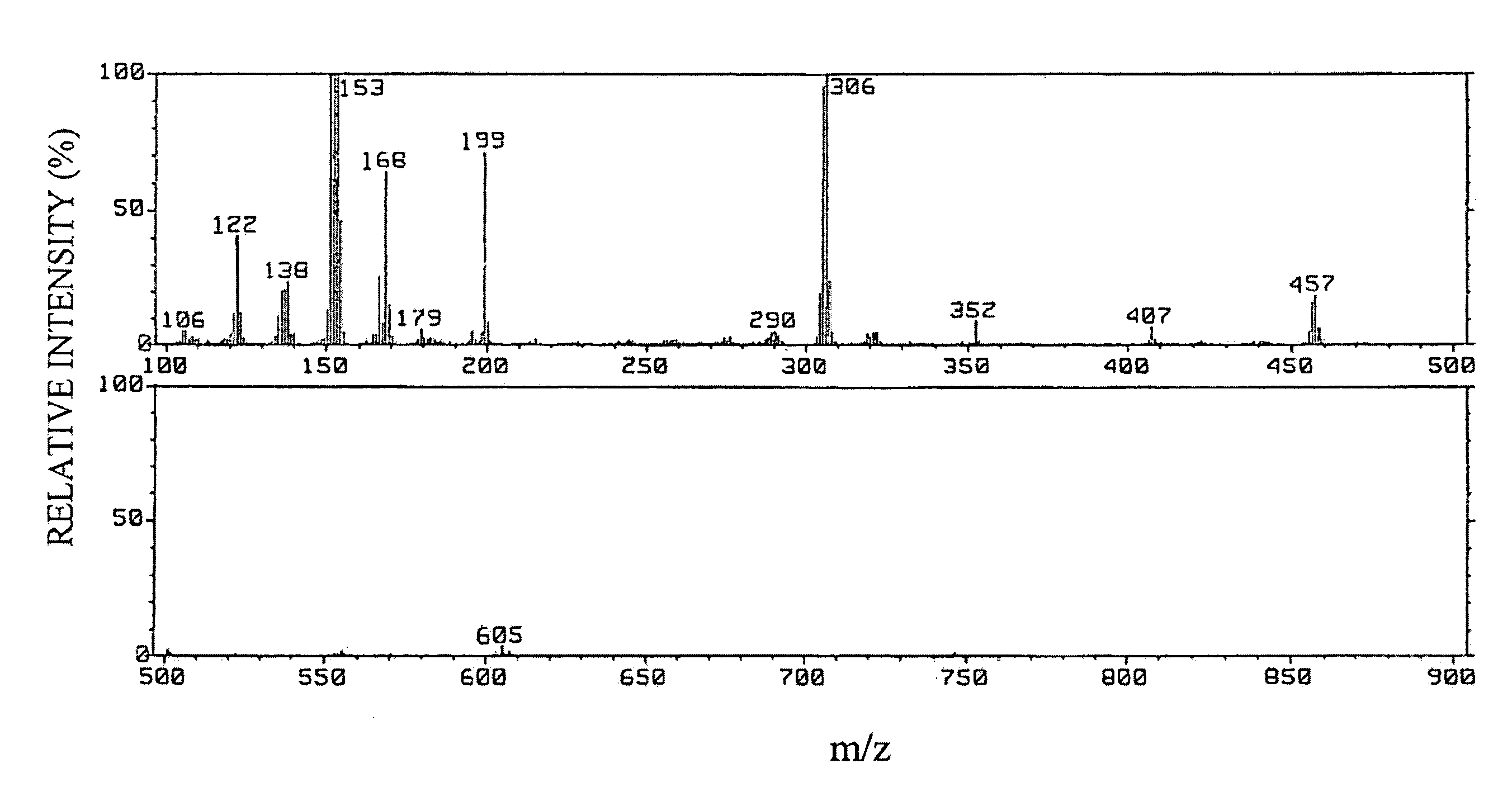
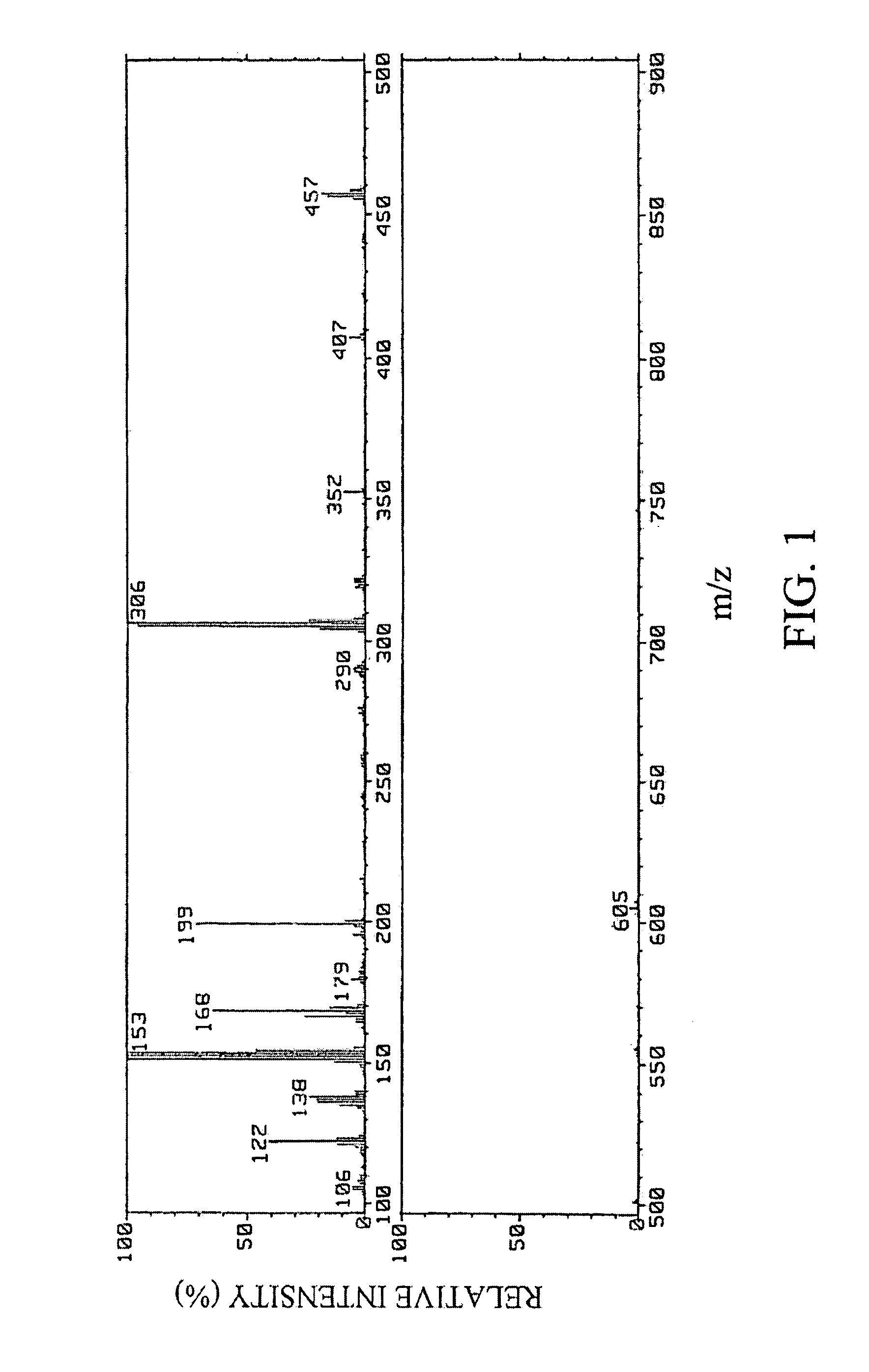
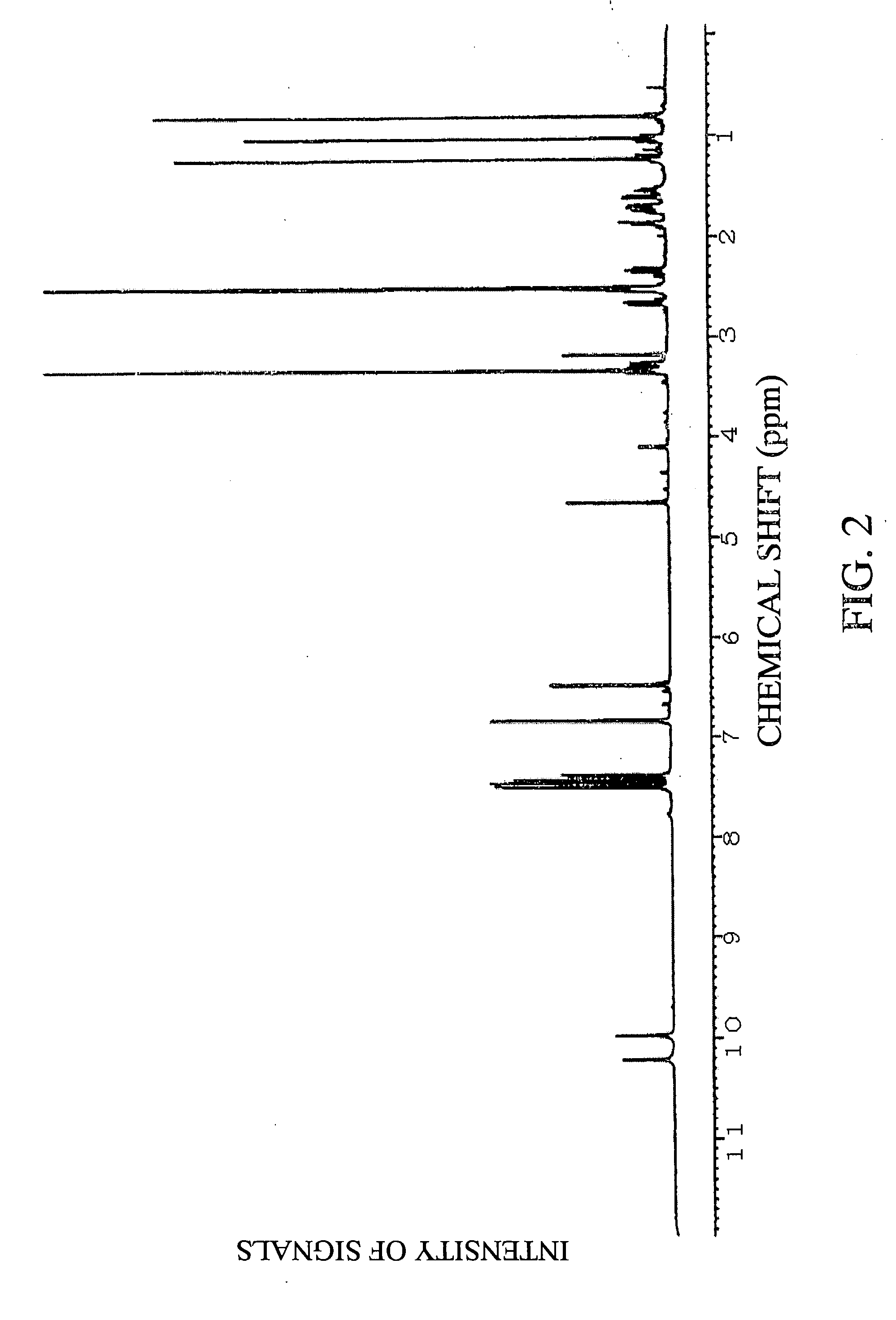
Examples
example 1
Preparation of (E)-1-(5,6,7,8,8a,10a-hexahydro-1,7-dihydroxy-8,8,10a-trimethyl-9H-xanthen-4-yl)-3-(4-hydroxyphenyl)-2-propen-1-one
[0108] (1) Twenty-four liters of ethyl acetate was added to 5.8 kg of dry powder of root portions of Angelica keiskei koidz., and extraction was carried out with stirring at room temperature for 3 hours. After suction filtration, the mixture was separated into an ethyl acetate extract and residue. After the ethyl acetate extract was concentrated under reduced pressure with a rotary evaporator, the concentrate was dissolved in chloroform, and the entire amount of the solution was absorbed to silica gel BW-300SP (manufactured by Fuji Silysia Chemical Ltd.: 750 ml). Next, the absorbed substances were eluted stepwise with hexane:chloroform=2:5 (750 ml), chloroform (1000 ml), chloroform:methanol=10:1 (1100 ml) in that order.
[0109] (2) After the fraction eluted with chloroform:methanol=10:1 obtained in item (1) of Example 1 was concentrated to dryness, the co...
example 2
Actions for Induction of Differentiation of ST-2 cells into Osteoblasts by Compound a
[0119] (1) Mouse interstitial cell strain ST-2 was suspended in DMEM medium (manufactured by Bio Whittaker) containing 10% fetal bovine serum (manufactured by Bio Whittaker) so as to have a concentration of 3×10⁴ cells / ml. The suspension was put to a 96-well plate in an amount of 0.1 ml per well, and the cells were cultured sterilely. After the cells were cultured for 2 days, the medium was exchanged with a fresh medium. The compound a derived from root portions of Angelica keiskei koidz. obtained in Example 1 was added thereto as a sample, and the cells were cultured for 3 days. Subsequently, differentiation of ST-2 cells into osteoblasts was measured using alkaline phosphatase as an index. The cells were washed once with PBS, 100 μl of a reaction substrate solution (100 mM diethanolamine buffer, pH 10.0, 2 mM magnesium chloride, 1 mM p-nitrophenyl phosphate) was added thereto, and the reaction wa...
example 3
Actions for Induction of Differentiation of MC3T3-E1 Cells into Osteoblasts by Compound a
[0120] Mouse pre-osteoblast strain MC3T3-E1 was suspended in DMEM medium containing 10% fetal bovine serum so as to have a concentration of 3×10⁴ cells / ml. The suspension was put to a 96-well plate in an amount of 0.1 ml per well, and the cells were cultured sterilely. After the cells were cultured for 2 days, the medium was exchanged with a fresh medium. The compound a derived from root portions of Angelica keiskei koidz. obtained in Example 1 was added thereto as a sample, and the cells were cultured for 5 days. Subsequently, the differentiation into osteoblasts was determined using alkaline phosphatase as an index in the same manner as in Example 2. As a result, it was revealed that the compound a induces the differentiation into osteoblasts in a concentration-dependent manner. The results are shown in Table 2.
TABLE 2Activities for Induction of Differentiation ofMC3T3-E1 Cells into Osteobl...
PUM
| Property | Measurement | Unit |
|---|---|---|
| temperature | aaaaa | aaaaa |
| temperature | aaaaa | aaaaa |
| temperature | aaaaa | aaaaa |
Abstract
Description
Claims
Application Information
 Login to View More