

Artificial peptide and use thereof
a technology of artificial peptides and peptides, which is applied in the direction of peptides, peptide/protein ingredients, immunoglobulins, etc., can solve the problems of inability to transport a peptide motif of interest (peptide fragment) to the nucleus, and achieve high efficiency, easy chemical synthesis, and high efficiency
- Summary
- Abstract
- Description
- Claims
- Application Information
AI Technical Summary
Benefits of technology
Problems solved by technology
Method used
Image

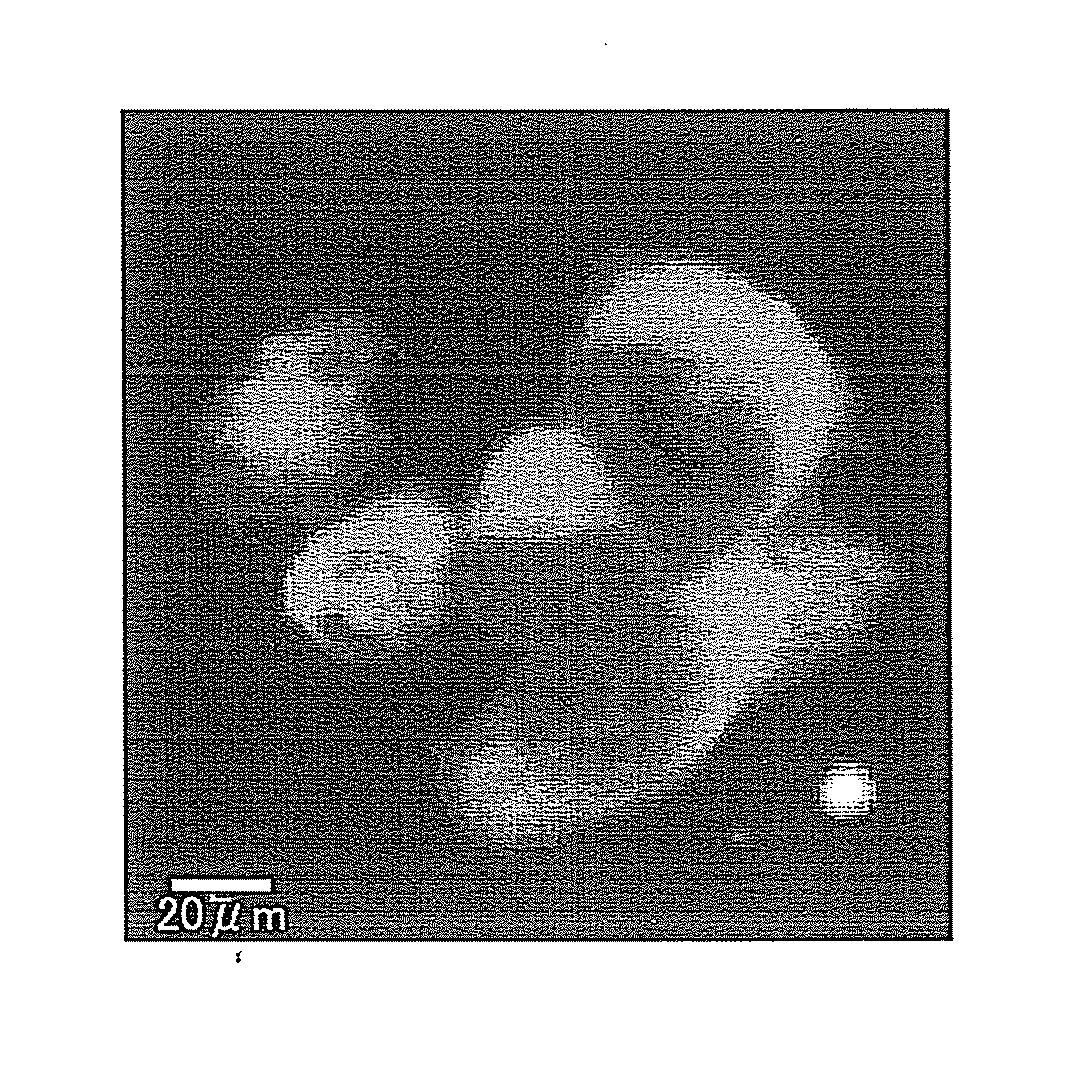
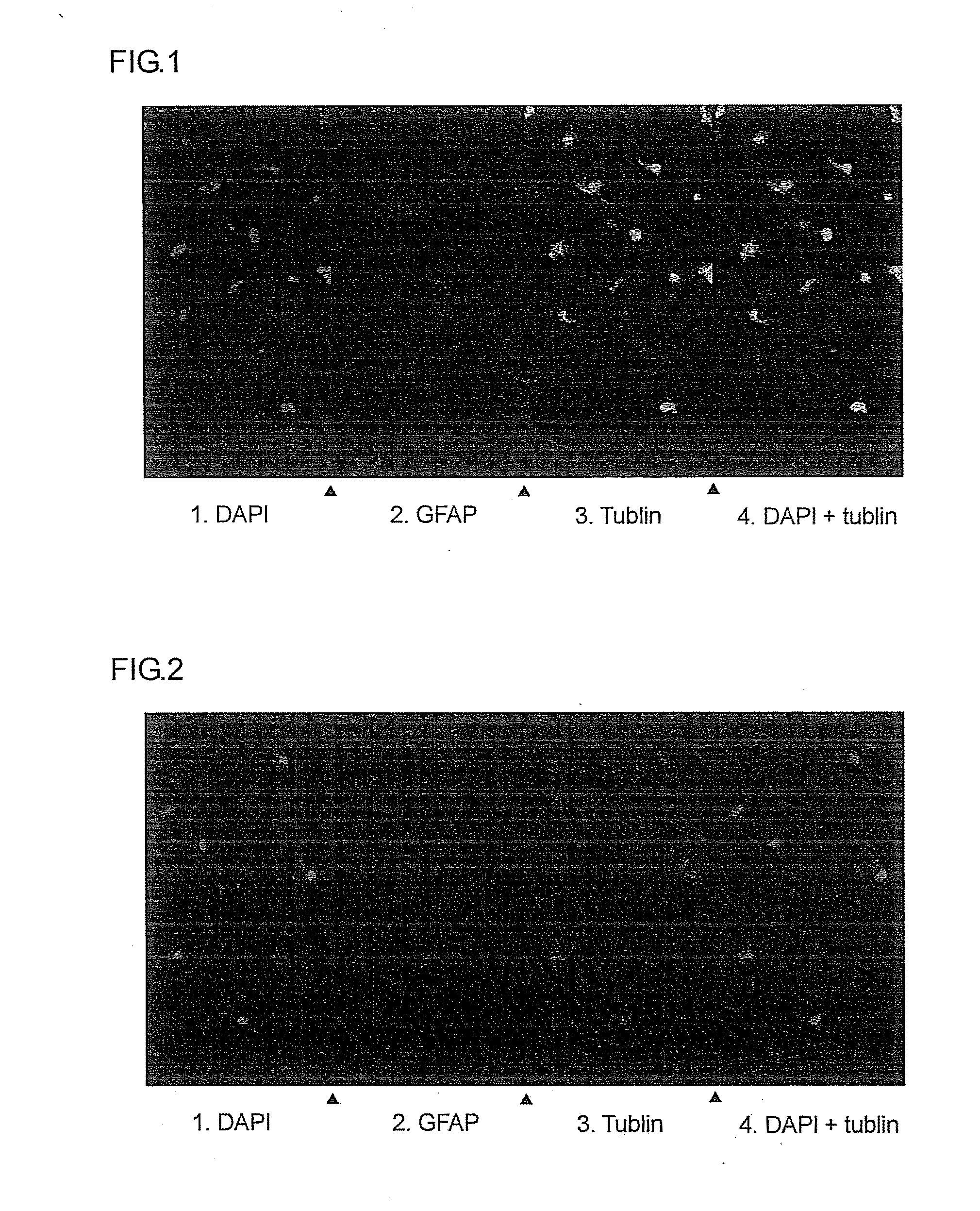
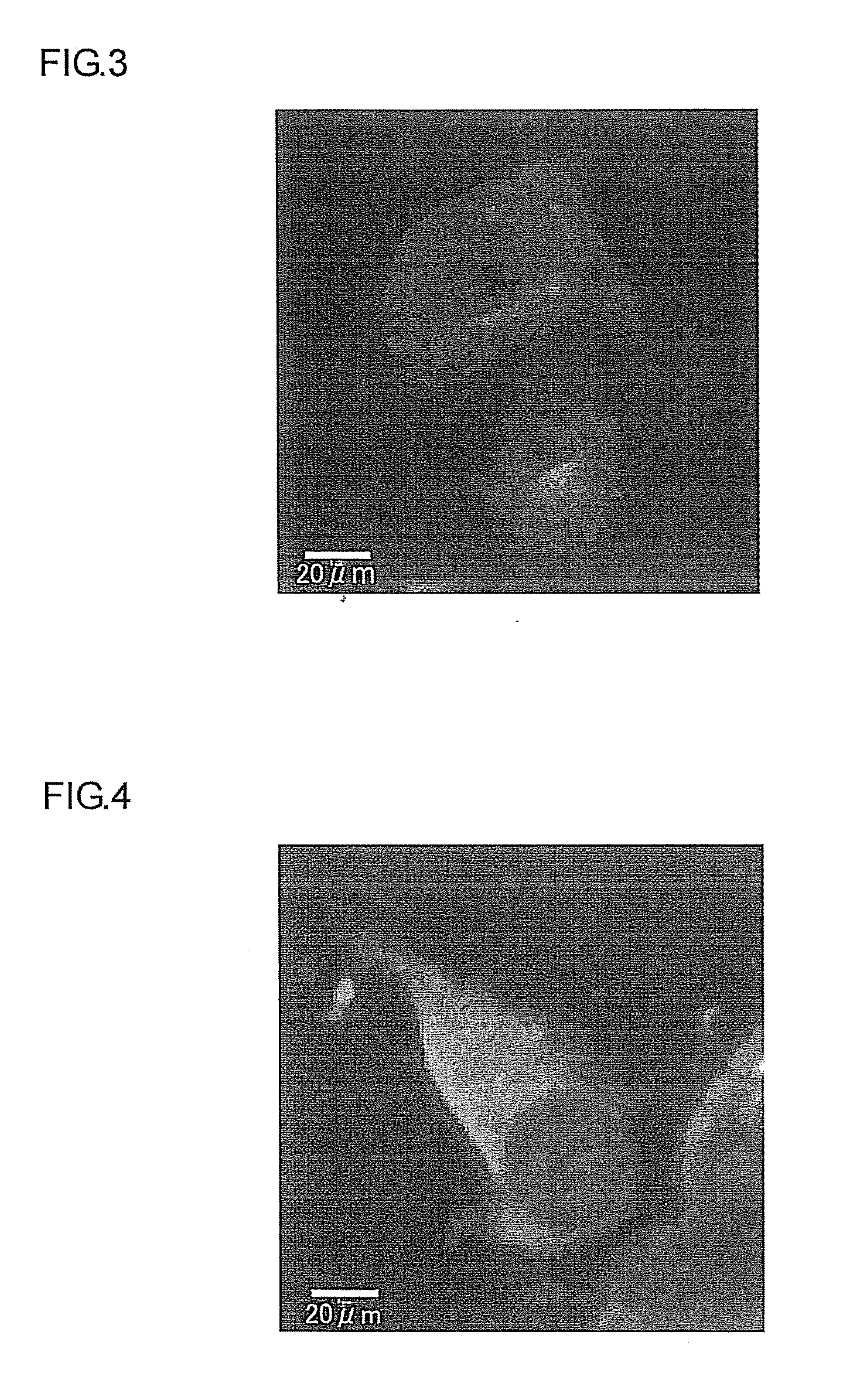
Examples
example 1
Peptide Synthesis
[0082]A total of six types of peptides (Samples 1 to 5, Comparative Sample 1) were produced using the subsequently described peptide synthesizer. Table 1 shows the amino acid sequences of these synthesized peptides.
TABLE 1 Total number ofSample amino acid No.Amino acid sequence residuesSample 1KKRTLRKNDRKKR-SLQYLCRFVIRQYTR28(SEQ ID NO: 81)Sample 2SLQYLCRFVIRQYTR-KKRTLRKNDRKKR28(SEQ ID NO: 82)Sample 3NLQDLCRIKIRQCIG-KKRTLRKNDRKKR28(SEQ ID NO: 83)Sample 4SLQHLCRCALRSHLE-KKRTLRKNDRKKR28(SEQ ID NO: 84)Sample 5SLKHLCRLKIRKCMG-KKRTLRKNDRKKR28(SEQ ID NO: 85)Compara-KKRTLRKNDRKKR13tive(SEQ ID NO: 1)Sample 1
[0083]As shown in Table 1, Samples 1 to 5 each have, at the N-terminal end or a C-terminal end thereof, a “cell membrane-permeable nucleolar localization signal sequence” composed of the amino acid sequence (13 amino acid residues) denoted as SEQ ID NO: 1. In addition, Samples 1 to 5 are constructed so as to have, as the peptide motif next to this cell membrane-permeable ...
example 2
Evaluation of Neuronal Differentiation-Inducing Activity of Synthesized Artificial Peptide
[0098]The neuronal differentiation-inducing activities of the six artificial peptides obtained in Example 1 were examined.
[0099]That is, these sample peptides were added to a culture broth of neural stem cells collected from a rat, and incubated. The amount of peptide added was adjusted so that the peptide concentration within the culture broth became 1 μM for each peptide.
[0100]After 24 hours had elapsed following peptide addition, each sample was subjected to nuclear staining with 4′,6-diamidino-2-phenylindole (DAPI), then examined under a fluorescence microscope.
[0101]In addition, the same sample was subjected to evaluation with a neuronal differentiation induction marker. That is, using tubulin as a marker for identifying neurons, the presence or absence of tubulin (i.e., of neurons) in the culture broth was determined by a fluorescent antibody method that uses a fluorescent dye-labeled ant...
example 3
Evaluation of Cell Membrane-Permeability of Synthesized Artificial Peptides
[0104]The cell membrane permeabilities of the five artificial peptides having neuronal differentiation-inducing activities (see Example 2) obtained in Example 1 were investigated.
[0105]Specifically, striate bodies of the cerebellum collected from a mouse embryo (E14.5) were suspended in a growth medium for mouse neural stem cells (product of Cell Applications) and, by removing the tissue specimen through a cell strainer, a cell suspension containing mouse neural stem cells (mNSC) was prepared. Next, a cell suspension prepared in the above growth medium to a cell concentration of 2×10⁵ cells / mL was cultured for one week at 37° C. and under 5% CO2 in an ultra-low attachment surface flask, thereby producing neurospheres (cell masses containing neural stem cells in an undifferentiated state). The neurospheres thus produced were dispersed by pipetting, and used in the membrane permeability test described below.
[01...
PUM
| Property | Measurement | Unit |
|---|---|---|
| flow rate | aaaaa | aaaaa |
| wavelength | aaaaa | aaaaa |
| permeable | aaaaa | aaaaa |
Abstract
Description
Claims
Application Information
 Login to View More