However, currently there exists a few severe challenges in this field.
Such technical challenges
restrict the practical application of the gene therapy in treatment of
solid tumors, as safety and
efficacy are extremely important factors that have to be taken into consideration in the research and development of gene therapeutic vectors for tumor treatment.
This consequently lowers down the tumor patients' tolerance to these traditional therapeutic methods, and results in
high frequency of recurrence and
metastasis of the tumors.
However, the proliferation of
bacteria cannot stop the growth of malignant tumors alone.
However, problems still exist in the above mentioned expression systems.
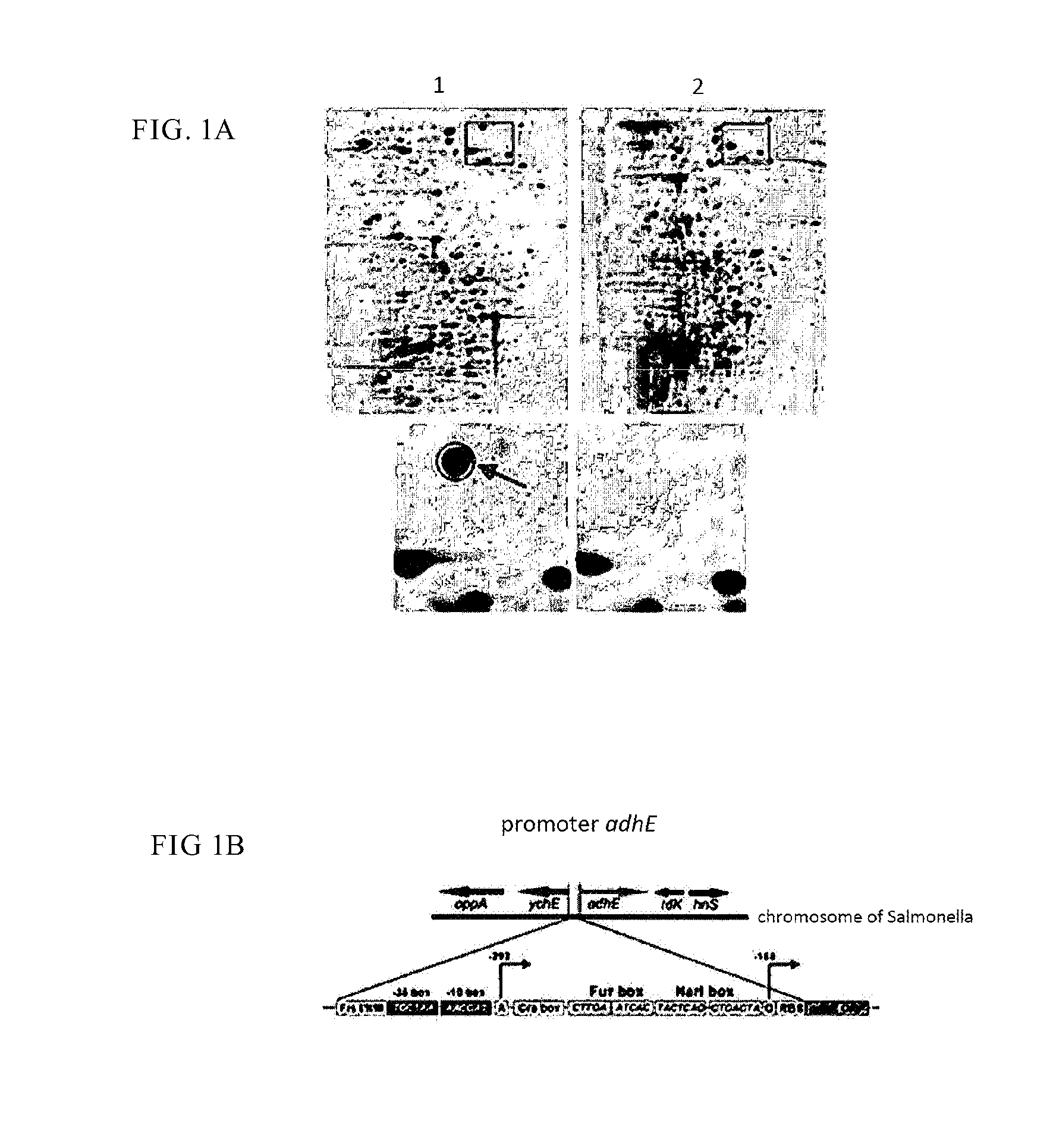
(1) The present invention provides an anaerobic-specific adhE gene screened out from
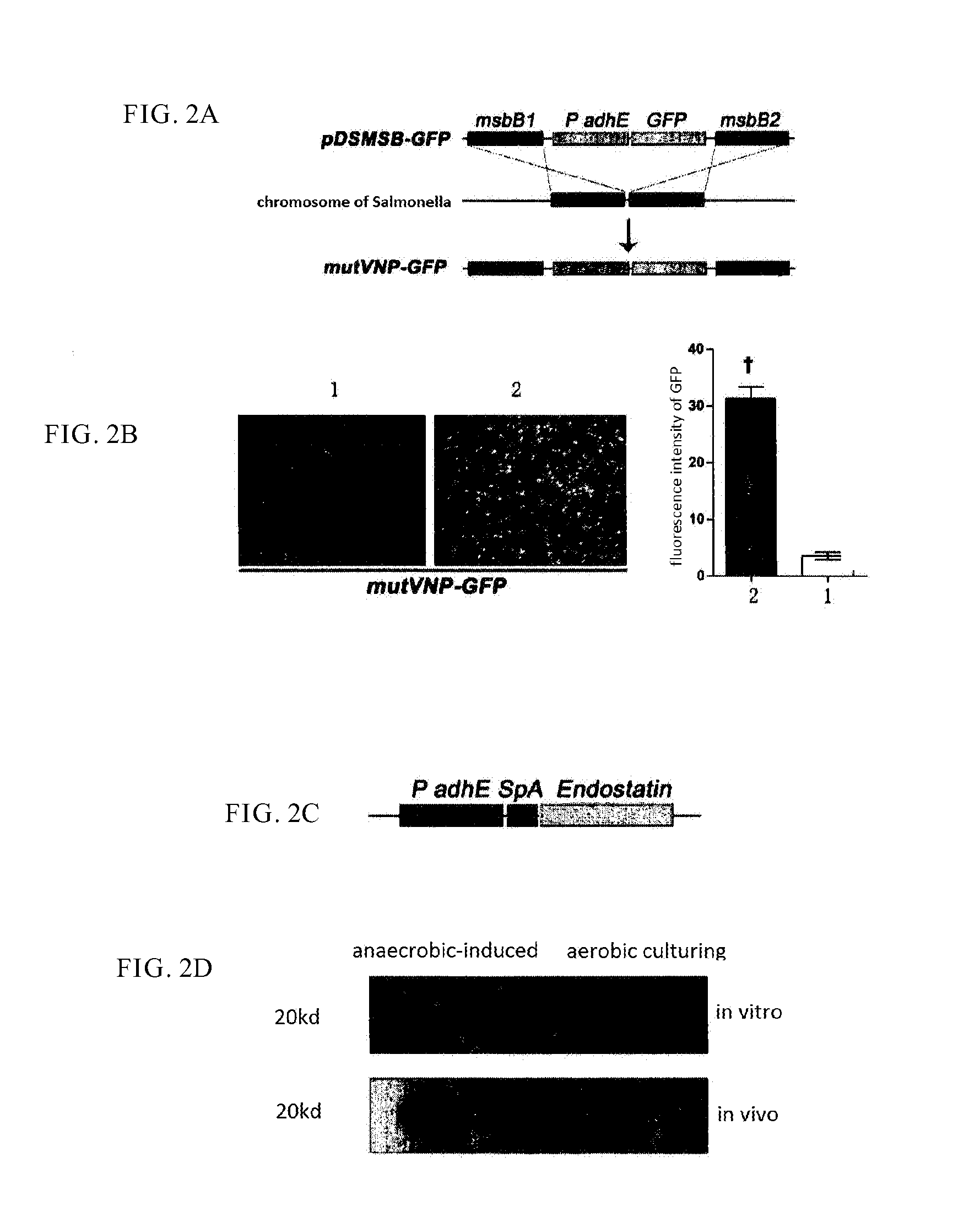
Salmonella VNP2009 through the proteomic technique; the expression level of the said anaerobic-specific adhE under anaerobic conditions is 120 times as much as that under aerobic conditions, therefore the padhE is a high-level, anaerobic-specific promoter. The
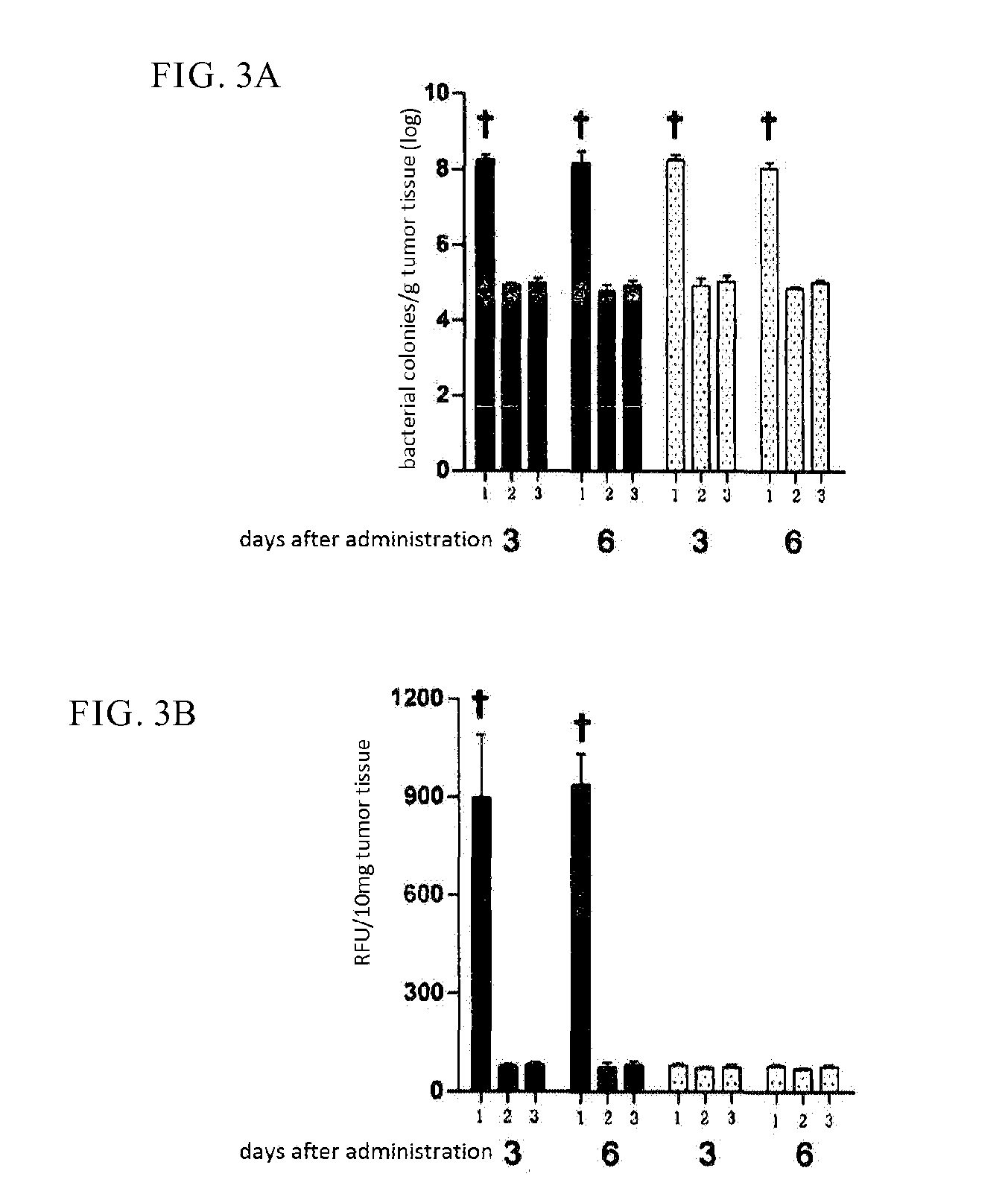
in vivo experiment shows that the promoter padhE can initiate high-level, tumor-specific expression of target genes such as
luciferase, GFP and
Endostatin.
(2) The present invention not only realizes the anaerobic tissue (including
tumor tissue) targeted delivery of the target gene by means of anaerobic-targeted
bacteria, but also, due to the fact that the prokaryotic promoter padhE initiates the expression of the target gene only under hypoxic or anaerobic conditions, prevents expression of the target gene in other normal tissues, and consequently lowers down the potential
in vivo toxicity of the target gene. The present invention realizes both the specific delivery of the target gene in the anaerobic tissue and the selective expression of the target gene in the anaerobic tissue; the said selective expression of the target gene takes place naturally in the core (therefore hypoxic or anaerobic) area of
tumor tissue, requiring no extra artificial inductive measures.
(3) The present invention discovers that the low-copy plasmid can realize stable in vivo existence of the target gene so that a better
therapeutic effect can be achieved.
(4) In most of the prior researches about tumor-targeted bacteria-induced gene therapy, though the target gene showed a certain degree of antitumor effect, its in vivo and
in vitro expression levels were too low to be detected by such conventional methods as protein
electrophoresis and
western blot. In contrast, the method provided in the present invention, the anaerobic tissue-specific therapeutic gene initiated by the promoter padhE, can reach high level of expression, and therefore can be detected by such conventional methods as protein
electrophoresis and
western blot under both in vivo and
in vitro conditions. Therefore, the present invention not only solves the technical difficulties appeared in specific delivery and selective expression of the target gene in the anaerobic tissue (including
tumor tissue), but also realizes high-level expression of the target gene under both in vivo and in vitro conditions, including in the tumor tissue, which consequently guarantees a good
therapeutic effect of the anti-anaerobic (including anti-tumor)
medicine prepared with the method disclosed herein.


 Login to View More