Highly porous lubricant conditioning and remediation media

US20200055021A1Active Publication Date: 2020-02-201441413 ALBERTA INC DBA EPT

Image

Smart Image Click on the blue labels to locate them in the text.
Viewing Examples
Smart Image
  • Highly porous lubricant conditioning and remediation media
  • Highly porous lubricant conditioning and remediation media
  • Highly porous lubricant conditioning and remediation media

Examples

Experimental program
Comparison scheme
Effect test

Embodiment Construction

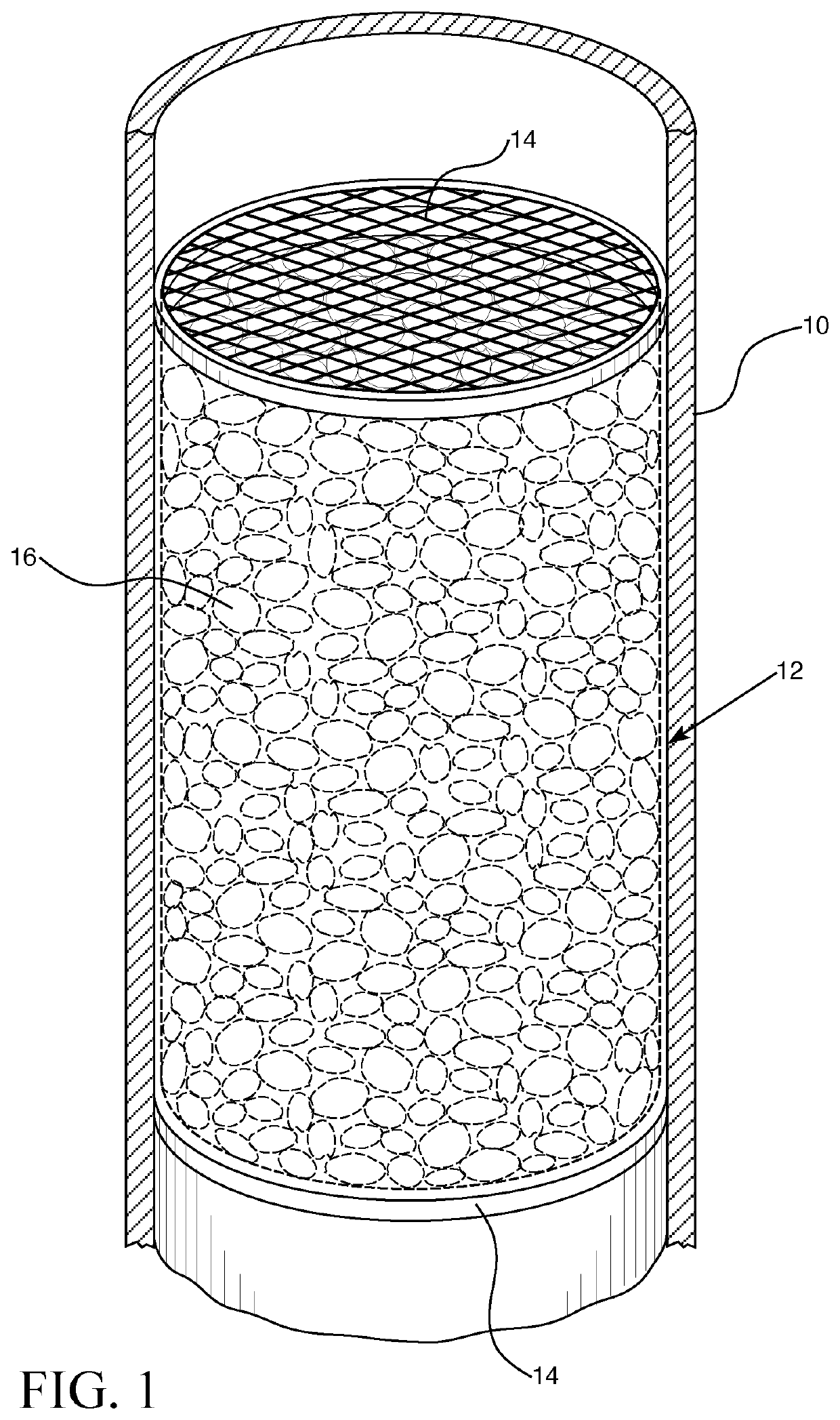
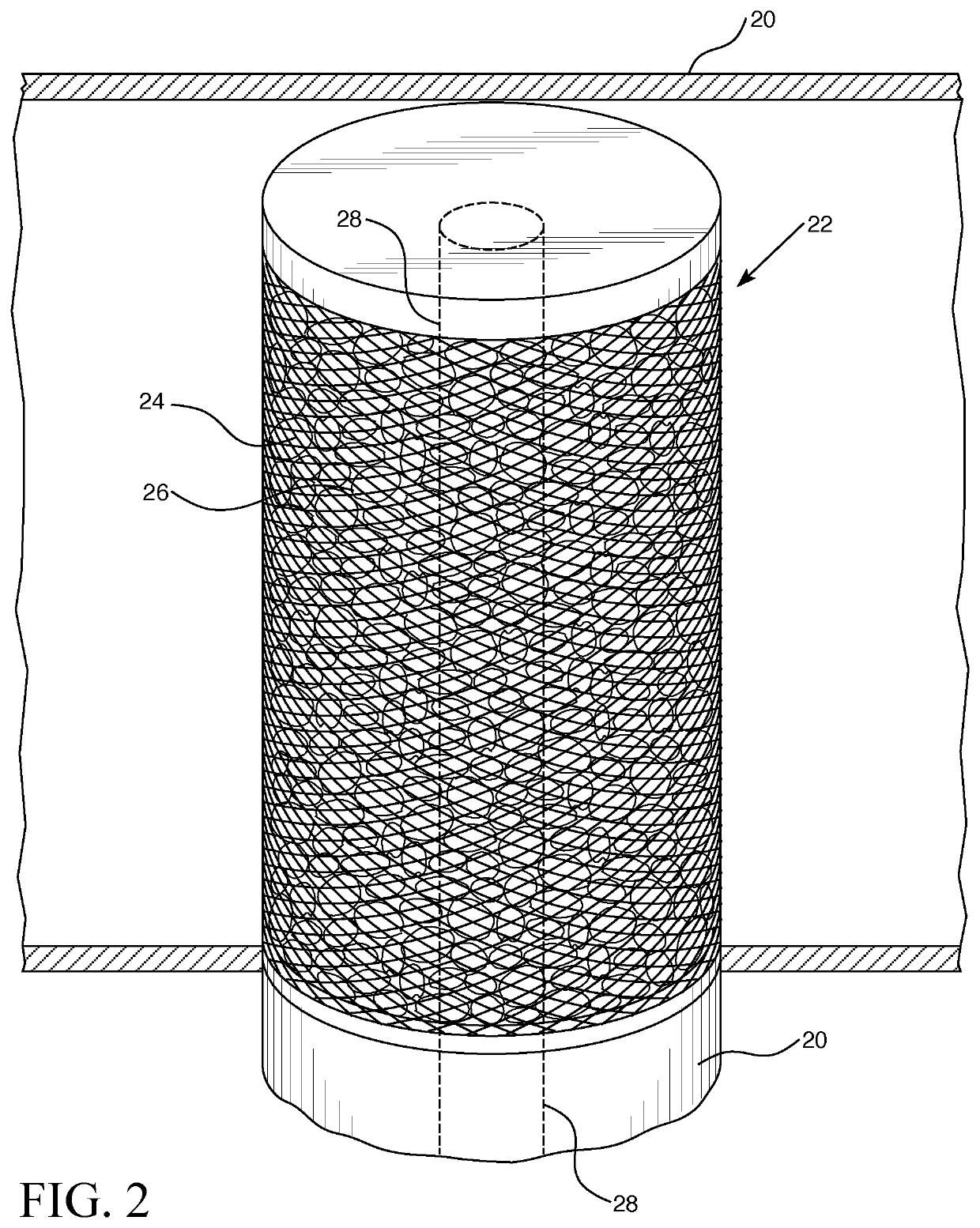
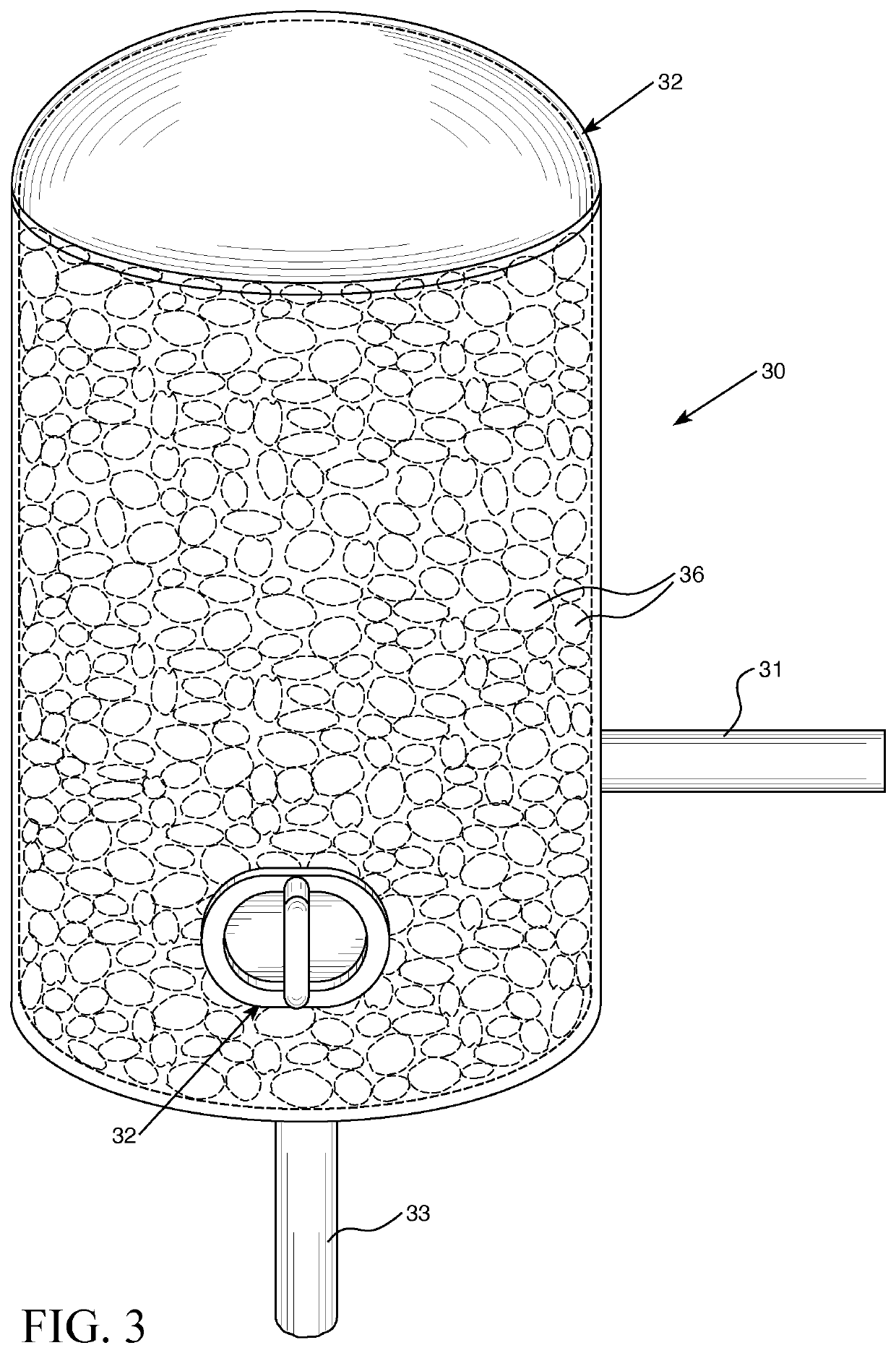
[0012]The present inventive ion exchange resins feature unusually large pore sizes, allowing for the, heretofore, impossible capture of fine lubricant contaminants and breakdown products (phosphate ester varnish, soot, coke etc.). These lubricant contaminants and degradation products are typically less than 4 μm in size and, therefore, difficult or impossible to remove via sieve-type techniques described within the prior art. By using ion exchange resins with pore sizes on the order of twenty times greater than those described throughout the prior art, the present inventive resins allow for the efficient removal of fine lubricant contaminants and breakdown products. These deleterious species enter the relatively larger pores of the inventive ion exchange resins where they are then captured and retained. Typical polymer resins meant for use in the present invention are (without limitation): polystyrene (including cross-linked polystyrenes), polyurethane, epoxy, polyvinyl, vinyl ester...

the structure of the environmentally friendly knitted fabric provided by the present invention; figure 2 Flow chart of the yarn wrapping machine for environmentally friendly knitted fabrics and storage devices; image 3 Is the parameter map of the yarn covering machine
Login to View More

PUM

PropertyMeasurementUnit
Diameteraaaaaaaaaa
Diameteraaaaaaaaaa
Diameteraaaaaaaaaa
Login to View More

Abstract

The present invention is a solid lubricant treatment medium, usually but not always in bead form, suitable to be brought into contact with lubricants to remediate and to condition them. A key feature of the medium, typically a polymeric resin, is the presence of relatively very large pores, which are able to capture and remove fine lubricant contaminants and breakdown products (such as small phosphate ester varnish, soot, coke, dissolved metal or other small semi-soluble or insoluble particles). Resins and adsorbents of the prior art have proven unable to remove fine contaminants like phosphate ester varnish that have a deleterious impact on industrial equipment performance and reliability. The mean pore size diameter of the medium is between about 8,000 â„« and 100,000 â„« and, more preferably, in the range of about 20,000 â„« to about 80,000 â„«.

Description

[0001]This patent application claims priority to, and incorporates herein by reference, U.S. Provisional Application for Patent No. 62 / 718,638, filed 14 Aug. 2018.FIELD OF THE INVENTION[0002]The present invention is a solid and unusually porous medium for use in conditioning or remediating industrial lubricants.BACKGROUND OF THE INVENTION[0003]The efficient and reliable operation of critical industrial equipment relies upon the use of lubricants or other functional fluids. Industrial lubricants (including lubricating oils, hydraulic fluids, phosphate ester-based control oils), however, are subject to degradation and contamination during service, impairing their ability to fulfill their duties effectively. These lubricants must, therefore, be maintained in acceptable condition to ensure that critical equipment performs reliably. When lubricating fluids are not kept in acceptable condition, costly equipment failure and downtime may result. Successful maintenance strategies must, there...

Claims

the structure of the environmentally friendly knitted fabric provided by the present invention; figure 2 Flow chart of the yarn wrapping machine for environmentally friendly knitted fabrics and storage devices; image 3 Is the parameter map of the yarn covering machine
Login to View More

Application Information

Patent Timeline
20 Feb 2020
Publication
US20200055021A1
IPC
B01J20/26; B01J20/28; C10M175/00; C10M105/74; B01D15/36
CPC
B01J20/261; B01J20/28016; C10M2223/0405; B01D15/361; B01J20/28085; B01J20/262; B01J20/267; C10M175/0008
Inventors
HOBBS, MATTHEW; DUFRESNE, PETER T