
Rapid and non-invasive method to evaluate immunization status of a patient
- Summary
- Abstract
- Description
- Claims
- Application Information
AI Technical Summary
Benefits of technology
Problems solved by technology
Method used
Image

Examples
example 1
[0090]General:
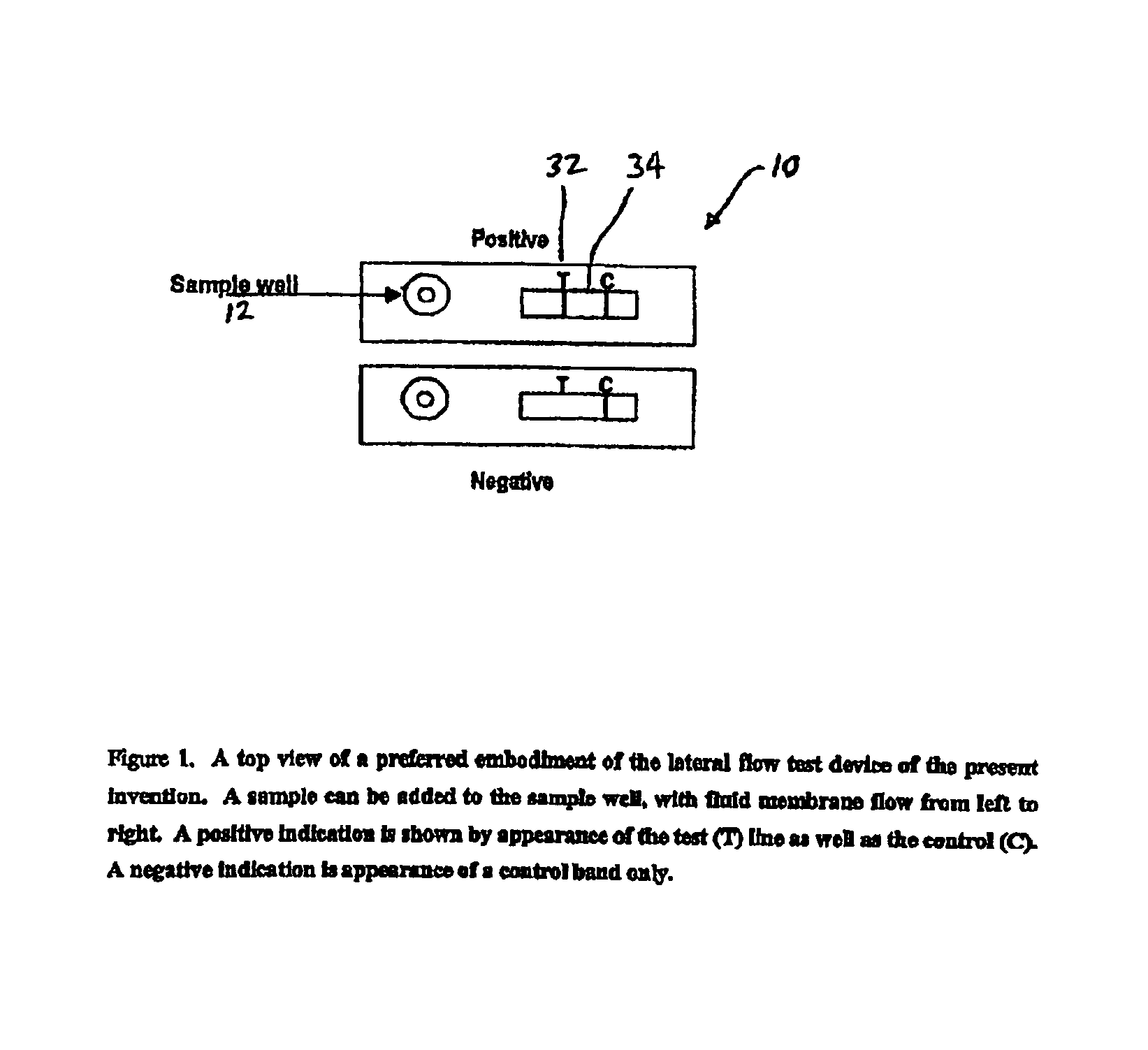
[0091]The design and rationale for this study rest on the importance of using saliva as the test medium to measure anthrax vaccine effectiveness. This rapid immunoassay avoids venipuncture and the necessity of having trained corpsmen to collect samples for measurement of anti-PA antibodies. Sample collection is non-invasive with no perceivable discomfort or risk to the individual. A positive confirmation of anthrax antibodies is readily observed within 5-10 minutes by the appearance of the test band. The assay is straight-forward with no other chemicals or reagents needed to perform the test.
[0092]The following sections describe the experimental approach designed to address three specific aims: (1) To optimize the assay of the present invention by signal amplification methods to achieve the most sensitive results; (2) To determine assay specificity by studying false positive and false negative results in the small pilot study; and (3) To validate the assay with paralle...
PUM
 Login to View More
 Abstract
Description
Claims
Application Information
 Login to View More