
Selective androgen receptor modulators and methods of use thereof
a selective androgen receptor and modulator technology, applied in the direction of phosphorous compound active ingredients, group 5/15 element organic compounds, amide active ingredients, etc., can solve the problems of no cure, no androgen receptor modulation, and a difficult subject of contraception, so as to reduce libido, and the effect of antiandrogen and anabolic activity and unexpected androgenic and anabolic activity
- Summary
- Abstract
- Description
- Claims
- Application Information
AI Technical Summary
Benefits of technology
Problems solved by technology
Method used
Image

Examples
example 1
Nonsteroidal Ligands with Androgenic and Anabolic Activity
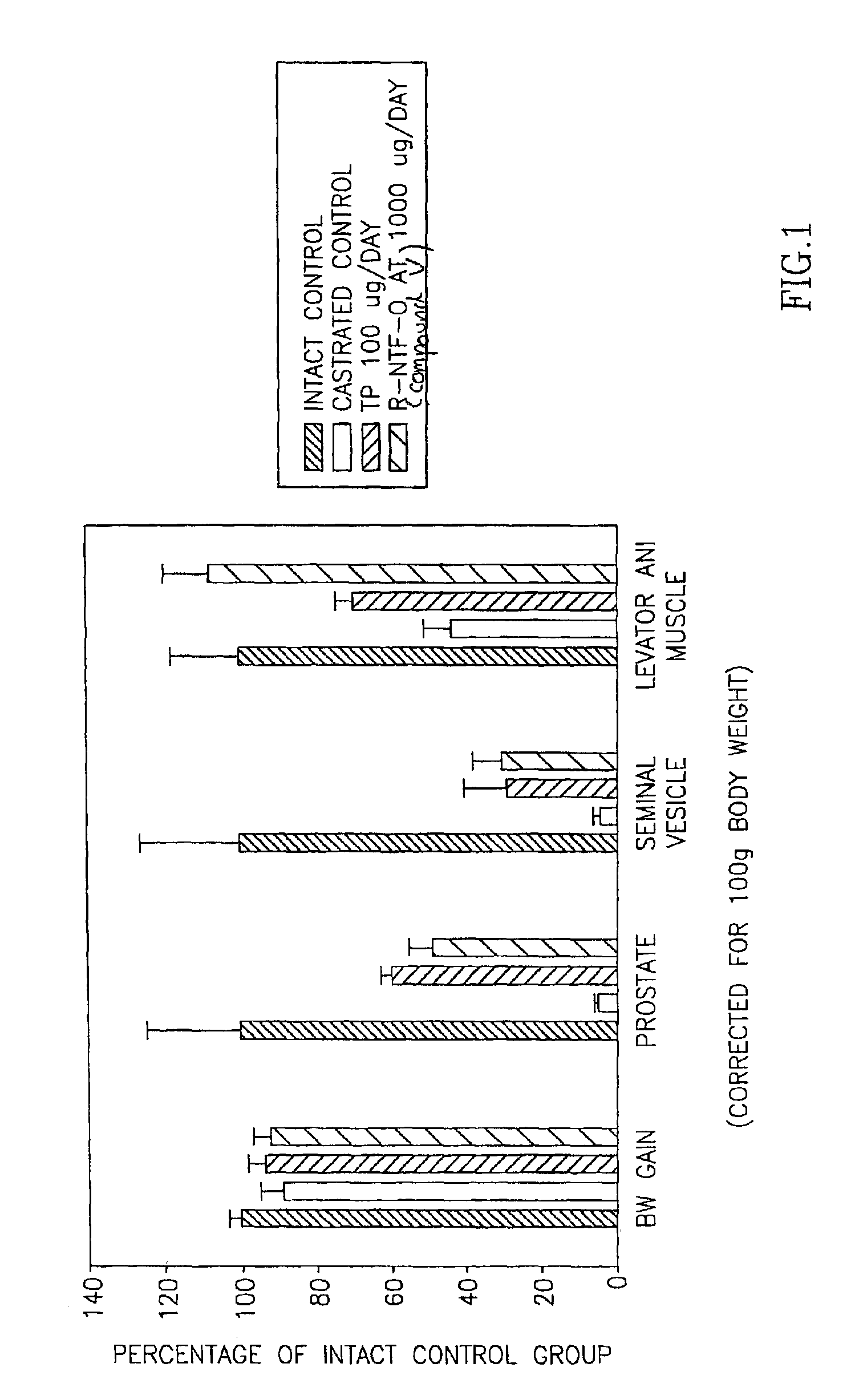
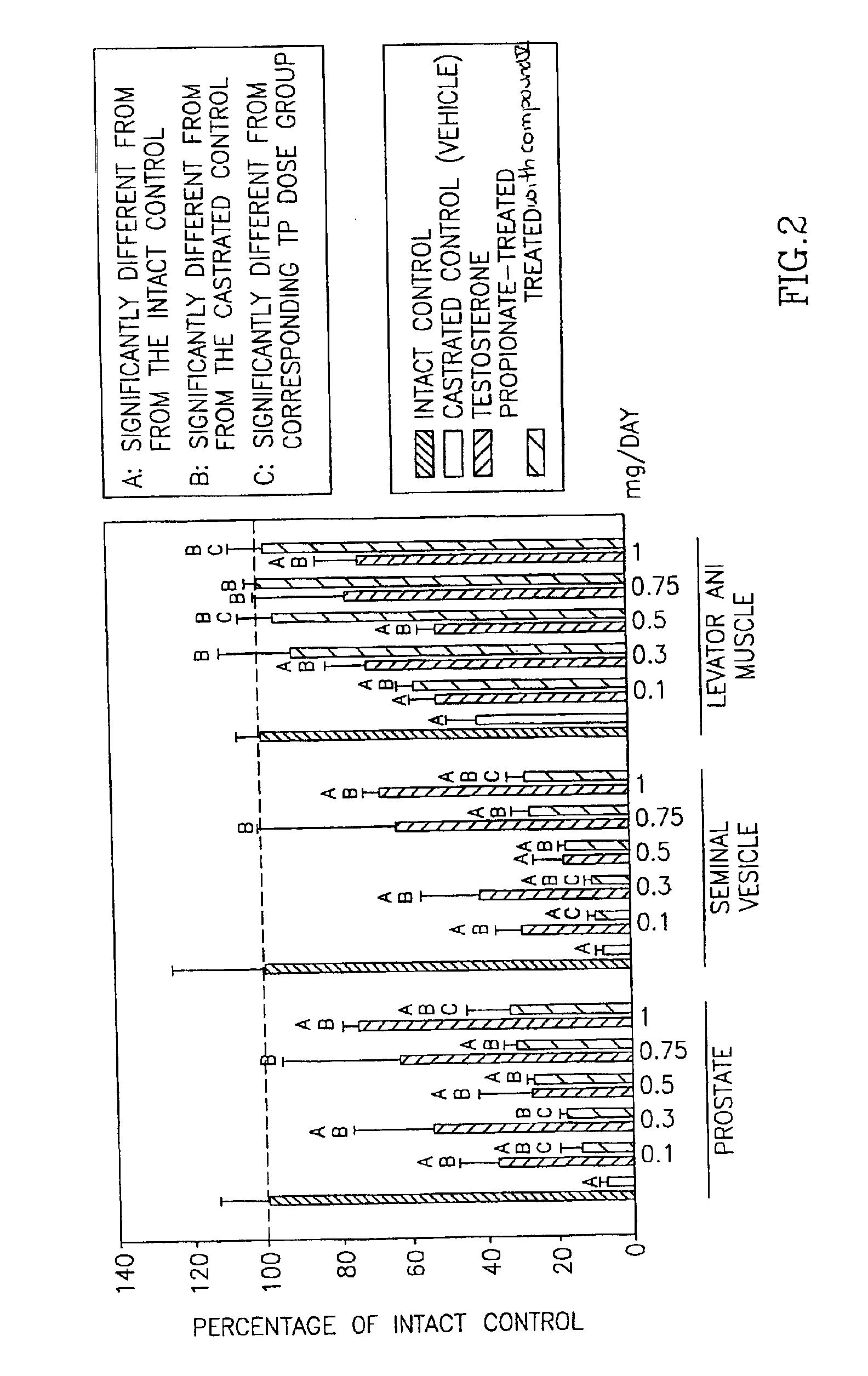
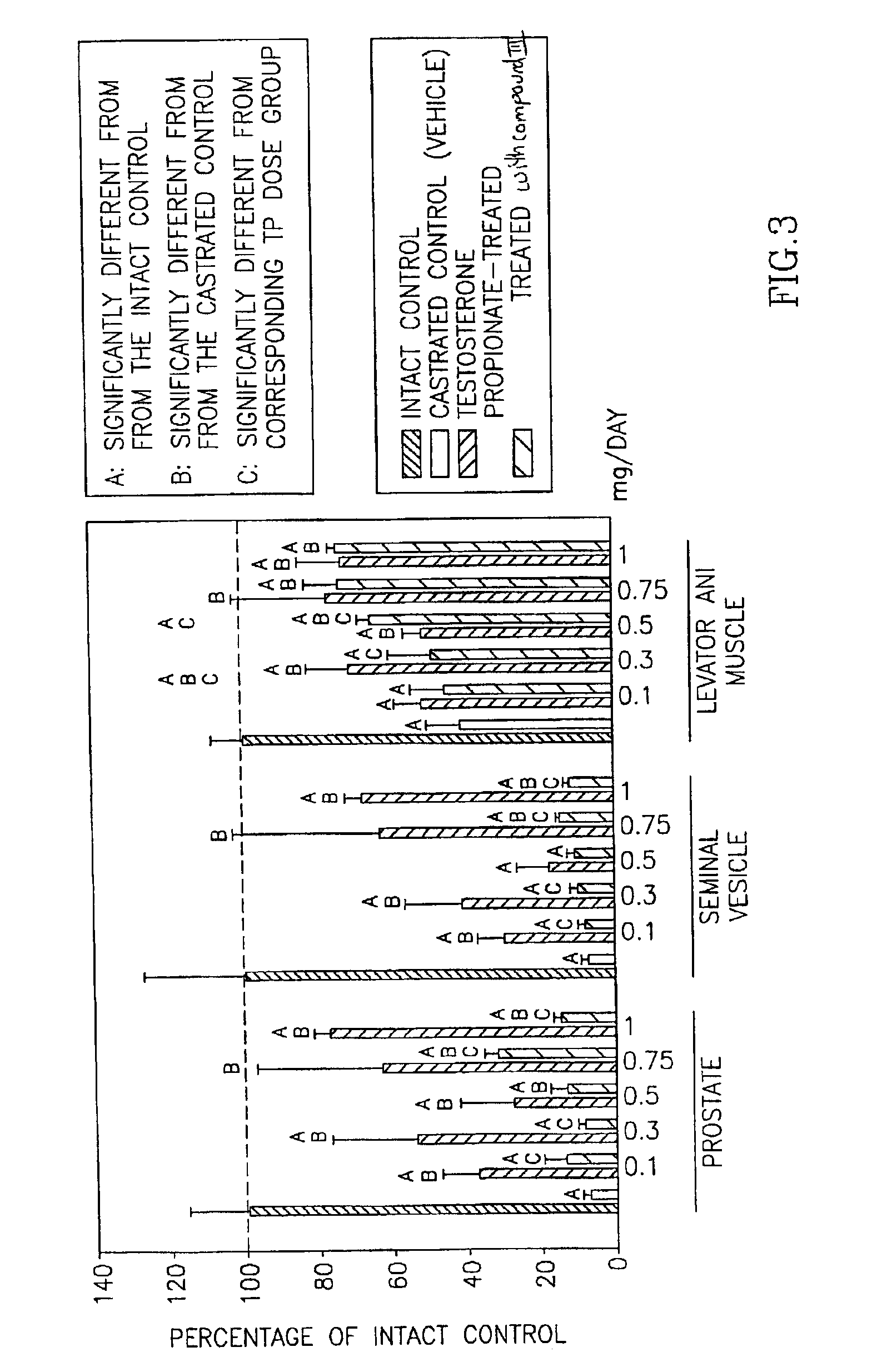
[0166]The SARM compounds provided herein were designed, synthesized and evaluated for in-vitro and in-vivo pharmacologic activity. The in-vitro androgen receptor binding affinity and ability to maintain androgen dependent tissue growth in castrated animals was studied. Androgenic activity was monitored as the ability of the SARM compounds to maintain and / or stimulate the growth of the prostate and seminal vesicles, as measured by weight. Anabolic activity was monitored as the ability of the SARM compounds to maintain and / or stimulate the growth of the levator ani muscle, as measured by weight.
Synthetic Procedures
[0167](2R)-1-Methacryloylpyrrolidin-2-carboxylic Acid (R-129). D-Proline (R-128, 14.93 g, 0.13 mol) was dissolved in 71 mL of 2 N NaOH and cooled in an ice bath; the resulting alkaline solution was diluted with acetone (71 mL). An acetone solution (71 mL) of metacryloly chloride 127 (13.56 g, 0.13 mol) and 2N NaOH sol...
example 2
Nonsteroidal Ligands with Androgenic and Anabolic Activity
[0175]The in-vivo efficacy and acute toxicity of four novel nonsteroidal androgens (compounds III, V, VI and VII) in rats was examined. In-vitro assays established that these compounds bind the androgen receptor with very high affinity. The structures and names of the four compounds are presented below: [0176]Compound III R═F[0177]Compound V R═NHCOCH3 [0178]Compound VI R═COCH3 [0179]Compound VII R═COC2H5
[0180]Materials. The S-isomers of III, V, VI and VII R-isomer of compound III were synthesized in accordance with the scheme as set forth in FIG. 9. Testosterone propionate (TP), polyethylene glycol 300 (PEG300, reagent grade) and neutral buffered formalin (10% w / v) were purchased from Sigma Chemical Company (St Louis, Mo.). Alzet osmotic pumps (model 2002) were purchased from Alza Corp. (Palo Alto, Calif.).
[0181]Animals. Immature male Sprague-Dawley rats, weighing 90 to 100 g, were purchased from Harlan B...
example 3
Pharmacokinetics of Compound V in Dogs
[0195]The pharmacokinetics of S-compound V, a novel selective androgen receptor modulator (SARM), were characterized in beagle dogs. A four-treatment, four-period crossover design was utilized in the study, which involved a total of six beagle dogs, three of each gender. Each animal received a 3 mg / kg IV dose, a 10 mg / kg IV dose, a 10 mg / kg PO dose in solution, and a 10 mg / kg PO dose in capsule, in a randomly assigned order. There was a one-week washout period between treatments. Plasma samples were collected for up to 72 hr after drug administration. Plasma Compound Vconcentrations were analyzed by a validated HPLC method. The clearance (CL), volume of distribution (Vss), half-life (T1 / 2), and other pharmacokinetic parameters were determined by noncompartmental methods. Results showed that Compound Vwas cleared from dog plasma with a terminal T1 / 2 of about 4 hr and a CL of 4.4 mL / min / kg after IV administration. FIGS. 4, 5, and 6 show the plasma...
PUM
| Property | Measurement | Unit |
|---|---|---|
| temperature | aaaaa | aaaaa |
| pH | aaaaa | aaaaa |
| temperature | aaaaa | aaaaa |
Abstract
Description
Claims
Application Information
 Login to View More