Check patentability & draft patents in minutes with Patsnap Eureka AI!

Polycyclic ring-fused compound and organic thin film transistor utilizing the same

a polycyclic ringfused compound and organic thin film technology, applied in the direction of organic chemistry, solid-state devices, thermoelectric devices, etc., can solve the problems of high production cost, high production cost, and material usable as a substrate, and achieve high carrier mobility

Active Publication Date: 2015-02-03
IDEMITSU KOSAN CO LTD
View PDF13 Cites 3 Cited by
  • Summary
  • Abstract
  • Description
  • Claims
  • Application Information

AI Technical Summary

Benefits of technology

The novel compound achieves high carrier mobility and storage stability, enabling efficient on-off operations and improved field effect mobility in organic thin film transistors, making them suitable for practical use in display devices.

Problems solved by technology

However, a CVD (chemical vapor deposition) apparatus used for fabrication of a TFT using silicon is very expensive, and an increase in size of a display or the like using a TFT had a problem that the production cost increased significantly.
Further, there was a problem that, since forming amorphous or polycrystalline silicon into a film requires significantly high temperatures, the type of a material which is usable as a substrate is limited, and hence, there were also problems that resin substrates or the like which were light in weight could not be used.
However, an organic semiconductor material which satisfies all of the required performances has not yet been developed.
However, pentacene has a disadvantage that the stability in the atmosphere is low.
However, no specific examples or the like have been made on a polycyclic compound having 6 rings (Patent Document 1).
However, the performance as the organic semiconductor material has not yet been demonstrated.

Method used

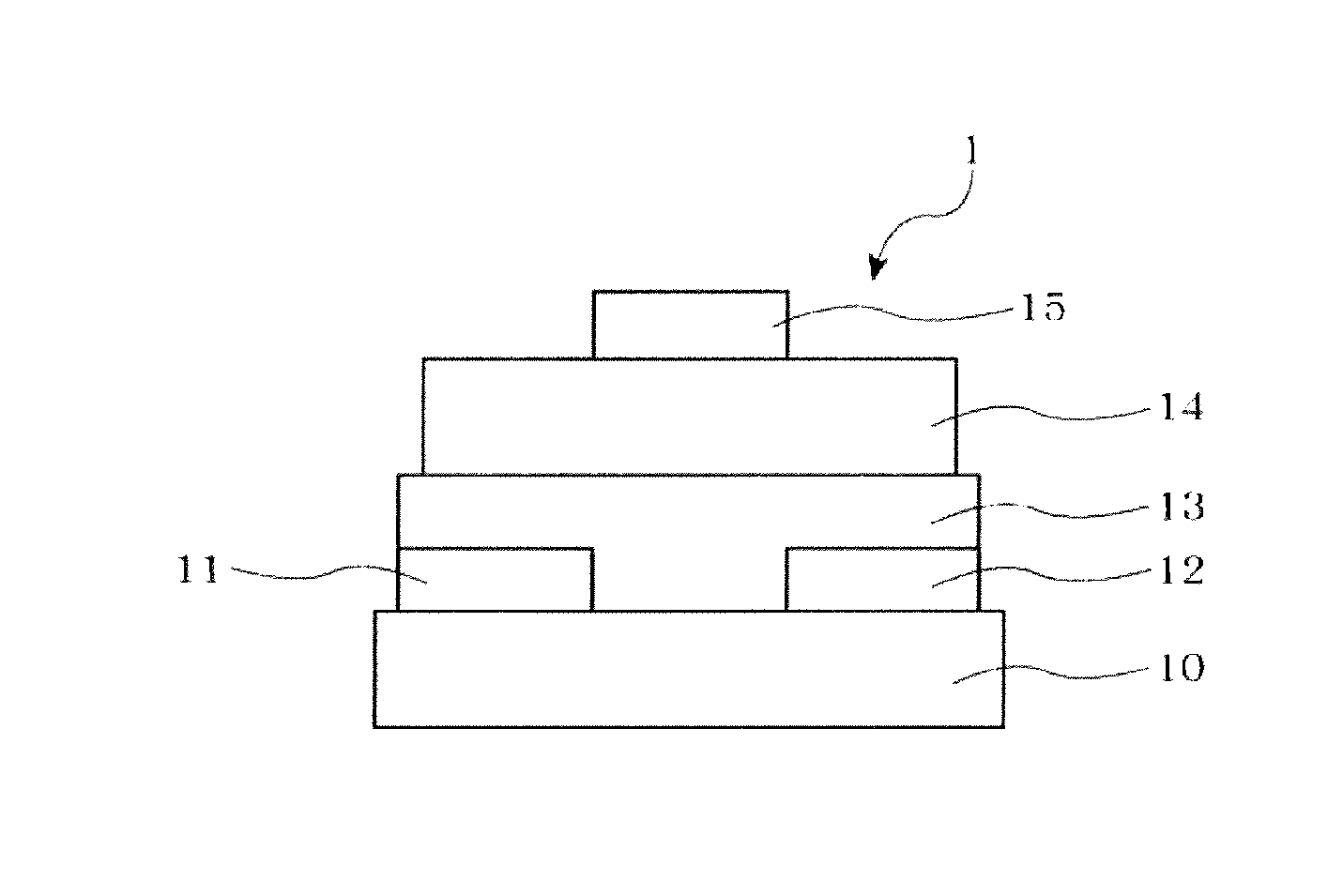
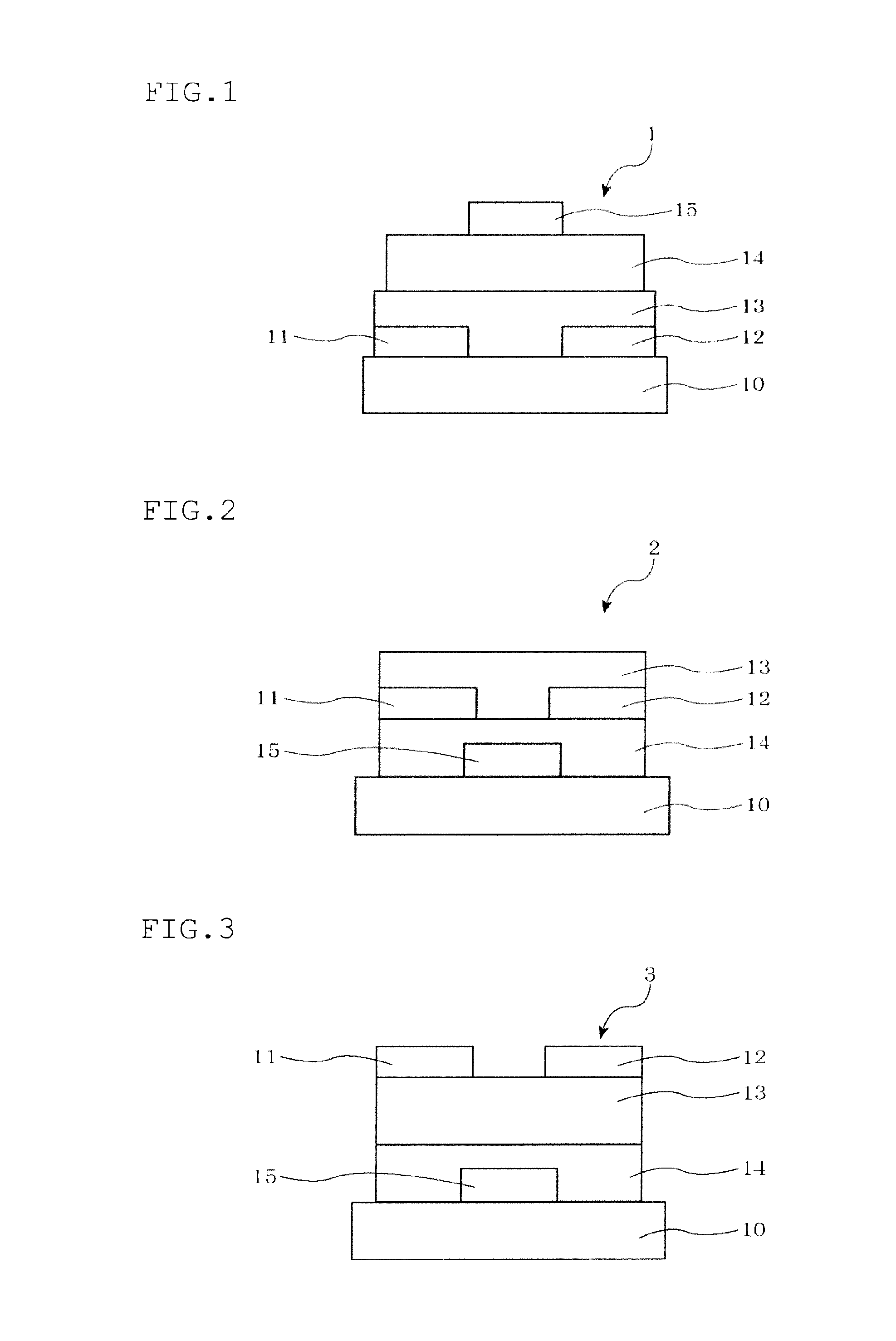
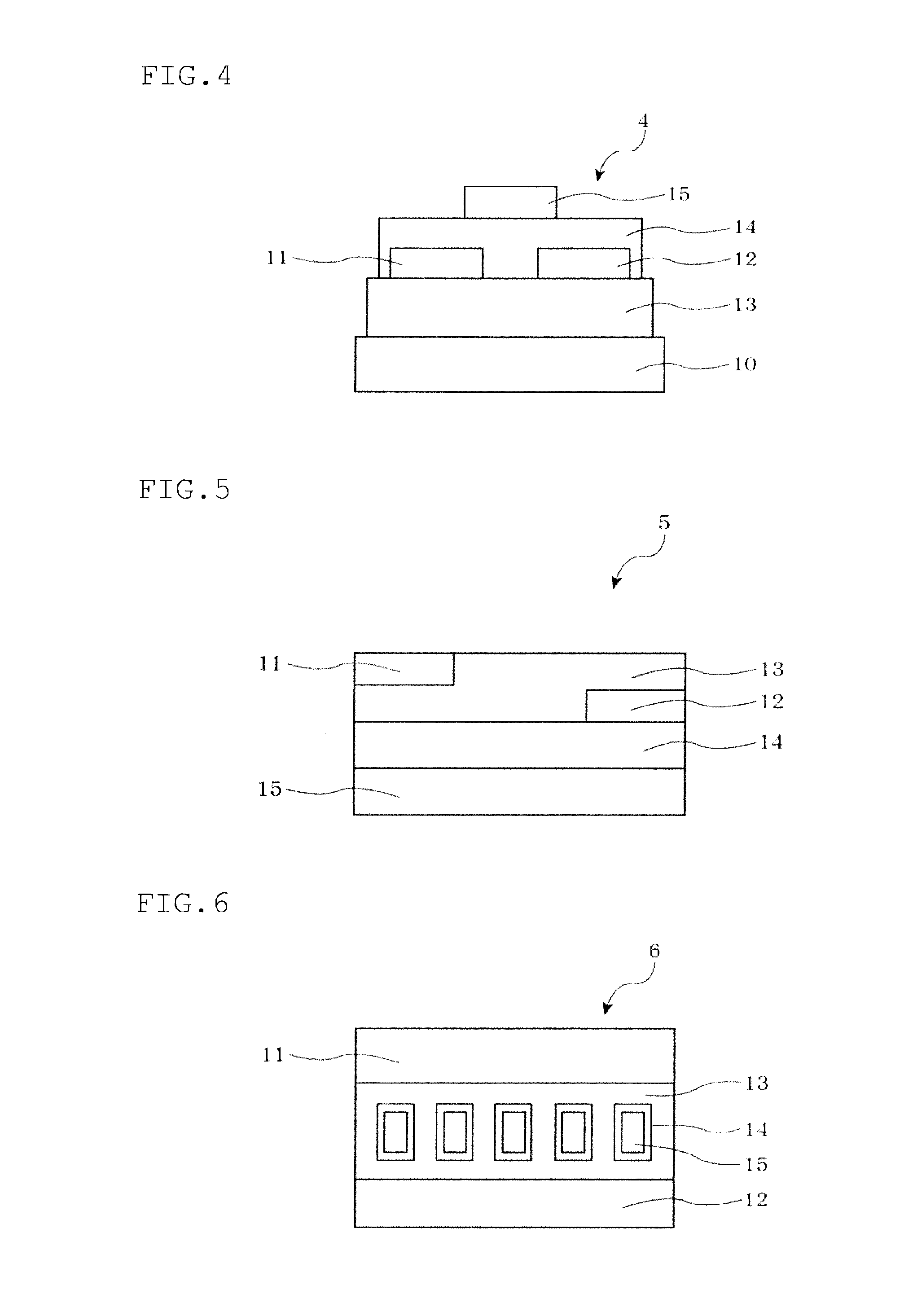
the structure of the environmentally friendly knitted fabric provided by the present invention; figure 2 Flow chart of the yarn wrapping machine for environmentally friendly knitted fabrics and storage devices; image 3 Is the parameter map of the yarn covering machine
View more

Image

Smart Image Click on the blue labels to locate them in the text.
Viewing Examples
Smart Image
  • Polycyclic ring-fused compound and organic thin film transistor utilizing the same
  • Polycyclic ring-fused compound and organic thin film transistor utilizing the same
  • Polycyclic ring-fused compound and organic thin film transistor utilizing the same

Examples

Experimental program
Comparison scheme
Effect test

example 1

Synthesis of Compound (A-8)

(1) Synthesis of Compound (a)

[0144]

[0145]45.0 g (0.149 mol) of 1-bromo-2-fluoro-4-iodobenzene, 1.71 g (1.49 mmol) of tetrakistriphenylphosphine palladium (0), 0.56 g (2.98 mmol) of copper iodide (I) and 270 ml of diisopropylamine were placed in a flask. To the resulting mixture, 16.8 g (0.149 mol) of 1-octine and 500 ml of dehydrated toluene were added, and the reactor was stirred with heating at 40° C. for 6.5 hours. The reaction mixture was filtered, and the solvent in the filtrate was removed under reduced pressure, thereby to obtain a crude product of compound (a). This crude product was purified by column chromatography (hexane), whereby 40.1 g (yield: 95%) of compound (a) was obtained.

(2) Synthesis of Compound (b)

[0146]

[0147]40.0 g (0.141 mol) of the compound (a), 8.0 g of palladium / carbon (Pd 5%) and 500 ml of dehydrated toluene were placed in a flask. Under atmosphere of hydrogen, the resulting mixture was stirred with heating at 60° C. for 18.5 ho...

example 2

Synthesis of Compound (A-75)

(1) Synthesis of Compound (f)

[0158]

[0159]10.0 g (57.1 mmol) of 1-bromo-2-fluorobenzene and dehydrated tetrahydrofuran were placed, followed by cooling to −70° C. To the resulting mixture, 44.2 ml (68.5 mmol) of 1.55M-normalbutyllithium was added dropwise. The resulting mixture was stirred at −70° C. for 1.5 hours, and 21.5 g (114.2 mmol) of triisopropyl borate was added dropwise, and the temperature was elevated to room temperature, followed by stirring for 4 hours. An aqueous hydrochloric acid solution was added to the reaction mixture, and extracted with dichloromethane. The solvent in the organic phase was removed under reduced pressure, thereby to obtain a crude product of the compound (f). This crude product was purified by column chromatography (hexane: acetone), whereby 4.8 g (yield: 61%) of compound (f) was obtained.

(2) Synthesis of Compound (g)

[0160]

[0161]6.5 g (16.3 mmol) of the compound (d), 4.8 g (34.3 mmol) of the compound (f), 300 ml of dime...

example 3

Synthesis of Compound (A-23)

(1) Synthesis of Compound (h)

[0166]

[0167]50.0 g (0.225 mol) of 1-fluoro-4-iodobenzene, 2.6 g (2.25 mmol) of tetrakis(triphenylphosphine)palladium (0), 0.85 g (4.50 mmol) of copper iodide (I) and 270 ml of diisopropylamine were placed in a flask. To the resulting mixture, 27.2 g (0.247 mol) of 1-octine and 500 ml of dehydrated toluene were added, and the reaction mixture was stirred with heating at 40° C. for 7 hours. The reaction mixture was filtered, and the solvent in the filtrate was removed under reduced pressure, thereby to obtain a crude product of compound (h). This crude product was purified by column chromatography (hexane), whereby 46.0 g (yield: 100%) of compound (h) was obtained.

(2) Synthesis of Compound (i)

[0168]

[0169]46.0 g (0.225 mol) of the compound (h), 2.3 g of palladium / carbon (Pd 5%) and dehydrated toluene were placed in a flask. Under atmosphere of hydrogen, the resulting mixture was stirred with heating at 100° C. for 24 hours. The r...

the structure of the environmentally friendly knitted fabric provided by the present invention; figure 2 Flow chart of the yarn wrapping machine for environmentally friendly knitted fabrics and storage devices; image 3 Is the parameter map of the yarn covering machine
Login to View More

PUM

PropertyMeasurementUnit
work functionaaaaaaaaaa
thicknessaaaaaaaaaa
Login to View More

Abstract

A compound for an organic thin film transistor represented by the following formula (1):

Description

CROSS-REFERENCE TO RELATED APPLICATIONS[0001]This application is a National Stage application of PCT / JP2010 / 007220, filed Dec. 13, 2010, which claims priority from Japanese application JP 2009-283280 filed Dec. 14, 2009.TECHNICAL FIELD[0002]The invention relates to a polycyclic ring-fused compound and an organic thin film transistor using the same.BACKGROUND ART[0003]A thin film transistor (TFT: Thin Film Transistor) has been widely used as a switching device for a display for a liquid crystal display device or the like. A representative TFT has a configuration in which a gate electrode, an insulator layer and a semiconductor layer are stacked in this sequence on a substrate, and has, on the semiconductor layer, a source electrode and a drain electrode being formed with a predetermined interval therebetween. The organic semiconductor layer constitutes a channel part, and an on-off operation is conducted by controlling electric current flowing between the source electrode and the dra...

Claims

the structure of the environmentally friendly knitted fabric provided by the present invention; figure 2 Flow chart of the yarn wrapping machine for environmentally friendly knitted fabrics and storage devices; image 3 Is the parameter map of the yarn covering machine
Login to View More

Application Information

Patent Timeline
no application Login to View More
Patent Type & Authority Patents(United States)
IPC IPC(8): H01L51/30C07D487/04C07D493/04H10K99/00
CPCH01L51/0072C07D487/04C07D493/04H01L51/0073H01L51/0541H01L51/0545H01L51/0558H10K85/6574H10K10/464H10K10/484H10K10/466H10K85/6572
Inventor SUNAGAWA, MISASAITO, MASATOSHINAKAMURA, HIROAKIKONDO, HIROFUMIKURIHARA, NAOKIKAWAMURA, MASAHIRO
Owner IDEMITSU KOSAN CO LTD
Features
  • R&D
  • Intellectual Property
  • Life Sciences
  • Materials
  • Tech Scout
Why Patsnap Eureka
  • Unparalleled Data Quality
  • Higher Quality Content
  • 60% Fewer Hallucinations
Social media
Patsnap Eureka Blog
Learn More