
Authenticating gram positive bacteria species and method for testing drug resistant gene and dedicating kit
A Gram-positive, detection kit technology, applied in the determination/inspection of microorganisms, biochemical equipment and methods, etc., can solve the problems of not targeting special populations, single molecular biology detection indicators, and poor practicability.
- Summary
- Abstract
- Description
- Claims
- Application Information
AI Technical Summary
Problems solved by technology
Method used
Image

Examples
Embodiment 1
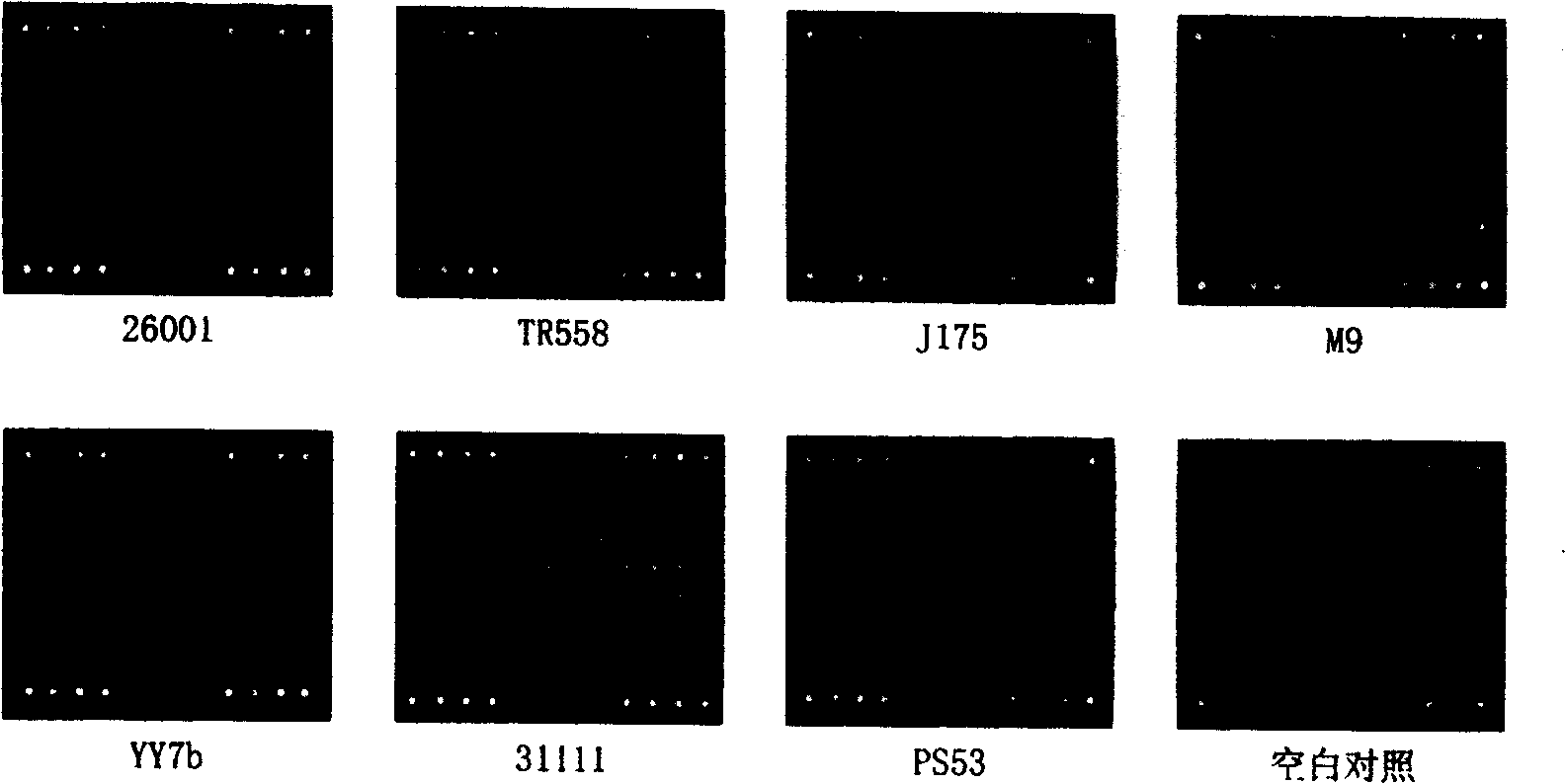
[0110] Embodiment 1, utilize Gram-positive bacterial species identification and drug-resistant gene detection kit of the present invention to carry out staphylococcus, enterococcus, streptococcus species identification and drug-resistant gene detection
[0111] 1. Detection targets, primers and probes
[0112] The detection targets of this kit include: Staphylococcus aureus, coagulase-negative staphylococcus of the genus Staphylococcus, Enterococcus faecalis and Enterococcus faecium of the genus Enterococcus, Streptococcus pneumoniae of the genus Streptococcus, and their drug resistance genes mecA, aac(6')-Ie-aph(2")-Ia, vanA, vanB, pbp-la / pbp-2b / pbp-2x, ermA, ermB, ermC, mefA and msrA.
[0113] Select primers and probes corresponding to the detection target, as shown in Table 3 and Table 4 (detailed information is shown in Table 1 and Table 2).
[0114] Table 3 Gram-positive bacteria identification and drug resistance detection gene chip kit primers (31 in total)
[0115] ...
Embodiment 2
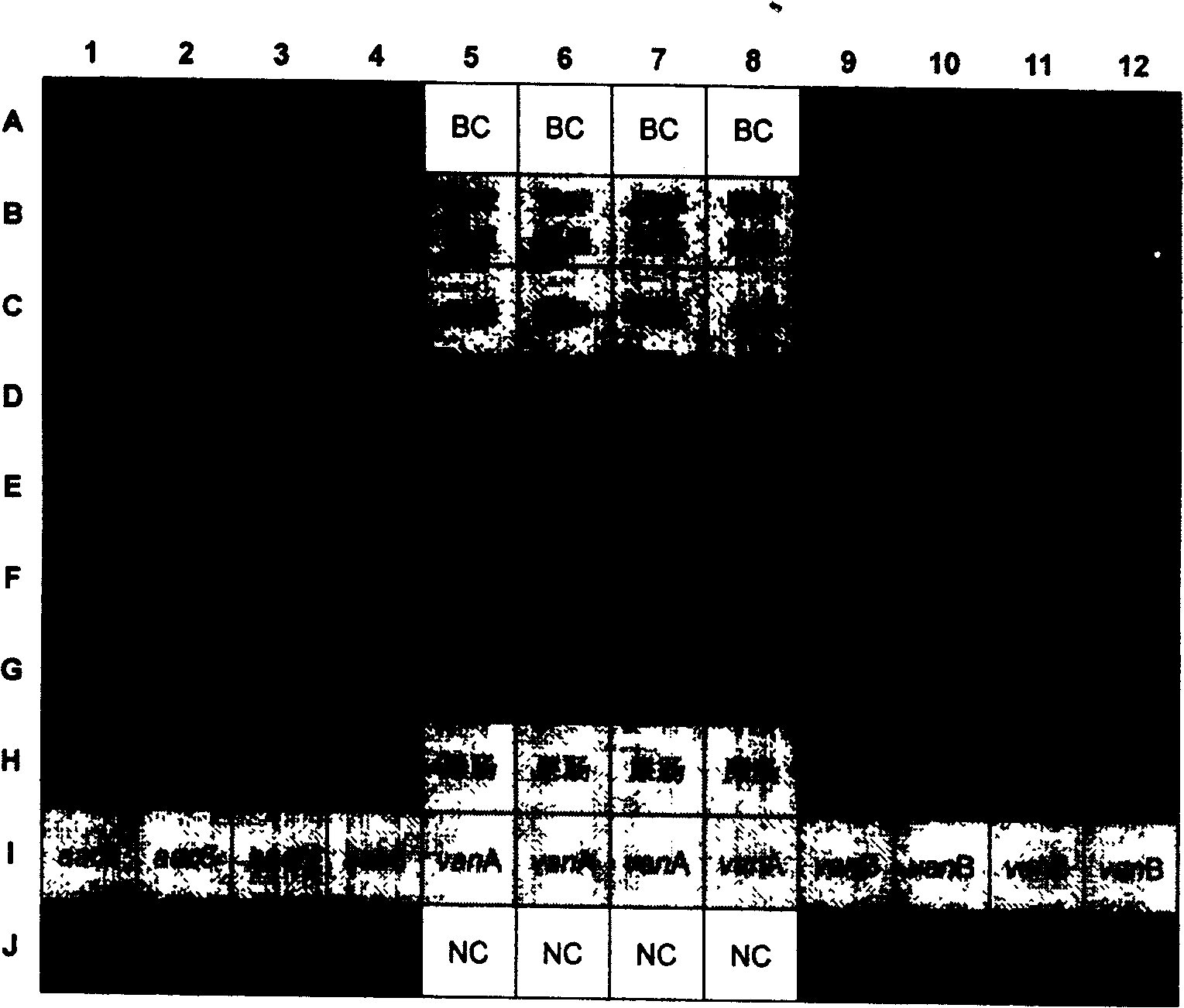
[0153] Embodiment 2, using the gram-positive bacterial species identification and drug-resistant gene detection kit of the present invention to carry out enterococcus identification and drug-resistant gene detection
[0154] 1. Detection targets, primers and probes
[0155] The detection targets of this kit include: Enterococcus faecalis, Enterococcus faecium, Enterococcus faecium and Enterococcus durascens and Enterococcus hirae, Enterococcus gallinarum and Enterococcus avium, Enterococcus japonica and Enterococcus saccharolyticus of the Enterococcus genus , and its resistance genes aac(6')-Ie-aph(2")-Ia, aadE, vanA and vanB.
[0156] Select primers and probes corresponding to the detection target, as shown in Table 8 and Table 9 (detailed information is shown in Table 1 and Table 2).
[0157] Table 8 Enterococcus identification and drug resistance detection gene chip kit used primers (15 in total)
[0158]
[0159]
[0160] Table 9 Enterococcus identification and dru...
Embodiment 3
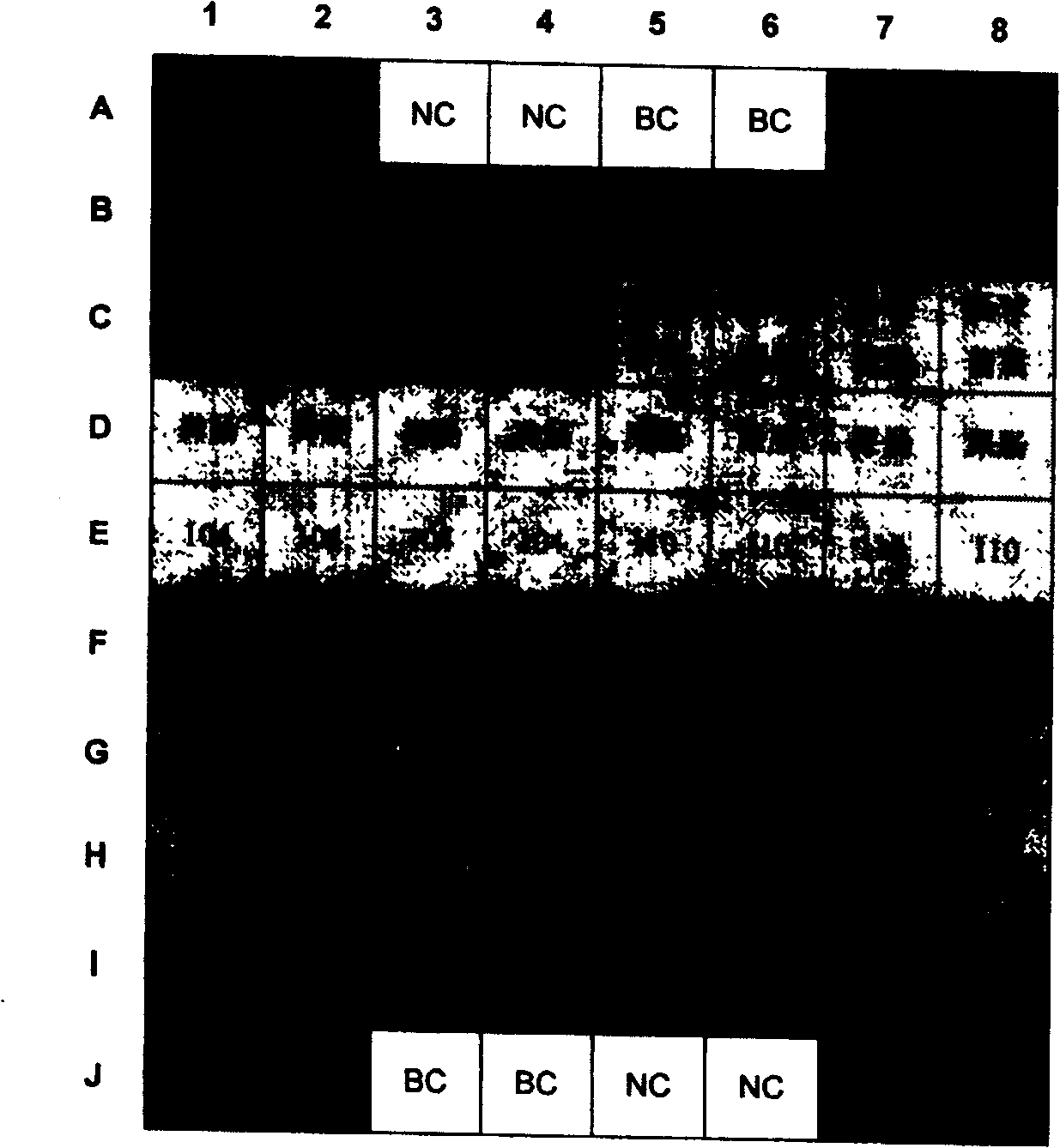
[0177] Embodiment 3, use Gram-positive bacterial species identification and drug-resistant gene detection kit of the present invention to carry out staphylococcus species identification and drug-resistant gene detection
[0178] 1. Detection targets, primers and probes
[0179] The detection targets of this kit include: Staphylococcus aureus of the genus Staphylococcus, coagulase-negative staphylococci, and their drug resistance genes mecA, blaZ, aac(6')-Ie-aph(2")-Ia, ermA / ermC and msrA.
[0180] Select primers and probes corresponding to the detection target, as shown in Table 11 and Table 12 (detailed information is shown in Table 1 and Table 2).
[0181] Primers and probes were synthesized by Shanghai Boya Biotechnology Company. The TAMRA fluorescent label at the 5' end of some primers and the amino modification at the 5' end of the probe were also completed by Shanghai Boya Biotechnology Company.
[0182] 2. Identification of staphylococcus and preparation of gene chi...
PUM
 Login to View More
 Abstract
Description
Claims
Application Information
 Login to View More