
Preparation of polycarboxylic acid water reducing agent for prefabricated part
A technology of prefabricated components and polycarboxylic acid, which is applied in the field of preparing high-performance water reducers for concrete, can solve problems that are not conducive to product storage, achieve the effects of preventing side reactions, reducing production costs, and improving stability
- Summary
- Abstract
- Description
- Claims
- Application Information
AI Technical Summary
Problems solved by technology
Method used
Image

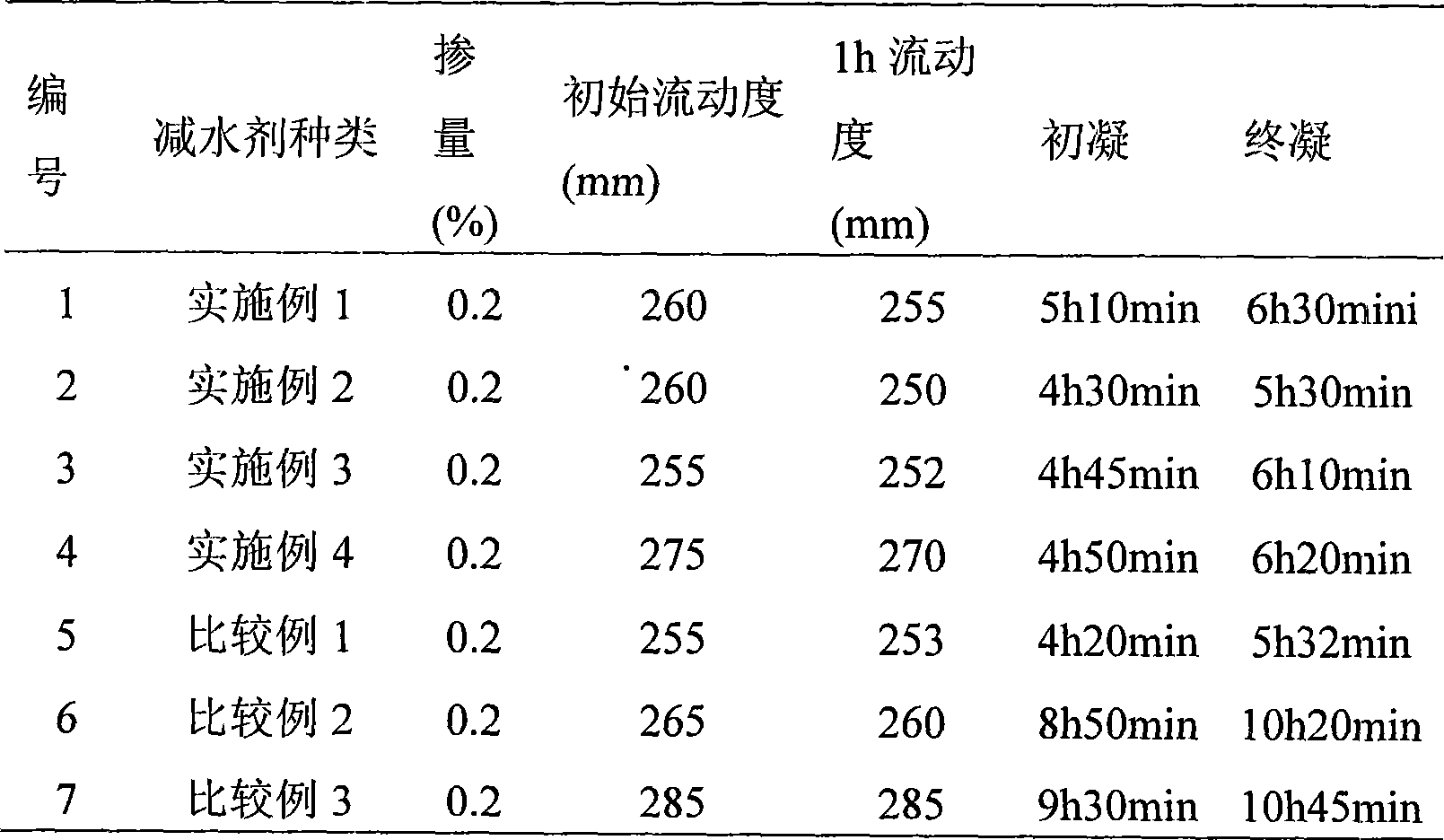
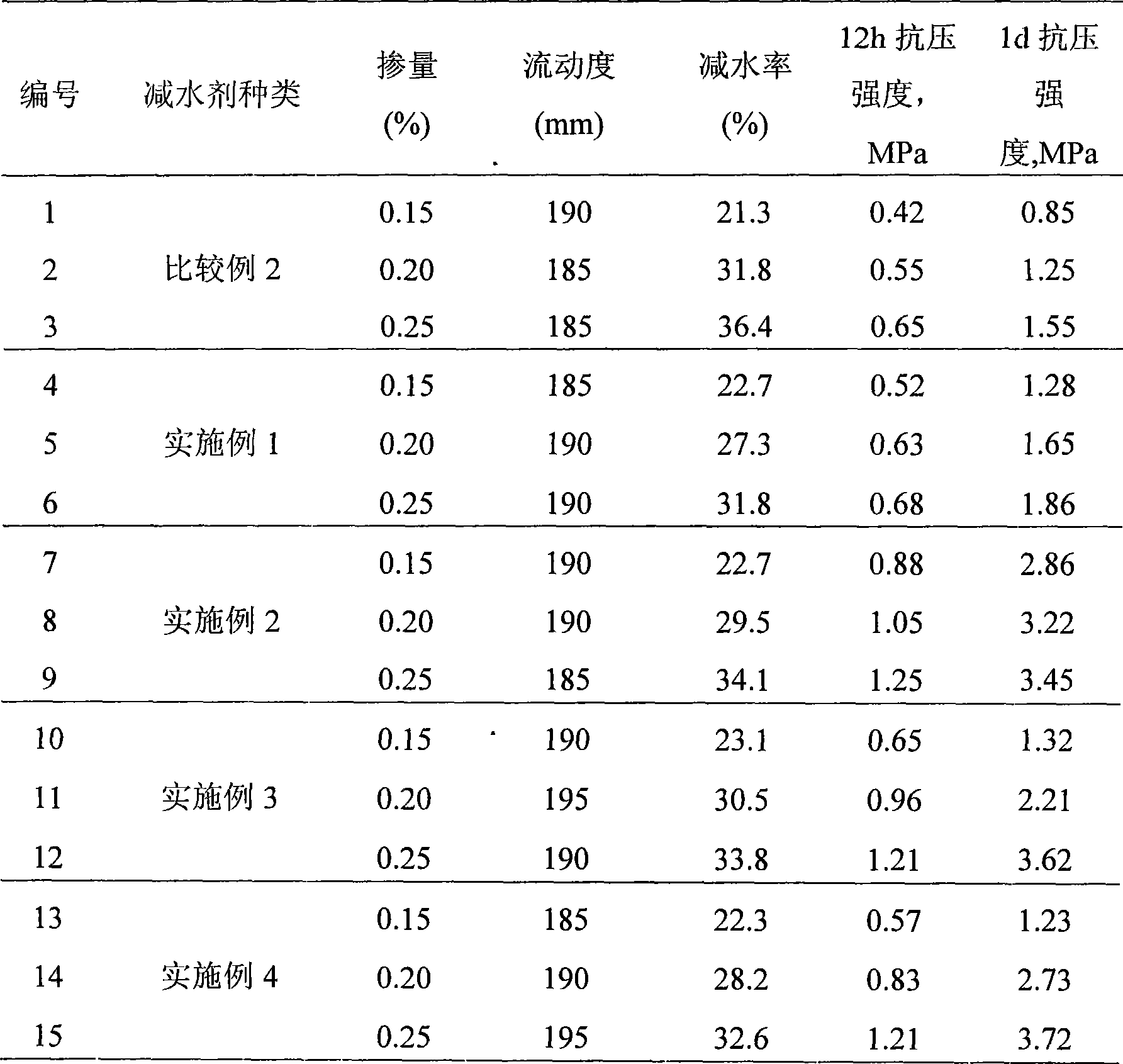
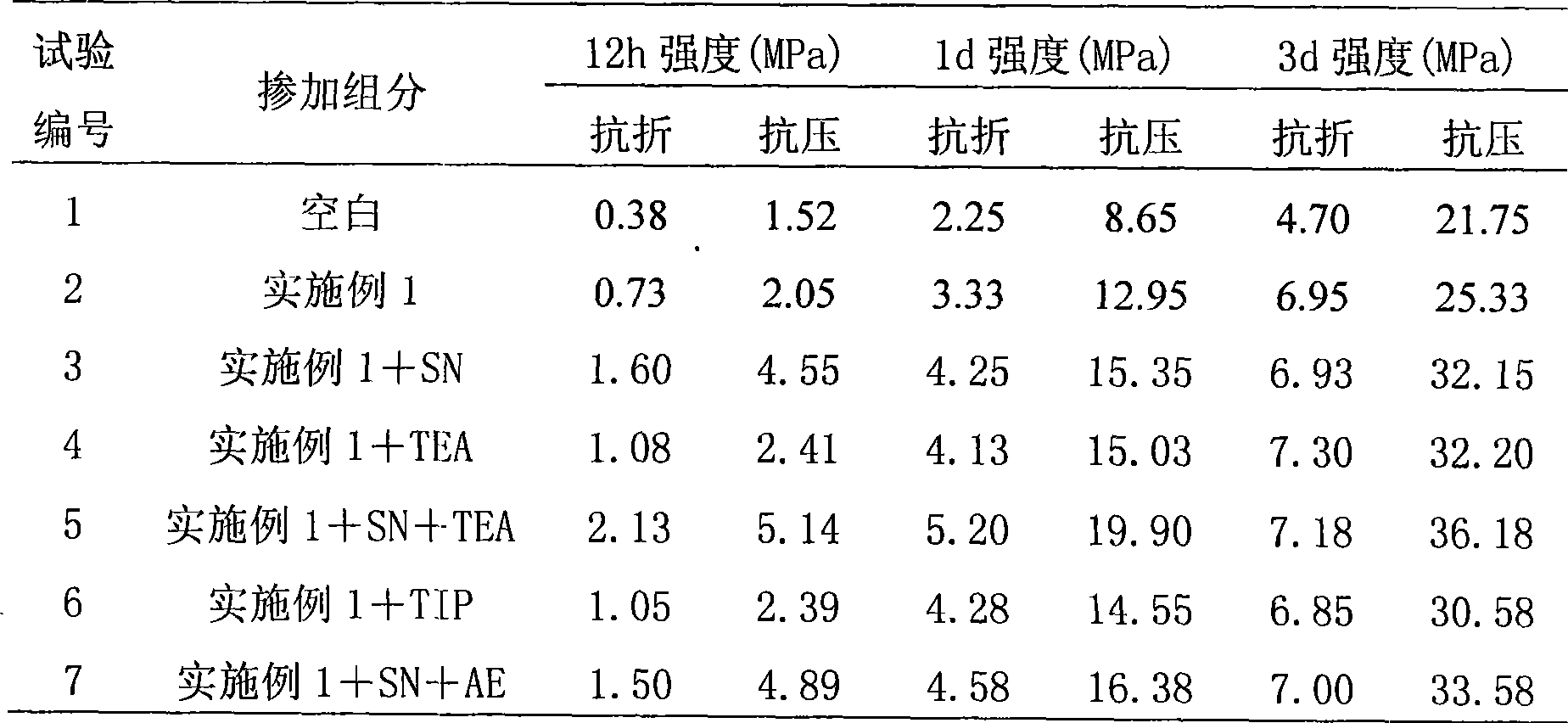
Examples
Embodiment 1
[0030] Add 80g of methoxypolyethylene glycol with a molecular weight of M2000 to the reaction vessel equipped with a stirring, condensing, and effluent reflux device, and fully melt it at a temperature of 110°C. Add 0.14g of a polymerization inhibitor hydroquinone, and react for 15 minutes 2.88g of acrylic acid, 4.00g of concentrated sulfuric acid, and 16g of cyclohexane were added to the reaction vessel in sequence, kept at a constant temperature for 3.5 hours, and the cyclohexane was removed by vacuuming to obtain a mixture of methoxy polyethylene glycol acrylate and acrylic acid . During the second step of polymerization, the esterification reaction was added into a four-necked flask to obtain mixture a, 71.7 g of water was continuously stirred, and the temperature was raised to 50° C. in a water bath. Add 17.28g of acrylic acid, 22.1g of sodium methacrylate, and 80g of ammonium persulfate aqueous solution with a concentration of 1% into the reaction kettle at one time, rai...
Embodiment 2
[0032]Add 80g of methoxypolyethylene glycol with a molecular weight of M3000 to the reaction vessel equipped with a stirring, condensing, and effluent reflux device, and fully melt it at a temperature of 100°C. Add 0.01g of a polymerization inhibitor hydroquinone, and react for 10 minutes , then sequentially add 1.0g of acrylic acid, 0.06g of concentrated sulfuric acid, and 6.4g of cyclohexane into the reaction vessel, keep the temperature at constant temperature for 6.5 hours, and remove the cyclohexane by vacuuming to obtain a mixture of methoxy polyethylene glycol acrylate and acrylic acid a. During the second step of polymerization, the esterification reaction was added into a four-necked flask to obtain a mixture a, 128.5 g of water was continuously stirred, and the temperature was raised to 50°C by heating in a water bath. 2.1g of p-toluenesulfonic acid, 13.8g of AMPS, and 72.5g of ammonium persulfate mass aqueous solution with a concentration of 20% were added to the re...
Embodiment 3
[0034] To the device equipped with stirring, condensation, effluent reflux and Add 80g of methoxypolyethylene glycol with a molecular weight of M3000, fully melt, and add 0.23g of hydroquinone as a polymerization inhibitor at 140°C. After reacting for 13 minutes, add 5.76g of acrylic acid and 2.0g of p-toluenesulfonic acid in sequence. g. Add 24 g of cyclohexane into the reaction vessel, keep the temperature constant for 5 hours, remove the cyclohexane by vacuuming to obtain the mixture a of methoxypolyethylene glycol acrylate and acrylic acid. During the second step of polymerization, the esterification reaction was added into a four-necked flask to obtain mixture a, 108.5 g of water was continuously stirred, and the temperature was raised to 45°C by heating in a water bath. Add 29.4 g of sodium methacrylsulfonate, 11.2 g of N, N-methylene acrylamide, and 230 g of ammonium persulfate aqueous solution with a concentration of 20% into the reaction kettle at one time, raise the...
PUM
 Login to View More
 Abstract
Description
Claims
Application Information
 Login to View More