
Method and device for fluidized catalytic conversion
A fluidized catalysis and catalyst technology, used in catalytic cracking, cracking, petroleum industry and other directions, can solve the problems of inability to optimize the operating conditions of the reaction system, unfavorable for catalytic conversion reactions, and reduced catalyst activity.
- Summary
- Abstract
- Description
- Claims
- Application Information
AI Technical Summary
Problems solved by technology
Method used
Image

Examples
Embodiment 1
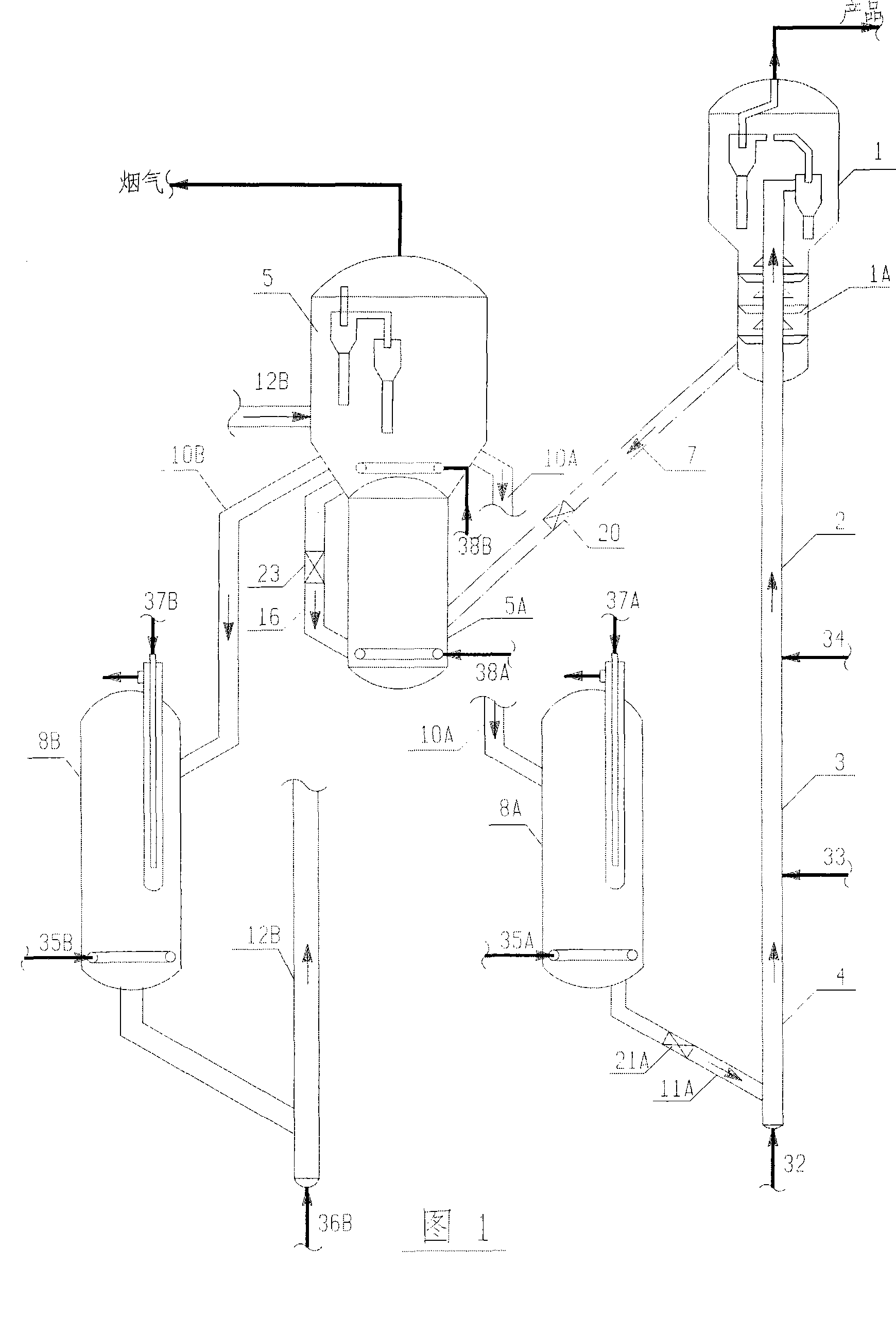
[0172] For verifying the effect of the present invention, adopt figure 1 The process flow shown, the process conditions shown in Table 2, the raw materials shown in Table 1 and the CORH catalyst produced by Changling Refinery Catalyst Factory, the test results are shown in Table 3.
[0173] In Table 2, scheme A of the prior art adopts a conventional catalytic conversion process technology: the temperature of the catalyst bed in the regenerator is 680°C, and the reaction temperature is 505°C. The raw material temperature was 200°C, and the agent / oil ratio was 6.0. Therefore, the temperature difference between the regenerant and the raw material is 480°C. The scheme A of prior art has following deficiency:
[0174] (1) The feedstock temperature of 200°C is quite low for the cracking of residue-containing feedstock.
[0175] (2) Although the temperature of the regenerator meets the regeneration requirements, the temperature is too high when in contact with the raw material, w...
Embodiment 2
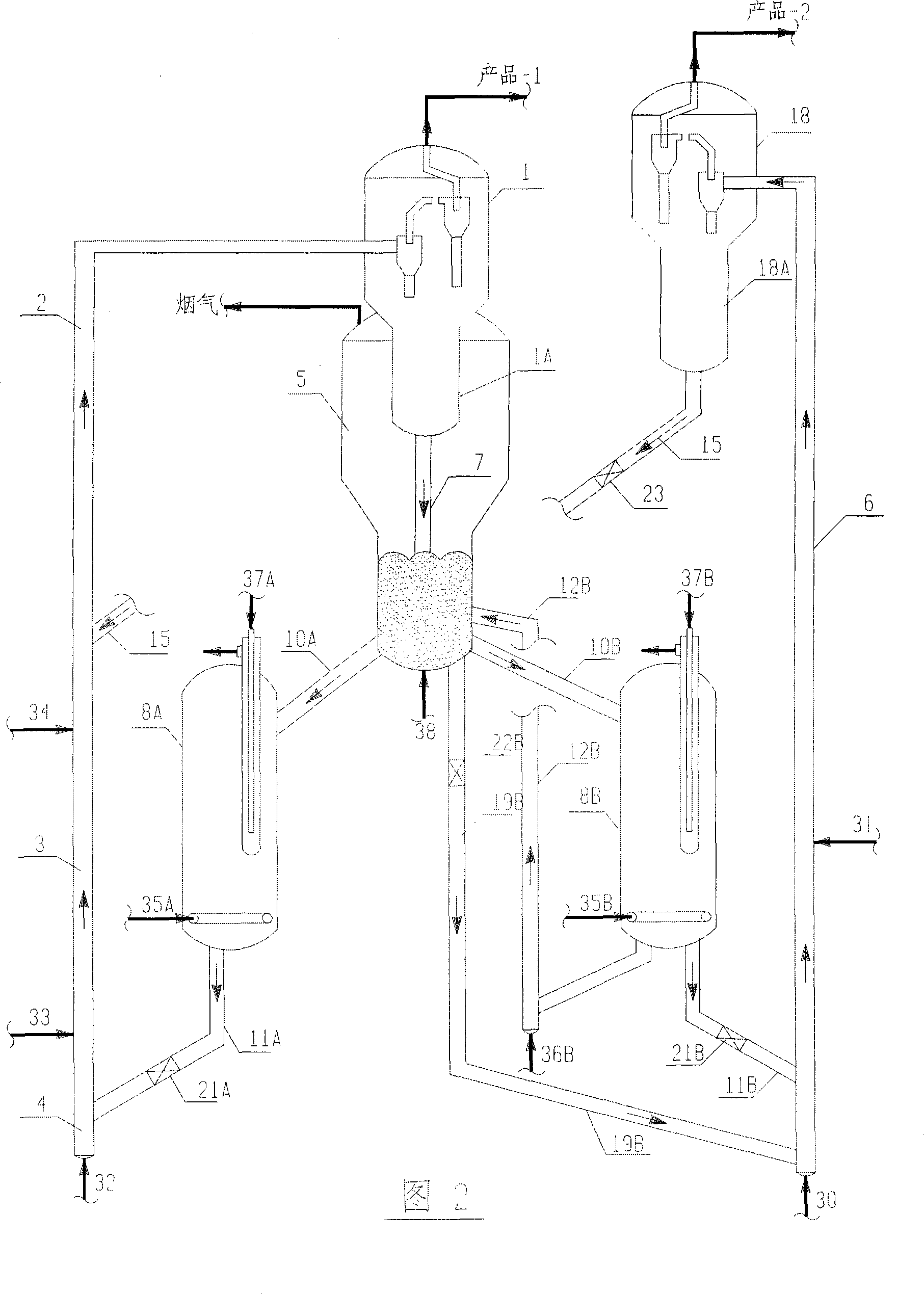
[0185] For verifying the effect of the present invention, adopt figure 2 In the process flow shown, the heavy oil riser adopts the process conditions shown in Table 2, the raw materials shown in Table 1, and the CORH catalyst produced by the Changling Refinery Catalyst Factory. The test results are listed in Table 4.
[0186] The results in Table 4 show that the yield of coke and dry gas decreased by 2.1%, the volume content of olefins in gasoline decreased by 65%, and the octane number (RON) increased by 0.6 units.
[0187] Table 4
[0188]
product
Option A this invention
Option B Product yield Wt%
fuel gas 5.2 3.7 LPG 14.4 14.1 gasoline 45.6 49.5 diesel fuel 23.6 25.1 oil slurry 3 - coke 8.2 7.6 total 100.0 100.0 gasoline quality
Olefin content V% 37.2 13.6 Aromatic content V% 31.6 37.9 Octane number RON 90.1 90.7
...
PUM
 Login to View More
 Abstract
Description
Claims
Application Information
 Login to View More