Unlock instant, AI-driven research and patent intelligence for your innovation.

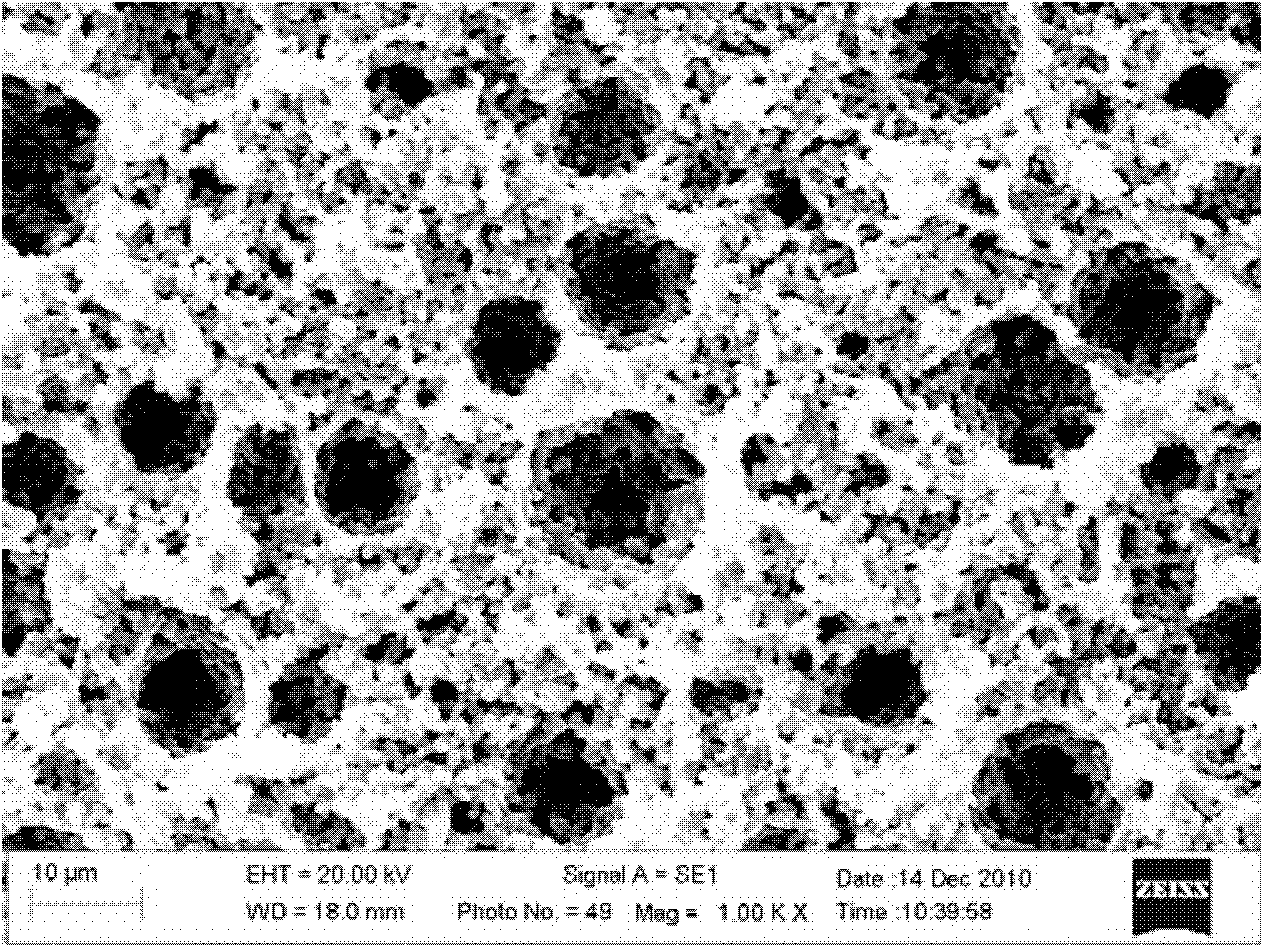
Method for preparing PDLC (Polymer Dispersed Liquid Crystal) by epoxy resin ultraviolet photoinduced cationic polymerization

A cationic polymerization, epoxy resin technology, applied in liquid crystal materials, chemical instruments and methods, optics, etc., can solve the problems of long polymerization temperature and polymerization time, insufficient adhesion, increase product cost, etc., and achieve good chemical corrosion resistance. , The effect of improving optoelectronic properties and improving thermal stability

Inactive Publication Date: 2011-10-19
UNIV OF SCI & TECH BEIJING
View PDF2 Cites 21 Cited by
  • Summary
  • Abstract
  • Description
  • Claims
  • Application Information

AI Technical Summary

Problems solved by technology

Although the PDLC film prepared by thermal polymerization of epoxy resin can overcome the problem of insufficient adhesion of the photo-induced radical polymerization system, due to the high polymerization temperature and long polymerization time, the production energy consumption increases, which greatly increases the product cost. and restricts its mass production
Moreover, the size of the products produced by the constraints of production equipment is limited, which causes difficulties in subsequent use
These shortcomings have seriously restricted the wider use of PDLC films prepared by thermal polymerization of epoxy resins.

Method used

the structure of the environmentally friendly knitted fabric provided by the present invention; figure 2 Flow chart of the yarn wrapping machine for environmentally friendly knitted fabrics and storage devices; image 3 Is the parameter map of the yarn covering machine
View more

Image

Smart Image Click on the blue labels to locate them in the text.
Viewing Examples
Smart Image
  • Method for preparing PDLC (Polymer Dispersed Liquid Crystal) by epoxy resin ultraviolet photoinduced cationic polymerization
  • Method for preparing PDLC (Polymer Dispersed Liquid Crystal) by epoxy resin ultraviolet photoinduced cationic polymerization
  • Method for preparing PDLC (Polymer Dispersed Liquid Crystal) by epoxy resin ultraviolet photoinduced cationic polymerization

Examples

Experimental program
Comparison scheme
Effect test

Embodiment 1

[0024] The ultraviolet light polymerizable epoxy monomer selected is polyethylene glycol diglycidyl ether (EGDE, =3 and 10), two monomers with different chain lengths were mixed uniformly at a mass ratio of 10:1 to form a polymerized monomer system, and the selected nematic liquid crystal was SLC1717 (T NI =365.2K, n o =1.519, n e =1.720), and the mass ratio of the mixed monomer system used and the nematic liquid crystal is 1:1, and the isotropic liquid is formed at room temperature (20°C). A cationic photoinitiator (UVI-6976) was added at 1.0% of the total mass, and glass beads with a diameter of 5 μm were added to control the thickness of the PDLC film. The content of glass beads was 0.5% of the total mass of the mixed system. After mixing liquid crystal, ultraviolet light polymerizable epoxy monomer, cationic photoinitiator and glass microspheres evenly, it is coated in the middle of two plastic films coated with indium tin oxide (ITO) transparent conductive film, and is...

Embodiment 2

[0028] The UV-polymerizable epoxy monomer selected is (a) polyethylene glycol diglycidyl ether (EGDE, =3); (b) bisphenol F epoxy resin (DGEBF), the two monomers are mixed uniformly at a mass ratio of 10:1 to form a polymerized monomer system, and the nematic liquid crystal selected is SLC1717 (T NI =365.2K, n o =1.519, n e=1.720), and the mass ratio of the mixed monomer system used and the liquid crystal is 1:1, and the isotropic liquid is formed at room temperature (20°C). Add cationic photoinitiator (UVI-6976) to 5.0% of the total mass, and add glass beads with a diameter of 12 μm to control the thickness of the PDLC film. The content of glass beads is 10% of the total mass of the mixed system. After mixing liquid crystal, ultraviolet light polymerizable epoxy monomer, cationic photoinitiator and glass microspheres evenly, it is coated in the middle of two plastic films coated with indium tin oxide (ITO) transparent conductive film, and is formed by rolling. film. The f...

Embodiment 3

[0031] The UV-polymerizable epoxy monomer selected is (a) polyethylene glycol diglycidyl ether (EGDE, =3); (b) Trimethylolpropane Triglycidyl Ether (TMPTTE) (c) Pentaerythritol Glycidyl Ether (PTTE) The above monomers were mixed uniformly at a mass ratio of 20:1:1 to form a polymerized monomer system. The nematic liquid crystal is selected as SLC1717 (T NI =365.2K, n o =1.519, n e =1.720), and the mass ratio of the mixed monomer system used and the liquid crystal is 1:1, and the isotropic liquid is formed at room temperature (20°C). Add cationic photoinitiator (UVI-6976) to 10% of the total mass, and add glass beads with a diameter of 20 μm to control the thickness of the PDLC film. The content of glass beads is 5.5% of the total mass of the mixed system. After mixing liquid crystal, ultraviolet light polymerizable epoxy monomer, cationic photoinitiator and glass microspheres evenly, it is coated in the middle of two plastic films coated with indium tin oxide (ITO) transpa...

the structure of the environmentally friendly knitted fabric provided by the present invention; figure 2 Flow chart of the yarn wrapping machine for environmentally friendly knitted fabrics and storage devices; image 3 Is the parameter map of the yarn covering machine
Login to View More

PUM

PropertyMeasurementUnit
Diameteraaaaaaaaaa
Diameteraaaaaaaaaa
Login to View More

Abstract

The invention belongs to the technical field of liquid crystal application, and provides a method for preparing an epoxy resin based PDLC (Polymer Dispersed Liquid Crystal) film material by ultraviolet photoinduced cationic polymerization, which is characterized in that the method comprises the following steps: uniformly mixing a ultraviolet polymerizable epoxy resin monomer and a nematic liquid crystal according to a certain mass ratio; adding cationic photoinitiator and glass microspheres with certain mass ratios to mix uniformly; coating the mixture between two layers of transparent ITO (indium tin oxid) conductive plastic films; using a roller to extrude the films with different thickness; irradiating the films for 10.0-30.0 minutes by 365-nm ultraviolet under the temperature of 20-60 DEG C; and curing the films to form the PDLC film material. The method has the advantages that by the polymerization-crosslinking reaction of the ultraviolet-polymerizable epoxy monomer, the polymer network strength and the thermal stability of the prepared PDLC film can be enhanced, the combination force between the polymer network and the ITO film can be improved, and simultaneously, the electro-optical properties of the prepared PDLC film can be improved, so that the prepared PDLC film has quicker response and larger comparison degrees.

Description

technical field [0001] The invention belongs to the field of liquid crystal application technology, and in particular provides a method for preparing a polymer-dispersed liquid crystal (PDLC) film material based on epoxy resin by cationic polymerization-induced phase separation induced by ultraviolet light. The prepared film material can be widely used in liquid crystal In the research of display, smart glass and related fields. Background technique [0002] Polymer Dispersed Liquid Crystal (hereinafter referred to as PDLC) is a composite material formed by uniformly dispersing liquid crystal droplets with birefringence properties in a continuous polymer matrix. When no electric field is applied to the PDLC film, the directors of the liquid crystal droplets are distributed randomly. Since the effective refractive index of the light passing through the liquid crystal droplets does not match the refractive index of the polymer matrix, the light occurs multiple times at the int...

Claims

the structure of the environmentally friendly knitted fabric provided by the present invention; figure 2 Flow chart of the yarn wrapping machine for environmentally friendly knitted fabrics and storage devices; image 3 Is the parameter map of the yarn covering machine
Login to View More

Application Information

Patent Timeline
no application Login to View More
IPC IPC(8): C09K19/52G02F1/1334
Inventor 杨槐宋平曹晖刘芳王菲菲张翠红张婷婷
Owner UNIV OF SCI & TECH BEIJING
Features
  • R&D
  • Intellectual Property
  • Life Sciences
  • Materials
  • Tech Scout
Why Patsnap Eureka
  • Unparalleled Data Quality
  • Higher Quality Content
  • 60% Fewer Hallucinations
Social media
Patsnap Eureka Blog
Learn More