
Silicon carbide gridding electrode PIN type nuclear battery
A grid-shaped, nuclear battery technology, applied in the field of microelectronics, can solve the problems of reducing energy conversion efficiency, energy loss, etc., and achieve the effect of improving energy conversion efficiency, reducing blocking effect, and being easy to implement
- Summary
- Abstract
- Description
- Claims
- Application Information
AI Technical Summary
Problems solved by technology
Method used
Image

Examples
Embodiment 1
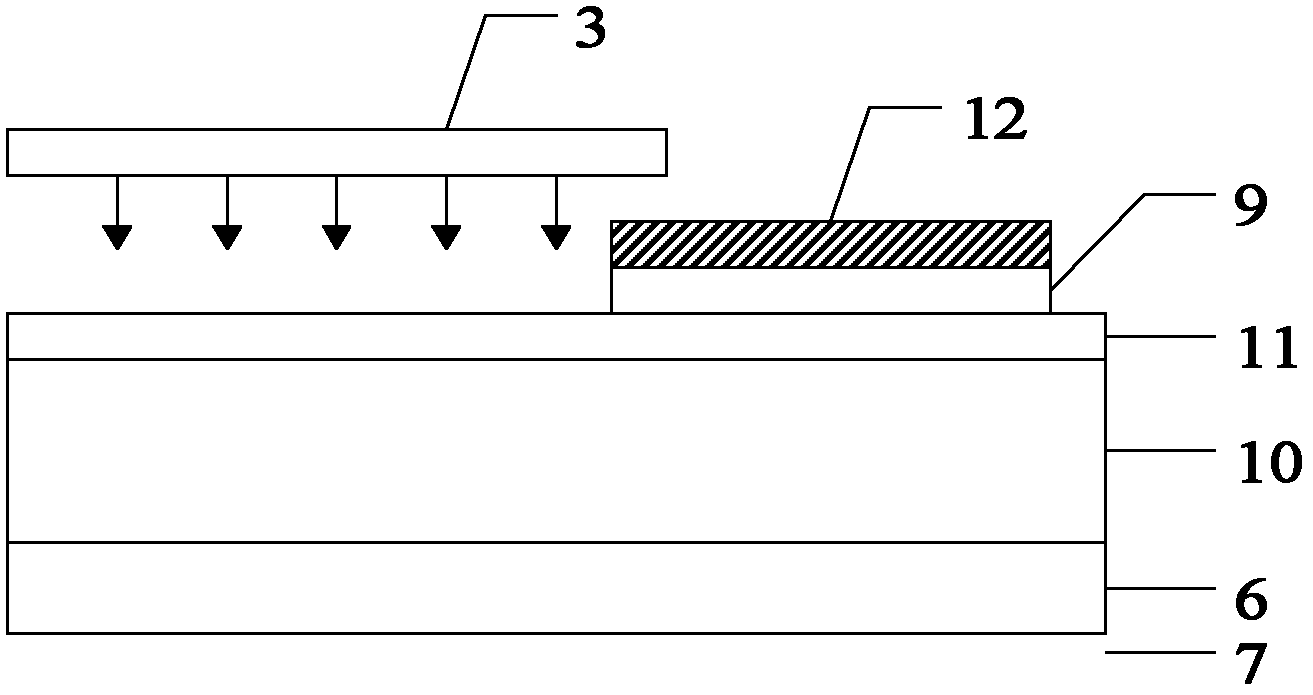
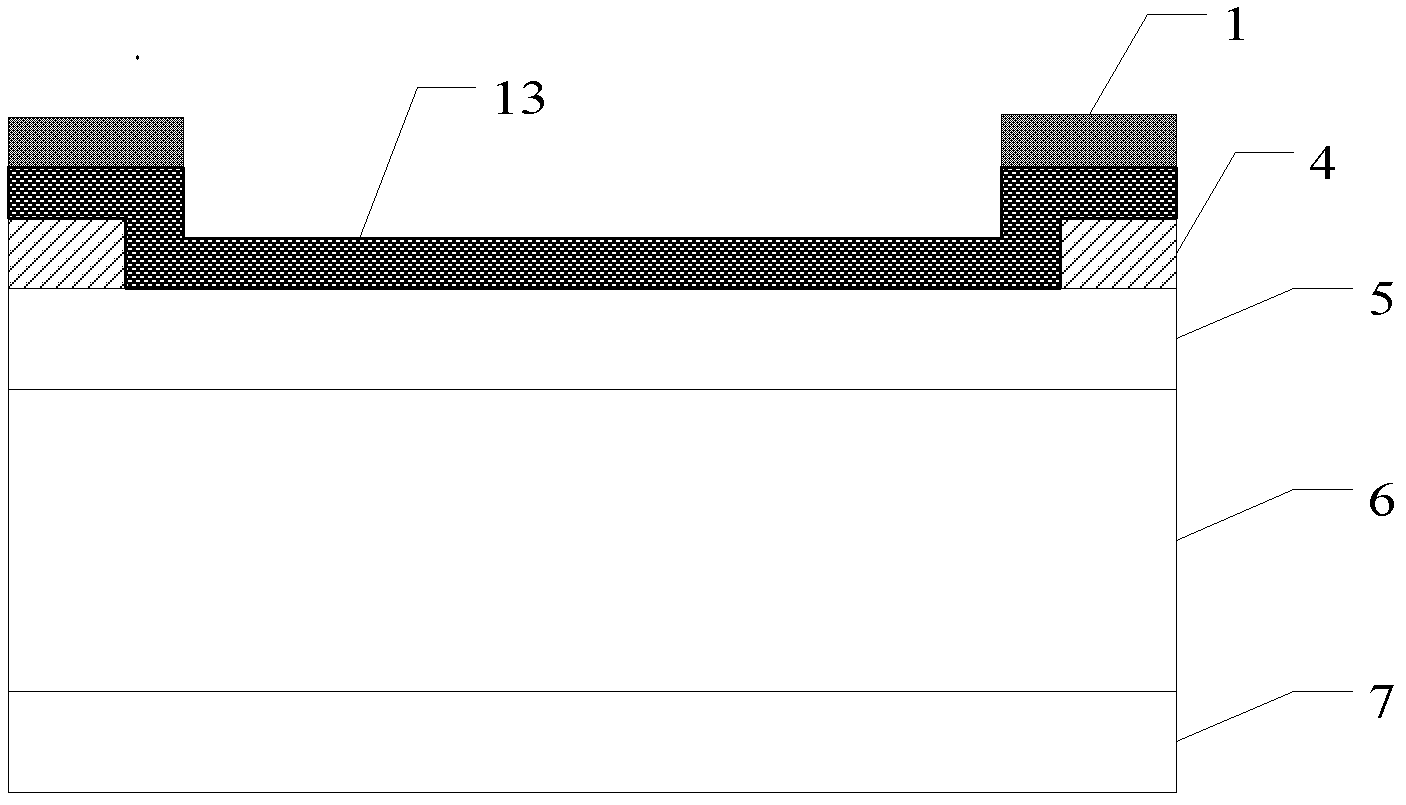
[0039] In the first step, a low-doped n-type epitaxial layer is epitaxially grown on a SiC highly doped n-type substrate sample, such as Figure 6 a.
[0040] The selected doping concentration is 1×10 18 cm -3 After cleaning, the highly doped n-type SiC substrate sample 7 is epitaxially grown on the highly doped n-type SiC substrate sample with a thickness of 3 μm, and the n-type low-doped epitaxial layer 6 doped with nitrogen ions has a doping concentration of 1×10 15 cm -3 , the epitaxy temperature is 1570°C, the pressure is 100mbar, the reaction gas is silane and propane, the carrier gas is pure hydrogen, and the impurity source is liquid nitrogen.
[0041] Step 2: Epitaxial growth of highly doped p-type epitaxial layer, such as Figure 6 b.
[0042] The p-type epitaxial layer 5 doped with aluminum ions is epitaxially grown on the low-doped epitaxial wafer with a thickness of 0.5 μm, and its doping concentration is 2×10 19 cm -3 , the epitaxy temperature is 1570°C, ...
Embodiment 2
[0060] Step 1: Epitaxial low-doped n-type epitaxial layer on the SiC highly doped n-type substrate sample, such as Figure 6 a.
[0061] A highly doped n-type SiC substrate sample 7 is selected, and its doping concentration is 5×10 18 cm -3 , after cleaning, the epitaxial growth thickness of the highly doped n-type SiC substrate sample is 3.5 μm, n-type low-doped epitaxial layer 6 doped with nitrogen ions, and its doping concentration is 1×10 15 cm -3 .
[0062] Step 2: Epitaxial growth of highly doped p-type epitaxial layer, such as Figure 6 b.
[0063] The epitaxial growth doping concentration on the low-doped epitaxial layer is 2×10 19 cm -3 , with a thickness of 0.3 μm, aluminum ion-doped p-type epitaxial layer 5, the epitaxial temperature is 1570° C., the pressure is 100 mbar, the reaction gas is silane and propane, the carrier gas is pure hydrogen, and the impurity source is trimethylaluminum.
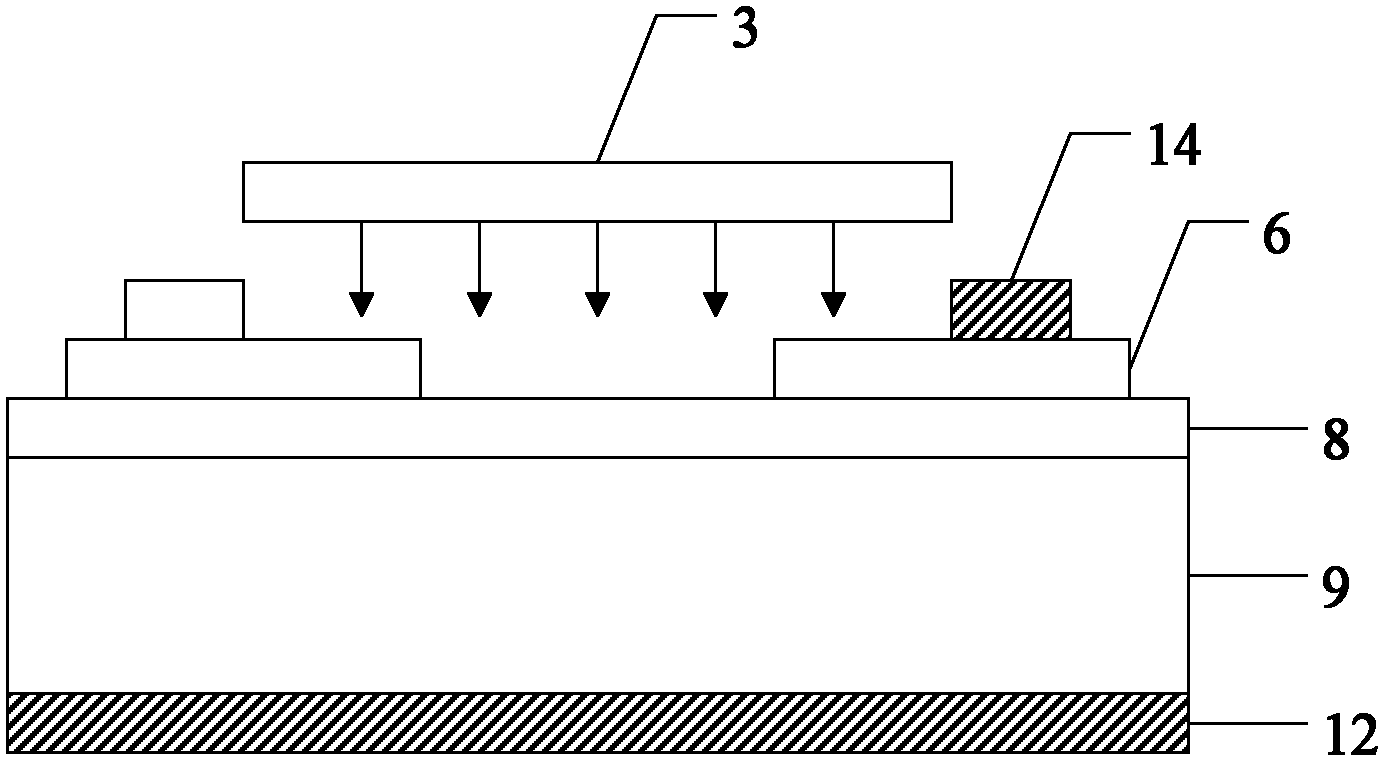
[0064] Step 3: Photolithography forms the mesa, such as Figure 6...
Embodiment 3
[0081] In step A, a low-doped n-type epitaxial layer is epitaxially grown on a SiC highly-doped n-type substrate sample, such as Figure 6 a.
[0082] The doping concentration will be selected as 7×10 18 cm -3 After cleaning the n-type highly doped SiC substrate sample 7, the epitaxial growth thickness is 5 μm, and the doping concentration is 5×10 15 cm -3 The n-type low nitrogen-doped ion epitaxial layer 6, the epitaxial growth process conditions are: the epitaxial temperature is 1570°C, the pressure is 100mbar, the reaction gas is silane and propane, the carrier gas is pure hydrogen, and the impurity source is liquid nitrogen.
[0083] Step B: Epitaxial growth of highly doped p-type epitaxial layer, such as Figure 6 b.
[0084] Under the condition that the epitaxial temperature is 1570°C, the pressure is 100mbar, the reaction gas is silane and propane, the carrier gas is pure hydrogen, and the impurity source is trimethylaluminum, epitaxially grow aluminum ion-doped ep...
PUM
| Property | Measurement | Unit |
|---|---|---|
| thickness | aaaaa | aaaaa |
| thickness | aaaaa | aaaaa |
| thickness | aaaaa | aaaaa |
Abstract
Description
Claims
Application Information
 Login to View More