
Medical hydrophilic lubrication coating of water system and preparation method thereof
A technology for lubricating coatings and water systems, applied to coatings, conduits, etc., can solve problems such as harming workers' health, polluting the environment, and complicated processes, and achieve the effects of reducing safety hazards, protecting the environment, and simplifying the preparation steps
- Summary
- Abstract
- Description
- Claims
- Application Information
AI Technical Summary
Problems solved by technology
Method used
Image

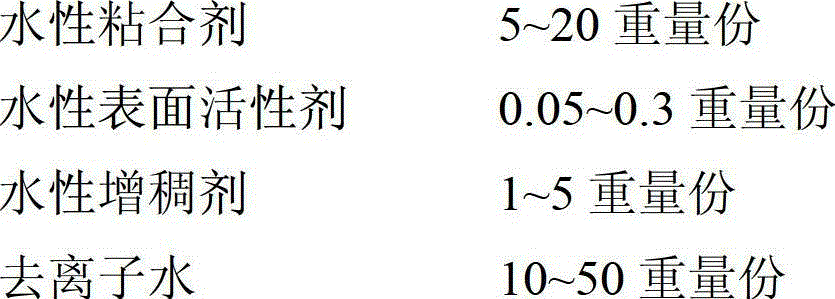
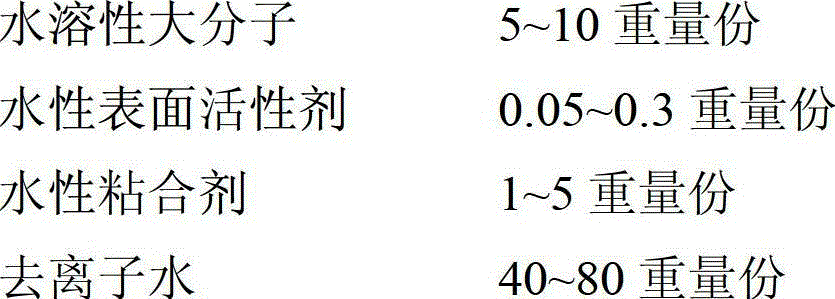
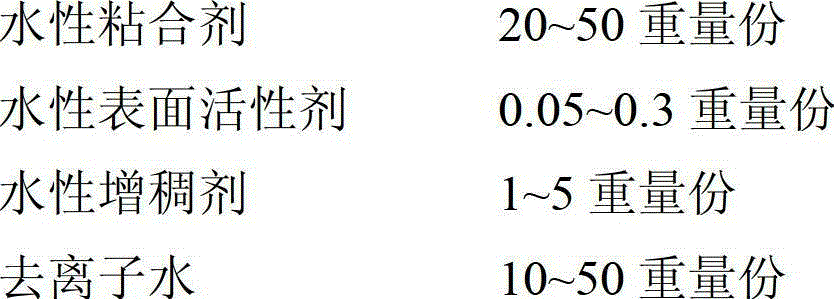
Examples
Embodiment 1
[0028] Primer coating preparation: Weigh 20 g of water-based polyurethane resin (produced by DSM, with a solid content of 40%), 0.1 g of sodium lauryl sulfate, 1 g of carboxymethyl cellulose, and 20 g of deionized water, mix well, and statically Set aside for 24 hours after defoaming; obtain the bottom layer coating mixture.
[0029] Preparation of lubricating coating: Weigh 5g of polyvinylpyrrolidone, 5g of water-based polyurethane resin (solid content 40%), 0.1g of sodium lauryl sulfate, 40g of deionized water, mix well, let it stand for 24 hours for defoaming, and obtain a surface layer mixture liquid for use.
[0030] Immerse the PVC catheter in ethanol, ultrasonically clean it at 40KHz for 10 minutes, remove the dirt on the surface, and dry it; then soak it in the bottom coating mixture for 10 seconds, take it out and bake it at 70°C for 8 minutes until it is completely dry; use a scanning electron microscope The thickness of the underlying coating was detected to be 3 m...
Embodiment 2
[0033] Primer coating preparation: Weigh 20g of water-based polyacrylic resin (produced by DSM, solid content 40%), 0.15 of trisodium phosphate, 1.5g of carboxymethyl cellulose, 30g of deionized water, mix well, and let stand for 24 hours Stand-by after defoaming;
[0034] Lubricating coating preparation: weigh 6g of polyvinylpyrrolidone, polyacrylic acid resin (produced by DSM, solid content 40%) 6g, trisodium phosphate 0.15, deionized water 50g, mix well, let stand for 24 hours to defoam, wait use.
[0035] Immerse the latex catheter in ethanol, ultrasonically clean it at 45KHz for 7 minutes, remove the dirt on the surface, and dry it; then soak it in the bottom coating mixture for 10 seconds, take it out and bake it at 75°C for 20 minutes until it is completely dry; use a scanning electron microscope The thickness of the underlying coating was detected to be 1 micron. Then put it into the surface layer mixture and soak for 10 seconds, take it out and bake it at 80° C. for...
Embodiment 3
[0037] Primer coating preparation: Weigh 20 g of water-based bisphenol A epoxy resin (produced by DSM, solid content 40%), 0.15 g of polyoxyethylene alkyl ester, 1.5 g of carboxymethyl cellulose, and 30 g of deionized water , mix well, let it stand for 24 hours to defoam and set aside;
[0038] Lubricating coating preparation: Weigh 6g of polyvinylpyrrolidone, 2.5g of water-based polyurethane resin (produced by DSM, solid content 40%), 1g of water-based polyacrylic resin (produced by DSM, solid content of 40%), polyoxygen Vinyl alkyl ester 0.15g, deionized water 50g, mix well, let stand for 24 hours to defoam, set aside.
[0039] Immerse the silicone catheter in ethanol, ultrasonically clean it at 50KHz for 5 minutes, remove the dirt on the surface, and dry it; then soak it in the bottom coating mixture for 10 seconds, take it out and bake it at 90°C for 3 minutes until it is completely dry. The thickness of the undercoat layer was obtained to be 5 microns. Then put it into ...
PUM
| Property | Measurement | Unit |
|---|---|---|
| Thickness | aaaaa | aaaaa |
| Friction | aaaaa | aaaaa |
| Friction | aaaaa | aaaaa |
Abstract
Description
Claims
Application Information
 Login to View More