
Detection method and kit for BUD13-ZNF259 gene mononucleotide polymorphism and application thereof
1. The technology of BUD13-ZNF259 and single nucleotide polymorphism is applied in the direction of recombinant DNA technology, measurement/inspection of microorganisms, biochemical equipment and methods, etc., which can solve the problems of non-disclosure and achieve high accuracy and method Simple and easy to operate effect
- Summary
- Abstract
- Description
- Claims
- Application Information
AI Technical Summary
Problems solved by technology
Method used
Image

Examples
Embodiment 1
[0041] Collection of research objects: A total of 874 patients with coronary heart disease were collected from Ningbo Lihuili Hospital, Ningbo Yinzhou People's Hospital, and Zhejiang Hangzhou Second Hospital, including 625 males and 249 females, with an average age of 62 years old; Among these inpatients, patients with less than 50% stenosis of each coronary artery were collected as the control group, a total of 776 cases, including 424 males and 352 females, with an average age of 58 years old. None of the participants had myocardial infarction, congenital heart disease, liver or kidney disease.
[0042] 1. Extraction of Serum DNA
[0043] Use Lab-Aid 820 automatic nucleic acid extractor (Xiamen Zhishan Biotechnology Co., Ltd., China, 500ul system) to extract whole blood genomic DNA from the sample, and then detect the concentration of the obtained DNA with a nucleic acid protein analyzer.
[0044] 2. Primer design: According to the sequence near the target SNP rs964184 down...
Embodiment 2
[0058] 1. Genotyping results
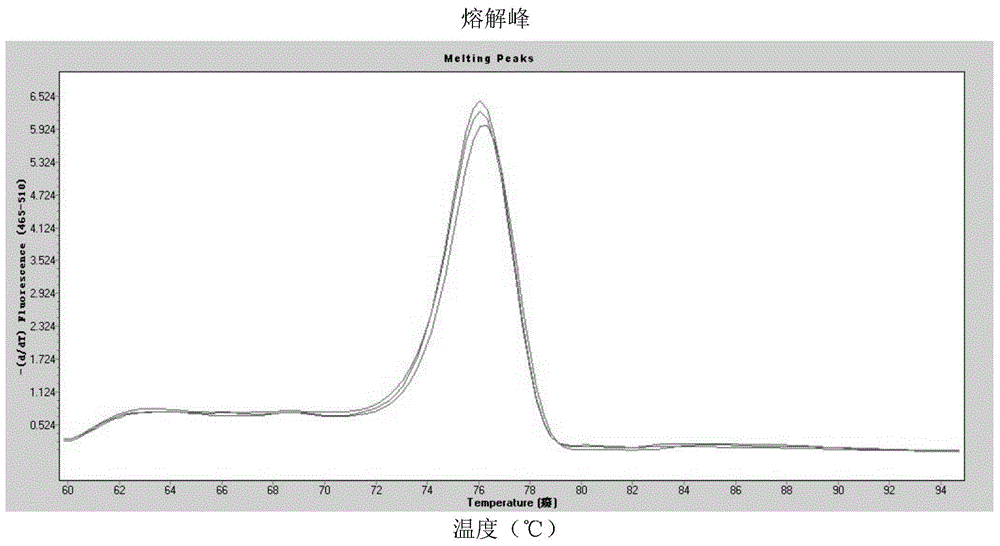
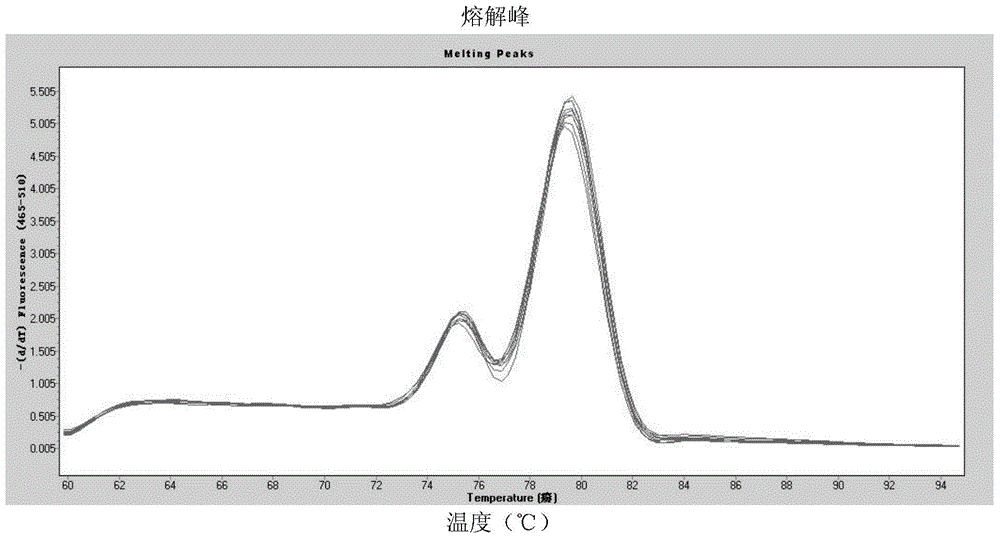
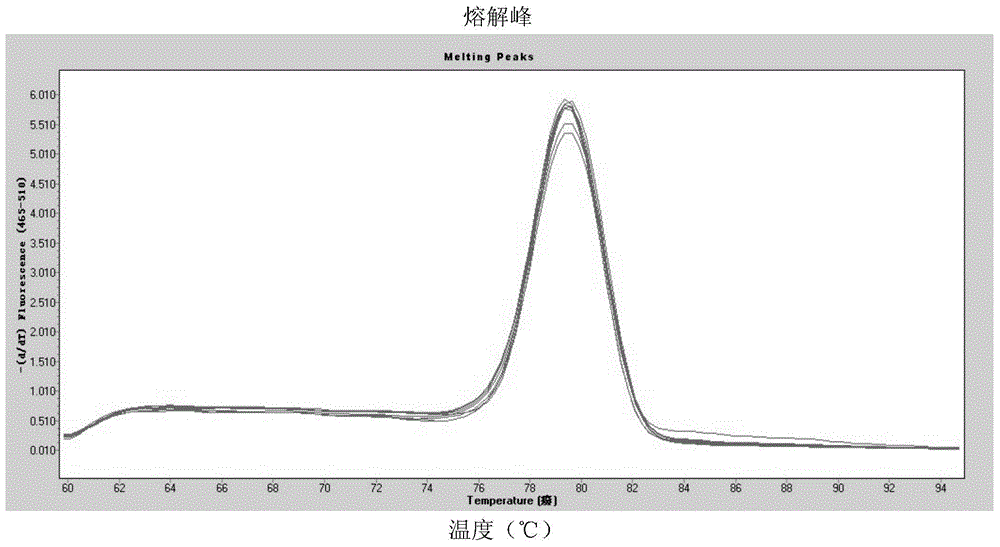
[0059] The invention judges the genotype according to the Tm value, LL homozygote, that is, GG: 76±0.5°C, HH homozygote, that is, CC: 80±0.5°C; LH heterozygote, that is, CG, Tm is 76±0.5°C and 80±0.5°C .
[0060] The genotype was detected by the Tm-shift method ( Figure 1-3 ), among 1650 patients, GG accounted for 5.33% (88 / 1650); CG accounted for 35.94% (593 / 1650); CC accounted for 58.72% (969 / 1650).
[0061] 2. Correlation between rs964184 and coronary heart disease (P<0.05 means there is a correlation)
[0062] By comparing patients and controls, we found that: as shown in Table 1, the risk gene G gene of rs964184 in the case group was significantly higher than that in the control group, and its inheritance mode was dominant inheritance.
[0063] Table 1 Results of genotype and allele distribution of rs964184
[0064]
PUM
 Login to View More
 Abstract
Description
Claims
Application Information
 Login to View More