
Preparation method of high-water-absorption sodium alginate composite nanofiber wound dressing
A technology of composite nanofiber and sodium alginate, which is applied in the field of medical and health materials to achieve the effect of easy control of material structure and performance, reduction of infection, and promotion of wound healing
- Summary
- Abstract
- Description
- Claims
- Application Information
AI Technical Summary
Problems solved by technology
Method used
Image

Examples
Embodiment 1
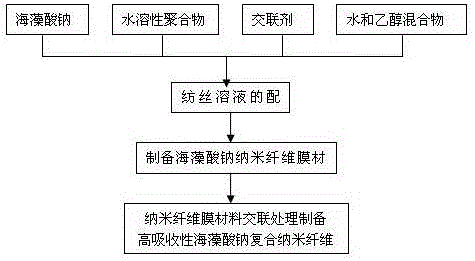
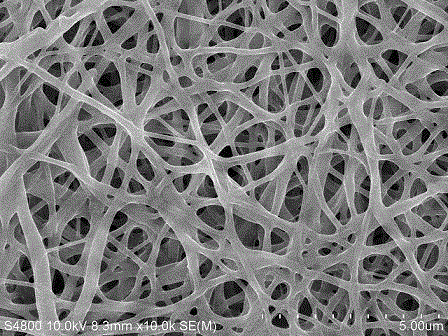
[0024] Weigh 1 gram of sodium alginate and 8 grams of PVA, add 100ml of a mixture of deionized water and ethanol (the volume ratio of water and ethanol is 9:1), stir magnetically in a water bath at 80°C for 2 hours to dissolve and form a transparent solution, and then add 1 gram of methyl alcohol Glycidyl acrylate, continue to stir and react for 2 hours, cool to room temperature to obtain a transparent spinning solution, put the spinning solution into a liquid storage device, and use an electrospinning device to prepare a sodium alginate composite nanofiber membrane material. Spinning conditions: voltage 30KV, solution flow rate 3ml / h, distance 10cm. The prepared sodium alginate composite nanofiber membrane material was vacuum dried in a vacuum oven for 2 days. Then transfer it to a blast drying oven, and perform cross-linking treatment at 100° C. for 24 hours to obtain a superabsorbent sodium alginate composite nanofiber membrane. The prepared material absorbs liquid up to 1...
Embodiment 2
[0026] Weigh 1 gram of sodium alginate and 8 grams of PVA, add 100ml of a mixture of deionized water and ethanol (the volume ratio of water and ethanol is 8:2), stir magnetically in a water bath at 80°C for 2 hours to dissolve and form a transparent solution, and then add 0.5 grams of methyl alcohol Glycidyl acrylate, continue to stir and react for 2 hours, cool to room temperature to obtain a transparent spinning solution, put the spinning solution into a liquid storage device, and use an electrospinning device to prepare a sodium alginate composite nanofiber membrane material. Spinning conditions: voltage 30KV, solution flow rate 3ml / h, distance 10cm. The prepared sodium alginate composite nanofiber membrane material was vacuum dried in a vacuum oven for 2 days. Then transfer it to a blast drying oven, and perform cross-linking treatment at 120° C. for 24 hours to obtain a superabsorbent sodium alginate composite nanofiber membrane. The prepared material absorbs liquid up t...
Embodiment 3
[0028] Weigh 1 g of sodium alginate and 10 g of PEO, add 100 ml of a mixture of deionized water and ethanol (volume ratio of water and ethanol is 9:1), stir magnetically in a water bath at 80°C for 2 hours to dissolve to form a transparent solution, and then add 0.5 g of methyl Glycidyl acrylate, continue to stir and react for 2 hours, cool to room temperature to obtain a transparent spinning solution, put the spinning solution into a liquid storage device, and use an electrospinning device to prepare a sodium alginate composite nanofiber membrane material. Spinning conditions: voltage 30KV, solution flow rate 3ml / h, distance 10cm. The prepared sodium alginate composite nanofiber membrane material was vacuum dried in a vacuum oven for 2 days. Then transfer it to a blast drying oven, and perform cross-linking treatment at 120° C. for 24 hours to obtain a superabsorbent sodium alginate composite nanofiber membrane. The prepared material absorbs liquid up to 10 times its own wei...
PUM
| Property | Measurement | Unit |
|---|---|---|
| water absorption | aaaaa | aaaaa |
| water absorption | aaaaa | aaaaa |
Abstract
Description
Claims
Application Information
 Login to View More