
Fluorescent biosensor, preparation method and application of fluorescent biosensor to detect organic phosphorus pesticide
A biosensor and organophosphorus pesticide technology, applied in biochemical equipment and methods, fluorescence/phosphorescence, microbial measurement/inspection, etc., can solve the problems of time-consuming and lengthy detection process, complex and expensive instruments, and avoid chemical labeling And modification, simple operation, low cost effect
- Summary
- Abstract
- Description
- Claims
- Application Information
AI Technical Summary
Problems solved by technology
Method used
Image

Examples
Embodiment 1
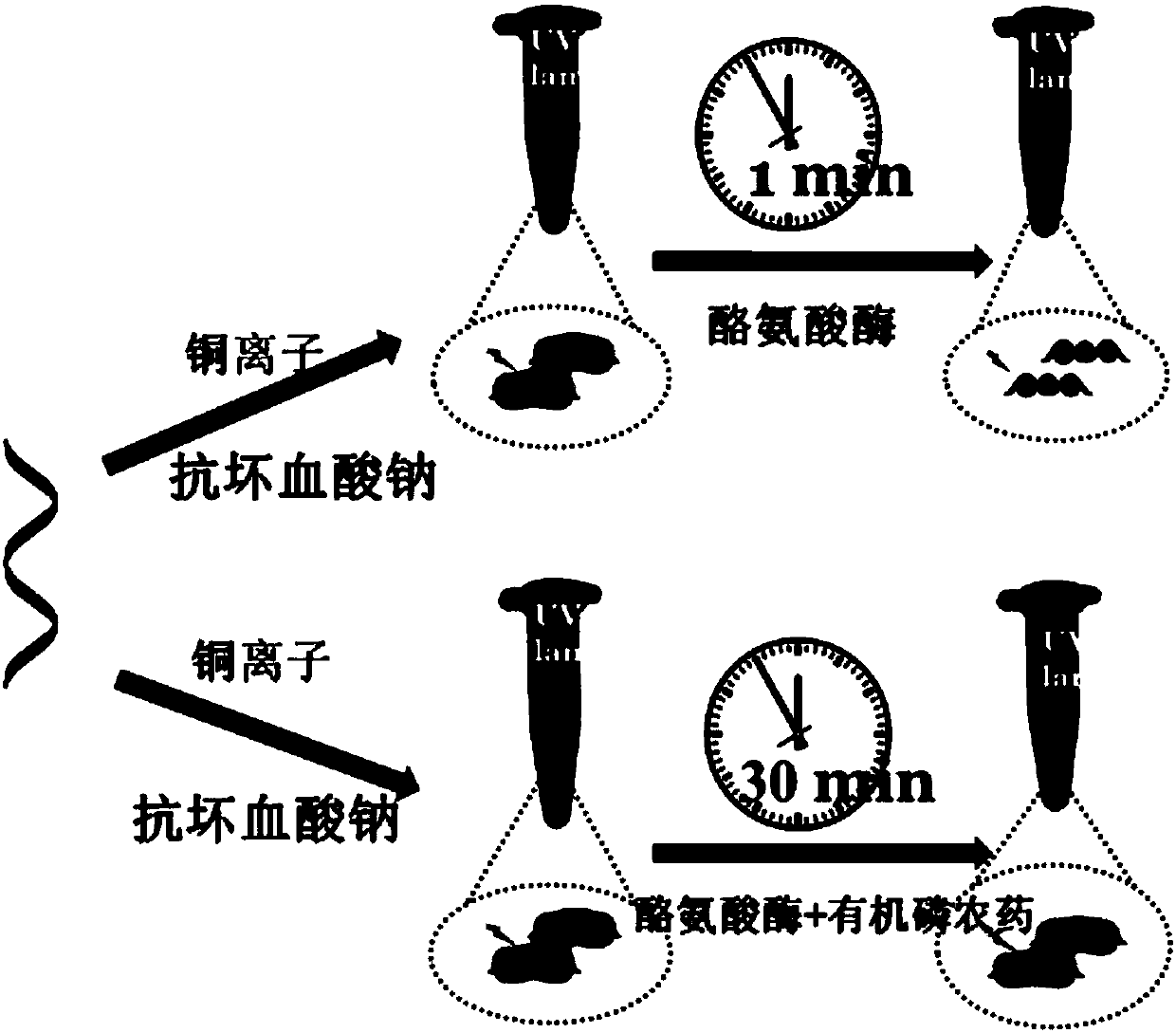
[0046] A method for preparing a fluorescent biosensor, comprising the following steps:
[0047] 1) Add 2 μL of PolyT30-DNA sequence to 88 μL of MOPS (10 mM (3-(N-morpholino)propanesulfonic acid) buffer solution at pH=7.6), add sodium ascorbate solution (8.0 mM)37 After incubating at ℃ for 10 min, add 50 μL of CuSO 4 Solution (800μM) was incubated at 37°C for 15min;
[0048] 2) Mix 4U / mL tyrosinase solution with 100ng / L organophosphorus pesticide, and culture it at 4°C for 30 minutes to obtain a mixed solution of tyrosinase and organophosphorus pesticide, add tyrosinase and 10 μL of organophosphorus pesticide mixed solution was incubated at 20°C-50°C for 10-30min to obtain a PolyT30-DNA / Cu NPs-tyrosinase-organophosphorus pesticide system, and to prepare a fluorescent biosensor with an "on" signal.
Embodiment 2
[0050] A fluorescent biosensor is prepared by the above method.
[0051] Determine the optimal concentration of tyrosinase concentration:
[0052] 1) Add 2 μL of PolyT30-DNA solution (1 μM) to 93 μL of MOPS (10 mM (3-(N-morpholino)propanesulfonic acid) pH=7.6 buffer solution), then add 50 μL of sodium ascorbate solution (8.0mM), after incubating at 37°C for 10min, add 50μL of CuSO 4 solution (800 μM), incubated at 37°C for 15 minutes, and prepared luminescent PolyT30-DNA copper nanoparticles;
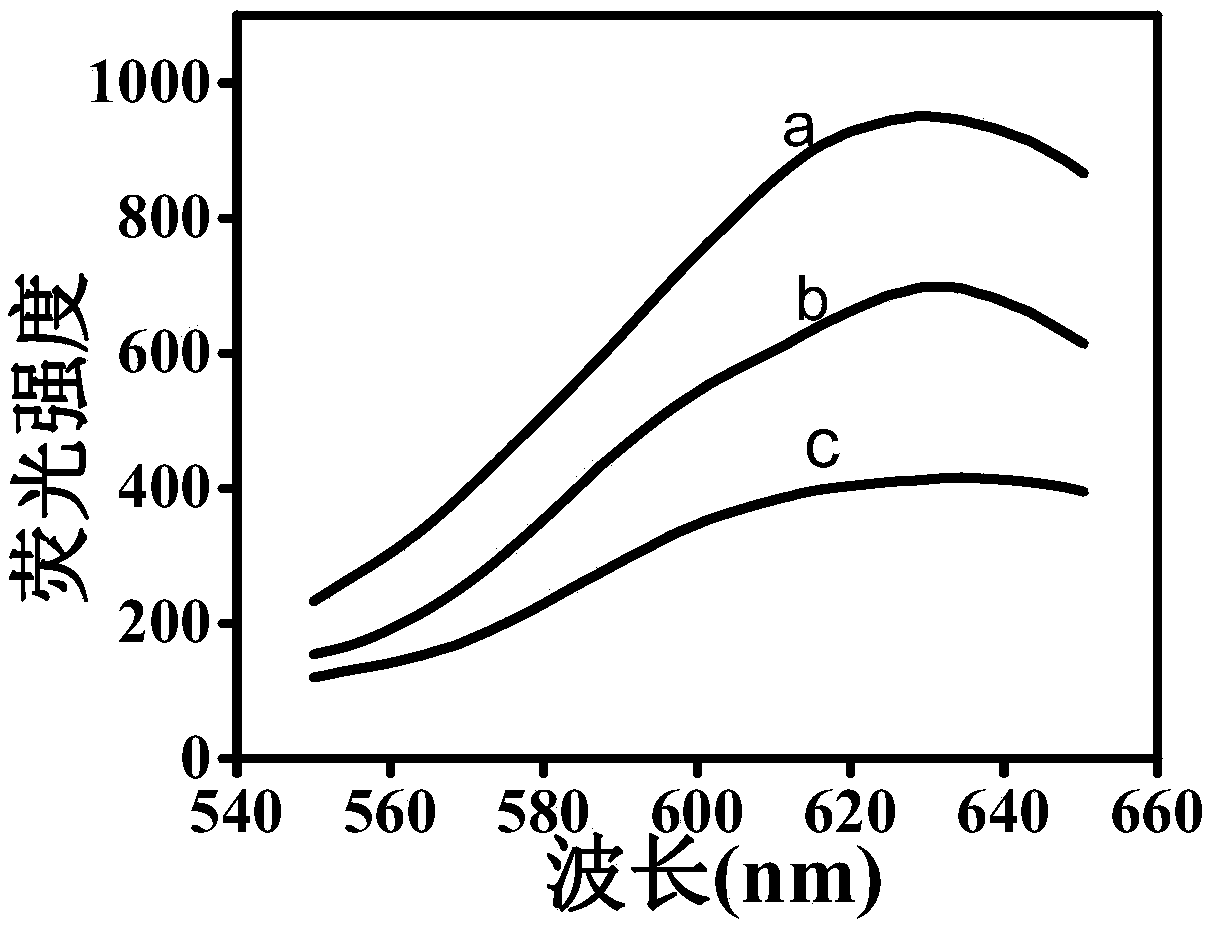
[0053] 2) Dilute the tyrosinase solution, configure it into 0.01, 0.1, 0.5, 1, 1.5, 2, 2.5, 3 and 4 U / mL tyrosinase solution, and add the prepared solution to the system prepared in step 1) respectively. 5 μL of tyrosinase solutions with different concentrations, and the maximum quenching value was reached when the tyrosinase concentration was 4 U / mL. See Figure 4A .
Embodiment 3
[0055] Application of a fluorescent biosensor to detect organophosphorus pesticides.
[0056] The specific detection method is:
[0057] 1) Add 2 μL of PolyT30-DNA solution (1 μM) to 88 μL of MOPS (10 mM (3-(N-morpholino) propanesulfonic acid) buffer solution at pH = 7.6), and add 50 μL of sodium ascorbate solution (8.0mM), after incubating at 37°C for 10min, add 50μL of CuSO 4 solution (800 μM), incubated at 37°C for 15 minutes, and prepared luminescent PolyT30-DNA copper nanoparticles;
[0058] 2) After mixing 5 μL of 4U / mL tyrosinase and 5 μL of organophosphorus pesticides of different concentrations and incubating at 4°C for 30 minutes, they were added to the luminescent copper nanoparticles prepared in step 1), and incubated at 37°C for 30 minutes to detect different Concentration fluorescence intensity, as the concentration of organophosphorus pesticides increases, the fluorescence intensity of copper nanoparticles will gradually become stronger, and the linear relatio...
PUM
 Login to View More
 Abstract
Description
Claims
Application Information
 Login to View More