(s)-selective biocatalyst
A technology of microbial strains and compounds, applied in the direction of biochemical equipment and methods, microorganisms, microorganisms, etc., to achieve the effects of wide substrate adaptability, easy preparation, and good prospects for industrial application development
- Summary
- Abstract
- Description
- Claims
- Application Information
AI Technical Summary
Problems solved by technology
Method used
Image

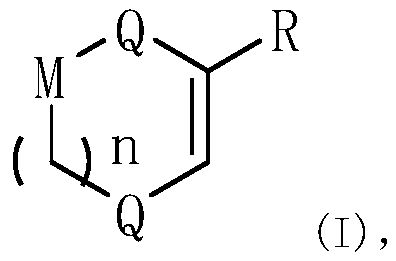


Examples
Embodiment 1
[0044] The screening of embodiment 1 bacterial strain
[0045] The test materials are more than 500 crinoid samples collected from Qi'ao Island in Zhuhai, Guangdong, Daya Bay in Shenzhen, Guangdong, Jiaowei Township in Xuwen, Guangdong, and Jiaowei Township in Zhanjiang, Guangdong. They were ground and diluted with sterile water to obtain a homogenate;
[0046] Seawater PDA medium is used for the enrichment culture of marine fungi: 200 g of peeled and cut potatoes are added to 1000 mL of sea water, boiled for 30 minutes, and then filtered with 4-6 layers of gauze. Add 20g sucrose, 18g agar, and distilled water to a constant volume of 1000mL in the filtrate. After sterilization, the temperature is lowered to about 50°C and 50mg of penicillin and 50mg of streptomycin are added to inhibit the growth and reproduction of marine bacteria.
[0047] The isolation, purification and screening of marine fungi use rich medium, the formula is: artificial seawater: CaCl 2 2H 2 O(1.36g / L)...
Embodiment 2
[0050] The cultivation of embodiment 2 microorganisms
[0051] Medium formula: artificial seawater: CaCl 2 2H 2 O(1.36g / L), MgCl 2 ·6H 2 O (9.68g / L), KCl (0.61g / L), NaCl (30.0g / L), NaCl 2 HPO 4 (0.014mg / L),Na 2 SO 4 (3.47g / L),NaHCO 3 (0.17g / L), KBr (0.1g / L), SrCl 2 .6H 2 O(0.040g / L) and H 3 BO 3 (0.030g / L)] 1L of artificial seawater contains 30g of malt extract, 3g of soybean peptone, the final pH is 8.0, and it is sterilized at 121°C for 20min.
[0052] Take the slant of Penicillium citrinum 4620 stored at 4°C (it is called the slant, because the slant can be stored longer than ordinary plates), pick a piece and inoculate it into a 250mL Erlenmeyer flask containing 50mL of medium. Cultivate on a shaker at 28°C and 150rpm for 3 days, transfer to a 500mL Erlenmeyer flask containing 100mL of medium according to the inoculum size of 5% (v / v), and continue to shake at 28°C and 150rpm After culturing for 7 days, the cells were collected by filtration. The measured enz...
Embodiment 3
[0054] Example 3 Preparation of (S)-2,6,6-trimethylcyclohexane-1,4-dione by resting cells
[0055] Suspend 5 g of resting cells of Penicillium citrinum 4620 collected by filtration in 100 mL of sodium phosphate buffer (pH 7.0, 50 mM), add the substrate 2,6,6-trimethyl-2-cyclohexene-1 , 4-diketone, so that the final concentration was 10 mM, shaken and reacted on a constant temperature shaker at 28° C. and 150 rpm for 72 hours, and then filtered the reaction solution to remove cells. Add NaCl to the filtrate to saturation, and extract with 50 mL of ethyl acetate, repeating three times. The filtered cells were soaked in 20 mL of ethyl acetate, repeated twice, the soaked ethyl acetate solutions were combined, washed twice with saturated NaCl solution, 10 mL each time. The obtained ethyl acetate extract was dried overnight with 10% (w / v) anhydrous sodium sulfate, and the ethyl acetate was removed by rotary evaporation to obtain the crude extract of the product, which was subjected...
PUM
| Property | Measurement | Unit |
|---|---|---|
| diameter | aaaaa | aaaaa |
Abstract
Description
Claims
Application Information
 Login to View More