

A kind of rare earth metal catalyst system and method for preparing high cis-conjugated diene polymer
A rare earth metal and catalyst technology, applied in the field of rare earth metal catalysts and the preparation of high cis conjugated diene polymers, can solve the problems of low coupling efficiency and the like
Patent Information
- Authority / Receiving Office
- CN · China
- Patent Type
- Patents(China)
- Current Assignee / Owner
- Publication Date
- 2020-07-28
Smart Images
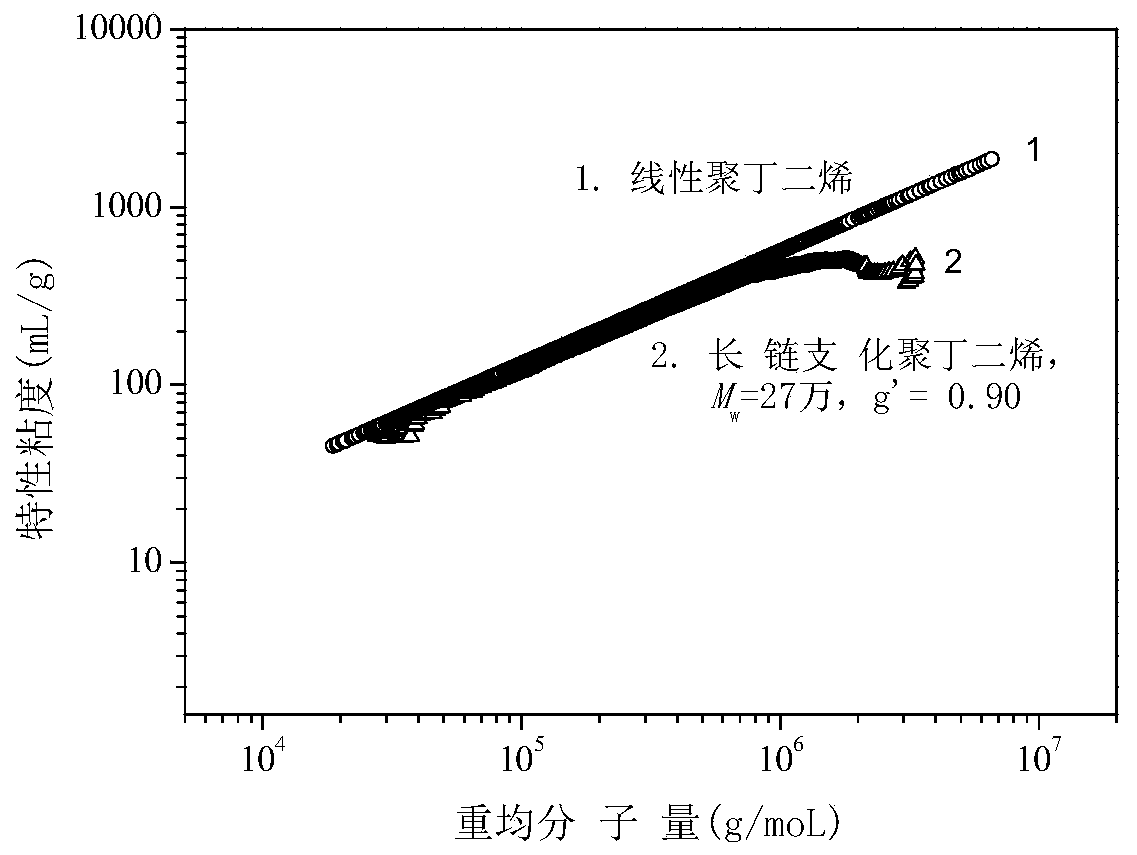
Figure 1 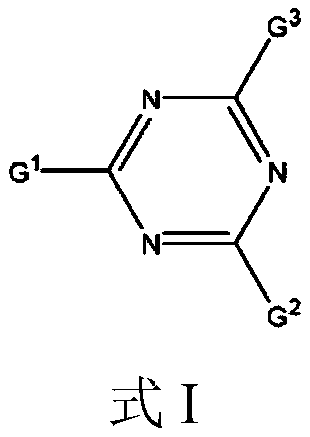
Figure 2 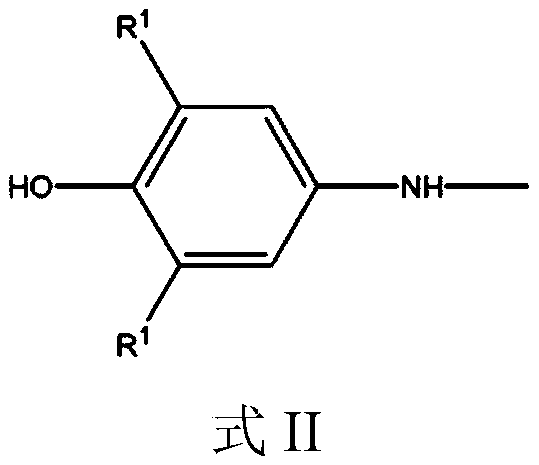
Figure 3
Abstract
Description
technical field
[0001] The present invention relates to the technical field of rare earth metal catalysts and preparation of high-cis-conjugated diene polymers, more specifically, to a rare-earth metal catalyst system and a method for preparing high-cis-conjugated diene polymers with different chain structures . Background technique
[0002] Traditional rare earth catalysts are used for the coordination polymerization of conjugated dienes, and usually obtain linear and perfect polymers with high cis structure, such as high cis polybutadiene (referred to as: rare earth butadiene rubber), high cis polyisoprene Diene (abbreviation: rare earth isoprene rubber) or high cis-butadiene-isoprene copolymer (abbreviation: rare earth isoprene rubber). Rare earth catalyst systems are usually divided into the following categories: (1) based on NdCl 3 nL, composition of alkylaluminum (Ln = neodymium or praseodymium, L is an oxygen, nitrogen or phosphorus complex) (refer to: Fourth Labora...
Examples
Embodiment 1
[0055] During the configuration of the catalyst system and the polymerization process, all operations were carried out under the protection of nitrogen.
[0056] The rare earth metal catalyst system consists of neodymium 2-ethylhexanoate (A), triisobutylaluminum and diisobutylaluminum hydride (B, the ratio of the two components is 7:1), chloroform and ethyl trichloroacetate (C, the ratio of the two components is 20:1), isooctanoic acid (D), 2,6-di-tert-butyl-4-methylphenol and 3,5-di(1,1-dimethylethyl) -Butyl 4-hydroxyphenylpropionate (E, the ratio of the two components is 100:1), the temperature is 35°C, and the time is 10 hours. The feeding method of each component in the catalyst is B-C-A-D-E, and the molar ratio of each component is A: B:C:D:E=1:18:3.5:2.5:2.5×10 -4 . Add appropriate amount of above-mentioned rare earth metal catalyst to butadiene / hexane solution (monomer concentration is 130g / L), make catalyst component A and butadiene monomer molar ratio be 1.0 * 10 -...
Embodiment 2
[0059] During the configuration of the catalyst system and the polymerization process, all operations were carried out under the protection of nitrogen.
[0060] Catalyst and polymerization process are the same as embodiment 1, and difference is, the feeding mode of each component in the catalyst is B-C-D-A-E, and catalyst component A and butadiene monomer molar ratio are 8.0 * 10 -5 : 1, the polybutadiene product was obtained, and the yield was 32%. M of polybutadiene w 3.4×10 5 g / mol, M w / M n is 3.1, and the cis-1,4 content is 98.6%. The polybutadiene product is a long-chain branched structure polymer, and g' is 0.84.
Embodiment 3
[0062] During the configuration of the catalyst system and the polymerization process, all operations were carried out under the protection of nitrogen.
[0063] The catalyst and polymerization process are the same as in Example 1, except that the catalyst component A is neodymium neodecanoate, the ratio of decanoic acid (D) to A is 0.3, and E is 6-(4-hydroxyl-3,5-di-tert-butyl Anilino)-2,4-di-n-octylthiol-1,3,5-triazine and 2,6-di-tert-butyl-4-methylphenol (the ratio of the two components is 58:1), The feeding method of each component in the catalyst is C-B-D-E-A. The polymerization time was 40 minutes, and the polybutadiene product was obtained in a yield of 71%. M of polybutadiene w 3.3×10 5 g / mol, M w / M n is 2.3, and the cis-1,4 content is 98.6%. The polybutadiene product is a long-chain branched structure polymer, and g' is 0.94.