
Coupled fluidized bed graded conversion reaction device and reaction method
The technology of a reaction device and a cyclone separation device is applied in the field of a coupled fluidized bed classification conversion reaction device, which can solve the problems of low carbon conversion rate and gasification intensity, low utilization rate of pulverized coal, and low methane yield, and achieve carbon conversion. The effect of high efficiency, high pulverized coal utilization rate and high methane yield
- Summary
- Abstract
- Description
- Claims
- Application Information
AI Technical Summary
Problems solved by technology
Method used
Image

Examples
Embodiment 1
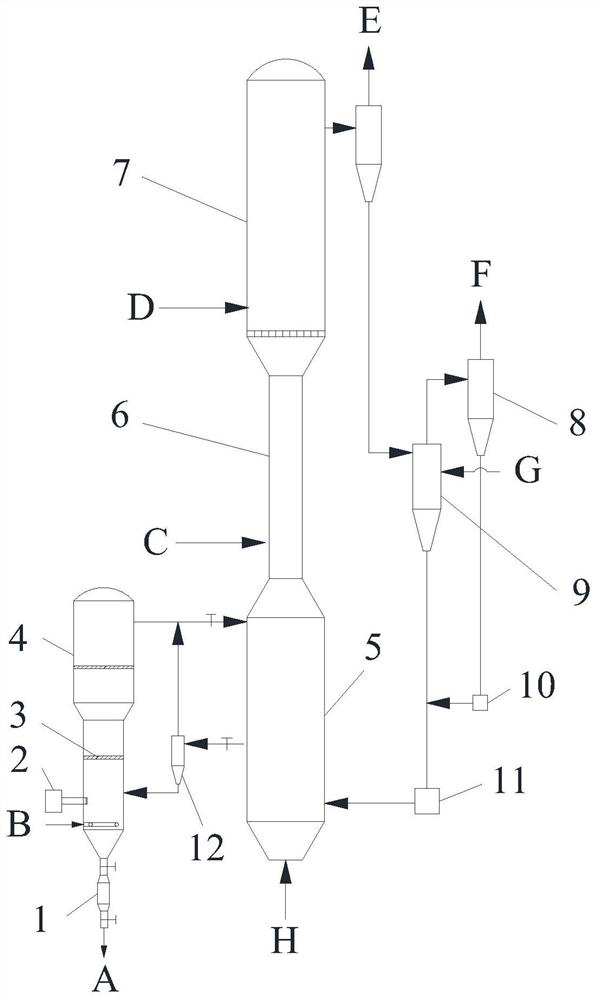
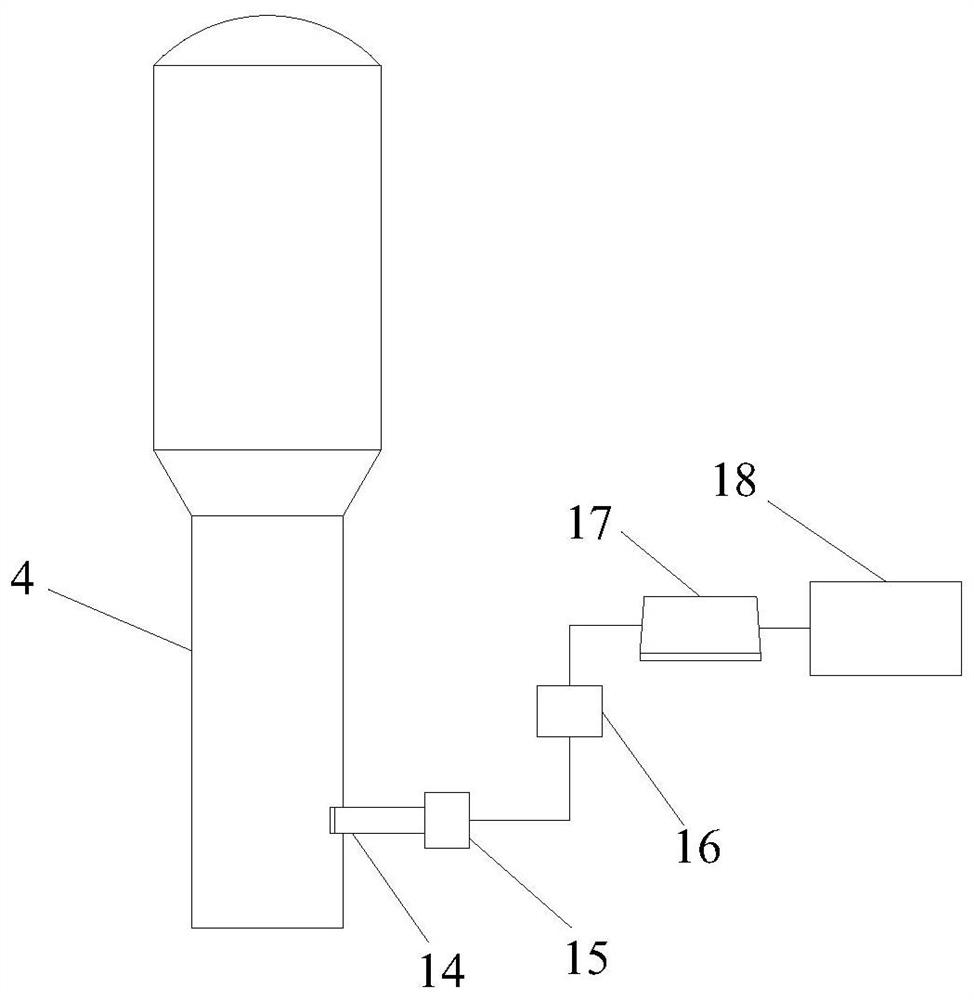
[0043] The reaction process is as follows: the catalyst-loaded carbon-containing raw material enters the pyrolysis furnace for rapid pyrolysis, the pyrolysis gas and semi-coke are separated in the pyrolysis furnace and the cyclone separator, and the coal tar enters the follow-up equipment for purification and separation. Separation: The separated semi-coke flows through the first feeding mechanism and the second feeding mechanism respectively, and enters the first reaction zone at the same time as the gasification agent for mixing, combustion and partial gasification reaction. Part of the incompletely reacted carbon-containing particles is controlled by the valve and is initially separated by the particle cyclone separation device. Most of the relatively small carbon-containing particles are directly recovered from the gas riser to the first reaction zone to continue to participate in the reaction. The unseparated Carbon-containing particles and large-particle ash enter the cla...
Embodiment 2
[0046] The reaction process is as follows: the catalyst-loaded carbon-containing raw material enters the pyrolysis furnace for rapid pyrolysis, the pyrolysis gas and semi-coke are separated in the pyrolysis furnace and the cyclone separator, and the coal tar enters the follow-up equipment for purification and separation. Separation: The separated semi-coke flows through the first feeding mechanism and the second feeding mechanism respectively, and enters the first reaction zone at the same time as the gasification agent for mixing, combustion and partial gasification reaction. Part of the incompletely reacted carbon-containing particles is controlled by the valve and is initially separated by the particle cyclone separation device. Most of the relatively small carbon-containing particles are directly recovered from the gas riser to the first reaction zone to continue to participate in the reaction. The unseparated Carbon-containing particles and large-particle ash enter the cla...
Embodiment 3
[0049] The reaction process is as follows: the catalyst-loaded carbon-containing raw material enters the pyrolysis furnace for rapid pyrolysis, the pyrolysis gas and semi-coke are separated in the pyrolysis furnace and the cyclone separator, and the coal tar enters the follow-up equipment for purification and separation. Separation: The separated semi-coke flows through the first feeding mechanism and the second feeding mechanism respectively, and enters the first reaction zone at the same time as the gasification agent for mixing, combustion and partial gasification reaction. Part of the incompletely reacted carbon-containing particles is controlled by the valve and is initially separated by the particle cyclone separation device. Most of the relatively small carbon-containing particles are directly recovered from the gas riser to the first reaction zone to continue to participate in the reaction. The unseparated Carbon-containing particles and large-particle ash enter the cla...
PUM
 Login to View More
 Abstract
Description
Claims
Application Information
 Login to View More