
Loop-mediated isothermal amplification detection method for detecting Fusarium oxysporum of Chinese wolfberry root rot, and detection primers and verification method thereof
A Fusarium oxysporum, ring-mediated isothermal technology, applied in the field of temperature amplification detection, can solve the problems of inability to prevent and control in advance, different judgment standards, long culture cycle, etc., to improve detection accuracy and high detection sensitivity , the effect of fast response
- Summary
- Abstract
- Description
- Claims
- Application Information
AI Technical Summary
Problems solved by technology
Method used
Image

Examples
Embodiment 1
[0072] The method of ring-mediated isothermal amplification detection of Lycium barbarum root rot disease of Fusarium oxysporum includes the following steps:
[0073] A. Sample collection
[0074] Collect the diseased plants of Lycium barbarum root rot, isolate the pathogenic bacteria by conventional methods indoors, and store the pathogenic bacteria at 4℃;
[0075] B. Strain culture
[0076] The pathogenic bacteria strains are cultivated on PDA medium, the formula of PDA medium is 200g potato, 20g glucose, 15-20g agar, 1000mL tap water, and culture at room temperature 25℃ under light conditions;
[0077] C. Extraction of strain genomic DNA
[0078] Adopt E.Z.N.A TM HP Fungal DNA Kit, take the hyphae cultured in step B and grind into powder under the protection of liquid nitrogen, add 600 μL of CPL buffer to the powder, add 10 μL of β-mercaptoethanol; 65°C water bath for 30 minutes, water bath During the treatment, take it out and shake it twice, add 600 μL of chloroform to prepare the...
Embodiment 2
[0104] Implementation effect 1 LAMP primer design and sequence
[0105] LAMP design software was used for primer design, including two outer primers F3 and B3, and two inner primers FIP and BIP; their sequences were F3: GTCCGAAAATTTTGCGGTGC, B3: TTCAGTGGTTA GTGACTGC, FIP: AGTGGCGGGGTAAGATACCCC, BIP: GCTTGCCCTGTTCCCACAAAAC.
[0106] Implementation effect 2 Establishment of LAMP reaction system
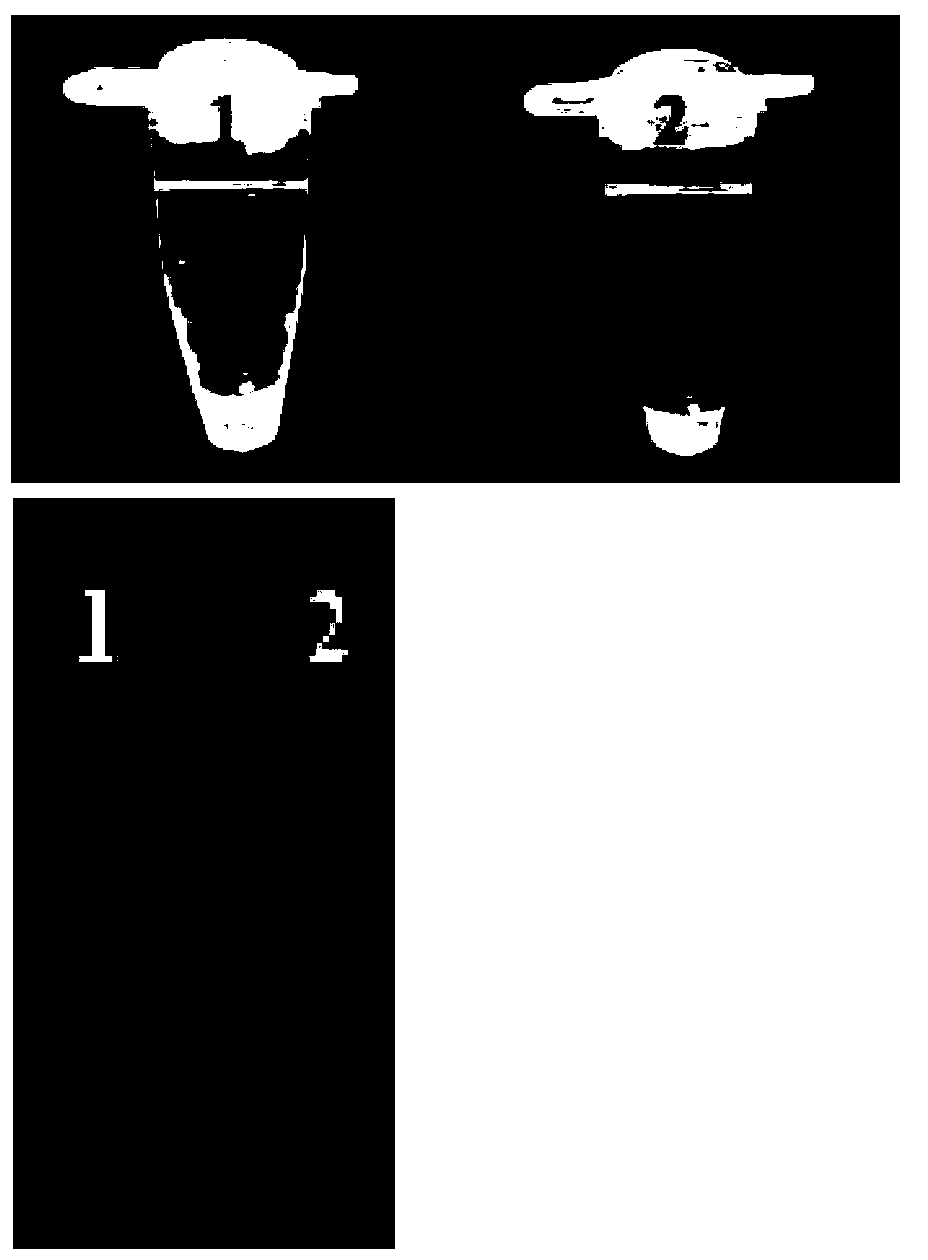
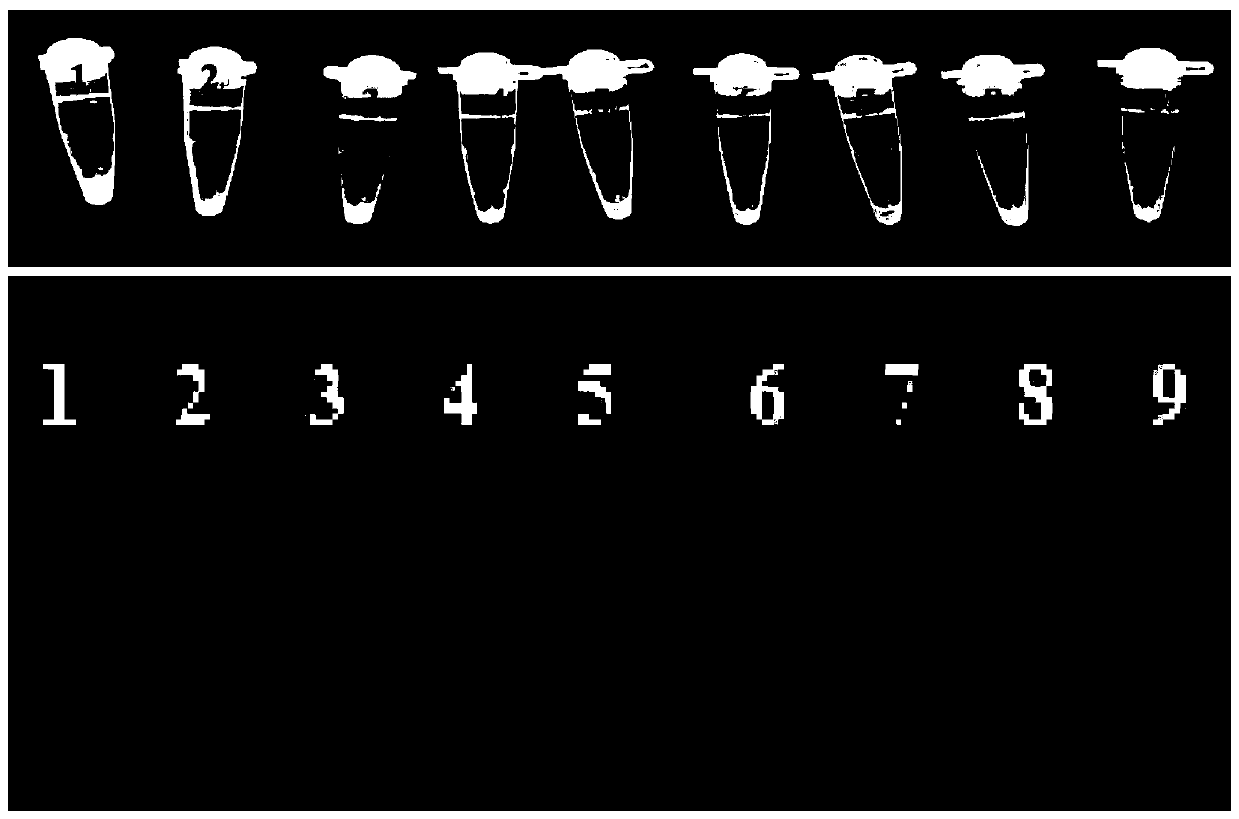
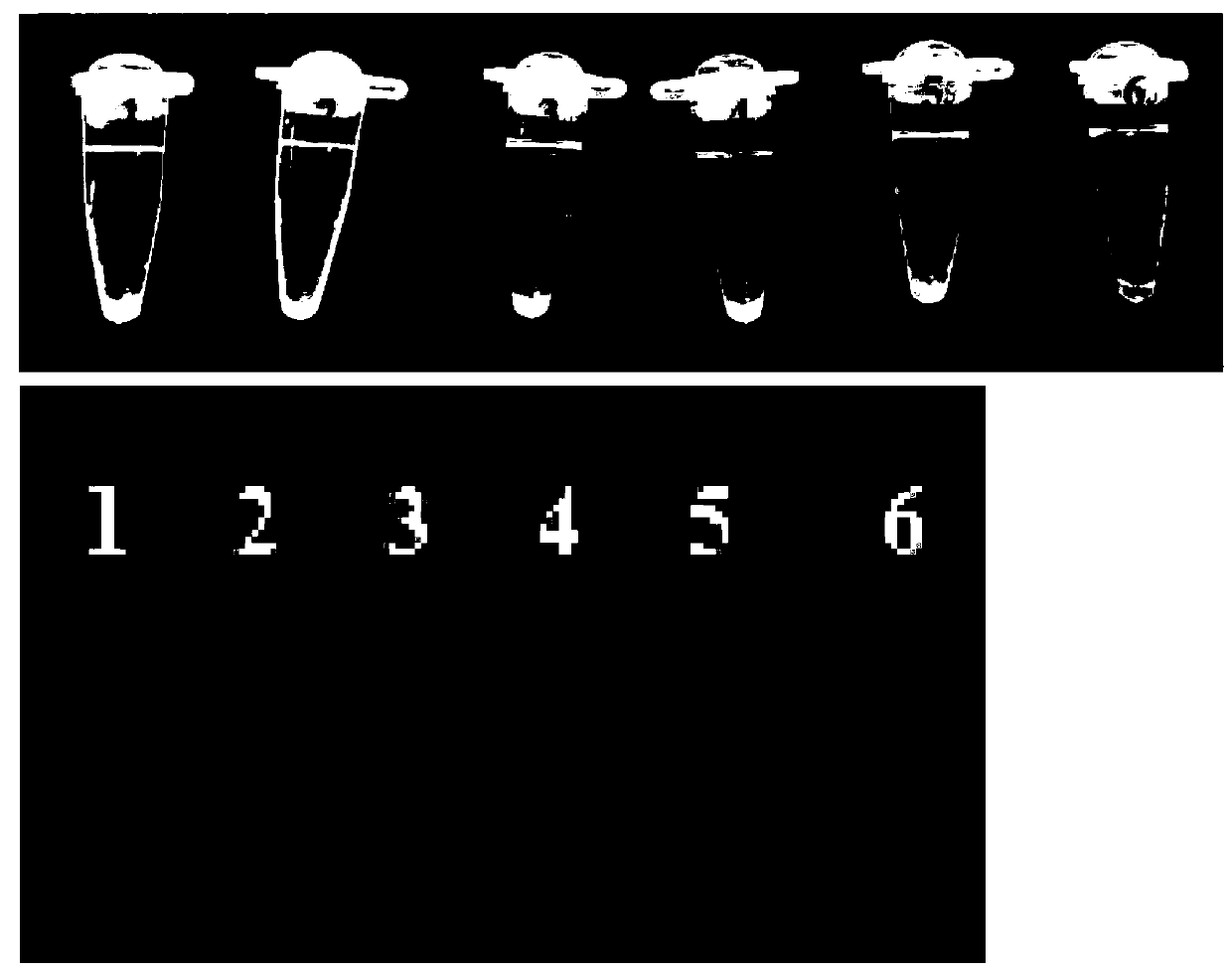
[0107] The optimized LAMP reaction system for detecting Fusarium oxysporum of Lycium barbarum root rot is 25μL: 10×IsothermalAmplification Buffe 2.5μL, 100mM MgSO 4 1.5μL, FIP Primer 1μL, BIPPrimer 1μL, F3Primer 1μL, B3Primer 1μL, 10mM dNTP 3.5μL, template DNA 2.5μL, 8 000U / mL Bst 2.0 DNA polymerase 1μL, ddH 2 O 10μL. By optimizing the reaction temperature, it was determined that the optimal reaction temperature of LAMP primer was 65℃. The reaction procedure is: 65°C for 1h, 80°C for 20min. Macroscopic observation of Fusarium oxysporum LAMP reaction solution is yellow-green, while the contr...
PUM
 Login to View More
 Abstract
Description
Claims
Application Information
 Login to View More