
Method for preparing potassium fluoride by using potassium alkali and potassium fluosilicate
A technology of potassium fluorosilicate and using potash, applied in the field of chemical and chemical fine chemicals, can solve the problems of low utilization rate of equipment, small scale of a single set of equipment, and no construction of industrialized devices.
- Summary
- Abstract
- Description
- Claims
- Application Information
AI Technical Summary
Problems solved by technology
Method used
Image

Examples
Embodiment 1
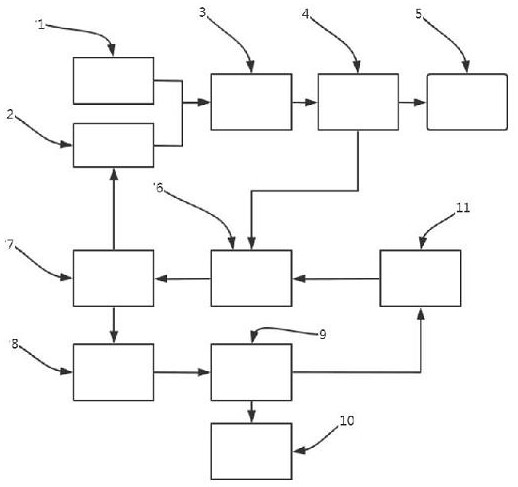
[0022] 200kg of 48% potash and 150kg of potassium fluorosilicate are mixed in the reaction tank. After the complete reaction and precipitation, the silicon dioxide is filtered with a plate filter, the mother liquor is concentrated and crystallized, and the solid is separated by a plate filter. The solid is potassium fluoride. The mother liquor returns to the reaction tank and fluorine participates in the reaction. The solid potassium fluoride was dried by spray drying at 550 degrees Celsius to obtain 98.5% anhydrous potassium fluoride. The waste heat tail gas is returned to concentrate and crystallize the mother liquor.
Embodiment 2
[0024] 200kg of 48% potash and 150kg of potassium fluorosilicate are mixed in the reaction tank. After the complete reaction and precipitation, the silicon dioxide is filtered with a plate filter, the mother liquor is concentrated and crystallized, and the solid is separated by a plate filter. The solid is potassium fluoride. The mother liquor returns to the reaction tank and fluorine participates in the reaction. The solid potassium fluoride was dried by spray drying at 600 degrees Celsius to obtain 98.7% anhydrous potassium fluoride. The waste heat tail gas is returned to concentrate and crystallize the mother liquor.
Embodiment 3
[0026] 200kg of 48% potash and 150kg of potassium fluorosilicate are mixed in the reaction tank. After the complete reaction and precipitation, the silicon dioxide is filtered with a plate filter, the mother liquor is concentrated and crystallized, and the solid is separated by a plate filter. The solid is potassium fluoride. The mother liquor returns to the reaction tank and fluorine participates in the reaction. The solid potassium fluoride was dried by spray drying at 500 degrees Celsius to obtain 98.6% anhydrous potassium fluoride. The waste heat tail gas is returned to concentrate and crystallize the mother liquor.
PUM
 Login to View More
 Abstract
Description
Claims
Application Information
 Login to View More