
Preparation method of ultra-thin ultra-low dilution rate high-temperature alloy cladding layer for garbage incinerator
A waste incinerator and high-temperature alloy technology, which is applied in metal processing equipment, manufacturing tools, welding equipment, etc., can solve problems such as limited effect
- Summary
- Abstract
- Description
- Claims
- Application Information
AI Technical Summary
Problems solved by technology
Method used
Image

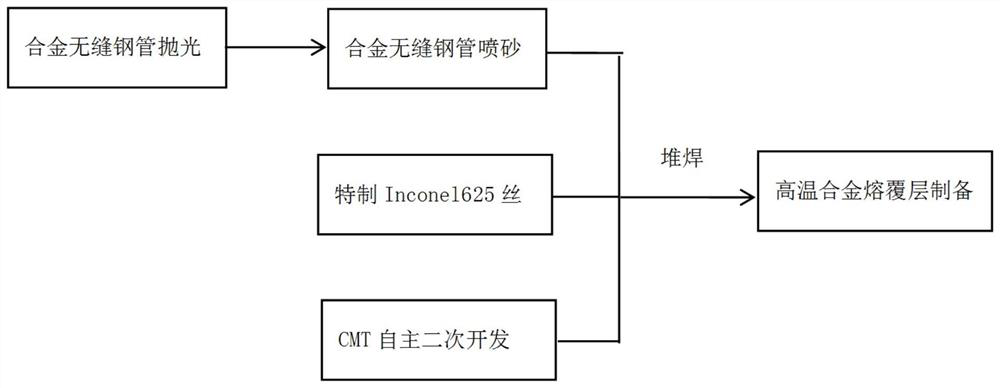
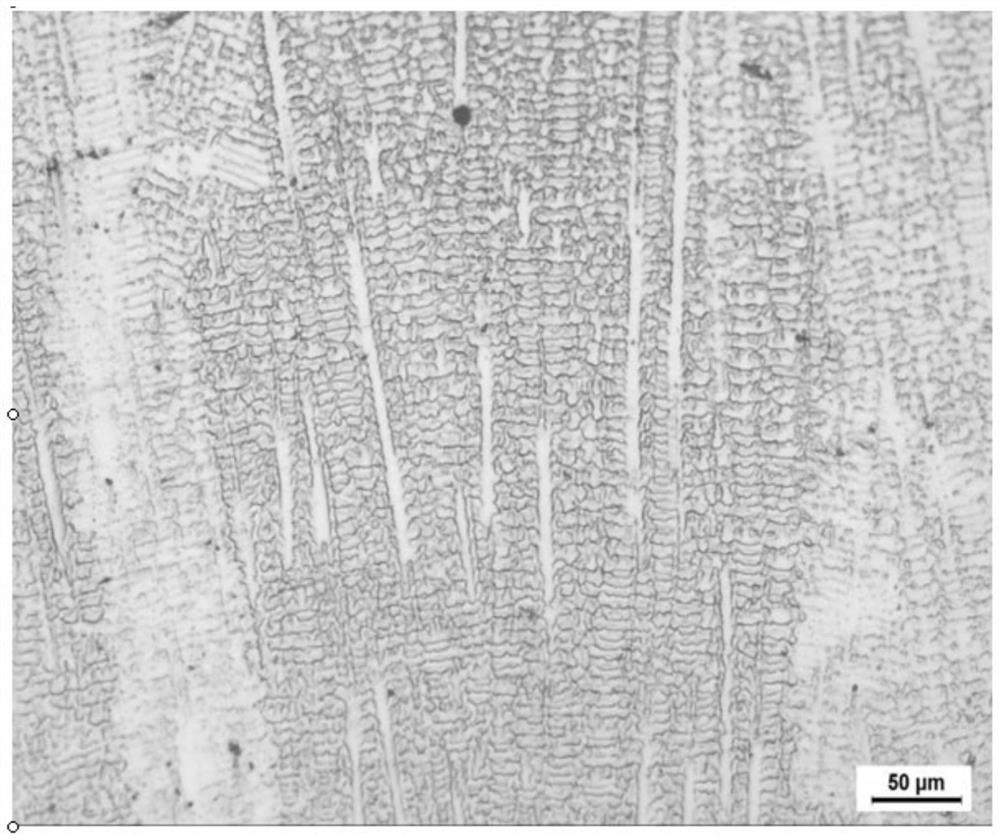
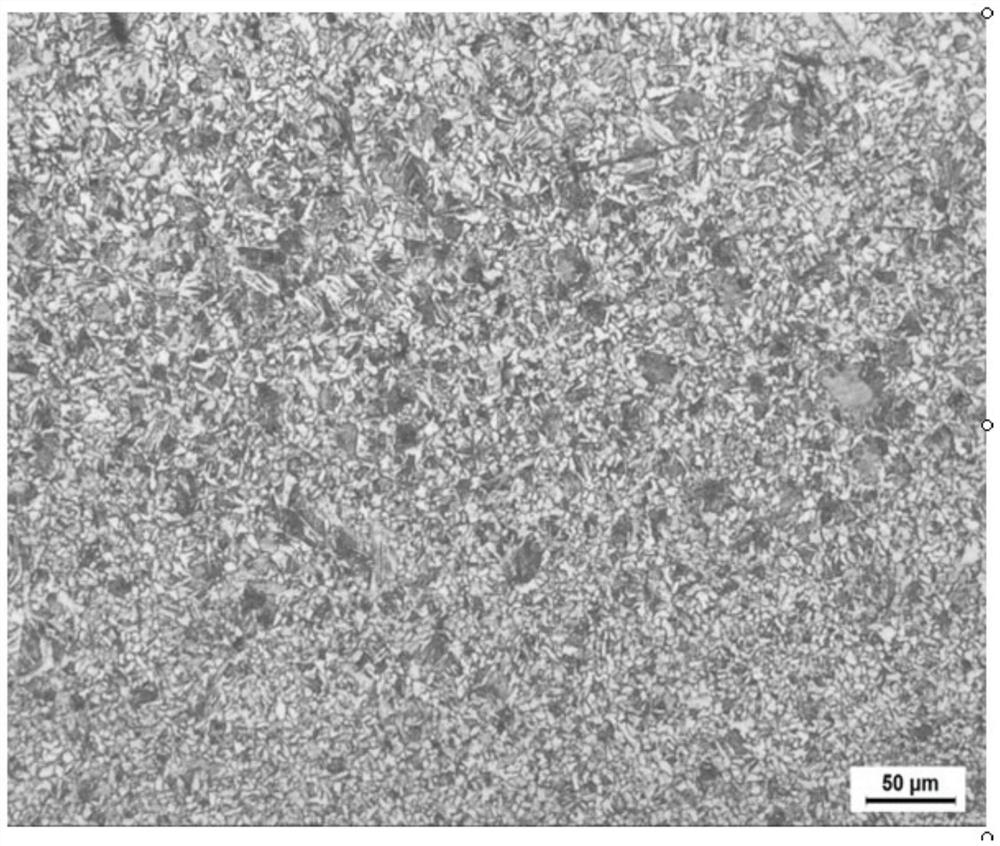
Examples
example 1
[0051] Example 1: An ultra-thin ultra-low dilution superalloy cladding layer for a waste incinerator
[0052] 1. The thickness of the superalloy cladding layer is ≥1.2mm.
[0053] 2. The mass percentage of the main components of the cladding layer: Ni: 58-64%, Cr: 20%-23%, Mo: 8%-10%, Nb: 3.15%-4.15%.
[0054] 3. Dilution rate Fe≤3.0%.
[0055] Using the ultra-thin and ultra-low dilution superalloy cladding layer of the present invention, the appearance and thickness of the superalloy anti-corrosion coating are detected and fed back: the weld seam of the cladding layer is still clear, the thickness reduction is not obvious, and the composition is normal, etc., indicating that Excellent corrosion resistance.
example 2
[0056] Example 2: An ultra-thin ultra-low dilution superalloy cladding layer for a waste incinerator
[0057] 1. The thickness of superalloy cladding layer is ≥2.0mm.
[0058] 2. The mass percentage of the main components of the cladding layer: Ni: 58-64%, Cr: 20%-23%, Mo: 8%-10%, Nb: 3.15%-4.15%.
[0059] 3. Dilution rate Fe≤3.0%.
[0060] Using the ultra-thin and ultra-low dilution rate high-temperature alloy cladding layer of the present invention, the appearance and thickness of the superalloy anti-corrosion coating are detected and fed back: the welding seam of the cladding layer is slightly corroded, and the thickness reduction rate is less than the design requirement. The composition of the layer is normal, indicating that the anti-corrosion performance is good.
PUM
| Property | Measurement | Unit |
|---|---|---|
| Thickness | aaaaa | aaaaa |
| Thickness | aaaaa | aaaaa |
| Thickness | aaaaa | aaaaa |
Abstract
Description
Claims
Application Information
 Login to View More