
Magnetic Recording Medium and Production Process Thereof
a technology of magnetic recording medium and production process, which is applied in the field of magnetic recording medium, can solve the problems of high cost of vacuum treatment device used for plasma treatment in vacuum, severe surface modification characteristics end up deteriorating, etc., and achieves the effects of improving startup operation, reducing static friction coefficient, and strengthening bonding strength of lubrican
- Summary
- Abstract
- Description
- Claims
- Application Information
AI Technical Summary
Benefits of technology
Problems solved by technology
Method used
Image

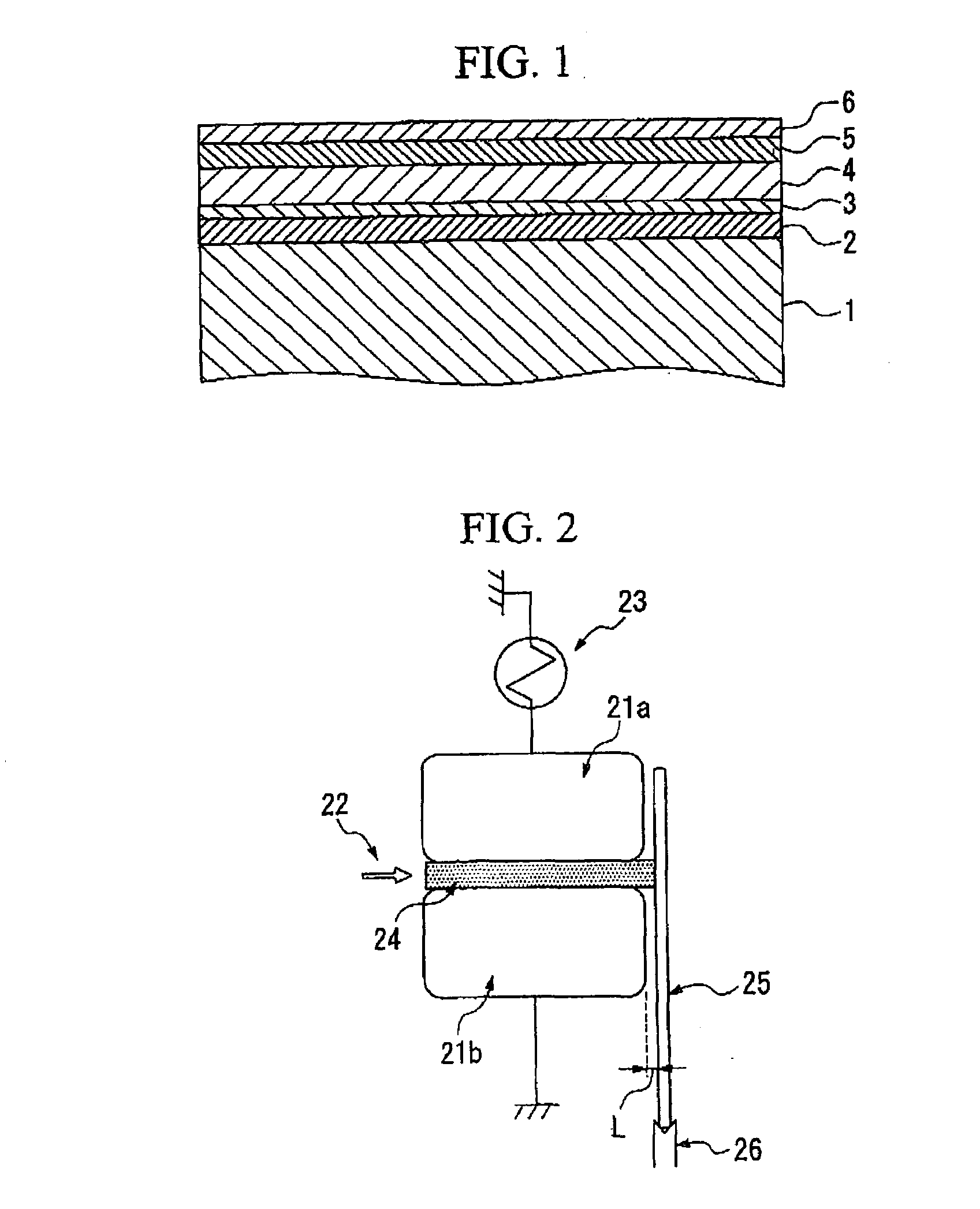
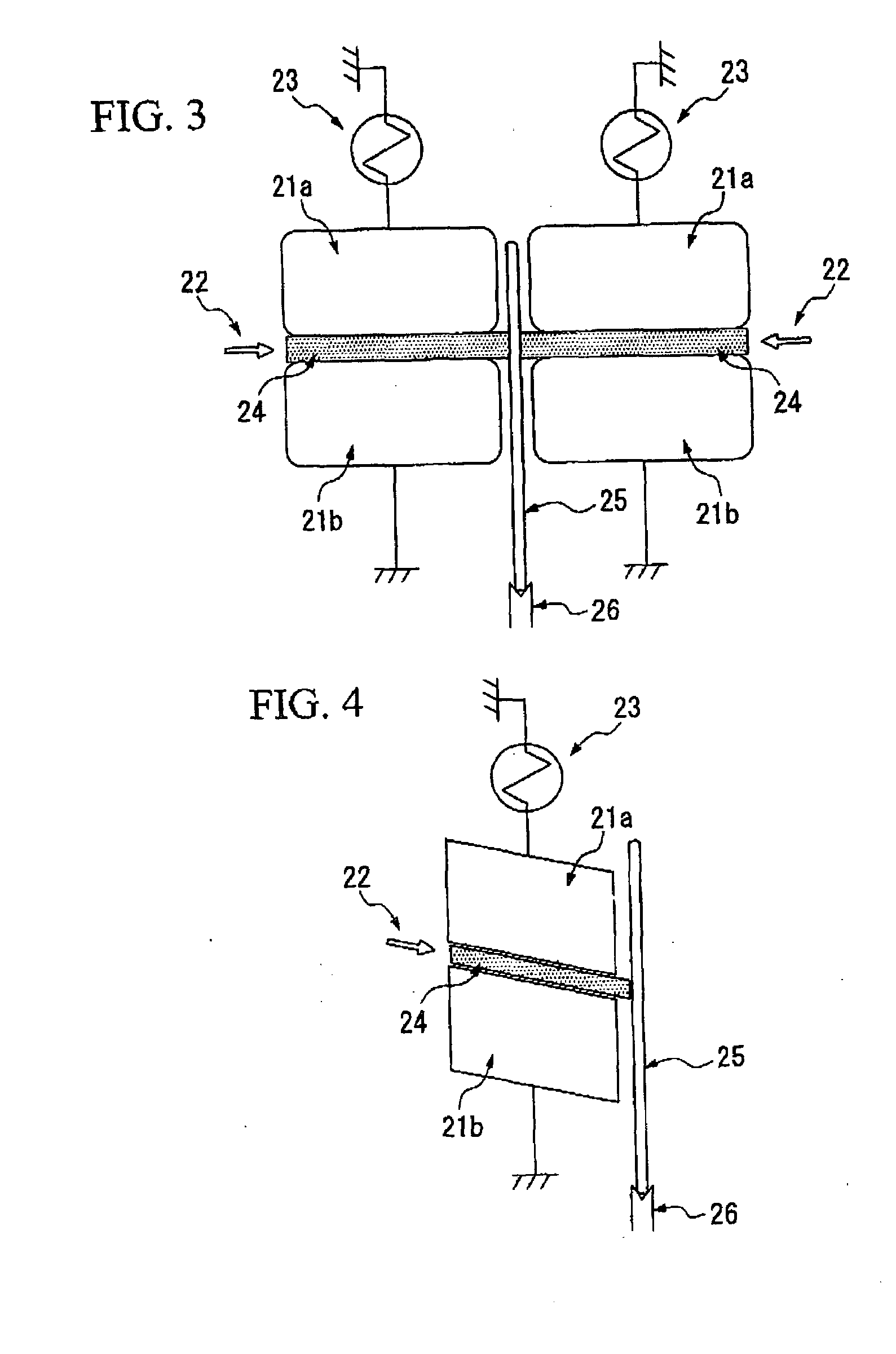
Examples
examples 1 to 17
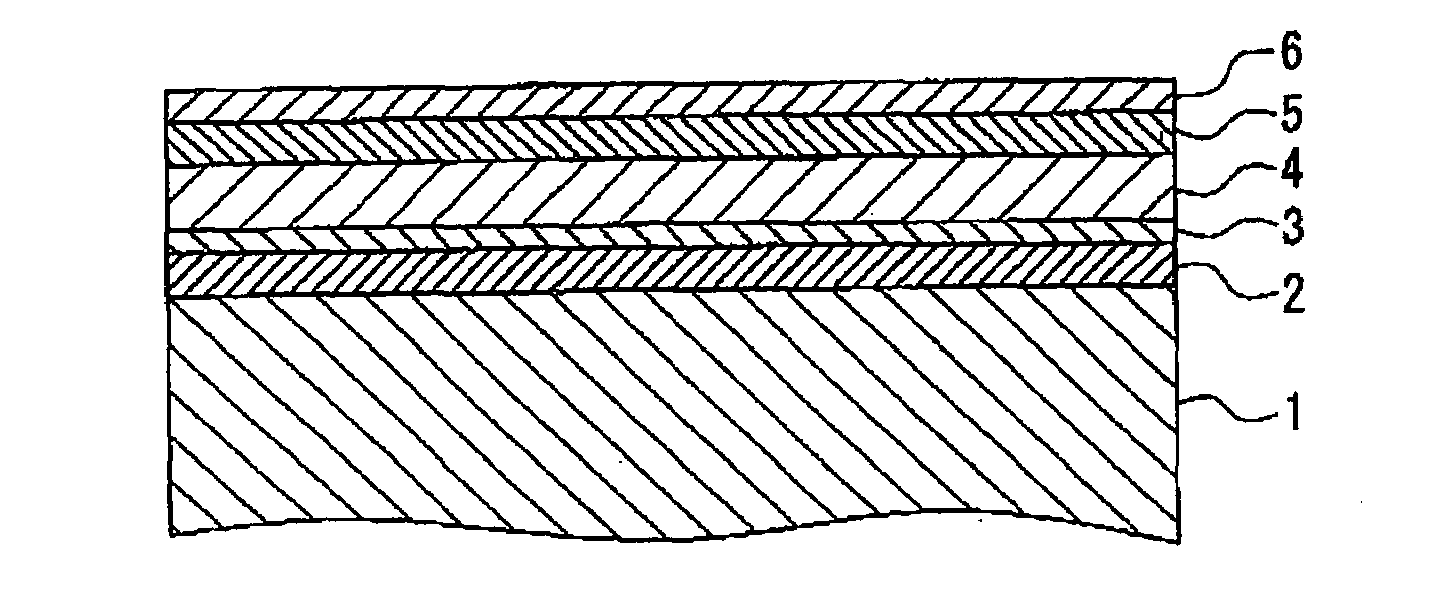
[0080]After adequately washing and drying an aluminum alloy substrate having an NiP plated film (diameter: 95 mm, inner diameter: 25 mm, thickness: 1.27 mm), it was irradiated with a laser from a radius of 17 mm to 19 mm (CSS zone) to form bumps having a height of 10 nm. Subsequently, the substrate was placed in a DC Magnetron Sputtering System (Model C3010, Anelva) After evacuating the air to an attainable vacuum of 2×10⁻⁷ Torr (2.7×10⁻⁵ Pa), the substrate was heated to 250° C.
[0081]Following heating, a non-magnetic substrate layer was laminated to a thickness of 5 nm using a target composed of Cr. Moreover, a non-magnetic substrate layer was laminated to a thickness of 5 nm using a target composed of Cr—Mo alloy (Cr: 80 at %, Mo: 20 at %). Next, a non-magnetic intermediate layer was laminated to a thickness of 2 nm using a target composed of Co—Cr alloy (Co. 65 at %, Cr: 35 at %). Next, a magnetic layer in the form of a CoCrPtB alloy layer was formed as a magnetic layer at a film ...
PUM
| Property | Measurement | Unit |
|---|---|---|
| frequency | aaaaa | aaaaa |
| angle | aaaaa | aaaaa |
| height | aaaaa | aaaaa |
Abstract
Description
Claims
Application Information
 Login to View More