However, when inorganic ultra-fine particles such as these are used, although a high degree of glossiness and a high degree of ink absorbancy may be obtained, the
viscosity of a
coating liquid tends to increase.
However, in resin
coated paper such as this, it is necessary to apply and dry a larger amount of a
coating liquid at a low
solid concentration, since the support cannot absorb ink, and therefore, there is a problem that productivity cannot be increased.
Further, it is known that inkjet recording materials using
polyolefin resin-
coated paper exhibit inferior sheet conveyance properties and inferior accuracy in conveyance in a printer, compared with inkjet recording materials that use paper as a support.
One problem with paper conveyance is that a paper coated with a
polyolefin resin cannot be conveyed to a predetermined position for printing in a printer with high accuracy, and tends to cause non-feeds (feeding malfunctions), resulting in difficulties with successive printing.
Further, inkjet recording materials using inorganic ultra-fine particles are extremely susceptible to external stress, since ink absorbancy of the
coating layer is increased, which leads to another problem relating to paper feedability, namely that, when several tens of sheets are stacked and successively printed, the ink receiving layer, which is the front side surface of a recording material, is damaged by the back side surface of another recording material.
Accordingly, inkjet recording materials using
polyolefin-
coated paper may cause paper feed malfunctions and, further, polyolefin resin-coated paper is often used for
photographic printing paper, and since it often contains
pigment particles in a back coating layer formed on the back side thereof, there is a problem that a paper is damaged by the
pigment particles during successive printing.
With regard to problems of sheet feeding accuracy, when sheet feeding accuracy is low, a portion of a recording material in which an image is to be printed is conveyed to a position deviating from a predetermined printing position.
Consequently, favorable printing quality may not be achieved due to the occurrence of streaked unevenness along a main scanning direction of a scanning head in a background
solid area or the like, known as banding, or the occurrence of streaked non-printed portions along the main scanning direction of a scanning head, known as white deletion.
If the accuracy of control of the feed amount is low, positions at which ink droplets are impacted may deviate from their intended positions, which may result in the occurrence of banding or white deletion.
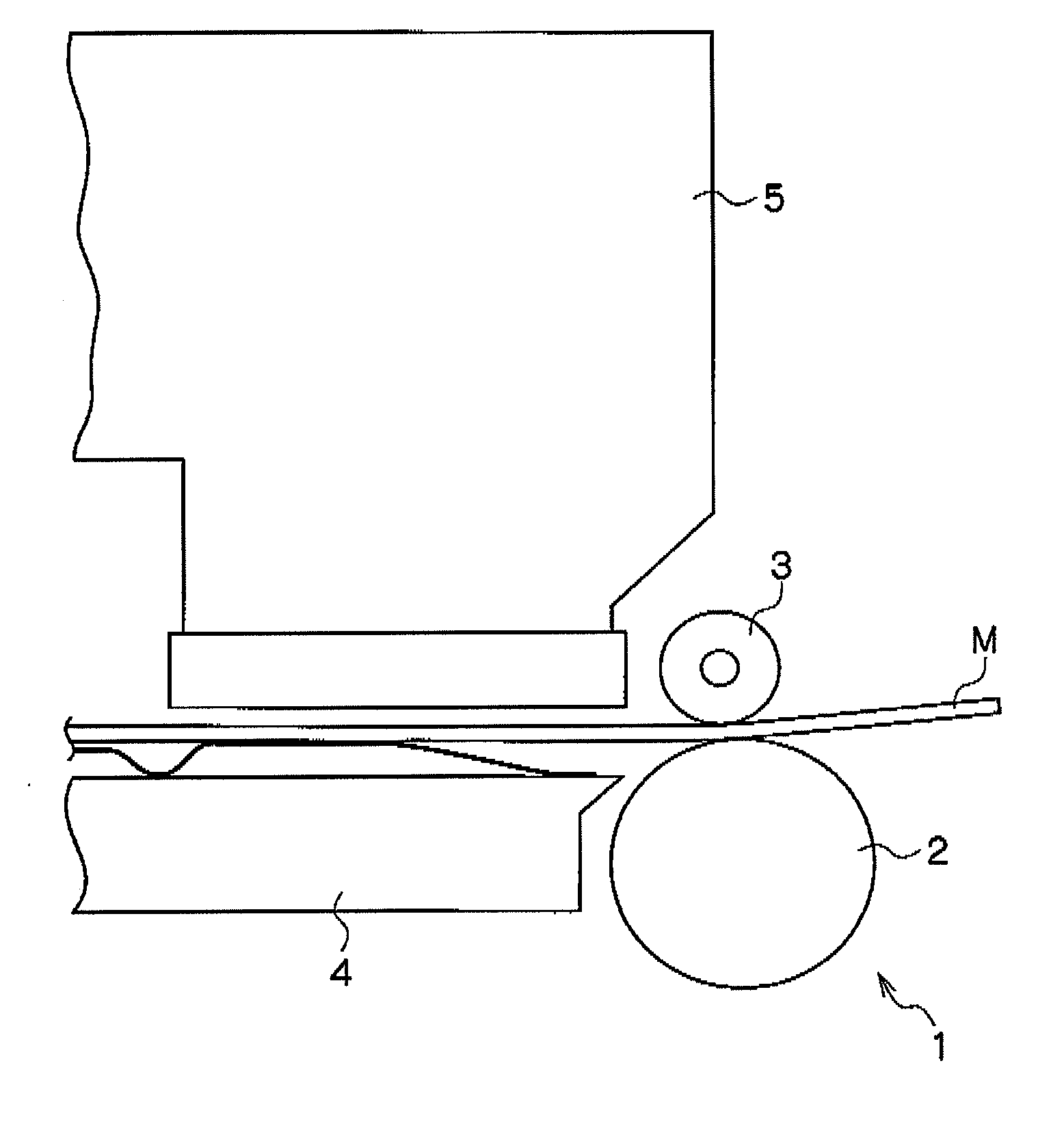
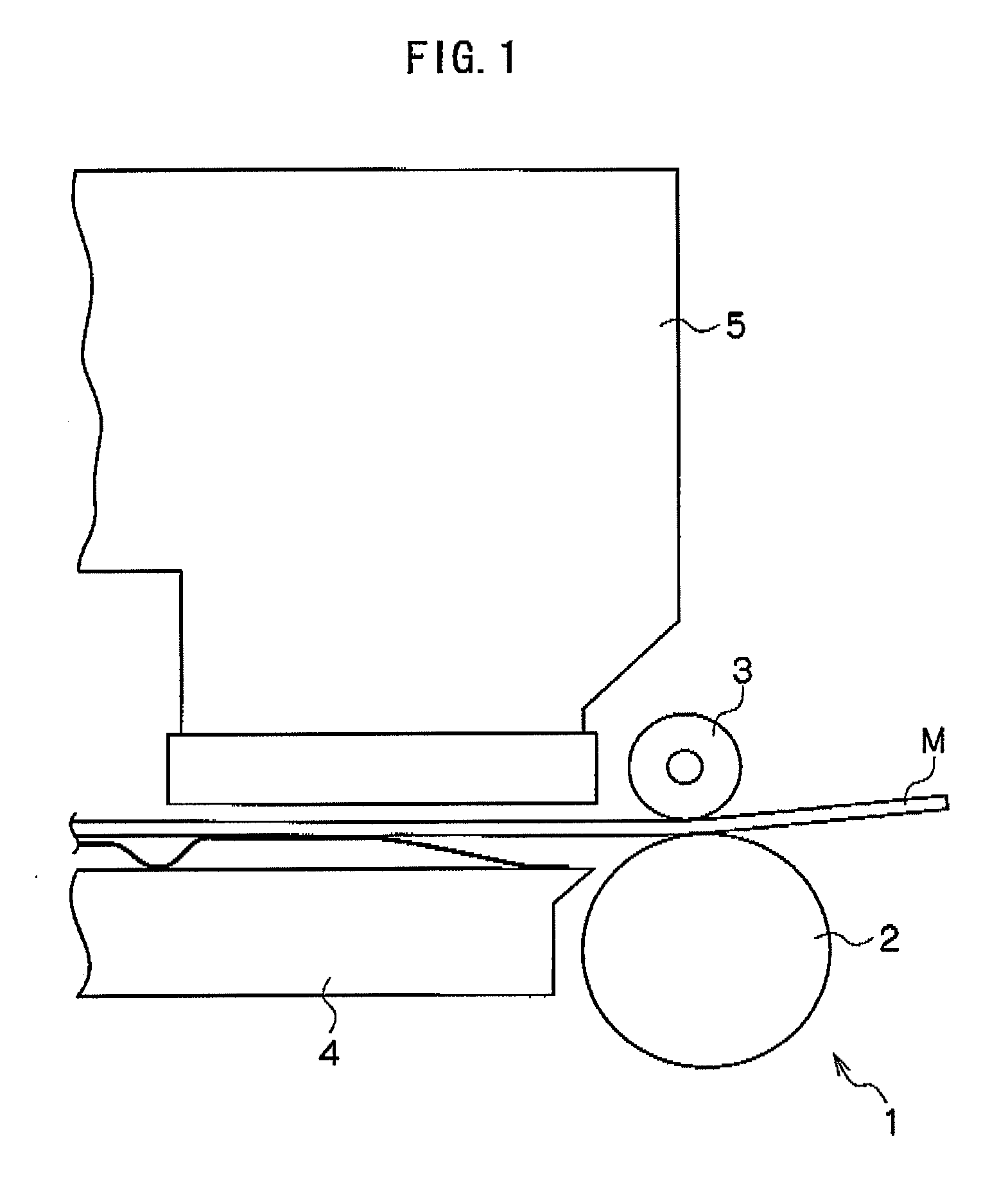
However, when an inkjet recording material using a polyolefin resin-coated paper is used in such a printer which is provided with a surface asperity roller as a paper feed roller (drive roller), and which is expected to perform conveyance with a high accuracy, slippage tends to occur between a back coat layer on a back side of the recording material and the drive roller.
For this reason, problems occur such as reduction in sheet feeding accuracy or the occurrence of banding or white deletion.
However, in the technique disclosed in JP-A No. 6-278357, the ratio of inorganic fine particles to PVA and SBR is high, and the coating amount is also large, and therefore feeding accuracy during high speed printing may decrease due to a low static function coefficient with respect to a
metal roller, even though paper feeding properties with respect to a
pickup roll are excellent.
Additionally, as described above, in a recording material having a back coat layer simply laminated on a back surface opposite to a recording surface, the
static friction coefficient between the front surface and the back surface may not be taken into account, and thus there is a possibility that double feeding, in which two sheets are fed into a printer at the same time, may occur.
Further, there is no clear discussion on
polymer materials used for the back coat layer, and the feedability may even be worsened by the provision of a back coat layer.
In the technique of applying a mixture of
colloidal silica and a resin for adhesion at a predetermined ratio to a back surface of a recording medium, a large application amount thereof causes deposition of a
fine powder of
colloidal silica onto portions of a
metal roller having asperity due to
continuous operation, resulting in decreased feeding accuracy due to a decrease in the
static friction coefficient between the metal roller and the back surface of the recording medium.
Consequently, banding cannot be prevented, and the feeding accuracy is low when printing is performed at high speed due to a small coating amount of the resin on the back surface.
Although commercially available recording materials for inkjet recording have applicability to inkjet printers on the market, when the recording speed increases, feeding accuracy may decrease due to insufficient gripping force.



 Login to View More