[0009]The invention provides methods and compositions for controlling loading of single analyte molecules, such as
nucleic acid templates, into reaction / observation volumes (such as the wells of a ZMW). These methods and compositions are useful for increasing the
throughput and efficiency of single molecule analysis systems. Basic approaches that are provided include: creating a single
binding site for an analyte in the reaction or observation volume; removing excess binding sites via catalytic or secondary binding methods, adjusting the size or charge of the analyte; packaging or binding the analyte molecules within (or on) a particle (e.g., within a viral
capsid), where a single such particle fits into the relevant observation volume (due to size or charge of the particle and / or observation volume); using non-
diffusion limited loading; controllably loading the analyte (e.g., using microfluidic or optical or
electrical control);
sizing or selecting charges in the observation volumes (e.g., the sizes of ZMWs in an array) to control which analytes will fit (spatially or electrostatically) into which array wells or well regions, iterative loading of analyte, e.g., by masking active sites between loading cycles, enriching the activity of the analytes that are loaded, using self-assembling nucleic acids to sterically control loading, using
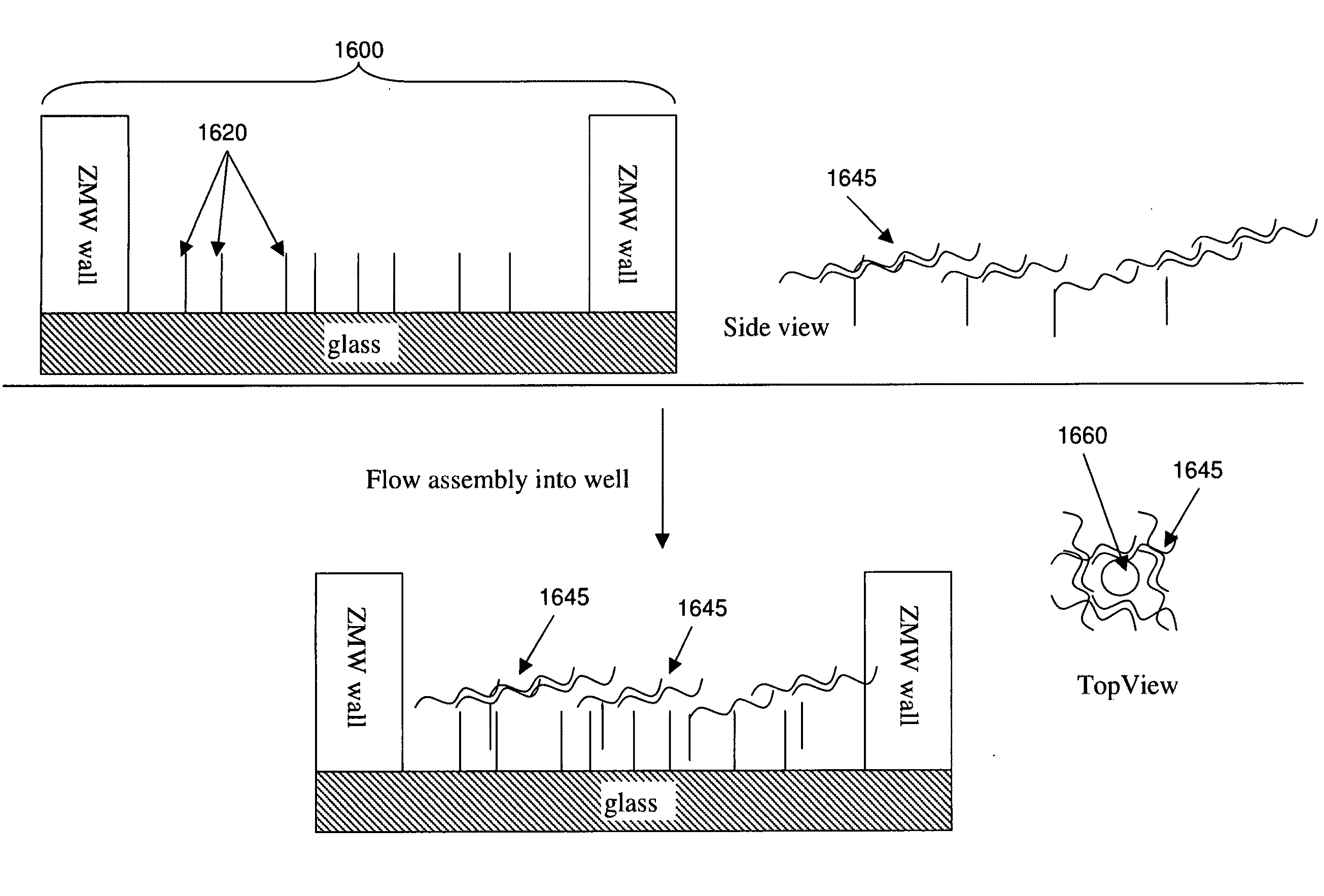
ribosome display to control loading and provide a base for analyte screening, adjusting the size of the reaction / observation volume; and many others. The methods and compositions provide for the possibility of completely loading single molecule array reaction sites (instead of about 30% of such sites as occurs in the prior art using random “Poisson limited” loading methods) with single analytes, and also provides for control over size, charge and / or location features for both array wells and analyte locations.
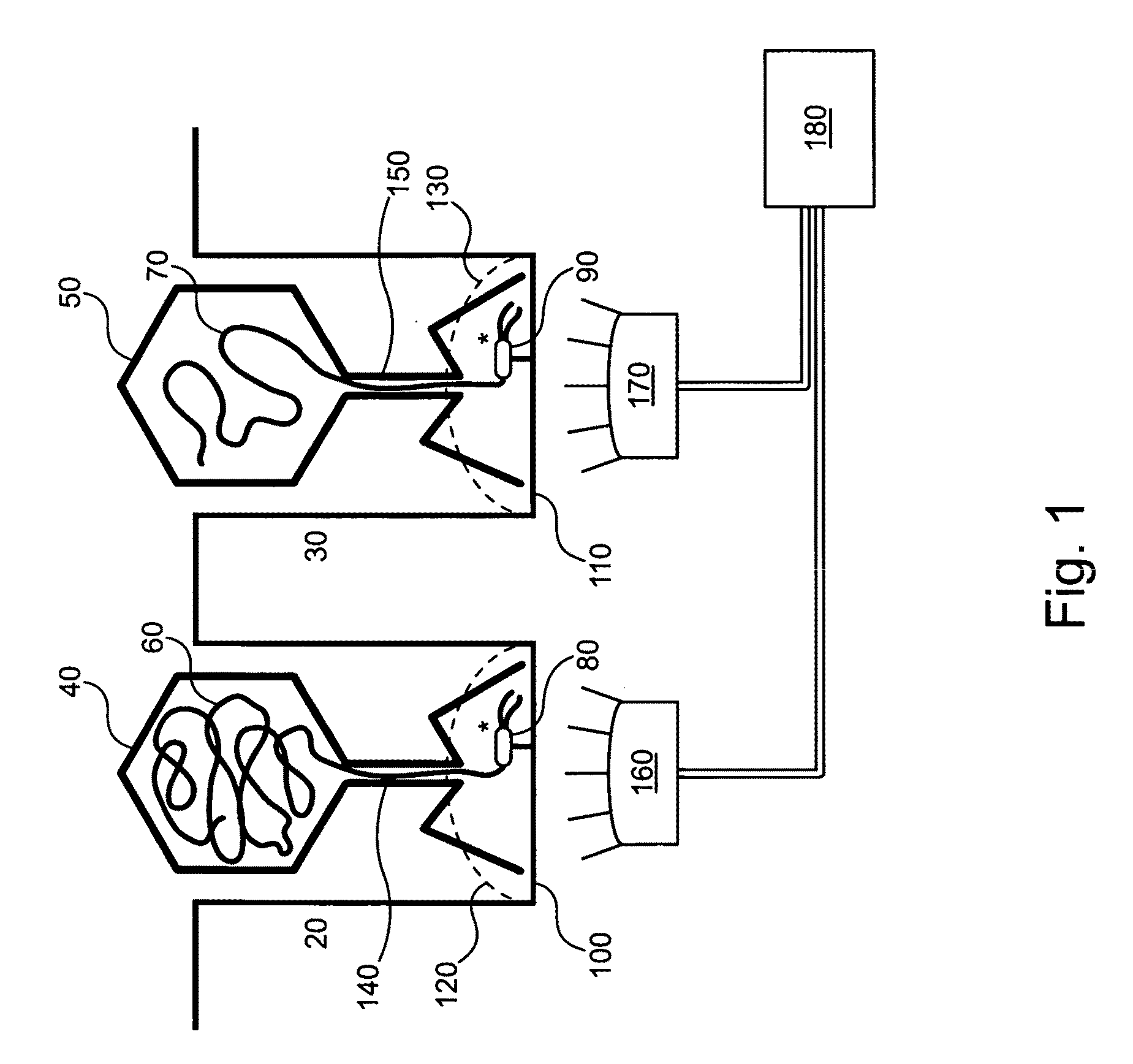
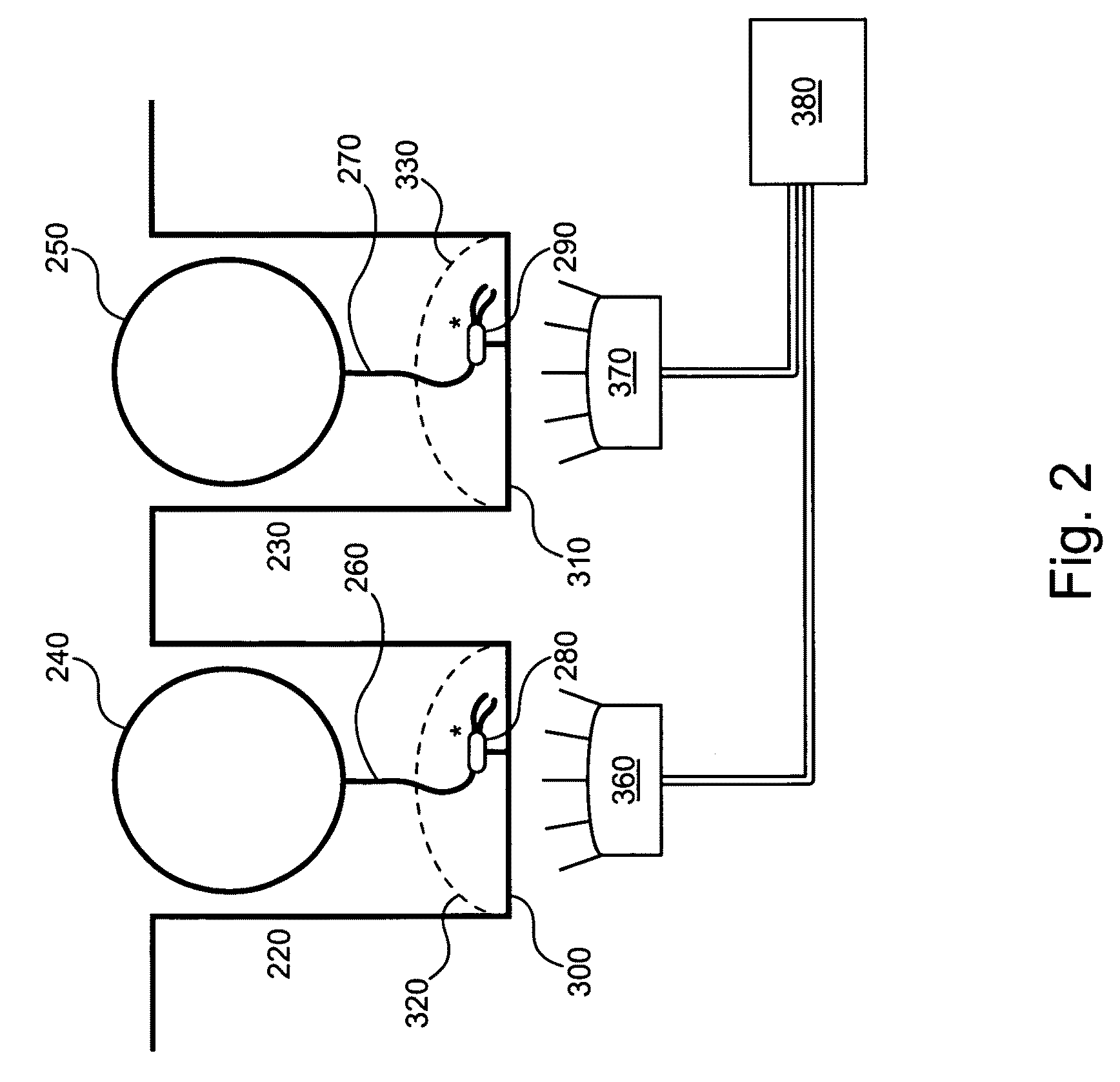
[0043]Single
analyte molecule can optionally be controllably transported into each of the analysis regions to produce a non-random distribution of analyte molecules in analysis regions. For example, this can include fluidly
coupling a plurality of analysis regions of the array to at least one source of the analyte through at least one microscale channel and controlling the flow between the source and the analysis region with a control module that gates or regulates flow from the source to the analysis region. A control module can optionally be operably connected to a sensor configured to sense flow of an analyte molecules from the channel into the analysis region. Optionally, the analyte can be optically labeled, the sensor can comprise an optical sensor, and the controller can controls a valve between the source and the analysis region. Optionally, the sensor can comprise a
conductivity sensor that detects passage of an
analyte molecule past the sensor, and each
analyte molecule can be coupled to a
dielectric nanoparticle. Single analyte molecules can optionally be transported into
individual analysis regions using a gradient
optical force, or an electrical trap. Controllably transporting an analyte molecule into an analysis region can optionally preventing the binding of additional analyte molecules in the analysis regions.
[0044]Optionally, selectively distributing single analyte molecules into analysis regions can include controllably transporting single that comprise a
binding site for the analyte molecule into each of the analysis regions. Steric inhibition can thereby prevent the binding of more than 1 analyte molecule to the particle. Alternately, the particle can comprise a single analyte molecule
binding site. A single particle can be controllably transported into an analysis region via, e.g., a fluidic control, an optical gradient, and / or an electrical trap. An array of optical traps with a trap to trap spacing that matches spacing between analysis regions can optionally be used to controllably transport single to analysis regions. A plurality of single particles can optionally be transported in parallel to a plurality of analysis regions.
[0050]Selectively distributing the analyte molecules can comprise providing the analysis binding regions of the array such that the analysis regions of the array individually comprise a plurality of analyte binding moieties and binding a
population of catalyst molecules or complexes that individually comprise at least one analysis region
binding domain and at least one catalyst domain to the analysis regions of the array. The catalyst can then degrade at least one of the plurality of analyte binding moieties, such that binding of the catalyst to the analysis region through the analysis region
binding domain protects at least one analyte binding
moiety in the analysis region from degradation by the catalyst domain. The catalyst molecules or complexes can then be released from the analysis regions, and analyte molecules can be bound to the array through the analyte binding moieties in the analysis regions.



 Login to View More