Check patentability & draft patents in minutes with Patsnap Eureka AI!

Protein particles and their use in food

Inactive Publication Date: 2012-02-09
FRIESLAND BRANDS BV
View PDF11 Cites 1 Cited by
  • Summary
  • Abstract
  • Description
  • Claims
  • Application Information

AI Technical Summary

Benefits of technology

[0009]It is hypothesized that protein particles with high protein density can be used as building blocks and potentially also as steric blocks in high protein foods. Using such protein particles, palatable food products can be prepared with high protein content, and protein concentration can be decoupled from food structure or texture.
[0010]The present invention is concerned with the preparation of particles of high protein content that can be incorporated into a food product as to provide high protein content without negatively affecting the sensory properties of the food product.

Problems solved by technology

However, such high protein food systems are prone to very extensive protein-protein interactions resulting in very strong and tight aggregates / networks, exclusion of water from such structures and a tendency to further aggregate and phase separate.
These phenomena will lead to textures that are experienced by consumers as being rubbery, tough and having a dry mouth feel.
Moreover, the phenomena will lead to loss of storage stability.

Method used

the structure of the environmentally friendly knitted fabric provided by the present invention; figure 2 Flow chart of the yarn wrapping machine for environmentally friendly knitted fabrics and storage devices; image 3 Is the parameter map of the yarn covering machine
View more

Image

Smart Image Click on the blue labels to locate them in the text.
Viewing Examples
Smart Image
  • Protein particles and their use in food
  • Protein particles and their use in food
  • Protein particles and their use in food

Examples

Experimental program
Comparison scheme
Effect test

example 1

Preparation of Whey Protein Containing Particles in Sunflower Oil

[0053]A 25% (w / w) whey protein solution (whey protein, WPI, Bipro, in Millipore water), pH 6.50, was prepared. 2.5% (w / w) polyglycerol polyricinoleate (PGPR, Danisco) was dissolved in sunflower oil (Reddy). Also, a 4% (w / w) sodium caseinate (hereinafter also referred to as “NaCas”) solution (sodium caseinate powder, DMV International, in Millipore water), pH 6.88, was prepared.

[0054]A primary water-in-oil (w / o) emulsion (30% water-in-oil) was prepared by slowly adding 60 grams of 25% (w / w) whey protein solution into 140 grams oil containing 2.5% PGPR while mixing with an Ultra-Turrax T25 (6500 RPM, 5 minutes). Then, the emulsion was heated at 80° C. for 20 minutes whilst stirring. The resulting emulsion was centrifuged at 30,000 g for 30 min, and the excess of oil (present as a supernatant) was decanted.

[0055]A secondary water-in-oil-in-water (w / o / w) emulsion was prepared as follows: The pellet (70 grams) was re-disper...

example 2

Protein Particles in Model Food Product

[0059]Particles were prepares as described in example 1. The pellet was redispersed at a concentration of 5% w / w, pH 5.7 and mixed with a 15% w / w WPI solution (see example 1), pH 5.7. The mixture was treated with an ultraturrax for 5 min at 6500 min-1 and subsequently homogenized at 150 bar (see example 1). Then a heat set gel was formed by heating for 10 min at 85° C. in a water bath.

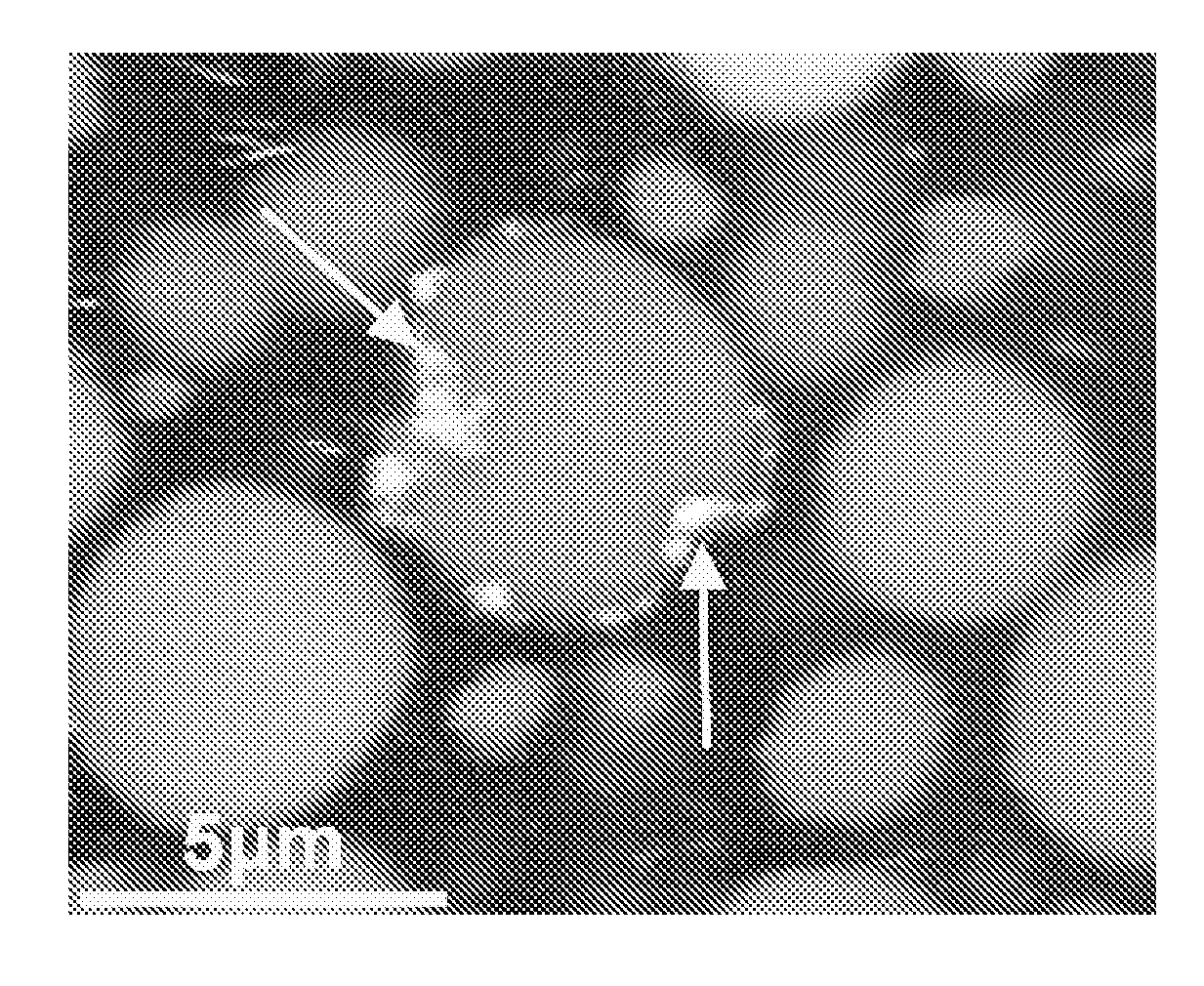
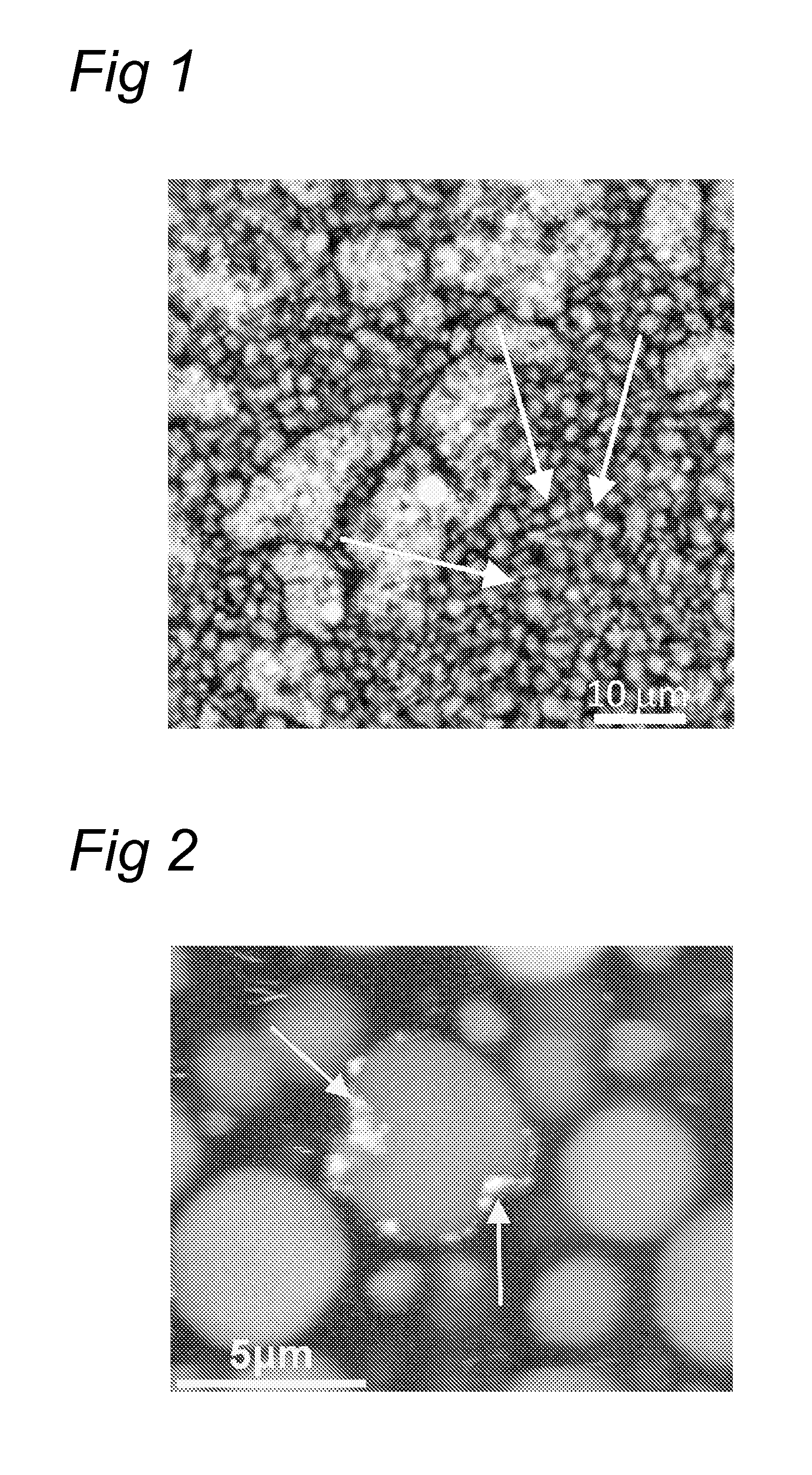
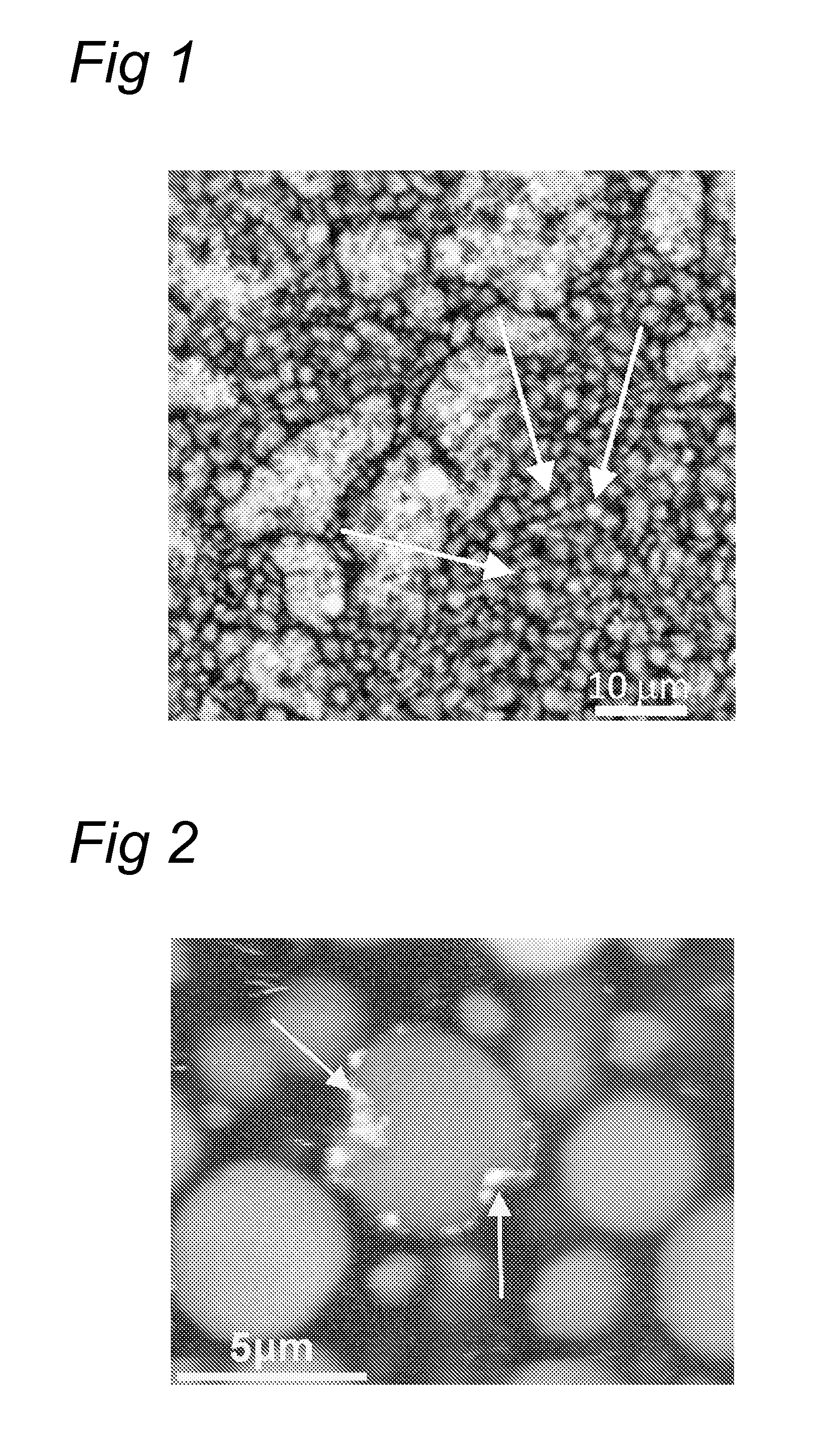
[0060]The gel was characterized with confocal light scanning microscopy (CLSM; FIG. 1). The (small) particles are clearly visible in the gel (and are indicated with arrows). In a reference gel without protein particles only the large gel fragments are visible (not shown).

example 3

Protein Particles in Food Product

[0061]A luncheon meat product was made, wherein protein particles according to the invention were added. This product contained 27 wt. % fat and 3 wt % particles. The reference product contained 30 wt. % fat. Previous work showed that 27% fat plus 3% free protein (not in the form of the particles of the invention) leads to an unacceptable hard product.

[0062]CLSM characterization did not reveal differences in the microstructure of the sausages.

the structure of the environmentally friendly knitted fabric provided by the present invention; figure 2 Flow chart of the yarn wrapping machine for environmentally friendly knitted fabrics and storage devices; image 3 Is the parameter map of the yarn covering machine
Login to View More

PUM

PropertyMeasurementUnit
Lengthaaaaaaaaaa
Fractionaaaaaaaaaa
Fractionaaaaaaaaaa
Login to View More

Abstract

The invention relates to oil-comprising protein particles, oil-free protein particles, and a method for preparation thereof. The invention is also concerned with the use of such protein particles for increasing the protein content of a food product, for replacing fat in a food product, and for controlled release of protein in the gastrointestinal tract.

Description

FIELD OF THE INVENTION[0001]The invention relates to oil-comprising protein particles, oil-free protein particles, and a method for preparation thereof. The invention is particularly concerned with the use of such protein particles for increasing the protein content of a food product. Alternatively, the protein particles may be used for replacing fat in a food product, or for controlled release of protein in the gastrointestinal tract.BACKGROUND[0002]At present, food products with high protein content are highly in demand. Foods having high protein content can fulfil important functions with respect to human health. For instance, due to their relatively strong satiating effect in comparison to fats and carbohydrates, they can be used to help prevent or reduce over-eating and may play a key role in body-weight regulation and hence in treatment / prevention of obesity. Furthermore, they can help to prevent loss of muscular mass in elderly people (sarcopenia). For such purposes, protein ...

Claims

the structure of the environmentally friendly knitted fabric provided by the present invention; figure 2 Flow chart of the yarn wrapping machine for environmentally friendly knitted fabrics and storage devices; image 3 Is the parameter map of the yarn covering machine
Login to View More

Application Information

Patent Timeline
no application Login to View More
IPC IPC(8): A23J3/00A23J1/00A23L1/305
CPCA23L1/31427A23L1/307A61K9/1658A23V2002/00A23L1/3056A23L1/035A23J3/22A23J3/08A23V2200/332A23V2200/316A23V2250/54A23V2250/5424A23V2200/222A23V2200/124A23L29/10A23L33/19A23L33/20A23L13/424A61P3/04
Inventor VENEMA, PAULSAGIS, LEONARD MARTIN CORNELIABOOIJ, TIENEKE WILLEMIJNDE VRIES, RINDERT JAKOBVAN DER LINDEN, ERIK
Owner FRIESLAND BRANDS BV
Features
  • R&D
  • Intellectual Property
  • Life Sciences
  • Materials
  • Tech Scout
Why Patsnap Eureka
  • Unparalleled Data Quality
  • Higher Quality Content
  • 60% Fewer Hallucinations
Social media
Patsnap Eureka Blog
Learn More