
Parstatin peptides
- Summary
- Abstract
- Description
- Claims
- Application Information
AI Technical Summary
Benefits of technology
Problems solved by technology
Method used
Image

Examples
example 1
Parstatin Peptides Synthesis and Compositions
[0298]Parstatin peptides used in our assays were synthesized in the core peptide facility of Peptide Specialty Laboratories GmbH (Heidelberg, Germany) or Bio-Synthesis Inc., (Lewisville, Tex.) or at the Protein and Nucleic Acid Shared Facility at the Medical College of Wisconsin. Synthesized peptides were purified by HPLC technology, characterized by mass spectrometry technology and sequenced. The synthesized peptides were as follows:
[0299]1. Human parstatin, parstatin (1-41), which corresponds to 1-41-amino acids cleaved N-terminal fragment of human PAR1.
Sequence:SEQ ID NO: 1MGPRRLLLVAACFSLCGPLLSARTRARRPESKATNATLDPR.(molecular weight of 4468 Da).
[0300]2. Mouse parstatin, which corresponds to 1-41-amino acids cleaved N-terminal fragment of mouse PAR-1.
Sequence:SEQ ID NO: 2MGPRRLLIVALGLSLCGPLLSSRVPMSQPESERTDATVNPR.(molecular weight of 4420 Da).
[0301]3. Scrambled human parstatin, which contains to randomly rearranging the amino acid sequenc...
example 2
Parstatin (1-41) Inhibits Angiogenesis In Vivo
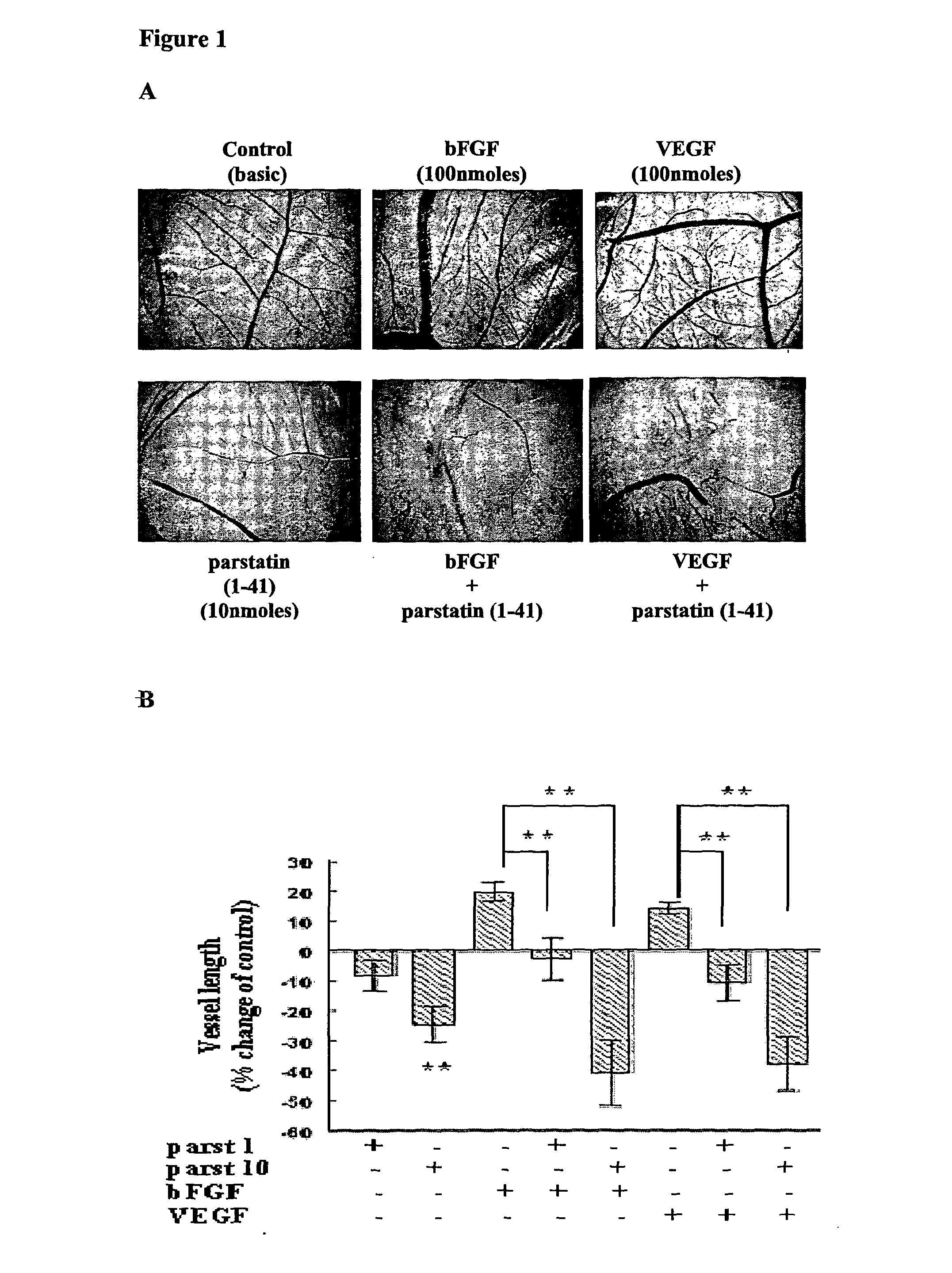
[0308]The in vivo chick chorioallontoic membrane (CAM) angiogenesis model was used to evaluate the effect of parstatin (1-41) in angiogenesis. On incubation day 9 of fertilized chicken eggs, an O-ring (1 cm2) was placed on the surface of the CAM and the vehicle or the indicated substances were placed inside this restricted area. After 48 h, CAMs were fixed in saline-buffered formalin, photographed, and analyzed using the Scion Image software (Scion Image Release Beta 4.0.2 software; Scion Corporation, Frederick, Md.). Image analysis was performed on at least 18 eggs for each group. Vessel number and length were evaluated by pixel counting, and the results expressed as mean percentage of control ±SE. Statistical analyses were performed using a Student's t test.
[0309]Parstatin (1-41) was very potent anti-angiogenic substance (FIG. 1A). The application of human parstatin on CAM of chick embryo, at concentration of 10 nmoles, resulted in a s...
example 3
Parstatin (1-41) Inhibits Angiogenesis in Rat Aortic Ring Assay
[0310]The recognition that angiogenesis in vivo involves not only endothelial cells but also their surrounding cells, has led to development of angiogenic assays using organ culture methods. Of these, the rat aortic ring assay has become the most widely used.
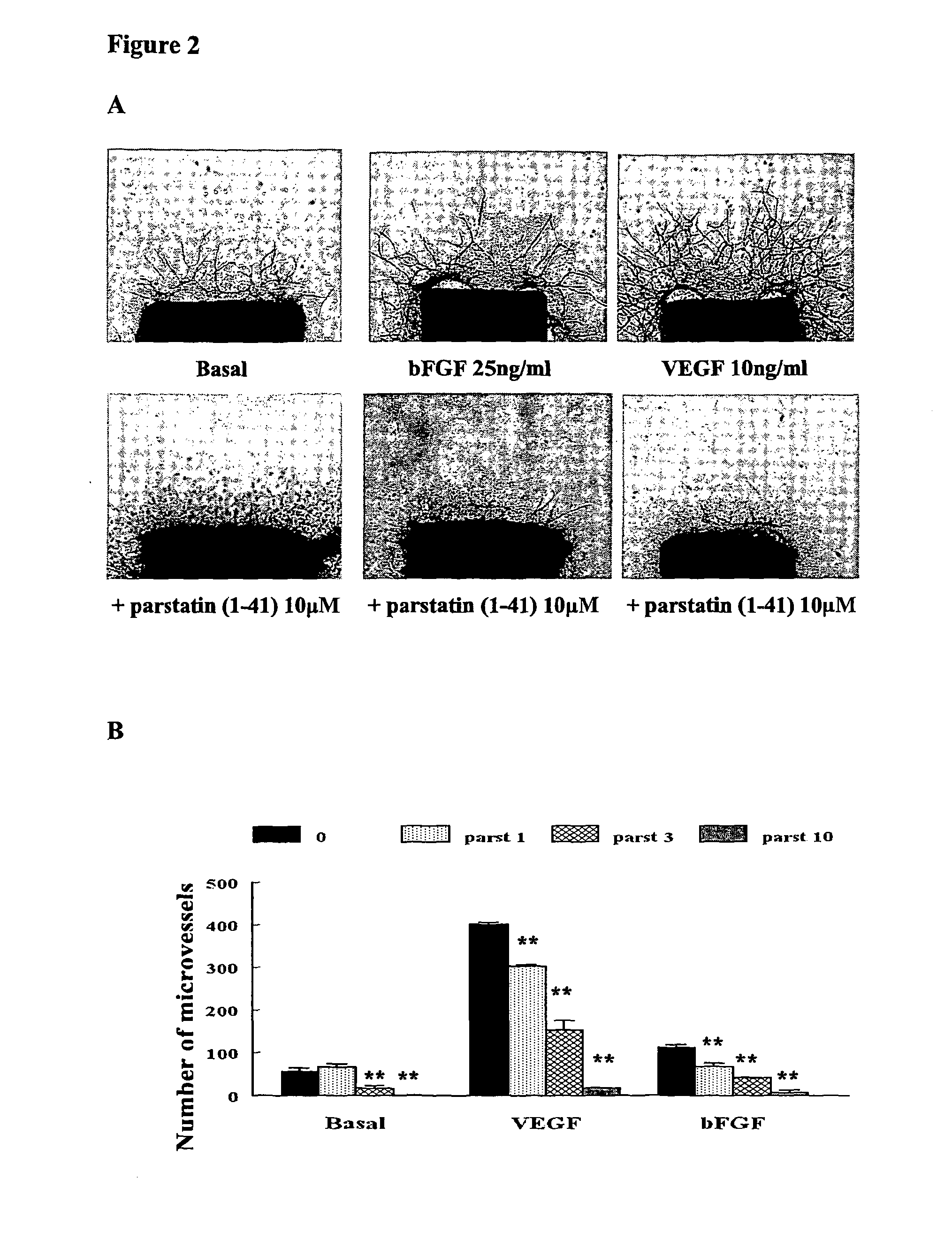
[0311]Freshly cut aortic rings obtained from 5- to 10-week-old Fischer 344 male rats were embedded in collagen gels and transferred to 16-mm wells (4-well NUNC dishes) each containing 115 ml serum-free endothelial basal medium (EBM, Clonetics Corporation) alone or supplemented with VEGF or bFGF. The angiogenic response of aortic cultures was measured in the live cultures by counting the number of neovessels over time using art accepted methods. Mean number of microvessels ±SE was determined. Statistical analysis was performed using unpaired two-tailed t-test.
[0312]Parstatin (1-41) inhibited microvessel formation (FIG. 2A). This inhibitory effect was in a dose depende...
PUM
| Property | Measurement | Unit |
|---|---|---|
| Fraction | aaaaa | aaaaa |
Abstract
Description
Claims
Application Information
 Login to View More