
Structure and process for thin film interconnect
a technology of thin film interconnection and structure, applied in the direction of metal layered products, solid-state devices, metal-working apparatus, etc., can solve the problems of high production cost, inability to meet the requirements of production, so as to achieve the effect of providing dimensional stability to the structur
- Summary
- Abstract
- Description
- Claims
- Application Information
AI Technical Summary
Benefits of technology
Problems solved by technology
Method used
Image

Examples
Embodiment Construction
The following example is intended to further illustrate the invention and is not intended to limit the scope of the invention in any manner.
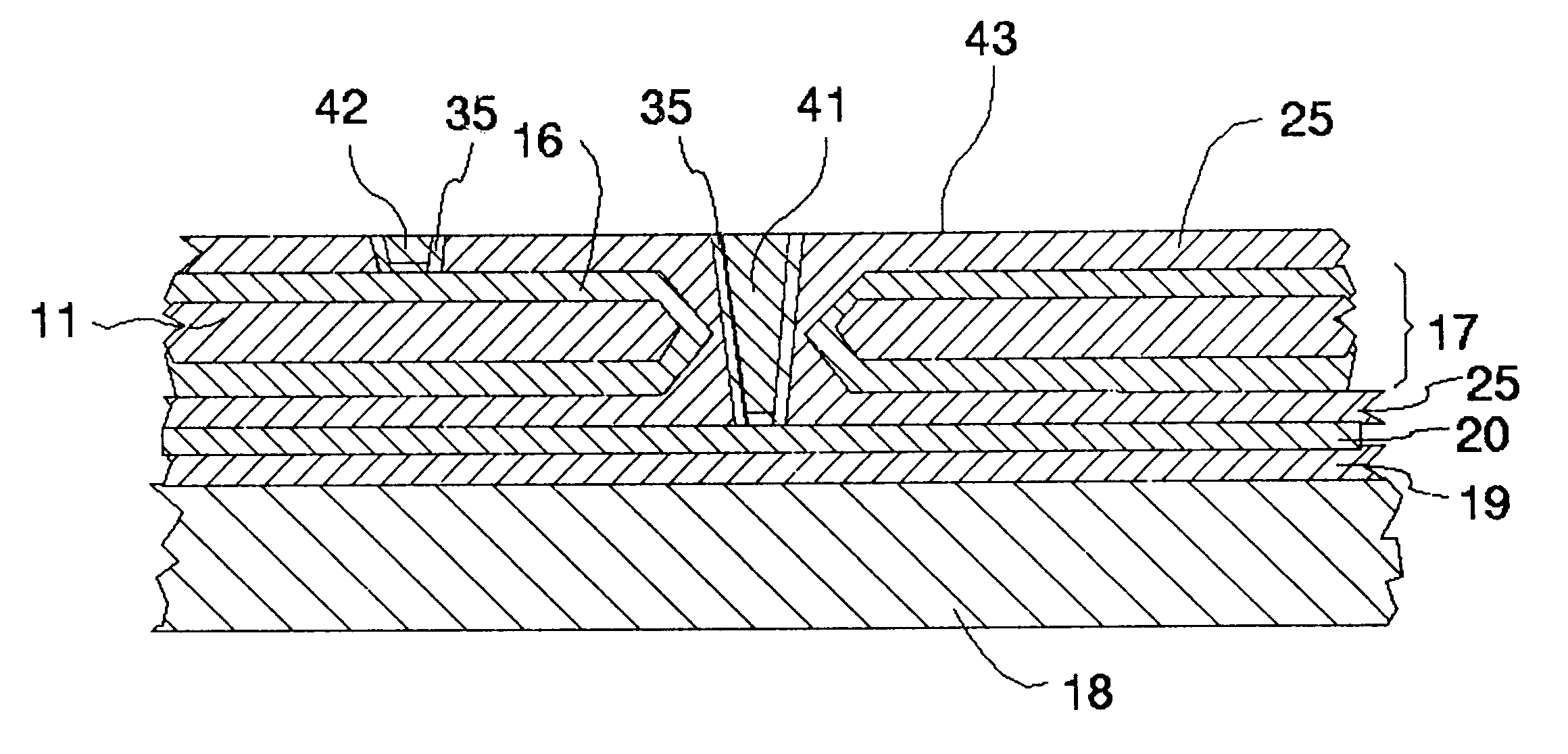
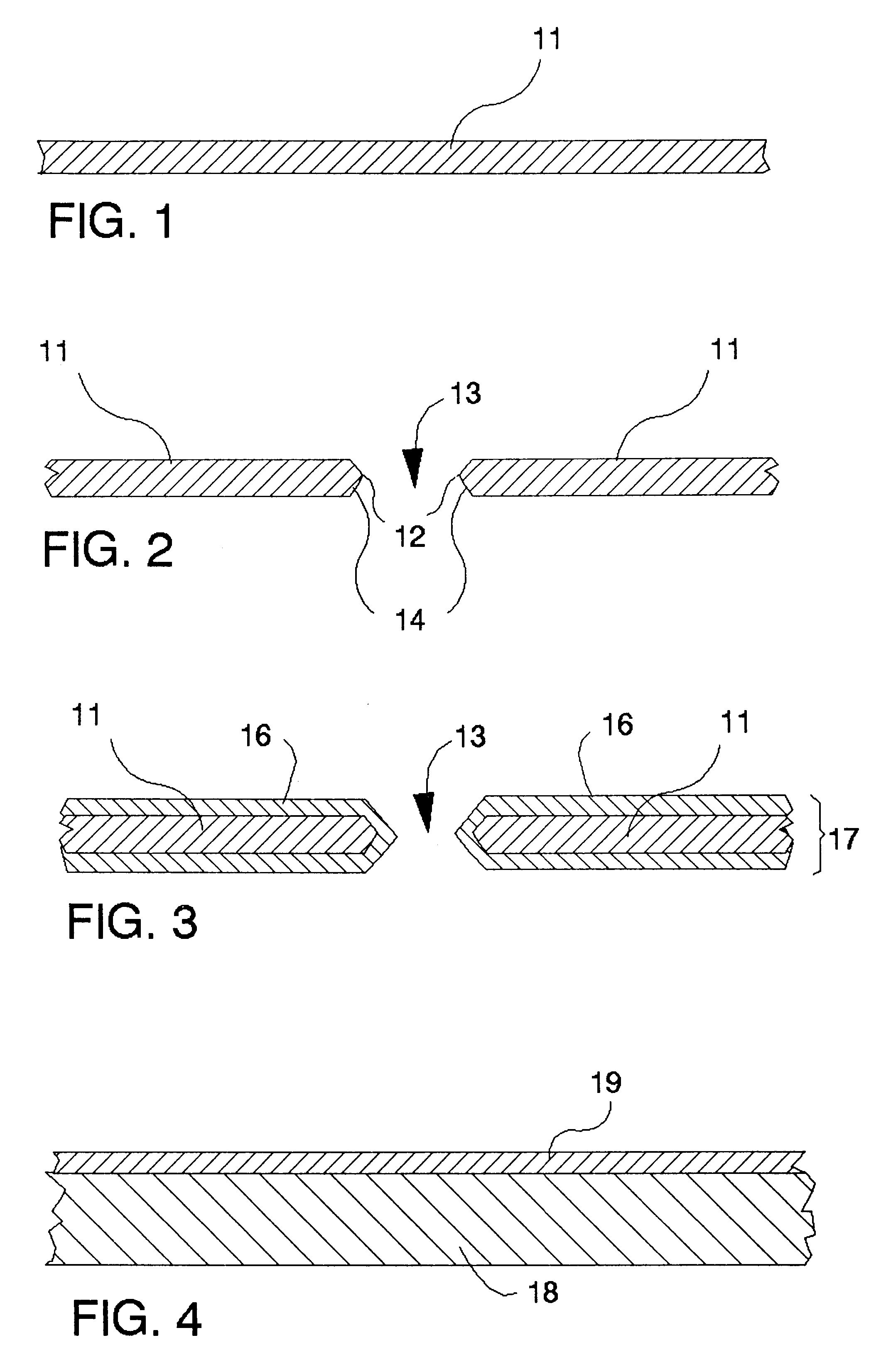
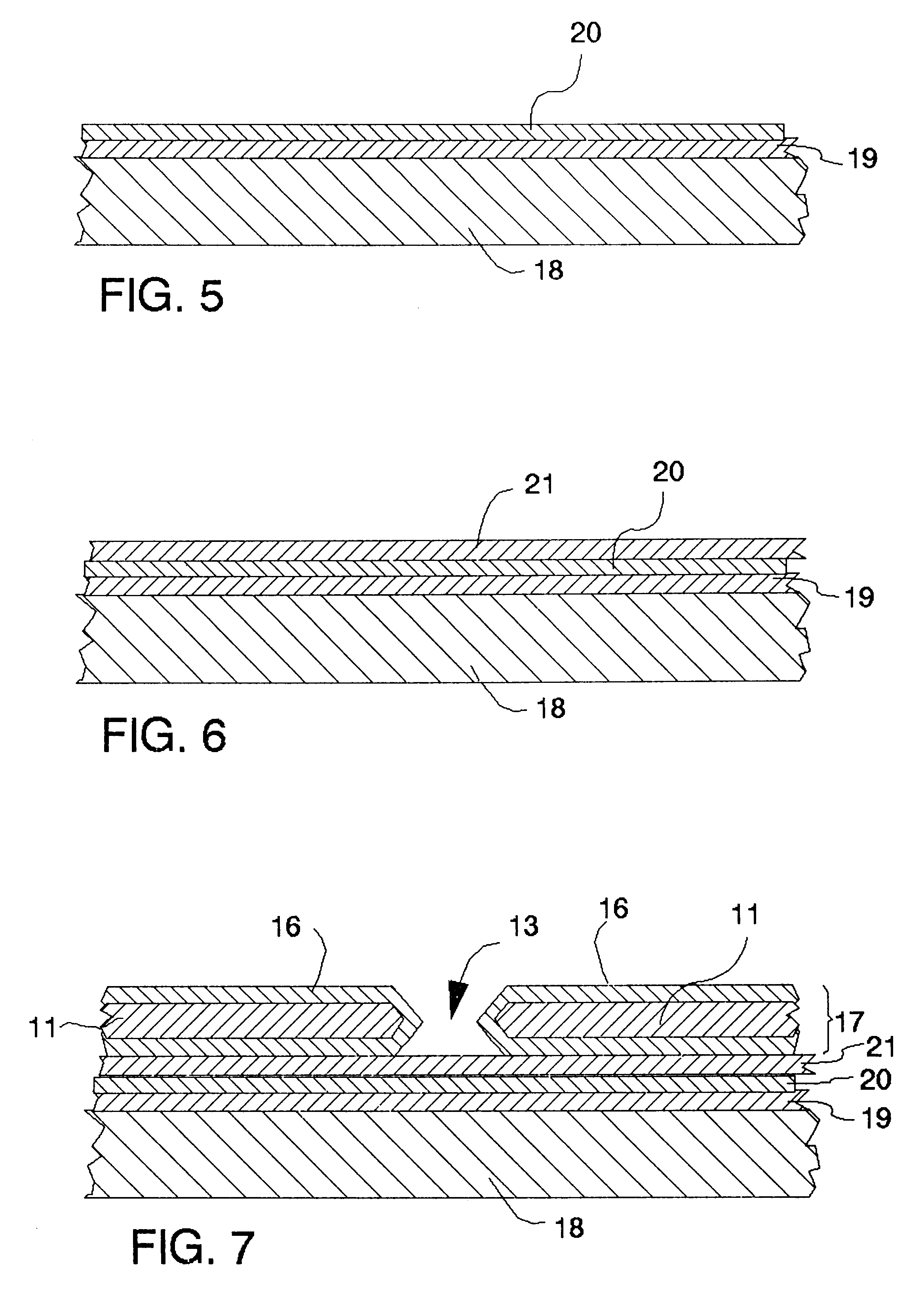
Double-sided etched molybdenum (1.4 mil thick) with knife-edge vias is made according to molybdenum etch techniques using photoresists and masks which are well known in the art. See for example, "Screening Masks and Method of Fabrication" I.B.M. Technical Disclosure Bulletin, Vol. 20, No. 2, pp. 577-578, (July 1977).
A thin layer (200-500 A) of chromium is evaporated onto both sides of the etched molybdenum foil such that it not only forms a continuous film on the top and bottom surfaces, but also forms a conformal film on the via sidewalls.
For use as a rigid support, a glass plate is coated on one side with 10 micron of polyimide which is fully cured. This polymer application is accomplished by means of spin, spray, or roller coating. A layer of chromium-copper-chromium metallurgy is then sputtered on top of this initial layer of polymer. The to...
PUM
| Property | Measurement | Unit |
|---|---|---|
| thick | aaaaa | aaaaa |
| pressure | aaaaa | aaaaa |
| thick | aaaaa | aaaaa |
Abstract
Description
Claims
Application Information
 Login to View More