Supercapacitor is a versatile energy-storage device, yet it receives incommensurate attention in the industries. Unit price and
electrical performance are the two major causes that prevent supercapacitor from
prevalence. Accordingly, an object of the present invention is to fabricate supercapacitor with sufficient
energy density in a single
package to fulfill application requirements. Integration of the required number of unit cells into one piece of the desired device at the fabrication stage involves lower cost and less hustle than post conjunction of encapsulated
capacitor individuals. Furthermore, such integration will offer end users a lot of convenience.
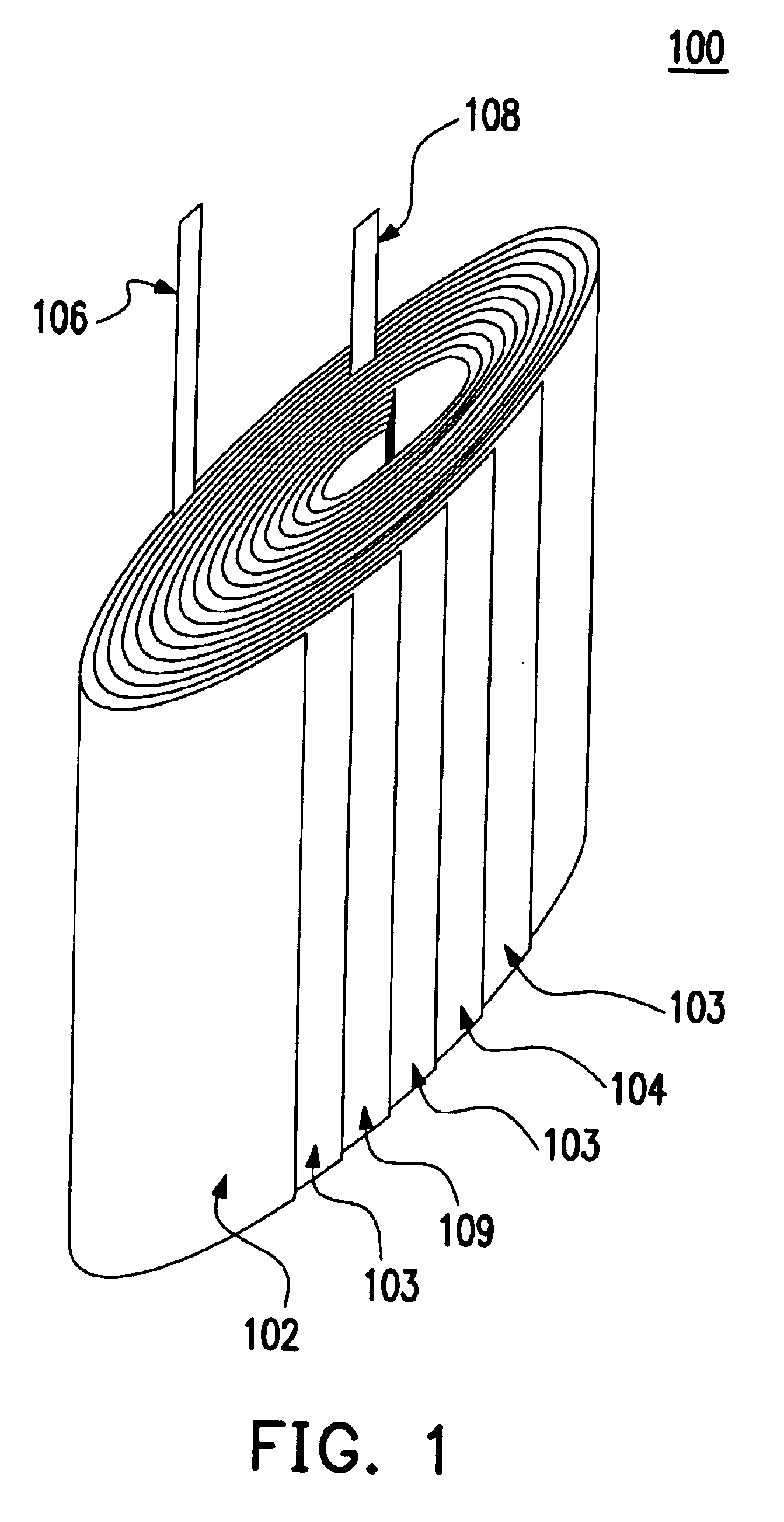
Another object of the present invention is to use spiral winding of as needed electrodes and separators into a cylindrical, oval or square roil of unitary supercapacitor. Each unit
capacitor is prepared in the right size to yield sufficient
capacitance as demanded by applications, as well as in an adequate configuration for the highest space utilization of the capacitor housing. Comparing to stacking, winding can generate
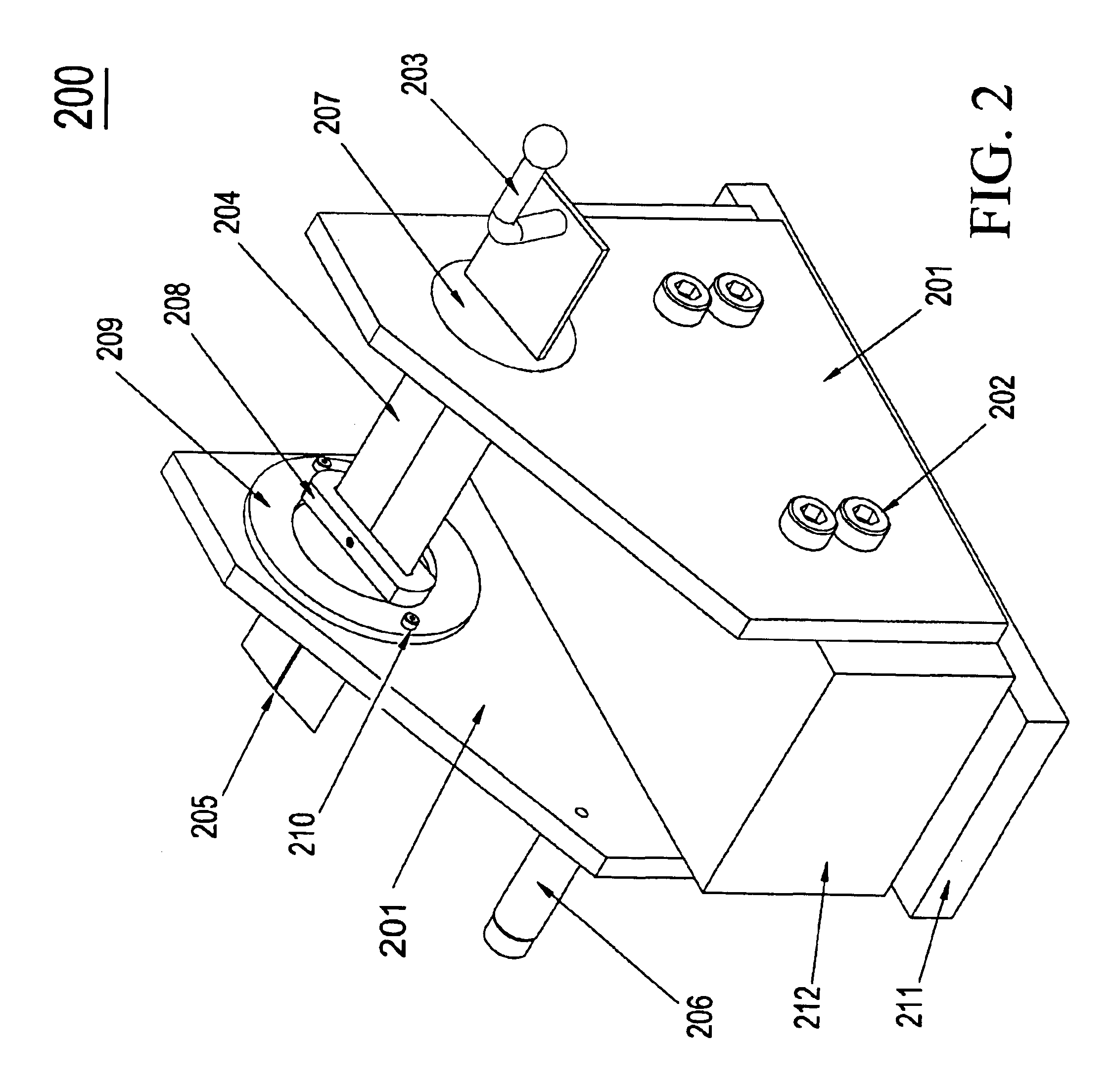
high surface area for the unitary supercapacitor in one step of operation. Using automatic machineries, the winding operation can produce supercapacitor at a high
throughput so that the products have commercial viability.
Still another object of the present invention is to employ bipolar packaging for promoting the working
voltage of unitary supercapacitor. There are four applications of edge sealing at four different stages of spiral winding of the electrodes and separators using a curable
polymer. Not only the edge sealing can confine the electrolytes within two electrodes of every unit
cell, but also it can insulate the electrodes to prevent electric shorts or electrochemical reactions, so that the leakage current (LC) of capacitor may be reduced. As the electrodes are fixed through edge sealing,
convulsion damage of the electrodes at charging and discharging of the capacitor may be minimized.
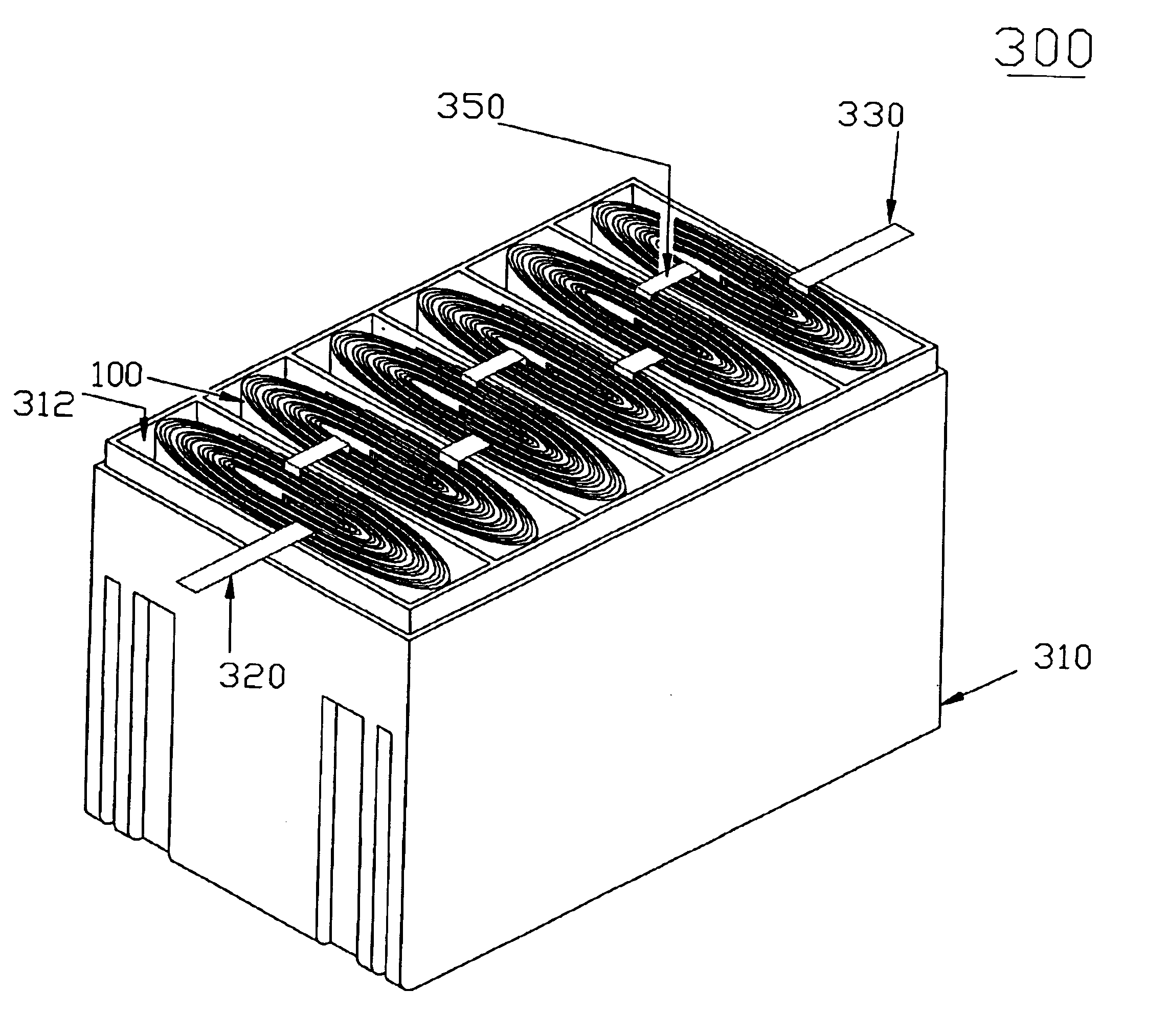
Yet another object of the invention is to place as needed number of unitary supercapacitors in a container with as needed number of compartments so that the individual units can be integrated into a single device with sufficient
energy density. When the
power load of an application is determined, the number, as well as the dimension, of the compartments of capacitor housing can then be decided. Correspondingly, the unitary supercapacitors are fabricated and assembled in the container to meet the application need without undue
wasting of material. There is no restriction on the shape of container to house the unitary supercapacitors as long as the integrated supercapacitor can fit the space of application.
Still yet another object of the invention is to employ a curable
potting material to hermetically seal the capacitor housing to complete the integration of unitary supercapacitors. In conjunction with the edge sealing,
potting should collectively and effectively assist the electrodes against
convulsion damages from mechanical movements induced during
charge and discharge of the supercapacitors. Many
potting materials can provide a
mechanical strength comparable to that offered by bolts and nuts. Nevertheless, the potting operation is easier and quicker than the screwing, and the former also presents a permanent fastening.
A 5.0V bipolar supercapacitor of wound type is consisted of three sheets of electrodes and three sheets of separator in one container. To attain the same working voltage of 5.0V, two conventional supercapacitors of 2.5V each must be connected in series using a connecting wire. Combining the two conventional capacitors, the
package consumes four electrodes and four separators, as well as two containers. Henceforth, the bipolar packaging uses less material than the conventional way for constructing the supercapacitor of 5.0V working voltage. Furthermore, due to the fact that separator contains most of the
electrolyte and the
electrolyte is the most expensive component of supercapacitor, more separators employed will lead to higher material cost for the supercapacitor. One more
advantage of the bipolar packaging is that the edge sealing can also insulate the substrate
metal, aluminum in the invention, which may be exposed during fabrication so that leakage current of supercapacitor may be reduced from preventing the
bare metal to react with any active contaminant, for example, water, which may be present in the
system.


 Login to View More
  Login to View More