Soybean based epoxy resin and methods of making and use
a technology soybean based resin, which is applied in the direction of epoxy resin coatings, coatings, natural resin chemical modification, etc., can solve the problems of lack of desirable properties of soybean based epoxy resin, poor flexibility of densely cross-linked films with high chemical resistance, etc., to improve the reactivity, enhance the curing characteristics and glass transition, and the density of cross-linking density
- Summary
- Abstract
- Description
- Claims
- Application Information
AI Technical Summary
Benefits of technology
Problems solved by technology
Method used
Image



Examples
example 1
Transesterification of Triglycerides
[0046]Transesterification of 1 mole of triglyceride was carried out with approximately 6 moles of allyl alcohol in presence of a base (potassium hydroxide—KOH) as a catalyst. The concentration of the base was 0.9% (w / w). To produce one liter of allyl esters, one liter of soybean oil was reacted with 348 g of allyl alcohol in the presence of 9.2 g of KOH, which was crushed and dissolved in the allyl alcohol. Soybean oil was heated to 90° C. in a three-neck flask. Allyl alcohol with KOH was then poured into the flask. A water cooled condenser was attached to the central neck of the flask, while a thermometer was inserted through one of the side necks. The third neck was used for introducing the reactants into the flask. The temperature of the reactant mixture was maintained at 90° C. until transesterification was complete. The transesterification time was approximately 2.5 hours under the condition specified above. During the reaction period, the de...
example 2
Epoxidation of Triglycerides and other Fatty Acid Esters
[0047]This example demonstrates the epoxidation procedure in a small laboratory scale. One liter of fatty acid allyl esters obtained in Example 1 was used to obtain one liter of soy based epoxy resin. Glycerol was used as a solvent and m-chloroperoxybenzoic acid (MCPBA) was used as a reagent. The ratio of esters:MCPBA:glycerol was 1:2:4. A round flask was placed in an ice bath. Glycerol and MCPBA were poured into the flask and mixed by an eccentric mixer until they formed a semi-paste. Small quantities of soy fatty acid ester solution were then added into the flask while eccentric mixing was continued. The process was continued until all the soy ester was uniformly mixed in the semi-paste.
[0048]Hexane was added to the flask to dissolve the epoxy esters. A suspension containing solid and liquid mixture was formed in the flask because not all components in the flask were soluble in hexane. The suspension was vacuum filtered to se...
example 3
Curing of Soybean Based Resin with Phthalic Anhydride
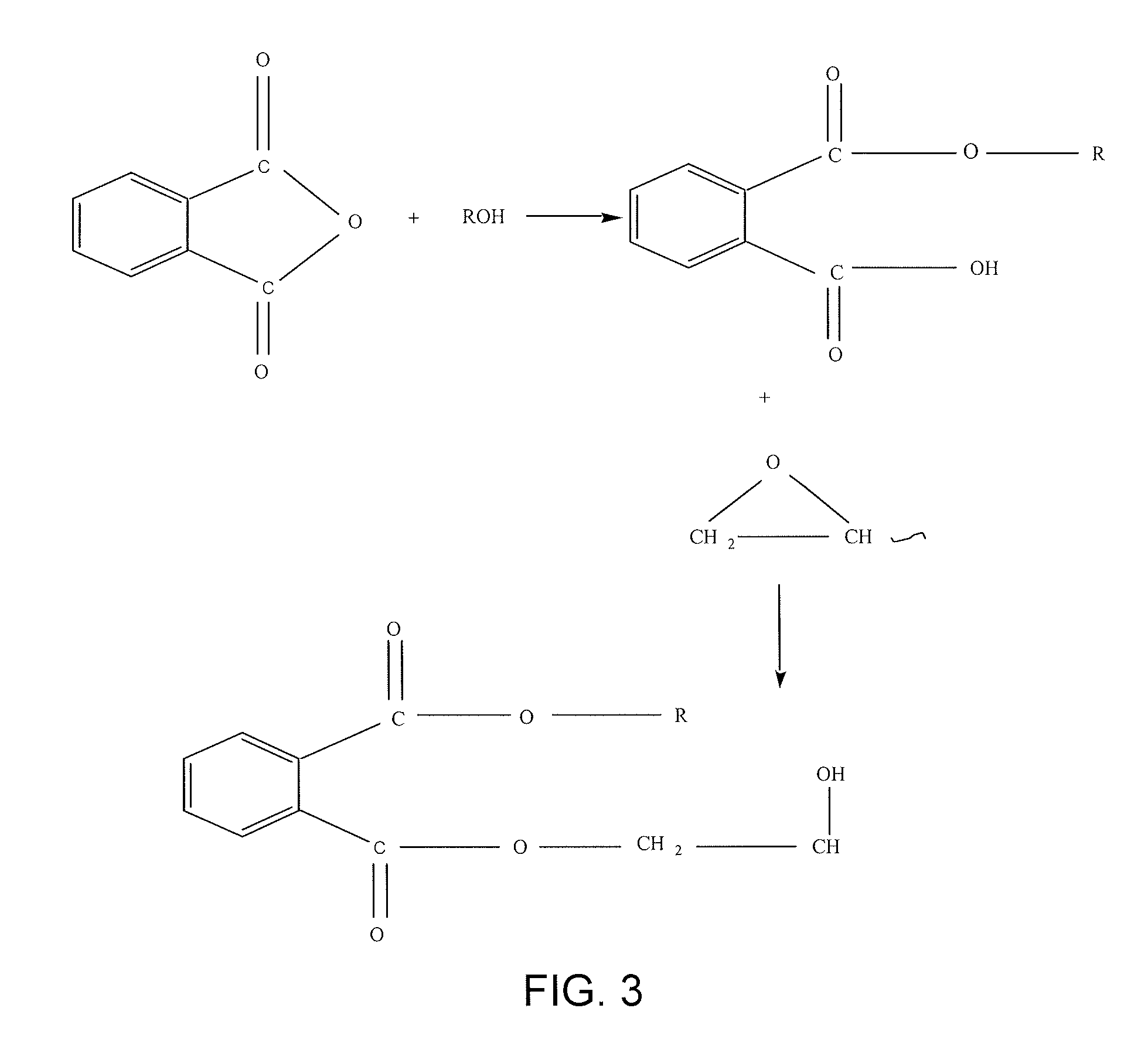
[0050]The epoxy soybean based resin obtained in Example 2 were mixed with phthalic anhydride (PA). The mixture was applied to metallic surfaces and heat cured at temperatures ranging between 185-200° C. for 2-4 minutes. The curing characteristics and glass transition of these resins were determined using Differential Scanning Calorimeter (DSC) (FIG. 7).
PUM
| Property | Measurement | Unit |
|---|---|---|
| temperature | aaaaa | aaaaa |
| temperature | aaaaa | aaaaa |
| time | aaaaa | aaaaa |
Abstract
Description
Claims
Application Information
 Login to View More
 - R&D
- Intellectual Property
- Life Sciences
- Materials
- Tech Scout
- Unparalleled Data Quality
- Higher Quality Content
- 60% Fewer Hallucinations
Browse by: Latest US Patents, China's latest patents, Technical Efficacy Thesaurus, Application Domain, Technology Topic, Popular Technical Reports.
© 2025 PatSnap. All rights reserved.Legal|Privacy policy|Modern Slavery Act Transparency Statement|Sitemap|About US| Contact US: help@patsnap.com