
A method for continuous extraction of chlorella functional components
A functional ingredient, the technology of Chlorella, which is applied in the preparation methods of peptides, chemical instruments and methods, algae/moss peptides, etc., can solve the problems of unclear products, long operation cycle, low yield, etc., and achieve simple operation. Reliable, easy to maintain active effect
- Summary
- Abstract
- Description
- Claims
- Application Information
AI Technical Summary
Problems solved by technology
Method used
Image

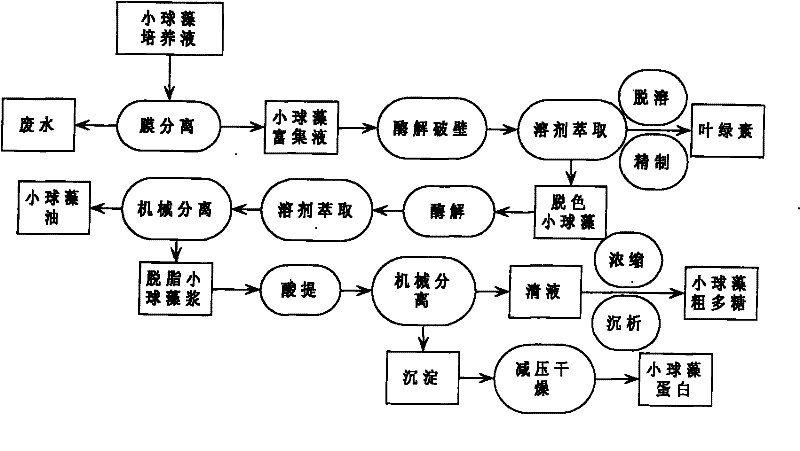
Examples
Embodiment 1
[0033] Use a pump to introduce the chlorella culture solution into a membrane separation system using polysulfone (or ceramic or polyether) as the membrane material for microporous membrane filtration. The control membrane separation process parameters are: cross-flow velocity 2.4cm / s, operating pressure The chlorella was concentrated to 0.5% of the original volume at a temperature of 0.02MPa and a temperature of 20°C to obtain a chlorella concentrate. Add cellulase 0.1%, pectinase 0.1%, and xylanase 0.1% to the concentrated solution (the amount of enzyme added is the percentage of dry matter in the chlorella concentrate), the temperature is 40℃, and the enzymatic hydrolysis is carried out for 1 hour Break the wall. A concentrated solution of Chlorella vulgaris was obtained. Ethanol was added to the concentrated solution of chlorella vulgaris to a concentration of 50% and a temperature of 50° C. for extraction for 2 hours. Then centrifuged (3000r / min) to obtain ethanol extract...
Embodiment 2
[0035] Use a pump to introduce the chlorella culture solution into a membrane separation system using polysulfone (or ceramic or polyether) as the membrane material for microporous membrane filtration. The process parameters of the membrane separation are controlled as follows: the cross-flow velocity is 5 cm / s and the operating pressure is The chlorella was concentrated to 0.8% of the original volume at 0.04 MPa, the temperature was 30°C, and the chlorella concentrate was obtained. Add cellulase 0.2%, pectinase 0.3%, and xylanase 0.4% to the concentrated solution (the amount of enzyme added is the percentage of dry matter in the chlorella concentrate), the temperature is 50℃, and the enzymatic hydrolysis is carried out for 2 hours Broken the wall to obtain a concentrated solution of broken wall chlorella. Add ethanol to the broken chlorella concentrate to make the concentration 60%, the temperature is 55°C, and the extraction is performed for 3 hours. Then centrifuged (3000r / ...
Embodiment 3
[0037] Use a pump to introduce the chlorella culture solution into a membrane separation system using polysulfone (or ceramic or polyether) as the membrane material for microporous membrane filtration. The process parameters of the membrane separation are controlled as follows: the cross-flow velocity is 4 cm / s and the operating pressure is The chlorella was concentrated to 1% of the original volume at 0.08 MPa, the temperature was 40°C, and the chlorella concentrate was obtained. Add cellulase 0.3%, pectinase 0.3%, and xylanase 0.3% to the concentrate (the amount of enzyme added is the percentage of the dry matter in the chlorella concentrate), the temperature is 60℃, and the enzymatic hydrolysis is carried out for 5 hours Broken the wall to obtain a concentrated solution of broken wall chlorella. Ethanol was added to the broken chlorella concentrate to make the concentration 70%, the temperature was 50°C, and the extraction was performed for 6 hours. After centrifugation (30...
PUM
 Login to View More
 Abstract
Description
Claims
Application Information
 Login to View More