
New process for fixing carbon dioxide
A carbon dioxide, new process technology, applied in calcium carbonate/strontium/barium, chemical instruments and methods, dispersed particle separation, etc., can solve the problems of aggravating the greenhouse effect, difficult to absorb, etc. The effect of improving utilization
- Summary
- Abstract
- Description
- Claims
- Application Information
AI Technical Summary
Problems solved by technology
Method used
Image

Examples
Embodiment 1
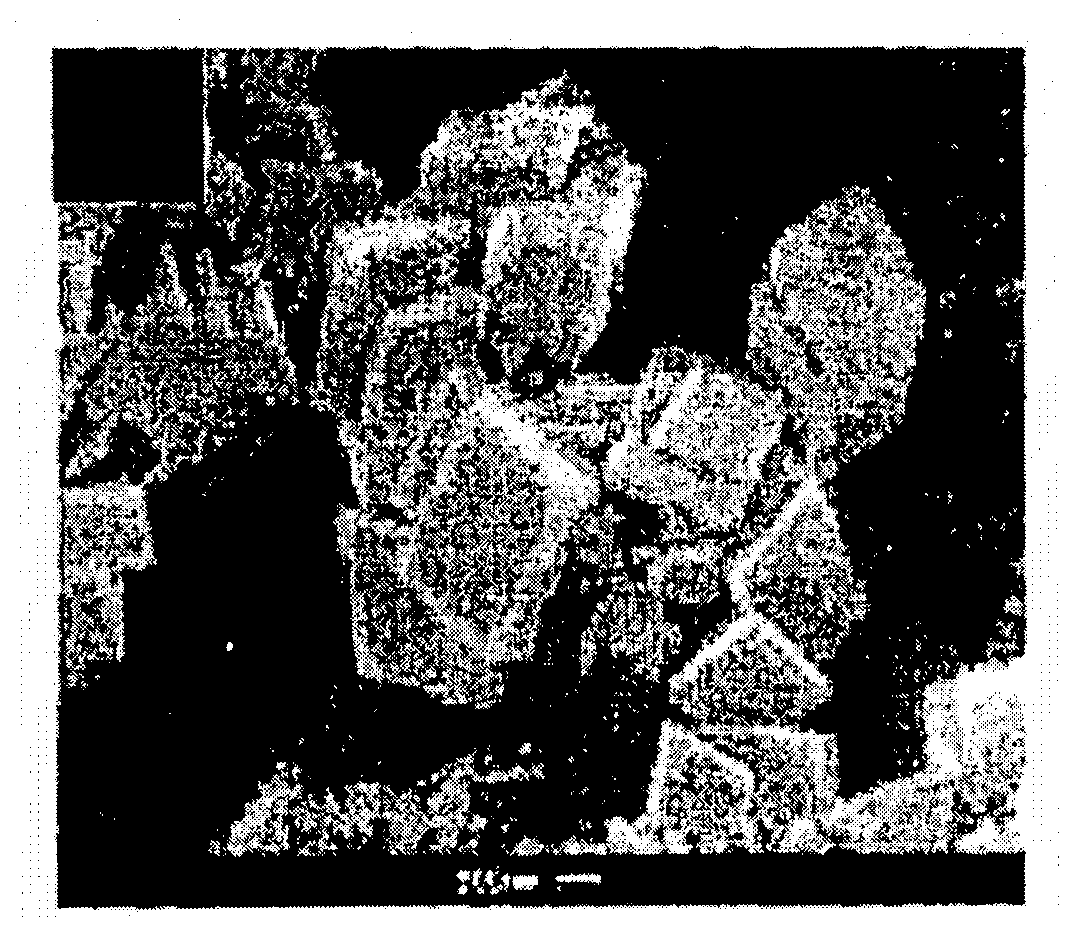
[0032] The slurry is prepared by mixing calcium carbide slag: water (mass ratio) = 1:15. Add 2mol / L ammonium chloride solution to dissolve until the pH of the solution is around 8. Filter to obtain a mixed solution of calcium chloride and ammonia water with a solution concentration of 2%. in CO 2 In the absorber, sodium dodecylbenzenesulfonate is added in the filtrate, and the addition of sodium dodecylbenzenesulfonate is controlled to be 0.2% of the calcium carbonate quality that generates. Then feed 6% (volume ratio) CO into the filtrate 2 Gas, the gas flow rate is 10ml / min, and the reaction temperature is controlled at 5°C. After the reaction was finished, the product was analyzed by a scanning electron microscope after filtration and drying, and the crystal form was figure 1 Calcite-type calcium carbonate in shape.
Embodiment 2
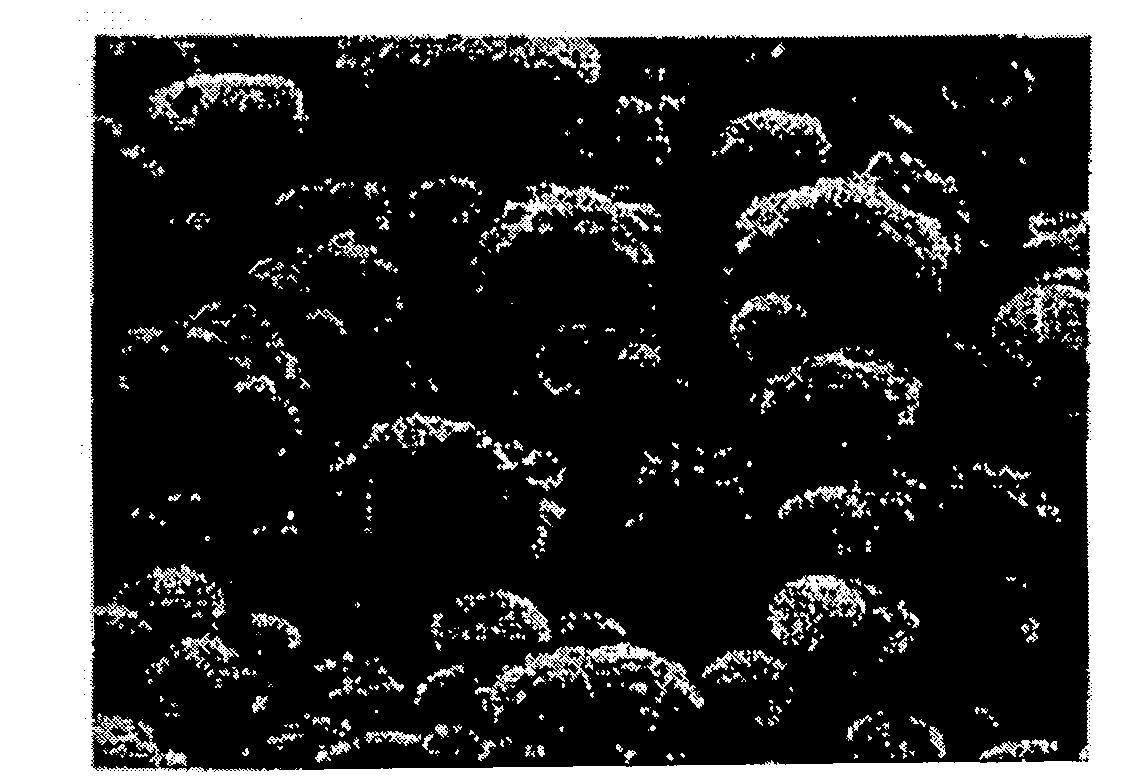
[0034] The slurry is prepared by mixing calcium carbide slag: water (mass ratio) = 1:20. Add 3mol / L ammonium chloride solution to dissolve until the pH of the solution is around 8. Filter to obtain a mixed solution of calcium chloride and ammonia water with a solution concentration of 4%. in CO 2 In the absorber, sodium dodecylbenzenesulfonate is added in the filtrate, and the addition of sodium dodecylbenzenesulfonate is controlled to be 0.2% of the calcium carbonate quality that generates. Then feed 10% (volume ratio) CO into the filtrate 2 Gas, the gas flow rate is 15ml / min, and the reaction temperature is controlled to be 12°C. After the reaction was finished, the product was analyzed by a scanning electron microscope after filtration and drying, and the crystal form was figure 2 The shape of vaterite calcium carbonate.
Embodiment 3
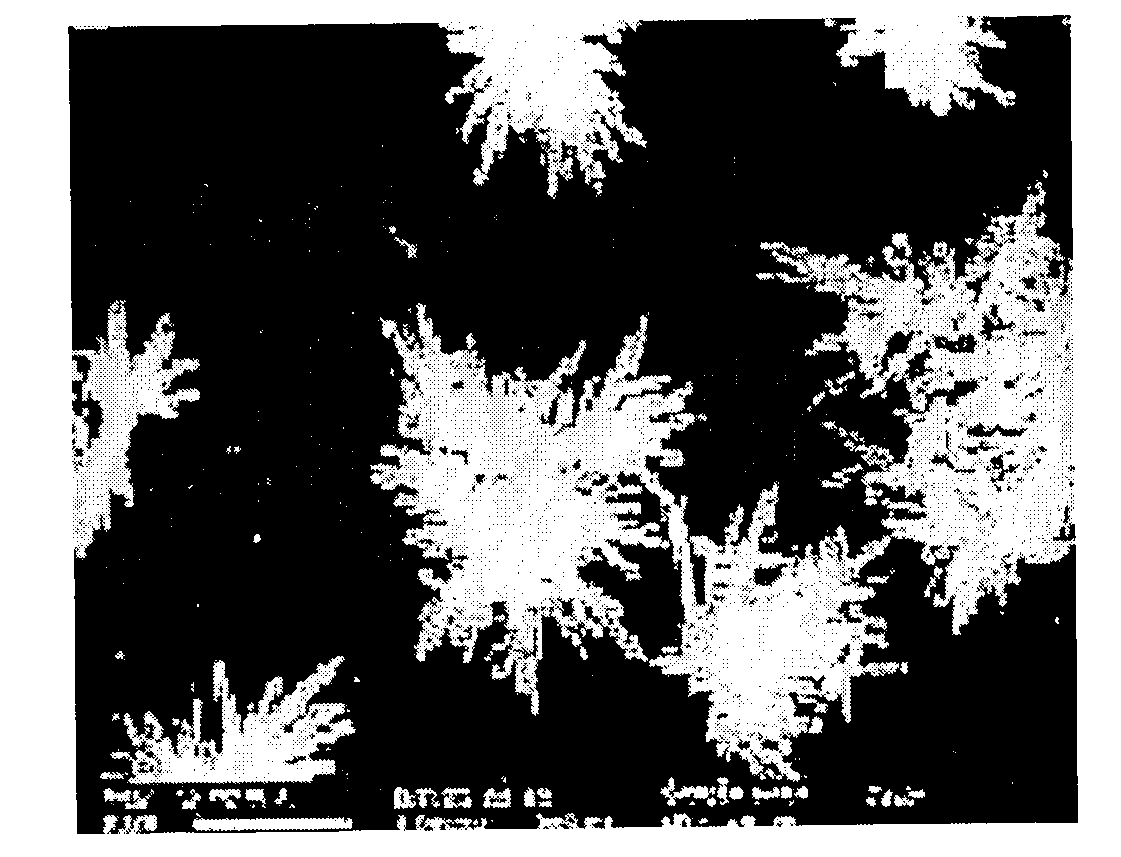
[0036] The slurry is prepared by mixing calcium carbide slag: water (mass ratio) = 1:25. Add 5mol / L ammonium chloride solution to dissolve until the pH of the solution is around 8. Filter to obtain a mixed solution of calcium chloride and ammonia water with a solution concentration of 12%. in CO 2 In the absorber, sodium dodecylbenzenesulfonate is added in the filtrate, and the addition of sodium dodecylbenzenesulfonate is controlled to be 0.2% of the calcium carbonate quality that generates. Then feed 25% (volume ratio) CO into the filtrate 2 Gas, the gas flow rate is 20ml / min, and the reaction temperature is controlled to be 75°C. After the reaction was finished, the product was analyzed by a scanning electron microscope after filtration and drying, and the crystal form was image 3 The shape of aragonite calcium carbonate.
PUM
 Login to View More
 Abstract
Description
Claims
Application Information
 Login to View More