
Multi-target tamibarotene derivative and its preparation method and application
A tamibarotene and multi-target technology, which is applied in the preparation of urea derivatives, organic compounds, chemical instruments and methods, etc., can solve the problems of low drug resistance, toxic and side effects that limit clinical use, etc.
- Summary
- Abstract
- Description
- Claims
- Application Information
AI Technical Summary
Problems solved by technology
Method used
Image

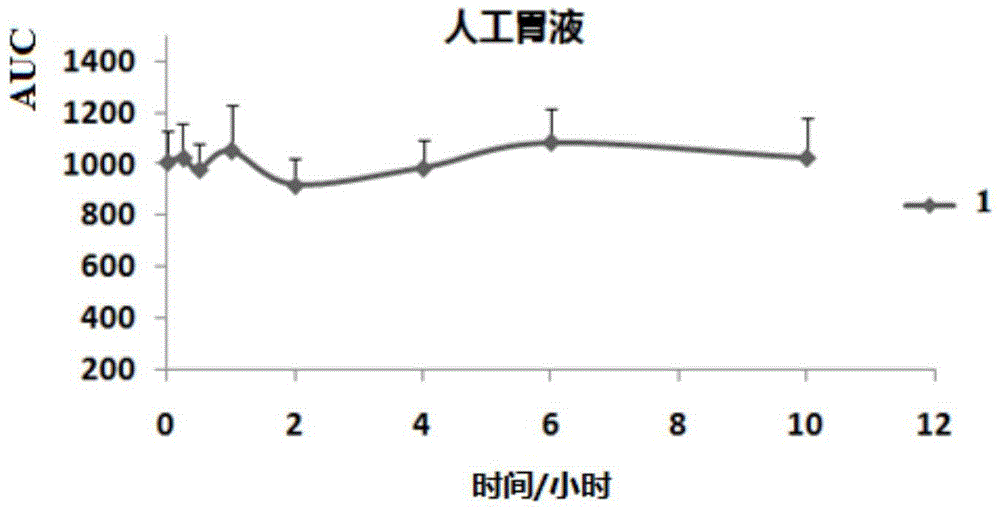
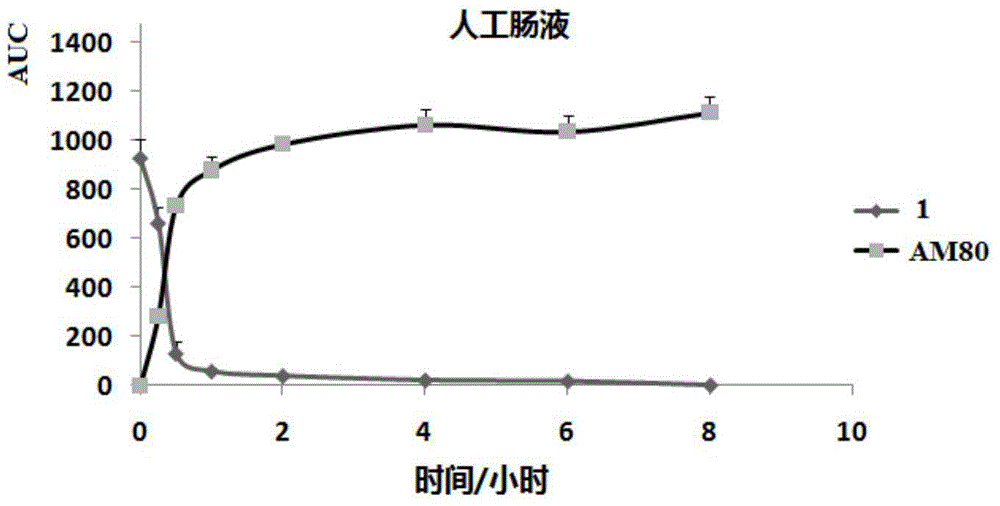
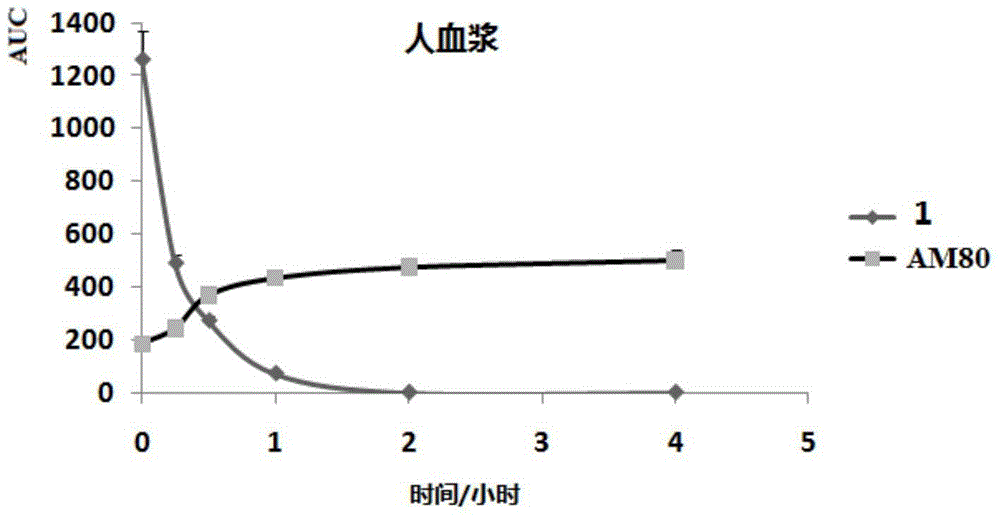
Examples
Embodiment 1
[0063] Example 1: N-(5,5,8,8-tetramethyl-5,6,7,8-tetrahydro-2-naphthyl)-4-((ureaoxy)carbonyl)benzamide ( 1) Preparation
[0064] Tamibarotene (AM80) (0.35g, 1mmol) was dissolved in anhydrous tetrahydrofuran, and 1-ethyl-(3-dimethylaminopropyl) carbodiimide hydrochloride (0.21 g, 1.1mmol), add pentafluorophenol (0.20g, 1.1mmol) previously dissolved in N,N-dimethylformamide. The reaction was carried out at room temperature for 12 hours, and the reaction was monitored by TLC. After the reaction is completed, the solvent is evaporated for later use. First dissolve hydroxyurea (0.08g, 1mmol) in N,N-dimethylformamide, add N-methylmorpholine (12mL) to dissolve the upper pentafluorophenol ester in anhydrous dioxane, Drop into the N,N-dimethylformamide reaction solution. React at room temperature for 12h. It was directly passed through the column (EA / PE=5 / 1) to obtain a white solid 1 (0.11 g, 27%). ESI-MS m / z:410.5(M+H) + , 1 H-NMR(600MHzDMSO-d 6 ):δ1.24-1.25(m,12H), 1.64-1.66(m,4H)...
Embodiment 2
[0065] Example 2: (5-Fluoro-2,4-dioxy-3,4-dihydropyrimidine-1(2H)-yl)methyl-4-((5,5,8,8-tetramethyl -Preparation of 5,6,7,8-tetrahydro-2-naphthyl)carbamoyl)benzoate (3)
[0066] 5-Fluorouracil (5-FU) (1.3g, 10mmol) was mixed with 3mL of 37% aqueous formaldehyde solution, stirred at 60°C for 2h, and evaporated under reduced pressure to remove water to obtain a colorless viscous oil. The obtained oil was dissolved in anhydrous acetonitrile, and AM80 (3.51 g, 10 mmol), dicyclohexylcarbodiimide (2.3 g, 11 mmol), and an appropriate amount of 4-dimethylaminopyridine were added. After 24 hours, TLC monitored the reaction to be complete, the solvent was evaporated, ethyl acetate was added to dissolve, and the organic phase was washed with water, 1M hydrochloric acid, saturated sodium bicarbonate, and saturated sodium chloride. It was dried over anhydrous magnesium sulfate, filtered and evaporated to remove the solvent, and the residue was separated with a silica gel column (dichlorometh...
Embodiment 3
[0067] Example 3: N 1 -(2-(2,6-Piperidinedione-3-yl)-1-oxoisoindolin-4-yl)-N 4 Preparation of (5,5,8,8-tetramethyl-5,6,7,8-tetrahydro-2-naphthyl)terephthalamide (5)
[0068] Tamibarotene (AM80) (0.35g, 1mmol) was dissolved in 20mL of thionyl chloride, two drops of DMF were added dropwise, and the mixture was stirred and refluxed at 75°C for 2h. The solvent was evaporated to obtain compound 4 as a yellow oily compound. In the future, Nalidomide (0.26g, 1mmol) was dissolved in the pyridine solution, and the tetrahydrofuran solution of compound 4 was added dropwise under ice bath. Remove the ice bath temperature response. After 24 hours, TLC monitored the reaction to be complete, the solvent was evaporated, ethyl acetate was added to dissolve, and the organic phase was washed with water, 1M hydrochloric acid, and saturated sodium chloride. It was dried over anhydrous magnesium sulfate, filtered and evaporated to remove the solvent, and the residue was separated with a silica gel c...
PUM
 Login to View More
 Abstract
Description
Claims
Application Information
 Login to View More