
A kind of silicon carbide-based semiconductor circuit breaker and its preparation method
A circuit breaker, silicon carbide technology, applied in the direction of semiconductor devices, circuits, electrical components, etc., can solve the problems of loss of pumping characteristics, loss of off-state characteristics, etc., achieve low on-resistance, reduce switching power consumption, and work reliably Effect
- Summary
- Abstract
- Description
- Claims
- Application Information
AI Technical Summary
Problems solved by technology
Method used
Image

Examples
Embodiment 1
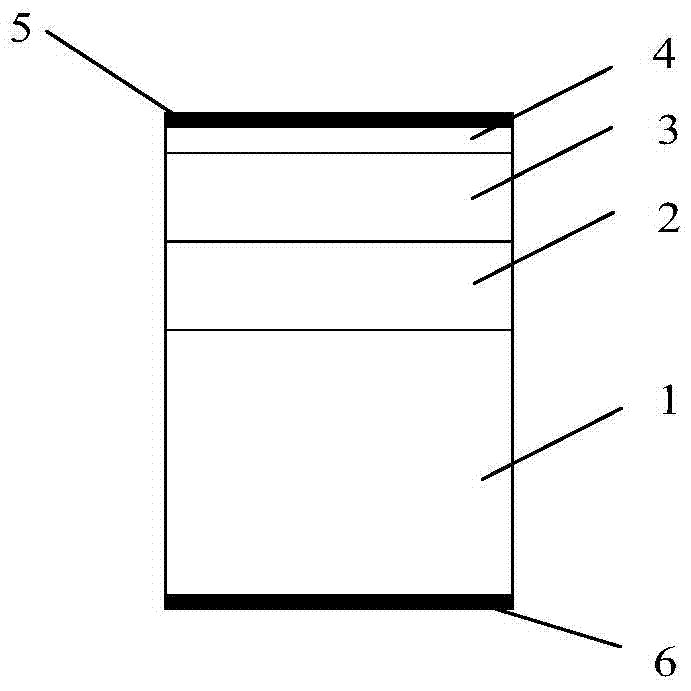
[0063] In Example 1, N + The thickness of the substrate is 300 μm; the concentration of phosphorus doped in the N base is 10 14 cm 3 , with a thickness of 10 μm; the concentration of doped aluminum in the P base region is 10 16 / cm 3 ~10 17 / cm 3 , and the concentration gradient is 9*10 14 / (cm 3 μm) incremental growth with a thickness of 100 μm; heavily doped P + region doped with boron at a concentration of 10 19 / cm 3 , with a thickness of 1 μm;
Embodiment 2
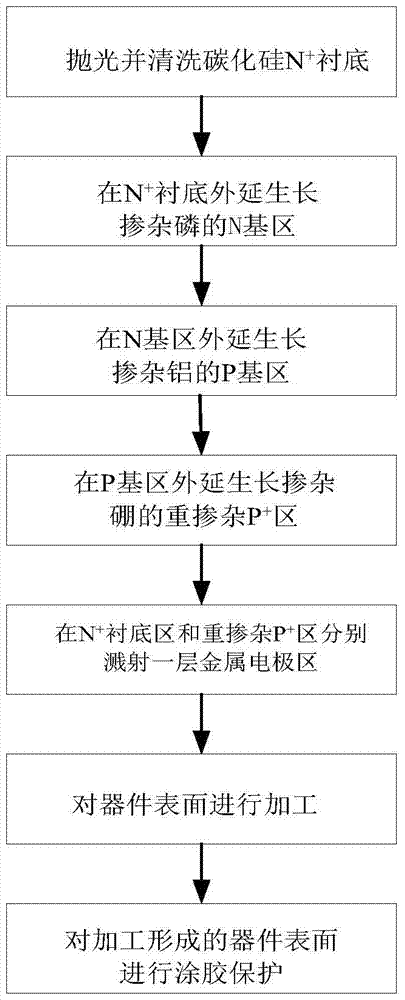
[0065] Example 2 according to figure 1 The illustrated process flow is used to complete the preparation of the silicon carbide-based semiconductor circuit breaker, the difference from Embodiment 1 is:
[0066] In step (2), the concentration of the N base region is controlled at 10 16 / cm 3 ~10 17 / cm 3 , and the concentration gradient is 9*10 14 / (cm 3 μm) incremental growth, with a thickness of 100 μm; under this parameter condition, when the switch PN junction is conducting forward, the accumulation of minority carriers on both sides of the space charge region, when the switch PN junction voltage reverses, can produce a large The reverse current realizes the SOS effect, which is beneficial to the miniaturization of the device;
[0067] And in step (3), the doping concentration of the P base region doped with aluminum is 10 14 / cm 3 ;
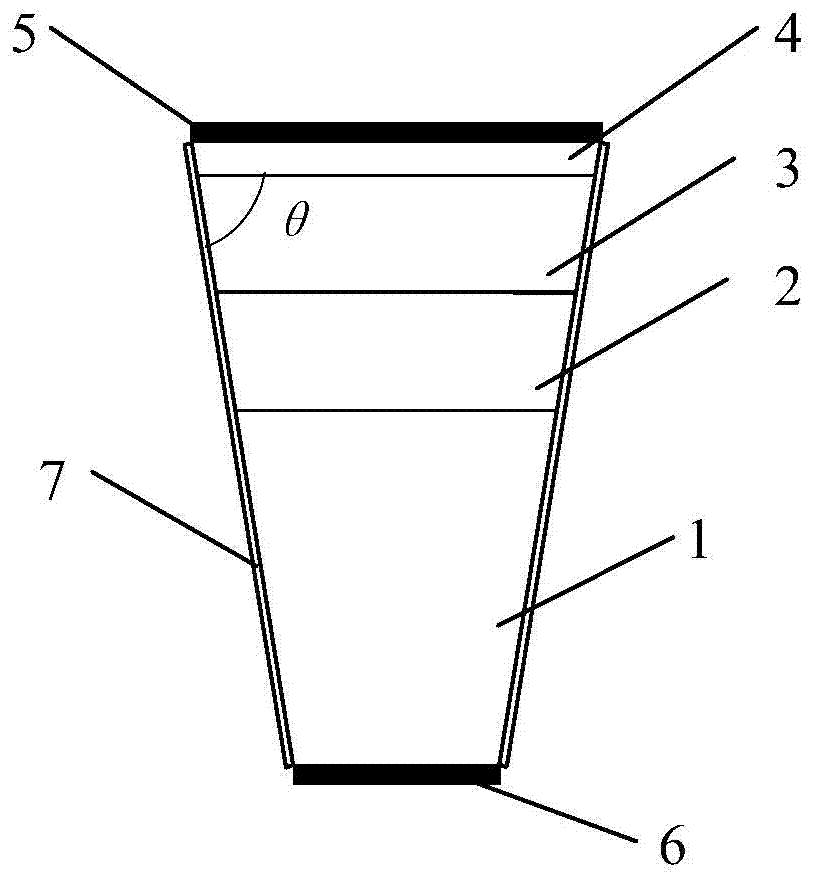
[0068] And in step (6), when the mesa is processed by mechanical cutting into an oblique angle, the PN junction is cut and penetrate...
PUM
| Property | Measurement | Unit |
|---|---|---|
| thickness | aaaaa | aaaaa |
| thickness | aaaaa | aaaaa |
| etching power | aaaaa | aaaaa |
Abstract
Description
Claims
Application Information
 Login to View More