Non-noble metal catalyst for oxygen reduction, and preparation and application of catalyst

A non-precious metal, catalyst technology, used in physical/chemical process catalysts, chemical instruments and methods, chemical/physical processes, etc., can solve the problems of easy-to-collapse graphene rearrangement, and achieve rich pore structure, good mass transfer performance, Inexpensive effect

CN105749947AActive Publication Date: 2016-07-13DALIAN INST OF CHEM PHYSICS CHINESE ACAD OF SCI
8 Cites 32 Cited by

Patent Information

Authority / Receiving Office
CN · China
Patent Type
Applications(China)
Current Assignee / Owner
Publication Date
2016-07-13

Smart Images

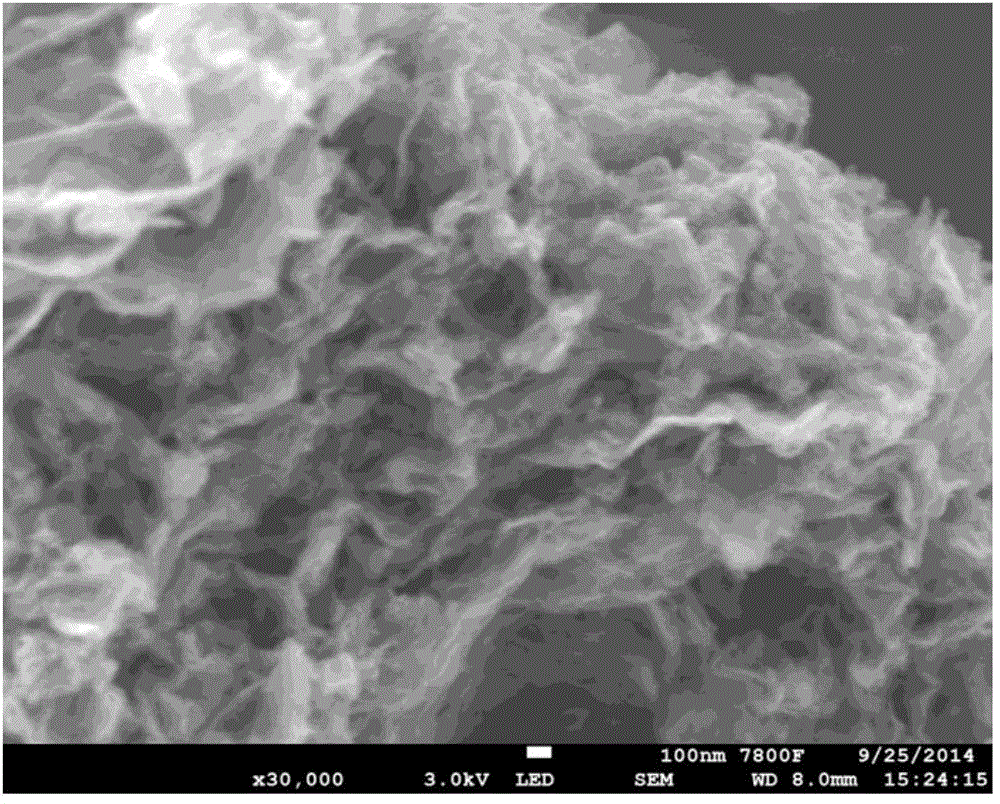
  • Figure 1
    Figure 1
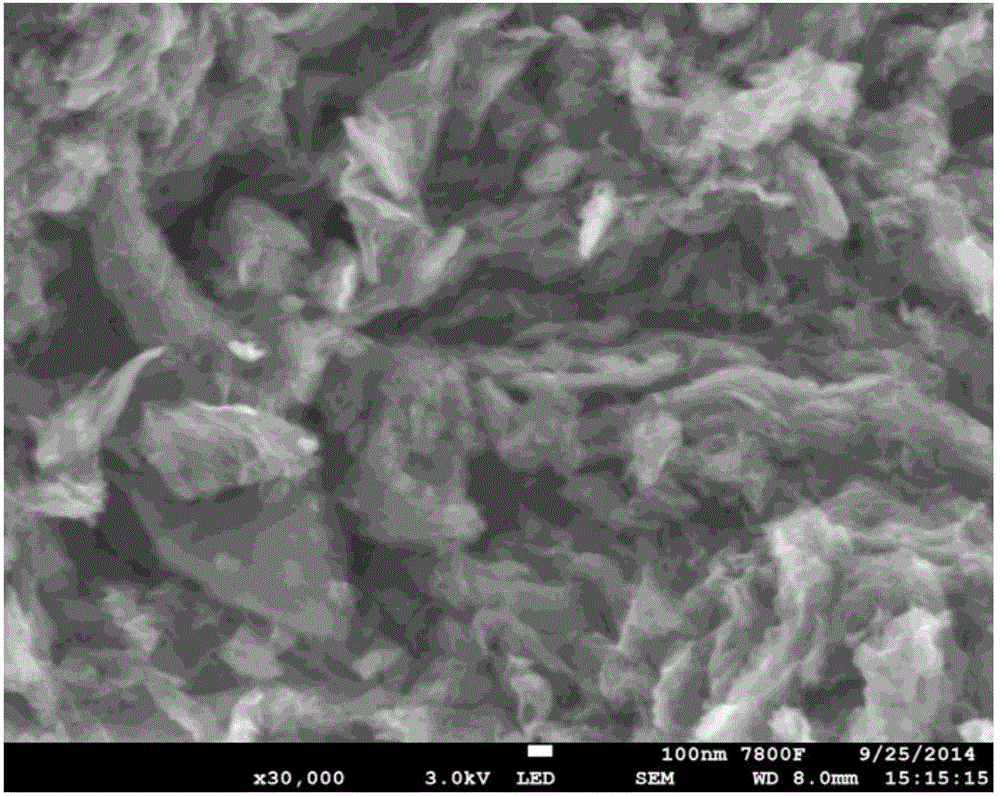
  • Figure 2
    Figure 2
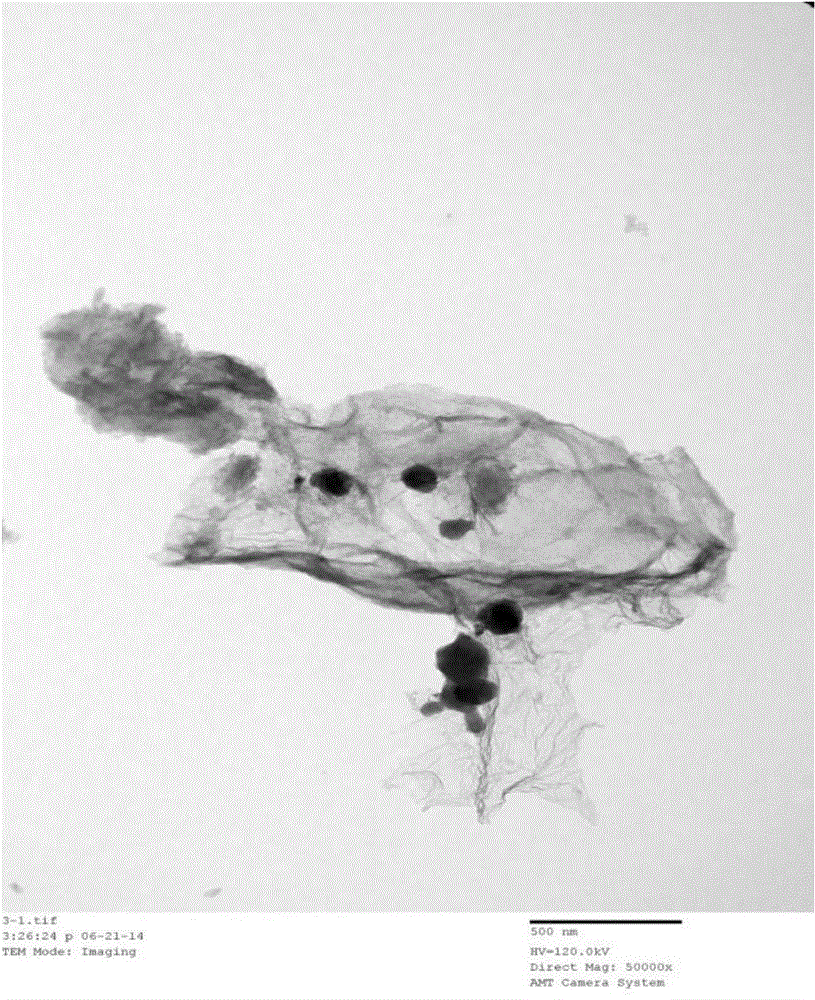
  • Figure 3
    Figure 3
Patent Text Reader

Abstract

Disclosed is a non-noble metal catalyst for oxygen reduction. The catalyst comprises a flake-like graphene carrier; a nitrogen-doped carbon skeleton arranged between neighbor flake layers of the flake-like graphene carrier; the graphene flake layers are separated by the nitrogen-doped carbon skeleton; and nanometer particles are adhered to the flake layers of graphene. The nanometer particles are one or more than two of carbon-coated non-noble metal particles, carbon-coated non-noble metal carbide particles, and carbon-coated non-noble metal nitride particles. A preparation method of the non-noble metal catalyst for oxygen reduction comprises: adding graphite oxide and non-noble metal precursor salt into water; performing mixing and standing; adding nitrogen-containing micro-molecules, a Nafion solution, and an oxidizing agent; performing uniform mixing; allowing the obtained solution to be evaporated; performing freeze-drying; and performing temperature programming thermal treatment and other after-treatment to obtain the non-noble metal catalyst for oxygen reduction. The catalyst has advantages of high oxygen reduction activity, good mass transfer performance, and low price.
Need to check novelty before this filing date? Find Prior Art

Description

technical field

[0001] The invention relates to a non-noble metal oxygen reduction catalyst, in particular to a non-noble metal oxygen reduction catalyst which can be used in proton exchange membrane fuel cells, alkaline anion exchange membrane fuel cells and metal-air batteries.

[0002] The present invention also relates to the preparation method of the above-mentioned non-noble metal oxygen reduction catalyst. technical background

[0003] Oxygen reduction reaction is the cathode reaction of proton exchange membrane fuel cells, alkaline anion exchange membrane fuel cells and metal-air batteries. The activation energy of the electrode process is high, and a large overpotential is required to make the reaction go smoothly. Therefore, electrochemical catalytic materials for reducing the activation energy of oxygen reduction reaction have become a hot spot in the research of oxygen reduction reaction. At present, the most common catalytic material for oxygen reduction is pla...

Examples

Embodiment 1

[0034] Example 1: 50 mg of graphite oxide was dispersed in 100 mL of water, ultrasonicated for 4 hours to obtain a uniform graphite oxide solution, 26.8 mg of hexahydrate and ferric chloride were added, ultrasonicated for 1 hour, left standing for 24 hours, and 277.5 mg of 5% Solution and 0.25mL aniline, stirred at 5°C for 1h, added 0.6257g ammonium persulfate, stirred at 5°C for 36h, evaporated the solvent at 90°C to make the solid content to 5%, freeze-dried for 48h, and obtained airgel. Put the airgel in a quartz boat, raise the temperature to 900°C at 5°C / min under the protection of nitrogen, keep it warm for 1h, cool naturally, then treat it in 0.5mol / L sulfuric acid solution at 80°C for 6h, wash and dry, and then Put it in a quartz boat for the first time and raise the temperature to 900°C at 5°C / min under the protection of nitrogen, keep it warm for 3h, and cool naturally to obtain a non-precious metal oxygen reduction catalyst.

[0035] Weigh the catalyst 5mg of the g...

Embodiment 2

[0036] Embodiment 2: added 5% The amount of the solution is 1.11g, and all the other conditions are the same as in Example 1.

Embodiment 3

[0037] Embodiment 3: added 5% The amount of the solution is 3.33g, and all the other conditions are the same as in Example 1.