
Preparation method for nano-sized zirconium-based cation metal organic framework (Zr-MOFs) materials carrying anionic medicine
A metal-organic framework and anionic technology, applied in medical preparations with non-active ingredients, medical preparations containing active ingredients, drug combinations, etc., can solve the problem of small loading, micron-level size, uncontrolled release, etc. Problems, to achieve the effect of large drug loading and increase loading
- Summary
- Abstract
- Description
- Claims
- Application Information
AI Technical Summary
Problems solved by technology
Method used
Image

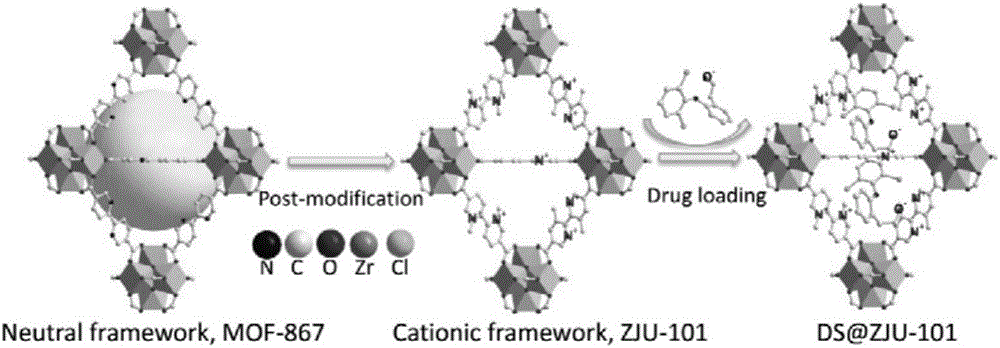
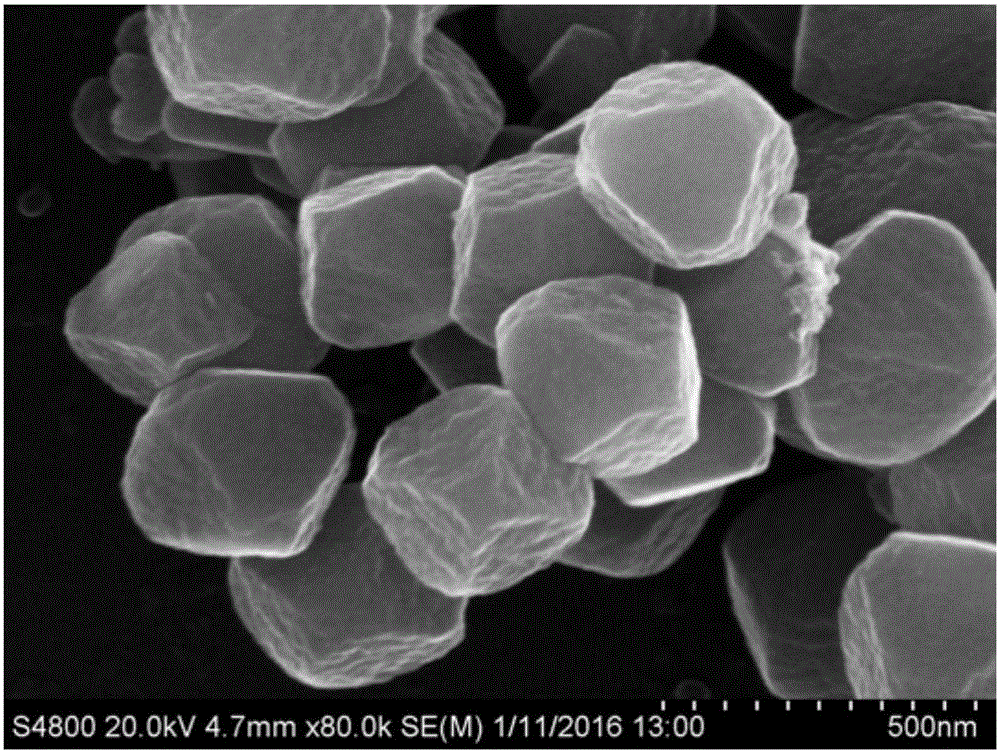
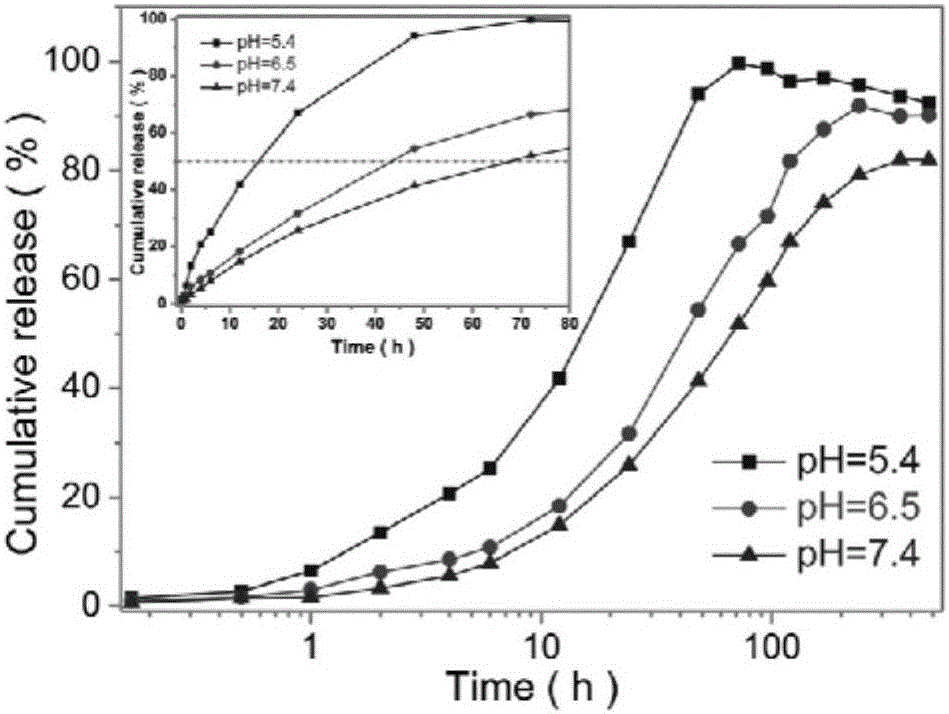
Examples
Embodiment 1
[0030] (1) ZrCl is mixed with a reactor 4 (11.7mg, 0.05mmol) and N-containing organic ligand pyridine-2,5-dicarboxylic acid (8.35mg, 0.05mmol) were uniformly dissolved in N,N-dimethylformamide (DMF, 18mL), and then added A small amount of glacial acetic acid (2mL, 35mmol), ultrasonically oscillated for 10min, and placed in an oven at 120°C for 24h;
[0031] (2) Centrifuge after cooling at room temperature, disperse the precipitate in DMF (10mL), repeat centrifugal washing 3 times, after centrifugation, disperse the sample evenly in acetone (10mL), let stand for 24h, add acetone (10mL) again after centrifugation ), repeating for three days, the obtained precipitate is a Zr-MOFs material that has not been cationized;
[0032] (3) Take the Zr-MOFs material synthesized above and dry it in a vacuum oven at 60°C for 12 hours;
[0033] (4) Use a glass bottle to disperse the dried Zr-MOFs material (700mg) in CHCl 3 (15mL), then added dropwise methyl trifluoromethanesulfonate (4.44m...
Embodiment 2
[0040] (1) ZrCl is mixed with a reactor 4 (11.7mg, 0.05mmol) and N-containing organic ligand 2,2'-bipyridine-5,5'-dicarboxylic acid (24.4mg, 0.1mmol) were uniformly dissolved in N,N-dimethylformamide (DMF , 18mL), a small amount of glacial acetic acid (2.29mL, 40mmol) was added, ultrasonically oscillated for 10min, and placed in an oven at 120°C for 24h;
[0041] (2) Centrifuge after cooling at room temperature, disperse the precipitate in DMF (10mL), repeat centrifugal washing 3 times, after centrifugation, disperse the sample evenly in acetone (10mL), let stand for 24h, add acetone (10mL) again after centrifugation ), repeating for three days, the obtained precipitate is a Zr-MOFs material that has not been cationized;
[0042] (3) Take the Zr-MOFs material synthesized above and dry it in a vacuum oven at 60°C for 12 hours;
[0043] (4) Use a glass bottle to disperse the dried Zr-MOFs material (700mg) in CHCl 3 (15mL), then added dropwise methyl trifluoromethanesulfonate ...
Embodiment 3
[0048] (1) ZrCl is mixed with a reactor 4 (11.7mg, 0.05mmol) and N-containing organic ligand 4,4'-(pyridine-2,5-ylidene)benzoic acid (44.3mg, 0.15mmol) were uniformly dissolved in N,N-dimethylformamide ( DMF, 18mL), then add a small amount of glacial acetic acid (2.86mL, 50mmol), ultrasonically oscillate for 10min, and put it in an oven at 120°C for 24h;
[0049] (2) Centrifuge after cooling at room temperature, disperse the precipitate in DMF (10mL), repeat centrifugal washing 5 times, after centrifugation, disperse the sample evenly in acetone (10mL), let stand for 24h, add acetone (10mL) again after centrifugation ), repeated for three days, and the obtained precipitate was a Zr-MOFs material that had not been cationized;
[0050] (3) Take the Zr-MOFs material synthesized above and dry it in a vacuum oven at 60°C for 12 hours;
[0051] (4) Use a glass bottle to disperse the dried Zr-MOFs material (700mg) in CHCl 3 (15mL), then added dropwise methyl trifluoromethanesulfon...
PUM
 Login to View More
 Abstract
Description
Claims
Application Information
 Login to View More