A method for photocatalytic decomposition of formic acid
A technology of photocatalysis and formic acid, applied in the field of photocatalysis, can solve the problems of high cost of hydrogen production, low catalytic efficiency, poor catalytic stability, etc., and achieve the effects of high selectivity and stability, short process and low cost
- Summary
- Abstract
- Description
- Claims
- Application Information
AI Technical Summary
Problems solved by technology
Method used
Image

Examples
Embodiment 1
[0053] The present embodiment provides a kind of method of photocatalytic decomposition of formic acid, and its specific method is:
[0054] (1) Dissolve 5.44g of sodium formate in 20mL of formic acid (the concentration of sodium formate is 4.0mol / L), transfer to a 60mL quartz tube and add 1mg of Fe to it 2 P / CdS complex (in the complex, Fe 2 The mass fraction of P nanoparticles is 5wt%) to obtain a mixed solution;
[0055] (2) Degas the mixed solution with argon, remove the dissolved air in the solution, and then seal it with a rubber stopper; irradiate the quartz tube with an LED lamp (3W×30 pieces) with a light emitting wavelength of >420nm , generate hydrogen; every 2h with gas chromatography to detect the type and quantity of generated gas.
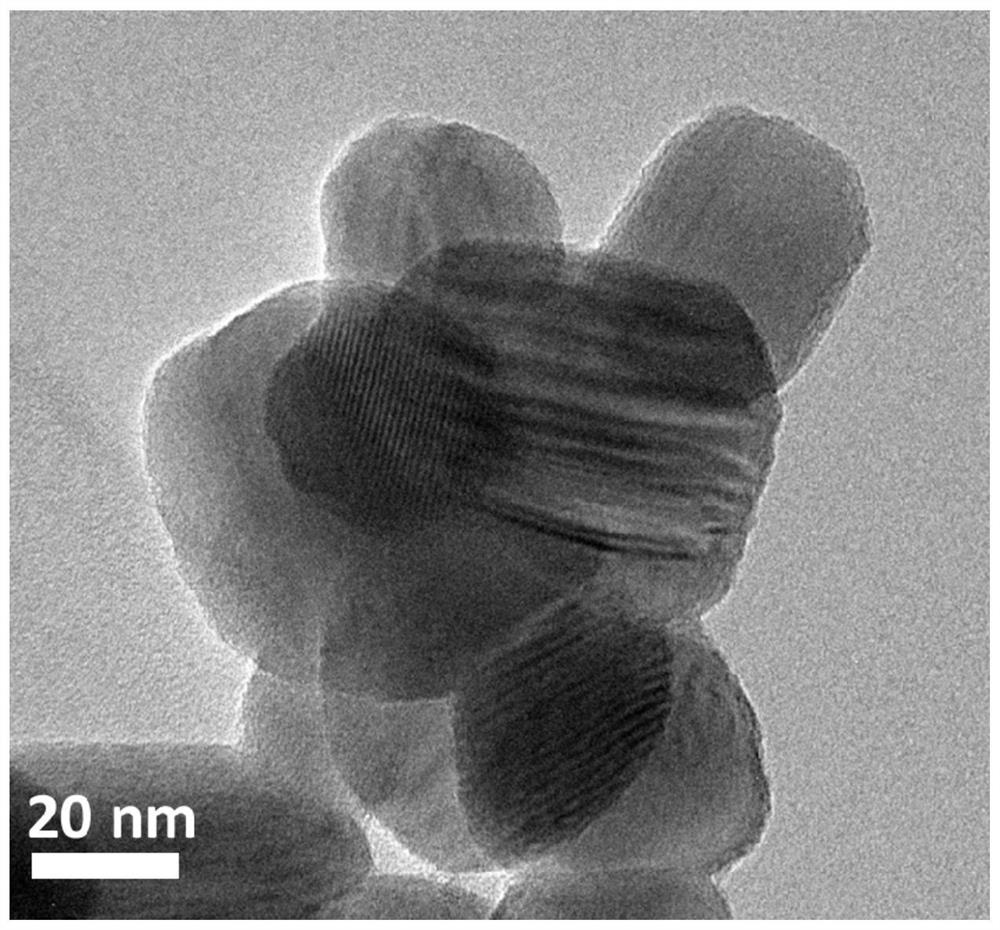
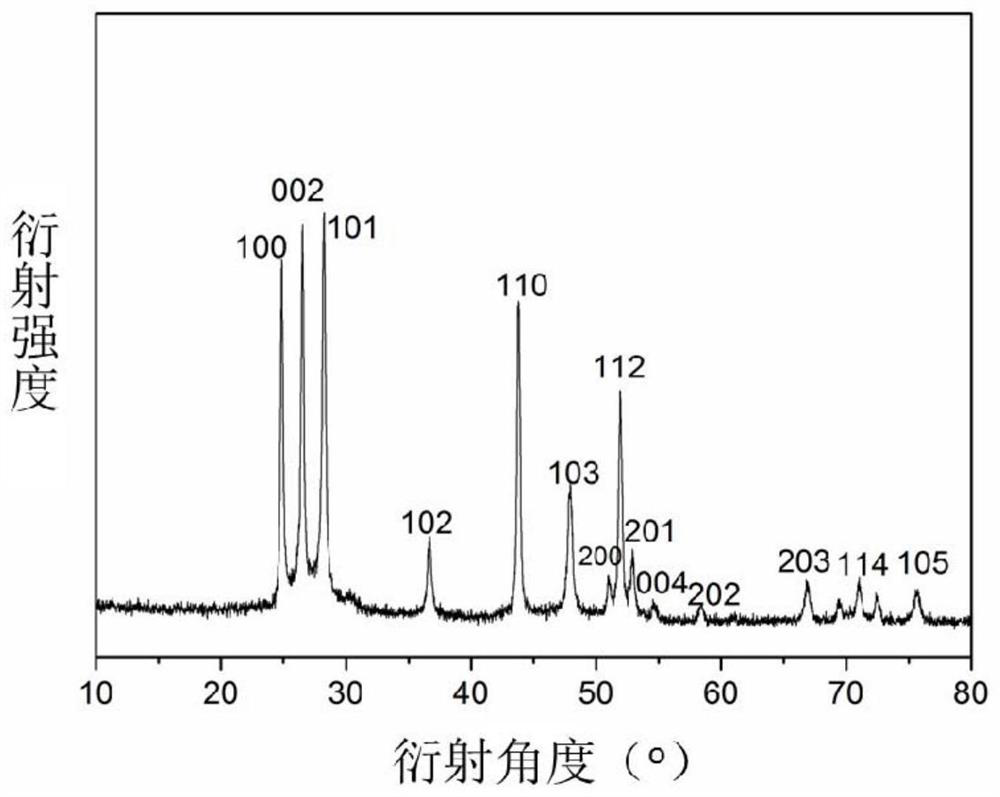
[0056] Among them, Fe 2 The synthesis of P can refer to the literature Catal.Sci.Technol.5(2015)4964-4967. Fe 2 The TEM morphology and XRD spectrum of P are as follows image 3 and Figure 4 shown. The Fe 2 The preparation m...
Embodiment 2
[0064] The present embodiment provides a kind of method of photocatalytic decomposition of formic acid, and its specific method is:
[0065] (1) Take 1 mg of CoP / CdS composite (in the composite, the mass fraction of CoP nanoparticles is 10wt%) and add it to 20 mL of sodium formate formic acid solution with a concentration of 5.0 mol / L, then sonicate for 5 min, and transfer to 60 mL of quartz tube;
[0066] (2) Use argon to remove the air from the mixed solution, and then seal it after removing the air; use an LED lamp (3W×30 pieces) with a light emitting wavelength of >420nm to irradiate the mixed solution to generate hydrogen and carbon dioxide; Chromatography detects the type and amount of gas produced.
[0067] Wherein, the preparation method of the CoP / CdS composite is as follows: 90 mg of CdS nanoparticles and 10 mg of CoP are mixed and ground in platinum, and ground for 30 minutes to obtain the CoP / CdS composite.
[0068] The curve of gas production in this embodiment ...
Embodiment 3
[0071] The present embodiment provides a kind of method of photocatalytic decomposition of formic acid, and its specific method is:
[0072] (1) Take 1mg Ni 2 P / CdS composite (composite, Ni 2 The mass fraction of P nanoparticle is 1.0wt%) join in the formic acid solution of the sodium formate that 20mL concentration is 3.0mol / L, sonicate 5min then, transfer in the quartz tube of 60mL;
[0073] (2) Use argon to remove the air from the mixed solution, and then seal it after removing the air; use an LED lamp (3W×30 pieces) with a light emitting wavelength of >420nm to irradiate the mixed solution to generate hydrogen and carbon dioxide; Chromatography detects the type and amount of gas produced.
[0074] Among them, the Ni 2 The preparation method of the P / CdS composite is as follows: 99mg CdS nanoparticles and 1mgNi 2 P is mixed and ground in platinum, and ground for 30 minutes to obtain Ni 2 P / CdS complex.
[0075] The curve of gas production in this embodiment as a funct...
PUM
| Property | Measurement | Unit |
|---|---|---|
| wavelength | aaaaa | aaaaa |
Abstract
Description
Claims
Application Information
 Login to View More
 - R&D
- Intellectual Property
- Life Sciences
- Materials
- Tech Scout
- Unparalleled Data Quality
- Higher Quality Content
- 60% Fewer Hallucinations
Browse by: Latest US Patents, China's latest patents, Technical Efficacy Thesaurus, Application Domain, Technology Topic, Popular Technical Reports.
© 2025 PatSnap. All rights reserved.Legal|Privacy policy|Modern Slavery Act Transparency Statement|Sitemap|About US| Contact US: help@patsnap.com