

Fluorescent probe for high-selectivity detection of formaldehyde, and synthesis method and application thereof
A fluorescent molecular probe, formaldehyde technology, applied in fluorescence/phosphorescence, chemical instruments and methods, luminescent materials, etc., can solve the problems of low biocompatibility, high preparation cost, complicated synthesis, etc., and achieve strong anti-interference ability, Low-cost, easy-to-synthesize effects
- Summary
- Abstract
- Description
- Claims
- Application Information
AI Technical Summary
Problems solved by technology
Method used
Image

Examples
Embodiment 1
[0022] Example 1: Synthesis of Fluorescent Molecular Probes
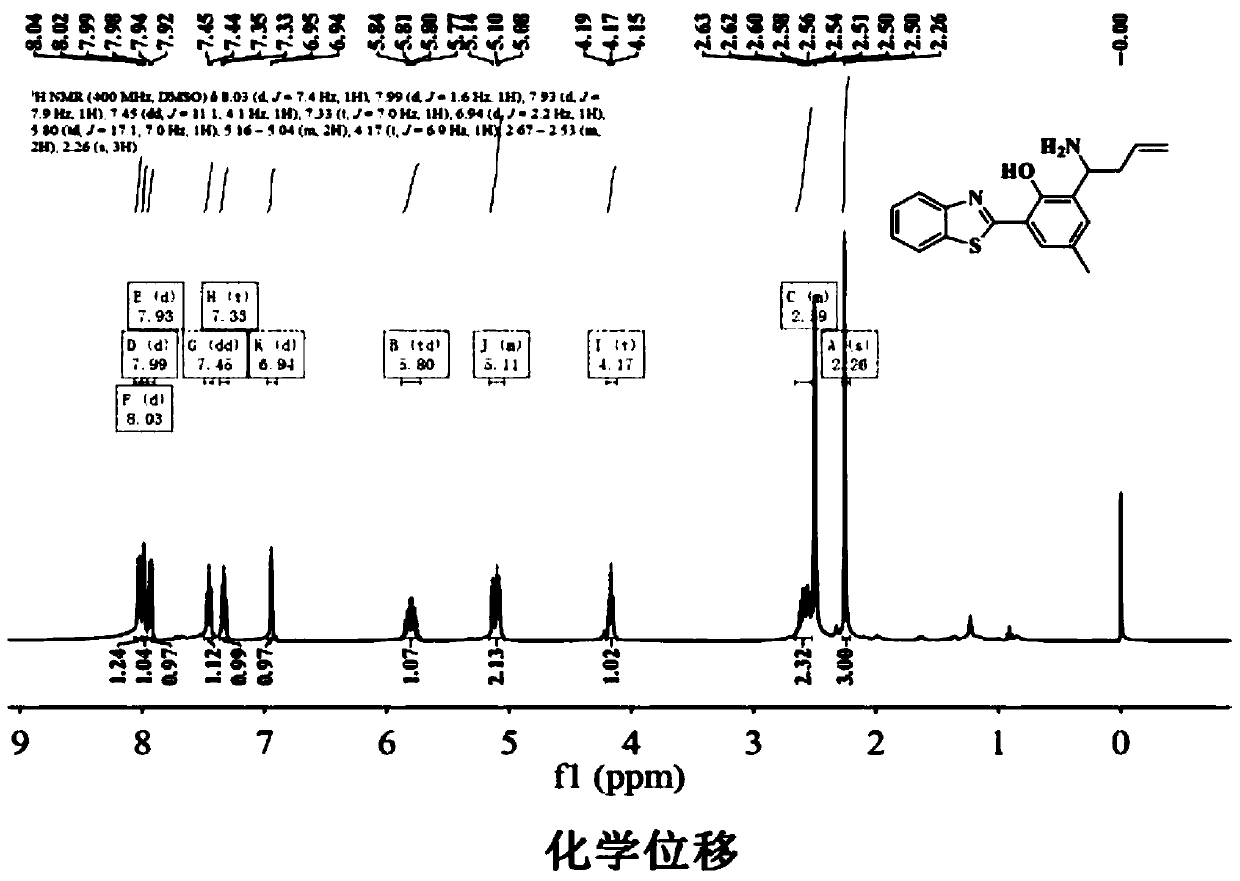
[0023] Aldehylated benzothiazole fluorescent molecule (compound 2) (0.269g, 1mmol) and allylboronic acid pinacol ester (0.201g, 1.2mmol) were added to methanol (10mL) and ammonia methanol (5mL, the concentration of ammonia 5mol·L -1 ) in a mixed solution at a controlled temperature of 0° C. for 1 h, and the reaction solution was moved to room temperature to continue the reaction for 5 h. The reaction was stopped, the reaction solution was spin-dried under reduced pressure, and the obtained crude product was separated by chromatography to obtain the probe molecule (0.274 g, 88.4%). The characterization of the probe molecules is as follows: 1 H NMR (400MHz, DMSO): δ8.03(d, J=7.4Hz, 1H), 7.99(d, J=1.6Hz, 1H), 7.93(d, J=7.9Hz, 1H), 7.45(dd, J=11.1,4.1Hz,1H),7.33(t,J=7.0Hz,1H),6.94(d,J=2.2Hz,1H),5.80(td,J=17.1,7.0Hz,1H),5.16– 5.04(m, 2H), 4.17(t, J=6.9Hz, 1H), 2.67–2.53(m, 2H), 2.26(s, 3H) (Fig. S1). 13 C NMR (100MH...
Embodiment 2
[0024] Embodiment 2 Probe of the present invention is to the detection of formaldehyde in the solution
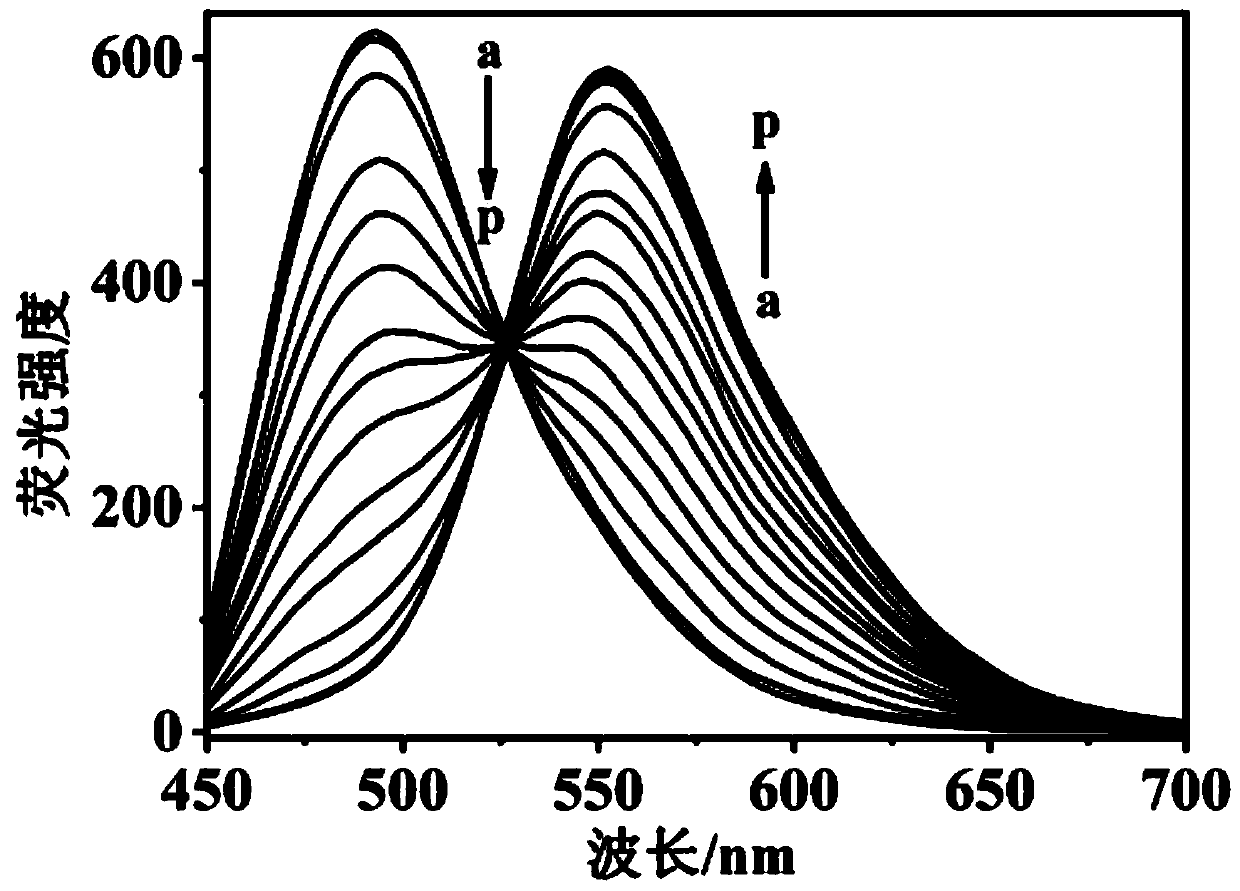
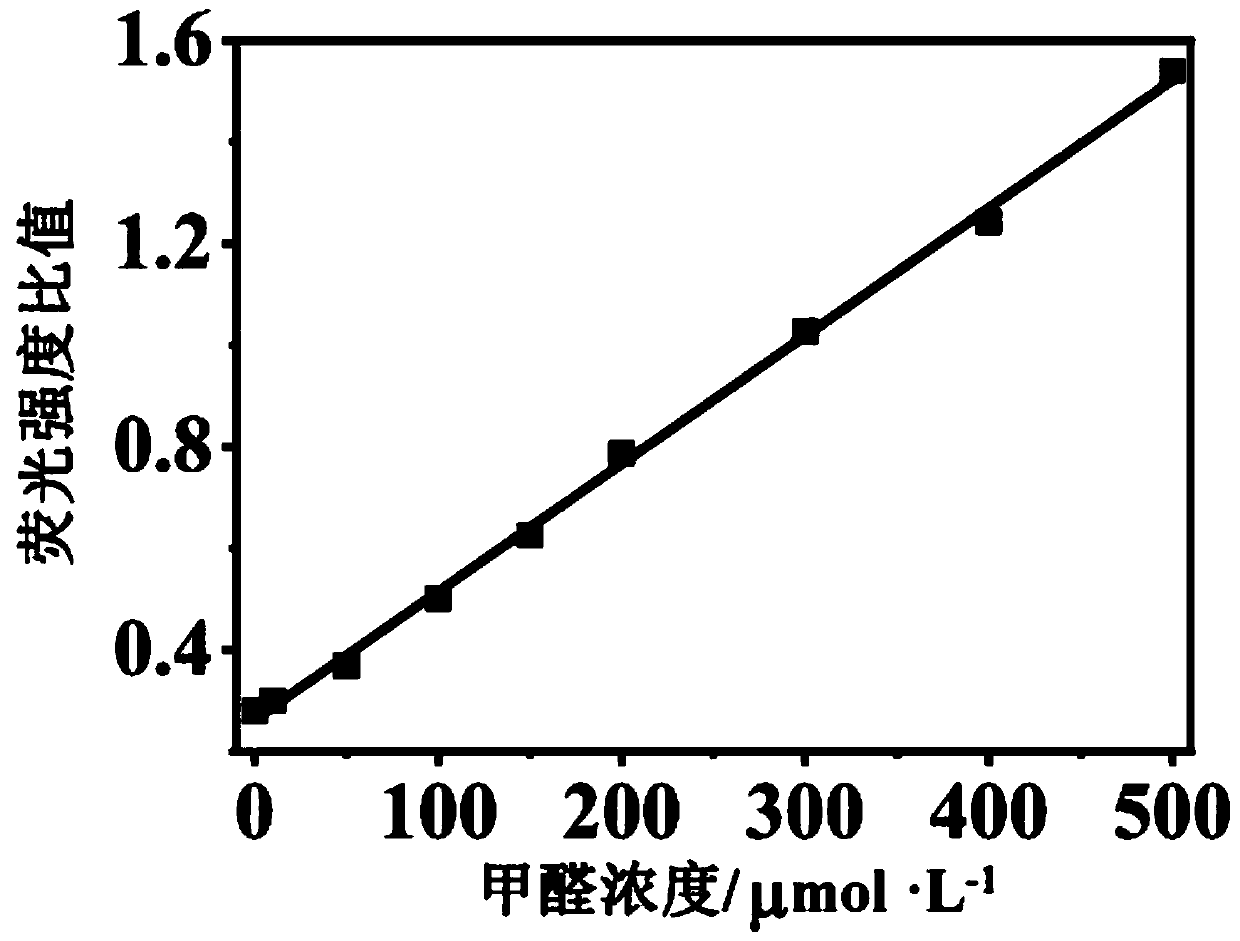
[0025] The molecular probe prepared above was dissolved in a mixed buffer solution (H 2 O / DMSO=1 / 1, v / v, 10mM PBS, pH 7.4)), prepared to 10μmol L -1 probe solution. Add 2 mL of prepared 10 μmol L to a 3 mL cuvette -1 Probe solution of the present invention, then add formaldehyde of different concentrations respectively and mix uniformly, test its fluorescence spectrum, the result is as follows: image 3 shown. The ratio of the fluorescence emission intensity of the solution at 552nm and 492nm is plotted against the concentration of formaldehyde, and the concentration of formaldehyde is 0-500μmol L -1 In the range, there is a good linear relationship between the two ( Figure 4 ), according to the standard diagram, the quantitative detection of formaldehyde in the sample to be tested within this concentration range is realized, and the solution changes from colorless to...
Embodiment 3
[0026] Embodiment 3 Probe of the present invention is to the test of formaldehyde in the cell
[0027] After cultured human gastric cancer cells (MGC-803) were cultured in 10 μM PBS solution of the probe of the present invention at 37° C. for 2 hours, the cell images obtained had no fluorescence. However, the MGC-803 cells were cultured in PBS solution of 1mM formaldehyde at 37°C for 2h, then cultured in PBS solution of 10μM probe of the present invention at 37°C for 2h, and washed with PBS buffer solution to obtain Fluorescence imaging of cells. This shows that the probe of the present invention has good cell membrane permeability and can be used for cell imaging analysis in the field of biomedicine.
PUM
 Login to View More
 Abstract
Description
Claims
Application Information
 Login to View More