Unlock instant, AI-driven research and patent intelligence for your innovation.

Nanometer-controlled polymeric thin films that resist adsorption of biological molecules and cells

a technology of nanometers and thin films, applied in the direction of textiles and paper, ornamental textile articles, synthetic resin layered products, etc., can solve the problems of peo, affecting the thickness of peo coating/layer, bacteria and cells are generally not able to adhere to the host's surface,

Inactive Publication Date: 2004-09-30
EI DU PONT DE NEMOURS & CO
View PDF2 Cites 15 Cited by
  • Summary
  • Abstract
  • Description
  • Claims
  • Application Information

AI Technical Summary

Benefits of technology

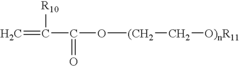
This patent describes a process for creating thin films of polyethylene glycol alkyl acrylate (PEGAA) on a variety of surfaces using surface atom transfer radical polymerization (SATRP). These films have specific surface functionalities and can resist the adhesion of bacteria and cells. The process can be used to create inert surfaces that prevent the adhesion of proteins and cells, which can lead to thrombosis and irritation in applications where the surface comes in contact with biomedical devices. The PEGAA films can also be used to create surfaces that prevent the adsorption of other molecules and cells. The patent also describes the use of self-assembling monolayers and polymer brushes to create protein and bacteria resistant surfaces. Overall, this patent provides a method for creating thin films that can resist bacterial and cell adhesion, which can be useful in various applications such as biomedical devices and food packaging materials.

Problems solved by technology

As a result, bacteria and cells are generally not able to adhere to a host's surface unless a protein layer has first been adsorbed thereto.
PEG, however, tends to auto-oxidize, especially when exposed to O.sub.2 and transition metals, which are present in most biochemically relevant solutions.
The thickness required for PEO coatings / layers, however, limits its usefulness in applications where a nanometer thickness is required, for example in the field of biomedical microdevices.
However, it is very difficult to produce SAMs having a film thickness greater than 5 nm.
However, although the surface density of the initiator molecules will determine the density of the PEGAA polymer chains, the PEGAAs occupy more space than the initiators, and therefore the surface density of the PEGAA will not necessarily directly correspond to the surface density of the initiator molecules.

Method used

the structure of the environmentally friendly knitted fabric provided by the present invention; figure 2 Flow chart of the yarn wrapping machine for environmentally friendly knitted fabrics and storage devices; image 3 Is the parameter map of the yarn covering machine
View more

Image

Smart Image Click on the blue labels to locate them in the text.
Viewing Examples
Smart Image
  • Nanometer-controlled polymeric thin films that resist adsorption of biological molecules and cells
  • Nanometer-controlled polymeric thin films that resist adsorption of biological molecules and cells
  • Nanometer-controlled polymeric thin films that resist adsorption of biological molecules and cells

Examples

Experimental program
Comparison scheme
Effect test

example 1

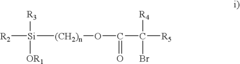
Synthesis of Pent4-enyl-2-bromo-2-methyl propionate Precursor

[0135] With continuous stirring, 1.46 mL of 5-hexen-1-ol (30.0 mmol) and 5.00 mL of triethylamine (30.0 mmol) were added at 0.degree. C. and under a nitrogen gas atmosphere to a flask containing 16 mL of dry CH.sub.2Cl.sub.2. 8.27 mL of 2-bromo-2-methylpropionyl bromide (30.0 mmol) was added dropwise over 10 min to form a white triethylamine salt. The resulting solution was then stirred for 1 hour at 0.degree. C. The solution was warmed to room temperature over the next 2.5 hours, and became darker brown in color. The precipitate was filtered off and rinsed with 50 mL methylene chloride. The filtrate was extracted 4 times with saturated aqueous ammonium hydroxide (NH.sub.4Cl) and 4 times with H.sub.2O. The crude brown oil was characterized and used in the next step of synthesis. HNMR (CDCl.sub.3, .delta. in ppm): 5.9-6.0 (m, 1H), 5.1-5.2 (d, 2H), 4.3 (m, 2H), 2.2 (m, 2H), 2.1 (s, 6H), 1.8 (m, 2H), 1.6 (m, 2H). Mass Spectru...

example 2

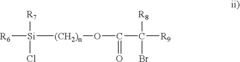
Preparation of 5-Triethoxyl silyl Pentyl 2-bromo-2-methyl propionate Initiator

[0136] In a flask equipped with a reflux condenser and a nitrogen purge, 0.698 g of pent-4'-enyl-2-bromo-2-methyl propionate (2.80 mmol) prepared in accordance with Example 1, 2 mL of HSi(OCH.sub.2CH.sub.3).sub.2 (10.8 mmol), and 5.0 mg CP.sub.2PtCl.sub.2 (0.0125 mmol) were added to 5 mL of dry CH.sub.2Cl.sub.2 solvent and then stirred. The reaction was refluxed overnight in the dark. After 17 hrs of refluxing, the reaction mixture was cooled and the solvent and excess silane were removed under reduced pressure. The crude product was distilled (at 60 millitorr vacuum / 135.degree. C.) to yield a light brown oil product (62% overall yield). .sup.1H NMR (CDCl.sub.3, .delta. in ppm): 4.10-4.13 (t, 2H), 3.75-3.79 (q, 6H), 1.89 (s, 6H), 1.64 (m, 2 H), 1.35, (m, 6H), 1.17-1.21 (t, 9H), 0.59 (m, 2H). MS (Cl): m / z 430 (M+NH.sub.4), 412 (M+H), 384 (M-C.sub.2H.sub.5), 367 (M-C.sub.2H.sub.5O), 287, 245,180.

example 3

Alternative Preparation of 5-Triethoxyl silyl pentyl 2-bromo-2-methyl propionate Initiator

[0137] In accordance with the process of Example 2, 5-Triethoxyl silyl pentyl 2-bromo-2-methyl propionate was prepared using H.sub.2PtCl.sub.6 as the catalyst instead of Cp.sub.2PtCl.sub.2. Since this catalyst showed good solubility in the reagents used, the reaction was run without using any solvent. The distilled product had the same spectral data as the Initiator produced in Example 2, with a yield near 65%.

the structure of the environmentally friendly knitted fabric provided by the present invention; figure 2 Flow chart of the yarn wrapping machine for environmentally friendly knitted fabrics and storage devices; image 3 Is the parameter map of the yarn covering machine
Login to View More

PUM

PropertyMeasurementUnit
thicknessaaaaaaaaaa
temperatureaaaaaaaaaa
thicknessaaaaaaaaaa
Login to View More

Abstract

This invention relates to a process for growing thin films of polyethylene glycol alkyl acrylate (PEGAA) on a moiety accepting surface of a substrate using Surface Atom Transfer Radical Polymerization (SATRP). This invention also relates to a process for producing thin PEGAA films having specific surface functionalities, a thickness ranging from about 0.5 nm to about 5000 nm, and a PEGAA chain density ranging from 0.1 to 100% surface coverage. This invention further relates to articles coated with such films, wherein the coated articles resist adhesion of biological molecules and cells, as well as, to uses for the coated articles.

Description

[0001] This invention relates to a process for growing thin films of polyethylene glycol alkyl acrylate (PEGAA) on a moiety accepting surface of a substrate using Surface Atom Transfer Radical Polymerization (SATRP). This invention also relates to a process for producing thin PEGAA films having specific surface functionalities, a thickness ranging from about 0.5 nm to about 5000 nm, and a PEGAA chain density ranging from 0.1 to 100% surface coverage. This invention further relates to articles coated with such films, wherein the coated articles resist adhesion of biological molecules and cells, as well as, to uses for the coated articles.TECHNICAL BACKGROUND[0002] Generally, bacterial adhesion to a surface occurs through two mechanisms: (i) biospecific / selective interactions, e.g, carbohydrate-protein or protein-protein interactions, and (ii) non-specific interactions, e.g. hydrophobic or electrostatic interactions. (Chapman et al., Langmuir, 1225, 1226, Vol. 17, No. 4 (2001). Bacter...

Claims

the structure of the environmentally friendly knitted fabric provided by the present invention; figure 2 Flow chart of the yarn wrapping machine for environmentally friendly knitted fabrics and storage devices; image 3 Is the parameter map of the yarn covering machine
Login to View More

Application Information

Patent Timeline
no application Login to View More
Patent Type & Authority Applications(United States)
IPC IPC(8): B32B17/06B32B27/00C08F4/02C08F4/44C08F4/80C08F120/26C12NG03F7/00
CPCB82Y30/00B82Y40/00C08F2438/01C08F292/00C08F220/28Y10T428/31663Y10T428/31855
Inventor HUANG, XUEYING
Owner EI DU PONT DE NEMOURS & CO