Raney catalyst, process for producing it and process for producing a sugar-alcohol using the same
a technology of catalyst and sugar, which is applied in the direction of metal/metal-oxide/metal-hydroxide catalyst, chemical/physical process, and combustion gas purification/modification. it can solve the problems of catalyst breaking down and cannot be used as a fixed-bed catalyst, and achieve the effect of low cost and high purity
- Summary
- Abstract
- Description
- Claims
- Application Information
AI Technical Summary
Benefits of technology
Problems solved by technology
Method used
Image

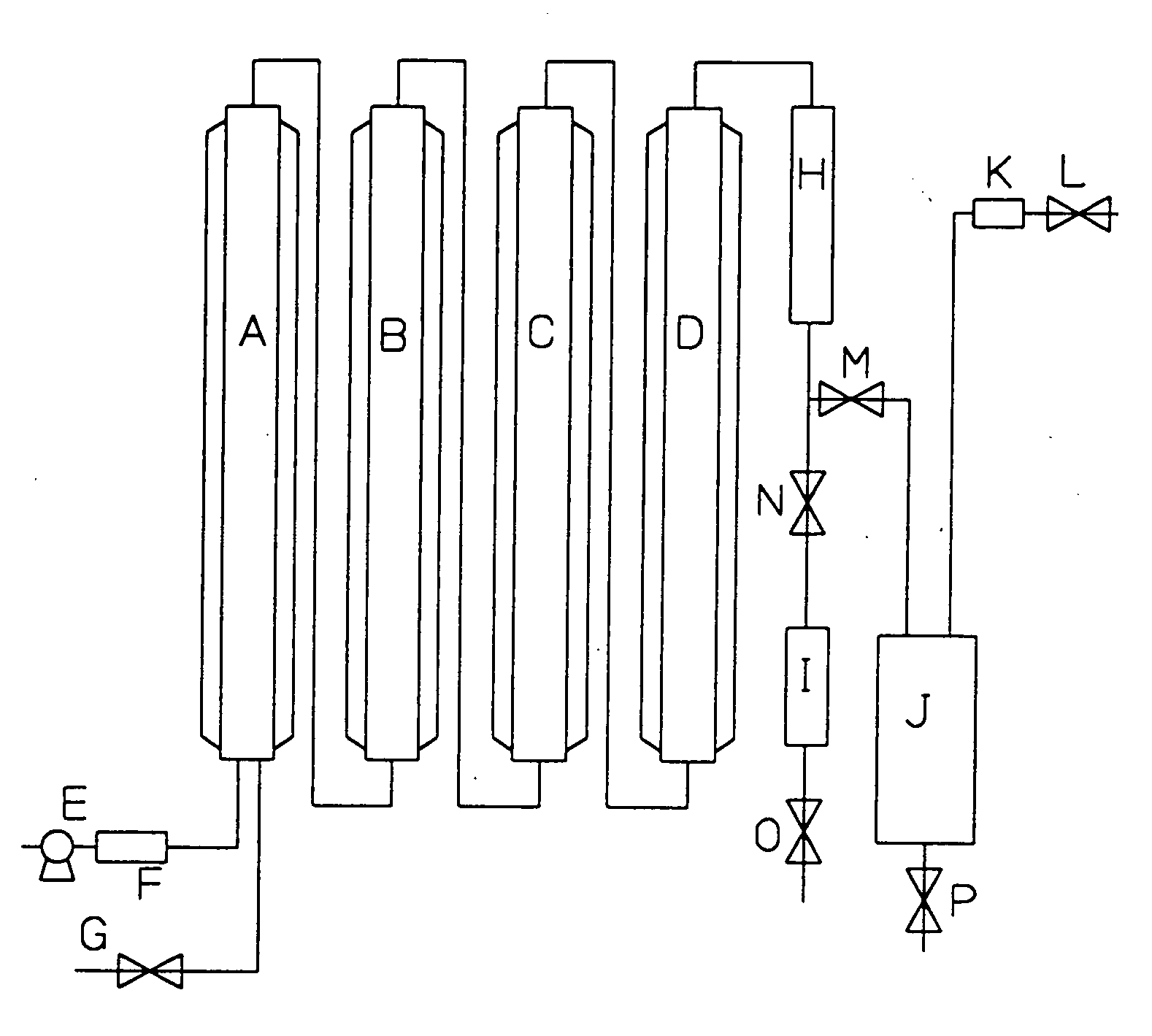
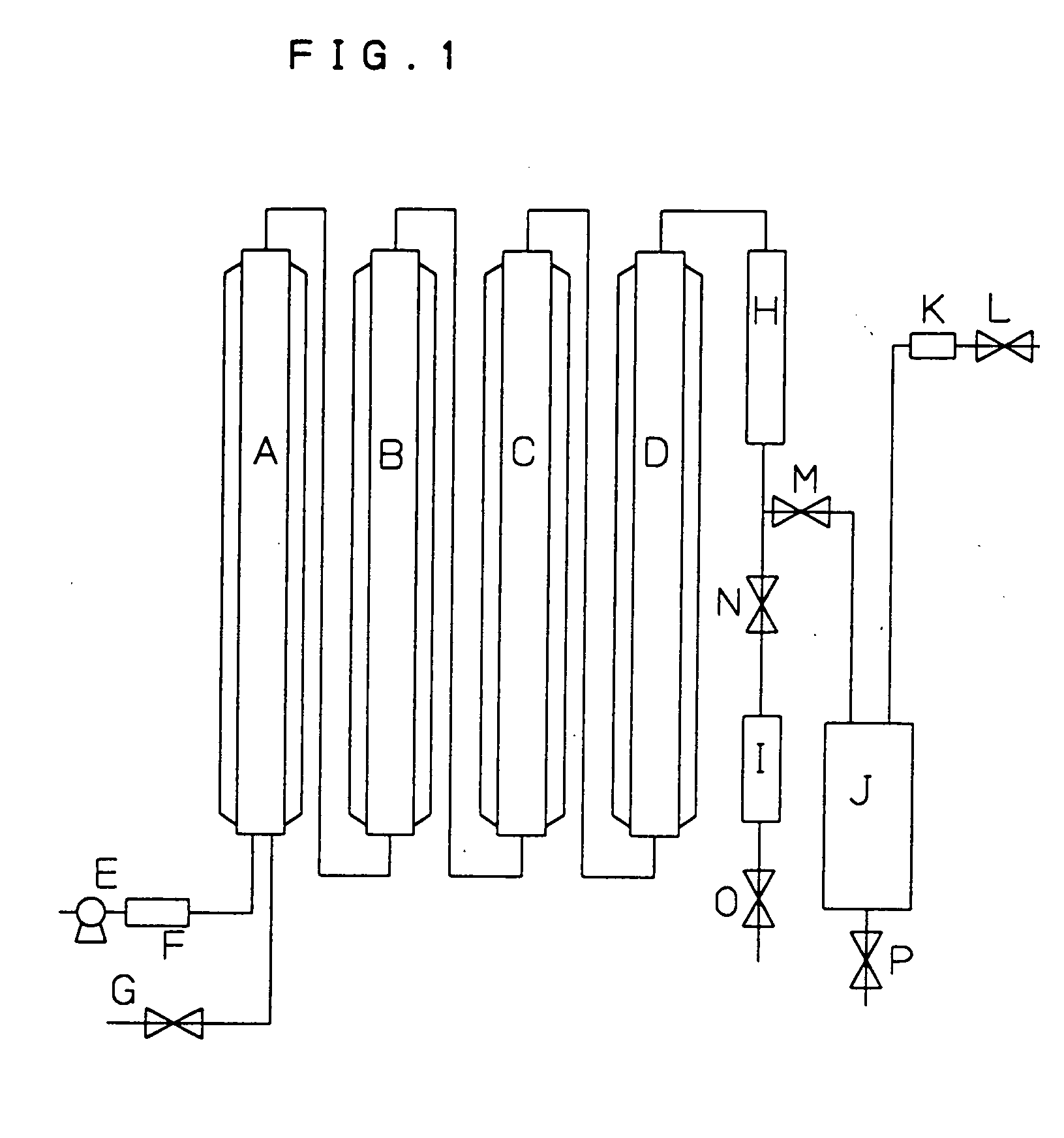
Examples
example 1
Production of Quenched Lump Alloy
[0053] 6 Kg of nickel metal and 6 Kg of aluminum metal were heat-melted and dropped onto chilled water surface 20 cm below through a nozzle.
[0054] The grain diameter of the obtained quenched lump alloy was a mixture of 1 mm to 15 mm.
[0055] It was broken by a crusher and meshed to obtain 4.98 Kg of quenched lump alloy of grain diameter 2 to 4 mm.
Development of quenched Lump Alloy
[0056] 34 Kg of 10% NaOH aqueous solution was poured into a 50 liter stainless container provided with heating jacket, heated to 50° C. and 4.6 Kg of the quenched lump alloy contained in a stainless cage was put therein.
[0057] It was held at 60° C. for 30 minutes and then the cage was lifted up and washed with water.
[0058] The development rate of lump form Raney catalyst thus obtained was 21.6%.
Hydrogenation Equipment
[0059] Now the hydrogenation equipment used for the conduction of the process for producing the sugar-alcohol using Raney catalyst according to the in...
example 2
[0074] The reaction was conducted in a similar way to the Example 1 except that 50% crystalline glucose aqueous solution was supplied as raw material at the rate of 1 liter per hour (SV=0.5) and the continuous hydrogenation was proceeded for 3 days.
[0075] The analysis results of the obtained reaction solution are shown in the Table 2.
TABLE 2Reaction timeNonreducing substance (%)Sorbitol purity (%)FirstDay0.0299.2ThirdDay0.0399.2
example 3
[0076] The reaction was conducted in a similar way to the Example 1 except that 50% xylose aqueous solution (purity 99.0%) was supplied as raw material at the rate of 1.4 liter per hour (SV=0.7) and the continuous hydrogenation was proceeded for 5 days at 120° C.
[0077] The analysis results of the obtained reaction solution are shown in the Table 3.
[0078] As the results show, the catalyst prepared by the method of the Example 1 was able to be used satisfactorily for the hydrogenation of xylose.
TABLE 3Reaction timeNonreducing substance (%)Xylitol purity (%)FirstDay0.0598.4ThirdDay0.0998.25thDay0.1798.1
PUM
| Property | Measurement | Unit |
|---|---|---|
| grain diameter | aaaaa | aaaaa |
| grain diameter | aaaaa | aaaaa |
| grain diameter | aaaaa | aaaaa |
Abstract
Description
Claims
Application Information
 Login to View More
 - R&D
- Intellectual Property
- Life Sciences
- Materials
- Tech Scout
- Unparalleled Data Quality
- Higher Quality Content
- 60% Fewer Hallucinations
Browse by: Latest US Patents, China's latest patents, Technical Efficacy Thesaurus, Application Domain, Technology Topic, Popular Technical Reports.
© 2025 PatSnap. All rights reserved.Legal|Privacy policy|Modern Slavery Act Transparency Statement|Sitemap|About US| Contact US: help@patsnap.com