While silica is not considered as adding to the
hardness value, its presence can also lead to scaling problems if present in other than minimal amounts.
The
water tube boiler, however, requires an even greater amount of feedwater pretreatment than the OTSG to ensure problem free operation.
These are:1. It has the highest chemical cost of any options2. It has the highest cost for
sludge and salt cake disposal requirements3. The OTSG's are limited by the 80% conversion of water into steam4. The OTSG has inherent design problems in terms of tube
wetting,
fouling, and scaling5. In
cold weather operations, the
sludge from the
lime softener becomes very hard to
handle6. In the event of an unscheduled maintenance shutdown, the
sludge in the
lime softener can quickly set up in a form similar to concrete and become very hard to remove from the
system.
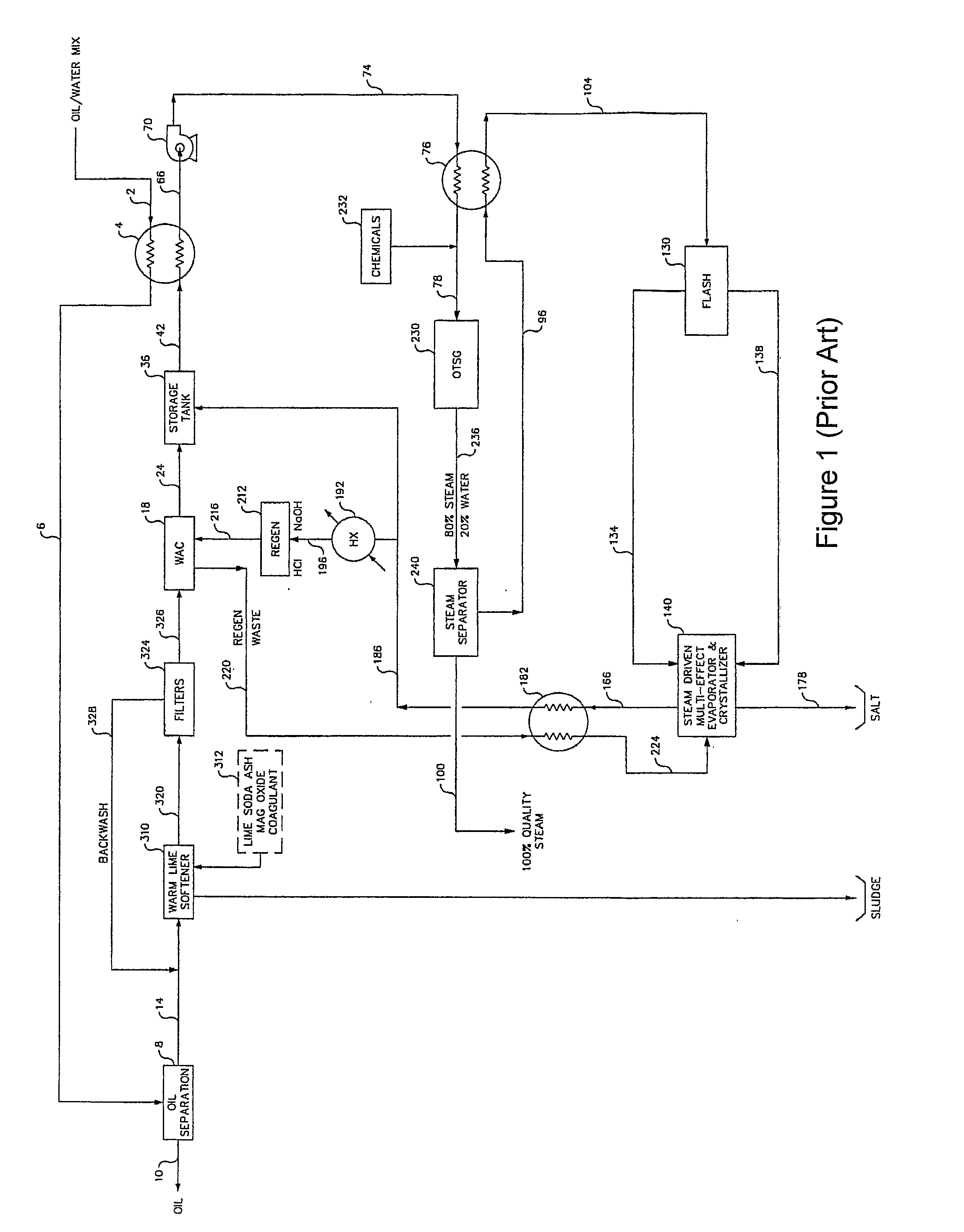
While this process seems to provide a simple approach to providing high quality water to the OTSG, it has limited applicability in that the concentration of the
hardness causing ions, such as
calcium and
magnesium, must be quite low in the raw produced water.
The disadvantages to this system are:1.
Power consumption is high due to MVC evaporator compressor2. A very large electrical infrastructure is required to supply power to the MVC evaporator compressors3. Suppliers of OTSG equipment are reluctant to design to greater than 80% quality steam even with high quality feed water4. OTSG tube
wetting problems5. Applicability is limited to
low calcium and
low magnesium produced waters due to high pH requirements for silica
solubility and even when low, acid cleanings are required to maintain evaporator efficiency by removing the CaCO3 scale that builds up.6. The evaporator is subject to scaling from low
solubility constituents in the evaporator feed like
strontium,
barium and complexes of metals that occur at high pH operation.
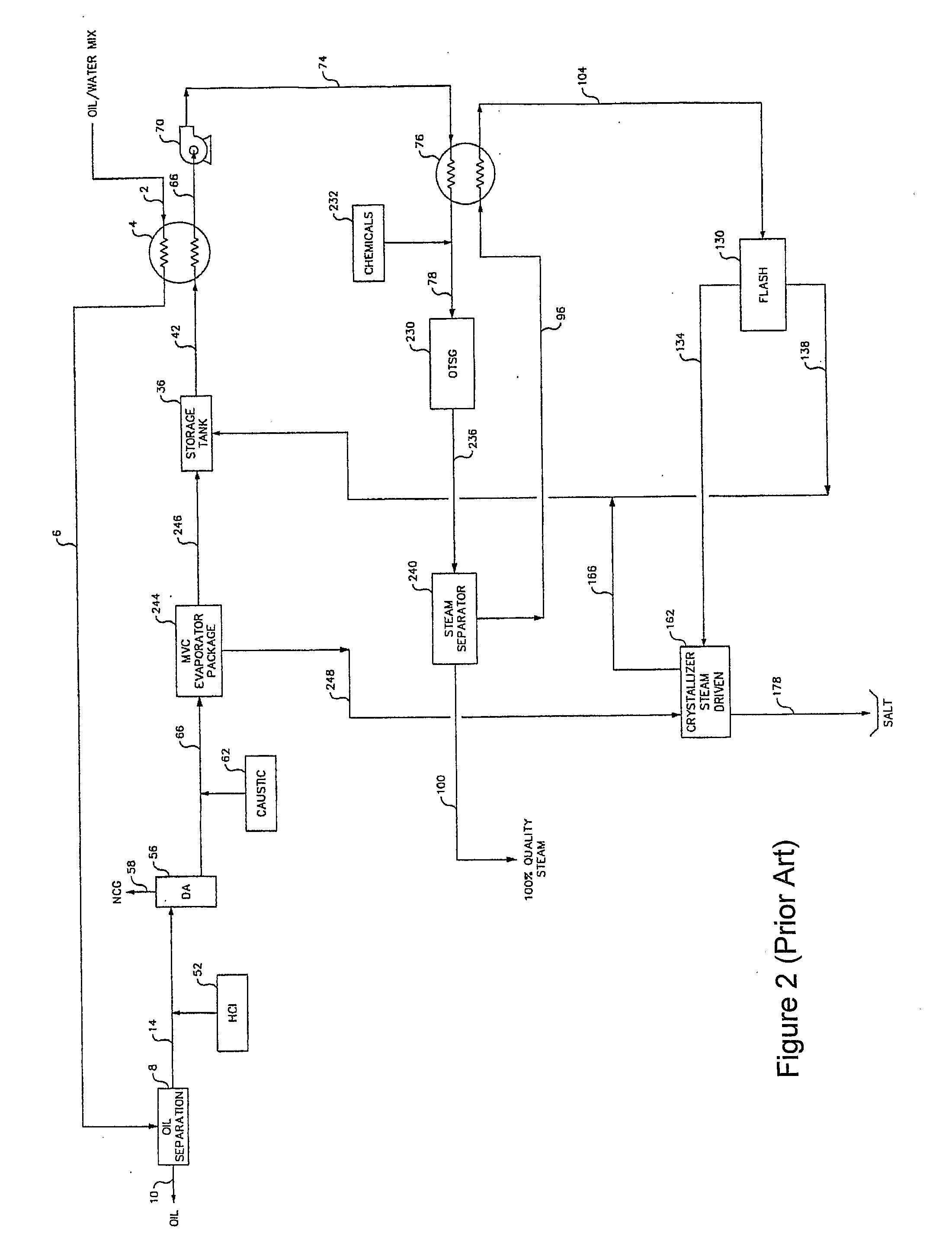
The steam driven ZLD system of the preceding figures has to be eliminated in favor of a MVC driven system as the amount of blowdown from the
water tube boiler is insufficient to support a steam driven evaporator.
However, this variation has the potential of
fouling and scaling the watertube boiler to a greater extent than when distillate
post treatment is utilized.
The disadvantages of this system include:1. Highest
power consumption and highest electrical infrastructure requirements2. High total cost compared to other options3. Multiple types of MVC evaporators are required (pretreatment / blowdown and crystallizer) which complicates operation4. TOC is all rejected to the pretreatment / blowdown and crystallizer MVCs which will likely cause foaming problems that will complicate operation and puts the MVC compressors at risk of damage5. Pretreatment MVC evaporator distillate must be cooled prior to RO treatment and then reheated.
In summary, the prior art process designs in current use for treating heavy oilfield produced waters for high quality
steam generation to be utilized in down-hole steam flooding applications is not entirely satisfactory due to:1.
physical chemical treatment processes are usually extensive, require high maintenance and
operator interface, and generate large sludge and regeneration streams that need to be dealt with in accordance with strict environmental regulations,2. large quantities required of expensive treatment chemicals that, in cases, need special safety / handling procedures,3. reliance on low efficiency OTSGs to generate high quality steam at a
recovery rate of 80%, water to steam and the associated steam separator and blowdown condensate handling systems,4. inherent OTSG problems with insufficient tube
wetting,
high heat transfer rates, and tube plugging,5. high
power consumption requirements and electrical infrastructure due to the use of vapor compressors,6. treating the entire produced water
stream to meet requirements for ASME grade water that can be utilized in a commercial
water tube boiler.
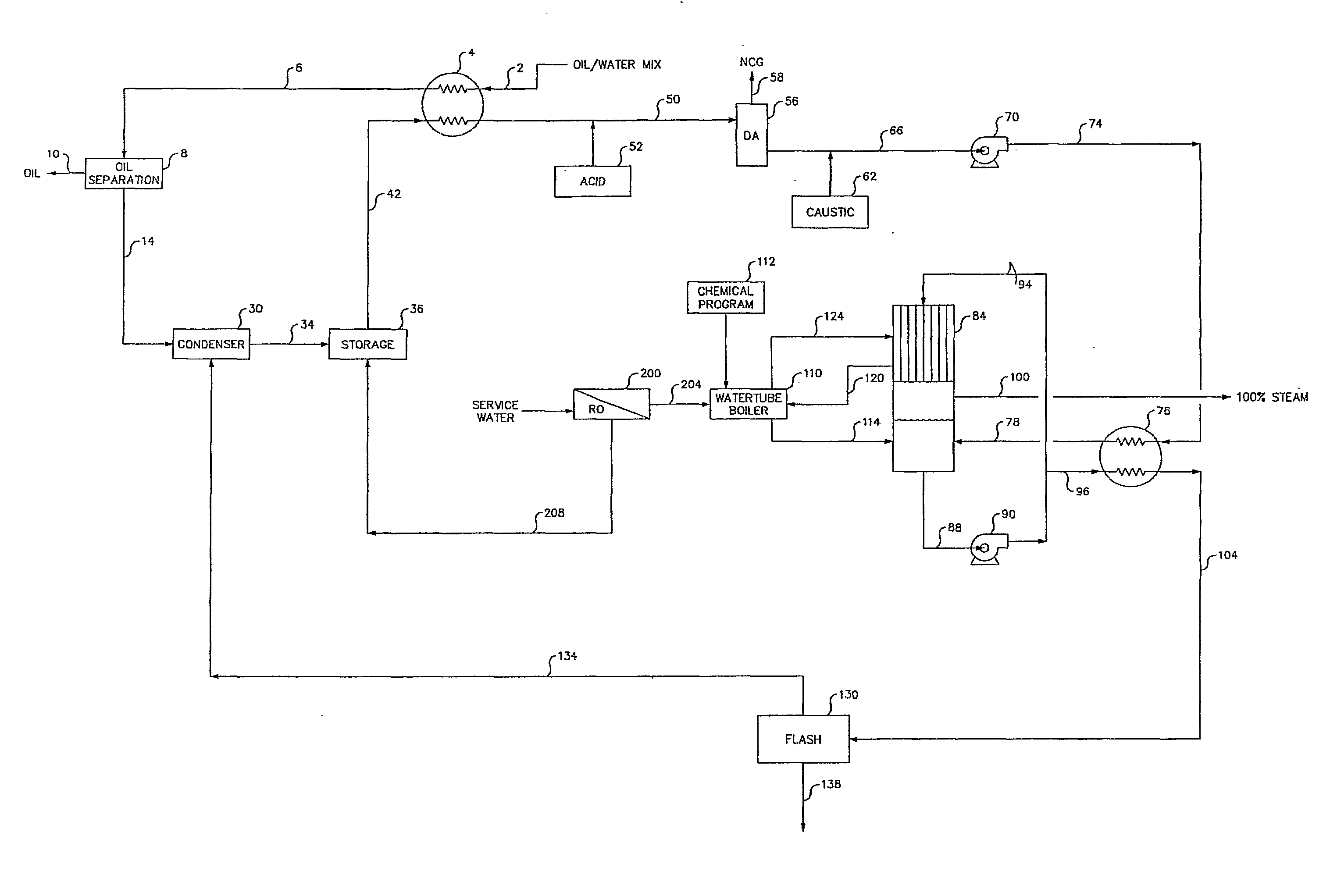
It is believed that no one heretofore has thought it feasible to operate a water tube boiler on deionized water coupled to an evaporator system at high pH and at pressures high enough to provide steam that can be directly used for steam flooding projects.
Therefore, a heretofore unaddressed need exists in the heavy oil industry to address the aforementioned deficiencies and inadequacies.


 Login to View More