This helps you quickly interpret patents by identifying the three key elements:
Problems solved by technology
Method used
Benefits of technology
Benefits of technology
The patent describes a method for generating stem cells from CD14+ mononuclear cells in a cell culture system. The method involves culturing the mononuclear cells with a cell culture medium and a supplementary minimal medium containing insulin. The cells are initially suspended in a solution containing albumin and then transferred to a new solution containing insulin. The method allows for the de-differentiation of the mononuclear cells to a stem cellphenotype. The process involves culturing the cells for a period of 3-8 days, with the optimal conditions being a temperature of 5% CO2 and 37°C. The resulting stem cells have the potential to differentiate into various cell types. The patent provides a technical solution for generating stem cells from a specific population of cells in a controlled environment.
Problems solved by technology
Although ES cells have been isolated from humans, their use in research and therapy is hampered by ethical considerations.
Nevertheless, the fact remains that the efficient and reliable isolation, maintenance and, particularly, expansion of stem cells continues to be elusive.
Method used
the structure of the environmentally friendly knitted fabric provided by the present invention; figure 2 Flow chart of the yarn wrapping machine for environmentally friendly knitted fabrics and storage devices; image 3 Is the parameter map of the yarn covering machine
View more
Image
Smart Image Click on the blue labels to locate them in the text.
Viewing Examples
Smart Image
Click on the blue label to locate the original text in one second.
Reading with bidirectional positioning of images and text.
[0190]A sample of CD14+ PBMC was placed in a FEP blood bag. A volume of 6% human serum albumin solution equal to the CD14+ PBMC sample was added.
[0191]A cell culture medium suitable for stem cell culture was added. The final mixture was approximately be constituted of 15% of CD14+ PBMC, 15% of 6% human serum albumin solution and 70% of cell culture medium.
[0192]An optional volume of 10 mg / L insulin can be added to promote cell growth.
[0193]The cell culture was then incubated in a 5% CO2 incubator at 37° C. for 90 minutes for PBMC to adhere to inside of the bag. After adhesion, the cells were incubated for 1 to 7 days where MLPC will be derived throughout this period. On day 7, the cell culture was removed from the bag wall and washed with 0.9% sterile normal saline. The resultant MLPC were...
example 2
Characterization of the MLPC
1. Morphological Observation of MLPC
[0194]Slides were prepared with samples of the cell culture from 1 day, 2 day, 3 day, 4 day, 5 day, 6 day and 7 day post-incubation in a CO2 incubator at 37° C. To study MLPC's biological characteristics, adherent cells phenotypes were analysed by an inverted microscope during cell cultivation periods (FIGS. 1 to 8.)
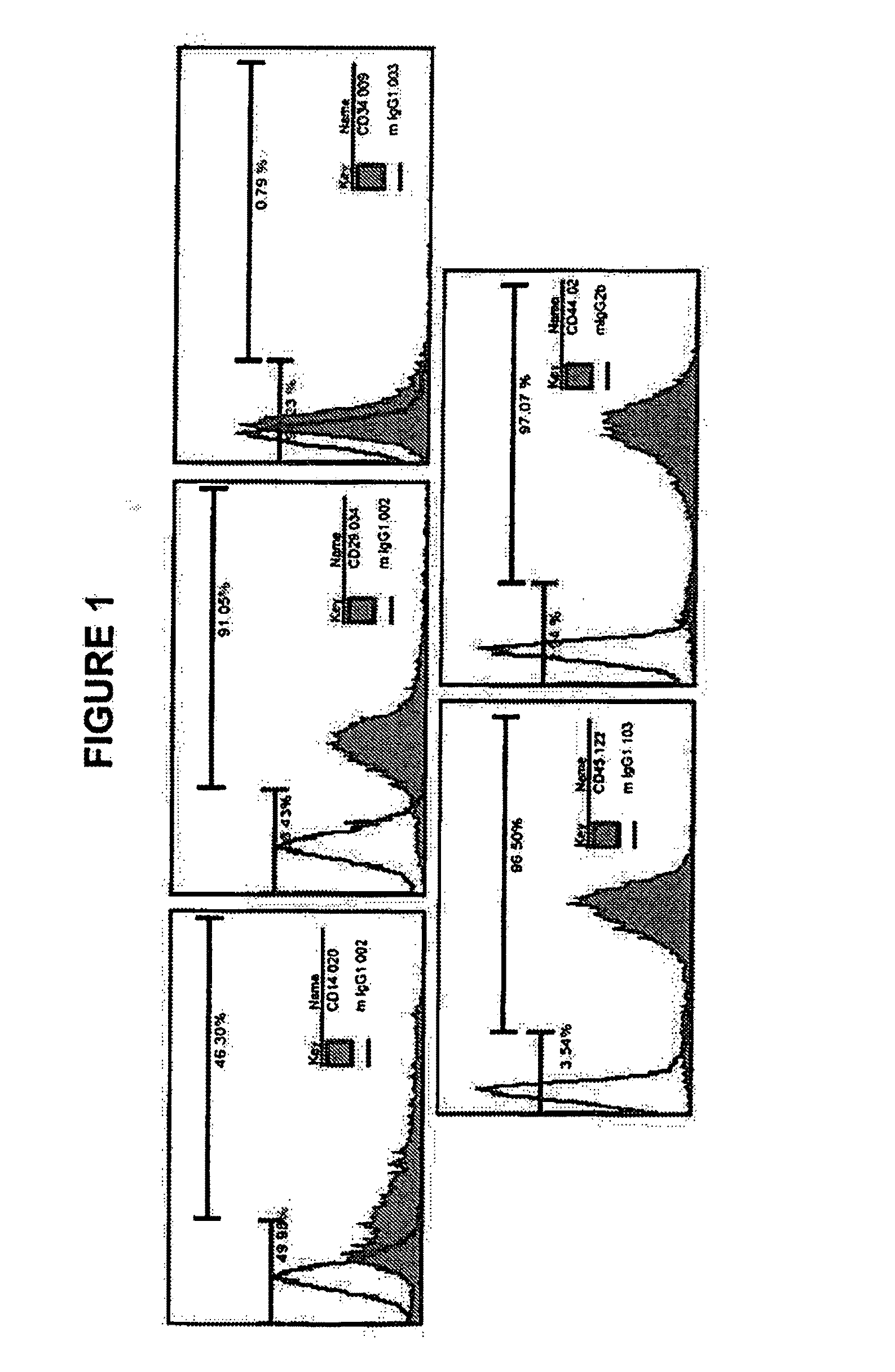
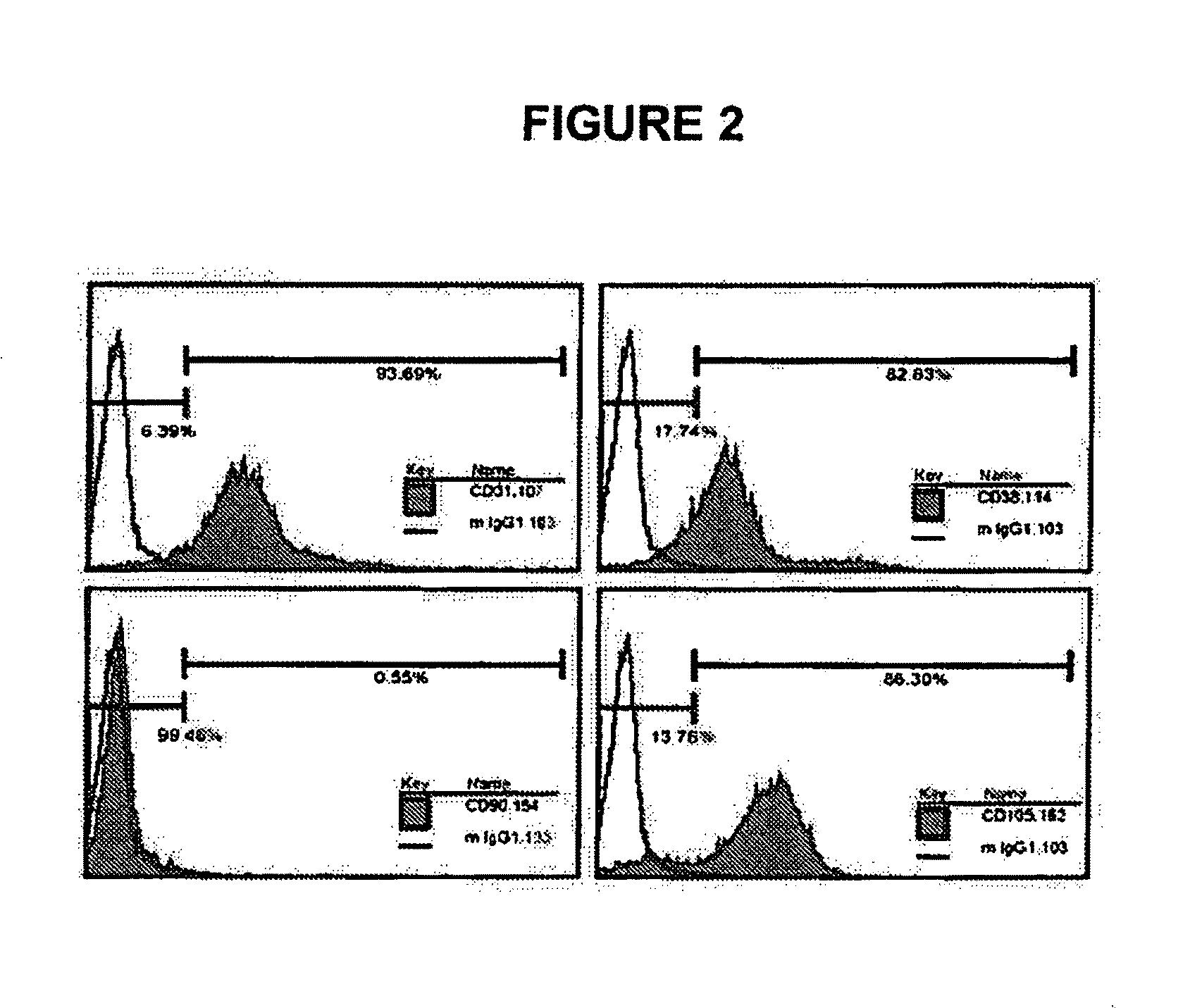
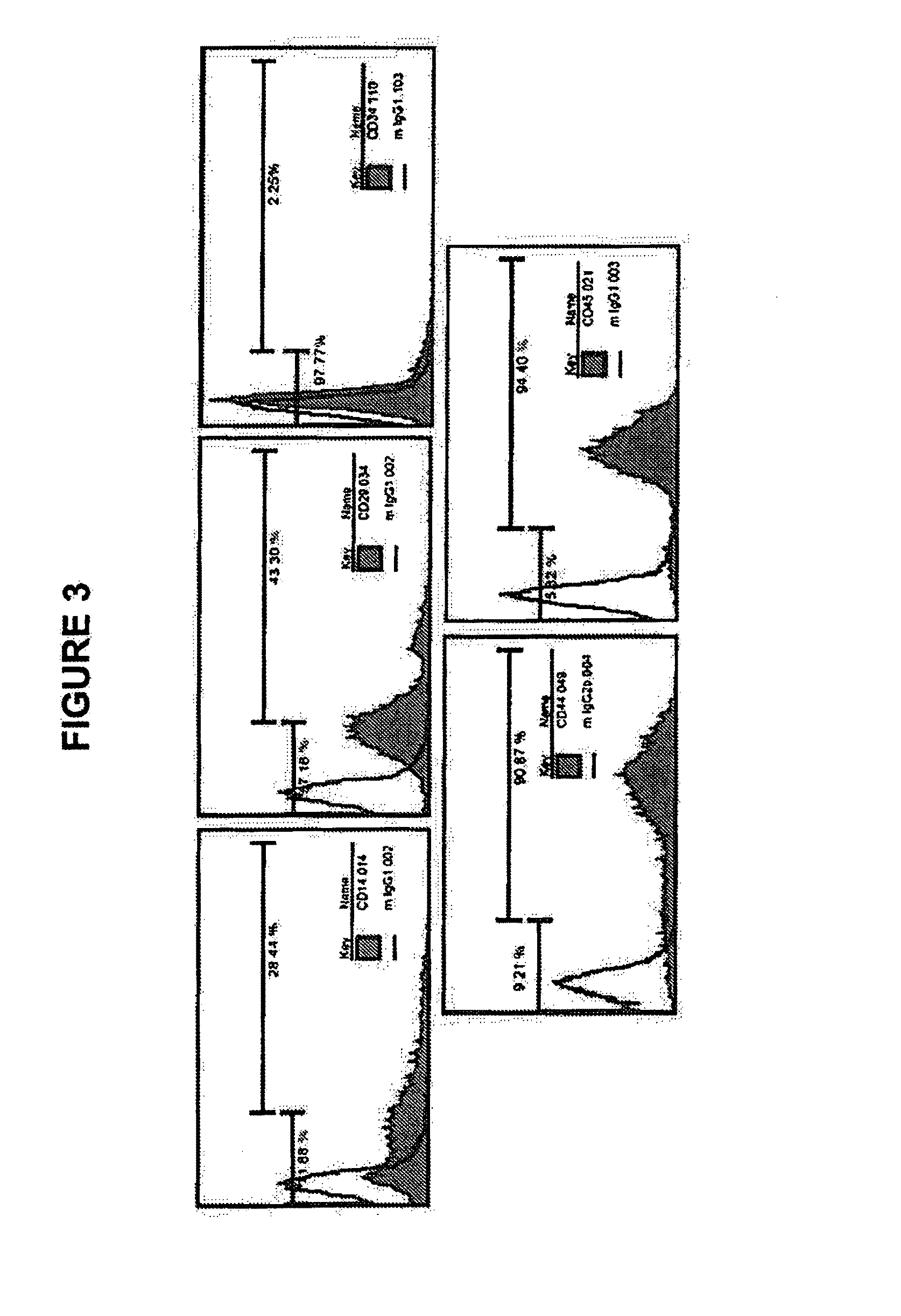
[0195]To identify MLPC stem cell expression, surface markers were analyzed by flow cytometry. MLPCs were harvested and washed with PBS from a closed bag system, centrifuged at 1500 rpm at 4° C. for 5 minutes, and the cell pellet kept. The cell density was adjusted to 1×10⁶ cells per tube, cells re-suspended in 100 microliters PBS buffer and transferred to a 1.5 mL vial. MLPCs were incubated with 5-20 μl Fluorochrome-labeled antibodies including CD14-FITC, CD29-PE, C31-PE, CD34-PE, IgG-PE isotype control (MACS, Germany), CD38-PE, CD45-PE, CD90-FITC, CD105-PE, (BD PharMingen, CA) at 4...
example 3
Protein expression of CD14+ Multi-Lineage Potential Cells
[0201]Cellular proteins were collected from CD14-positive of PBMCs-pool of 4 health's volunteer after 4-7 days cultivation. Briefly, protein extraction of cells was obtained by urealysis buffer and acetone purification.
[0202]Samples from each group were mixed equally according to the protein quantity and 2-DE was then performed using IPG strips (18 cm, pH 3-11, linear (L); GE Healthcare, Amersham, USA) and 12.5% sodiumdodecyl sulfatepolyacrylamidegel electrophoresis (SDS-PAGE) in duplicate 3 times using the IPGphor IEF system and Ettan DALTSix System (Amersham Biosciences, USA).
[0203]The gels were stained with CyproRuby (GIBCO) and scanned with an image scanner (Amersham Biosciences, USA) for protein spots identification. Proteins were obtained by in-gel digestion; gel spots were de-stained in 50% acetonitrile (ACN) and 25% 50 mM NH4HCO3, the...
the structure of the environmentally friendly knitted fabric provided by the present invention; figure 2 Flow chart of the yarn wrapping machine for environmentally friendly knitted fabrics and storage devices; image 3 Is the parameter map of the yarn covering machine
Login to View More
PUM
Login to View More
Abstract
The present invention relates generally to a method of generating cells exhibiting multilineage potential and to cells generated thereby. More particularly, the present invention is directed to an in vitro method of generating mammalian stem cells from CD14+ mononuclear cells and to cells generated thereby. This finding has now facilitated the design of means for reliably and efficiently generating populations of multilineage potential cells, such as stem cells,for use in a wide variety of clinical and research settings. These uses include, inter alia, the directed differentiation, either in vitro or in vivo, of the subject multilineage potential cells and the therapeutic or prophylactic treatment of a range of conditions either via the administration of the multilineage potential cells of the invention or the more fully differentiated cellular populations derived therefrom. Also facilitated is the design of in vitro based screening systems for testing the therapeutic impact and / or toxicity of potential treatment or culture regimes to which these cells may be exposed.
Description
FIELD OF THE INVENTION[0001]The present invention relates generally to a method of generating cells exhibiting multilineage potential and to cells generated thereby. More particularly, the present invention is directed to an in vitro method of generating mammalian stem cells from CD14+ mononuclear cells and to cells generated thereby. This finding has now facilitated the design of means for reliably and efficiently generating populations of multilineage potential cells, such as stem cells, for use in a wide variety of clinical and research settings. These uses include, inter alia, the directed differentiation, either in vitro or in vivo, of the subject multilineage potential cells and the therapeutic or prophylactic treatment of a range of conditions either via the administration of the multilineage potential cells of the invention or the more fully differentiated cellular populations derived therefrom. Also facilitated is the design of in vitro based screening systems for testing t...
Claims
the structure of the environmentally friendly knitted fabric provided by the present invention; figure 2 Flow chart of the yarn wrapping machine for environmentally friendly knitted fabrics and storage devices; image 3 Is the parameter map of the yarn covering machine
Login to View More
Application Information
Patent Timeline
Application Date:The date an application was filed.
Publication Date:The date a patent or application was officially published.
First Publication Date:The earliest publication date of a patent with the same application number.
Issue Date:Publication date of the patent grant document.
PCT Entry Date:The Entry date of PCT National Phase.
Estimated Expiry Date:The statutory expiry date of a patent right according to the Patent Law, and it is the longest term of protection that the patent right can achieve without the termination of the patent right due to other reasons(Term extension factor has been taken into account ).
Invalid Date:Actual expiry date is based on effective date or publication date of legal transaction data of invalid patent.


 Login to View More
  Login to View More