Recently, because of a demand for a
higher power of an engine and measures for an
exhaust gas to minimize
atmospheric pollution, use environment of the piston ring is becoming severer and wear of an outer peripheral surface of the piston ring has been a problem to be solved.
However, in a
diesel engine using a piston ring with such a
nitride on an outer peripheral surface thereof as a hard film, when the
combustion pressure is high or when an
exhaust gas countermeasure is taken by a large quantity of EGR (
Exhaust Gas Recirculation), there arises the problem that the wear on the outer peripheral slide surface is increased.
Accordingly, it is less than optimal to ensure the lifetime and the sealing performance of the piston ring for a long time.
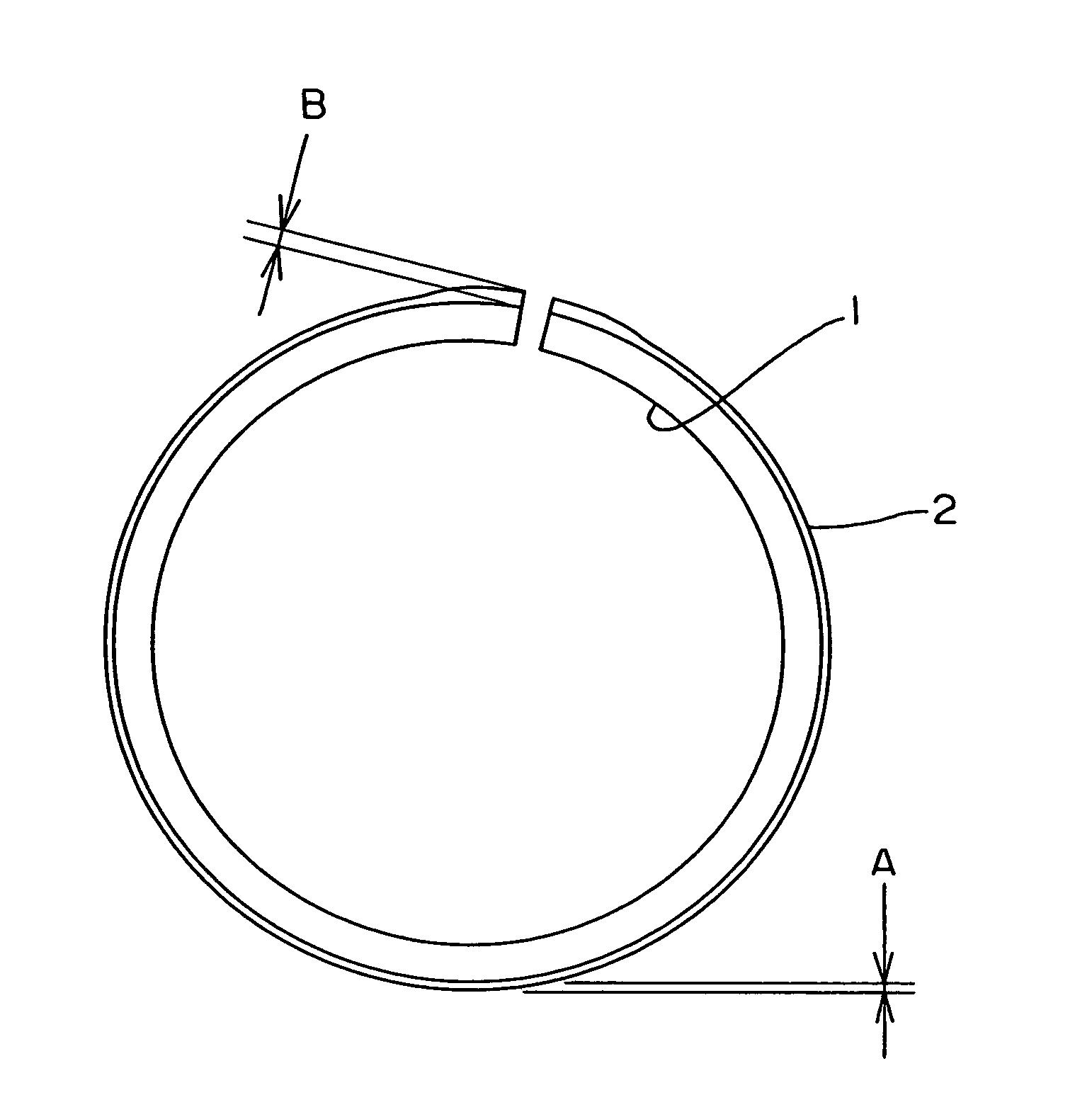
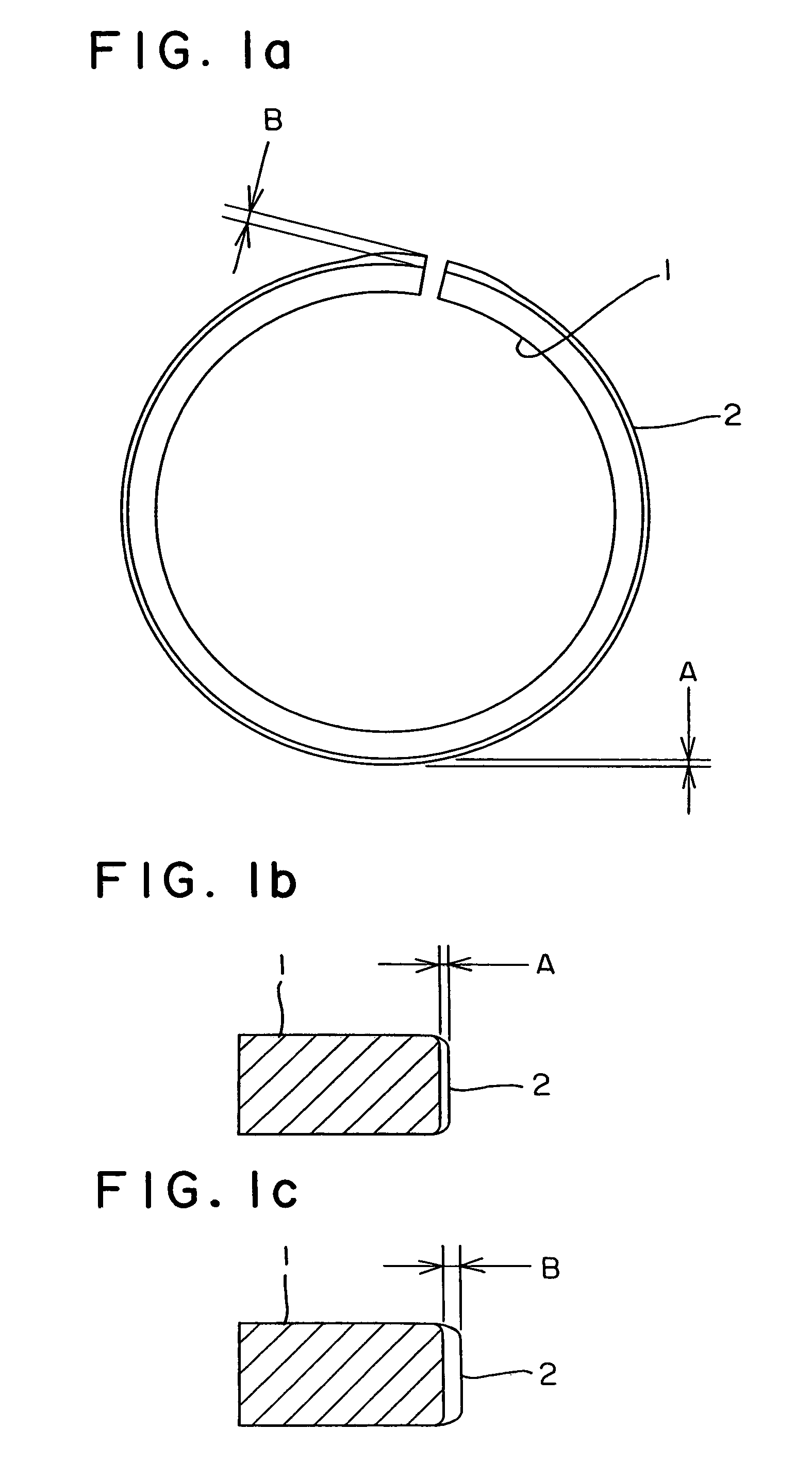
Particularly, with respect to an outer peripheral slide surface of a portion of butt ends of a top ring which define a gap, since a high temperature
combustion gas passes a closed gap between the butt ends when compressed within a cylinder and hence, the
lubrication condition is more serious compared to other portions.
Due to such wear, when the hard film formed on the outer peripheral slide surface of the butt ends or the portion thereof by
ion plating is dissipated, a steel material which constitutes a substrate is exposed to a slide surface so that the wear rapidly progresses whereby the closed gap size between the butt ends is increased resulting in lowering of the sealing function.
Further, a lubricating oil leaks to a
combustion chamber side and this brings about not only the increase of an
oil consumption but also the occurrence of environmental problem such as the increase of sulfuric component in an exhaust gas or the like.
Further, when the hard film is dissipated due to wear and the substrate material of steel is exposed, the danger of engine scuffing is also increased.
Accordingly, it is the fact that the proposal disclosed in the previously mentioned publication is also less than optimal as the countermeasure.
Further, in a high-load
diesel engine which increases the combustion pressure or in an engine which adopts an
exhaust brake, the piston ring is deformed in a dish shape at the time of explosive combustion or at the time of operating an
exhaust brake and this is liable to induce wear of ring grooves of the piston.
Due to this repeated deformation stress, the fatigue breakage of the piston ring is liable to be induced at a position opposite to the butt ends at which the stress is concentrated.
Further, when the hard film is made of nitride formed by
ion plating (for example,
chromium nitride,
titanium nitride or nitrides in which
oxygen, carbon,
boron or the like is added to those nitrides), there has been a problem that the film is peeled off due to fatigue of repeated
friction force which is attributed to the sliding movement between the piston ring and an inner peripheral wall of the cylinder.
When a defect or the like exists in the vicinity of the portion, it functions as a starting point of fatigue failure and hence, there arises a new problem that the breakage of the piston ring is liable to occur easily.
Further, when the hard film is uniformly thick as mentioned previously, there arises a problem on a cost besides the above-mentioned problems.
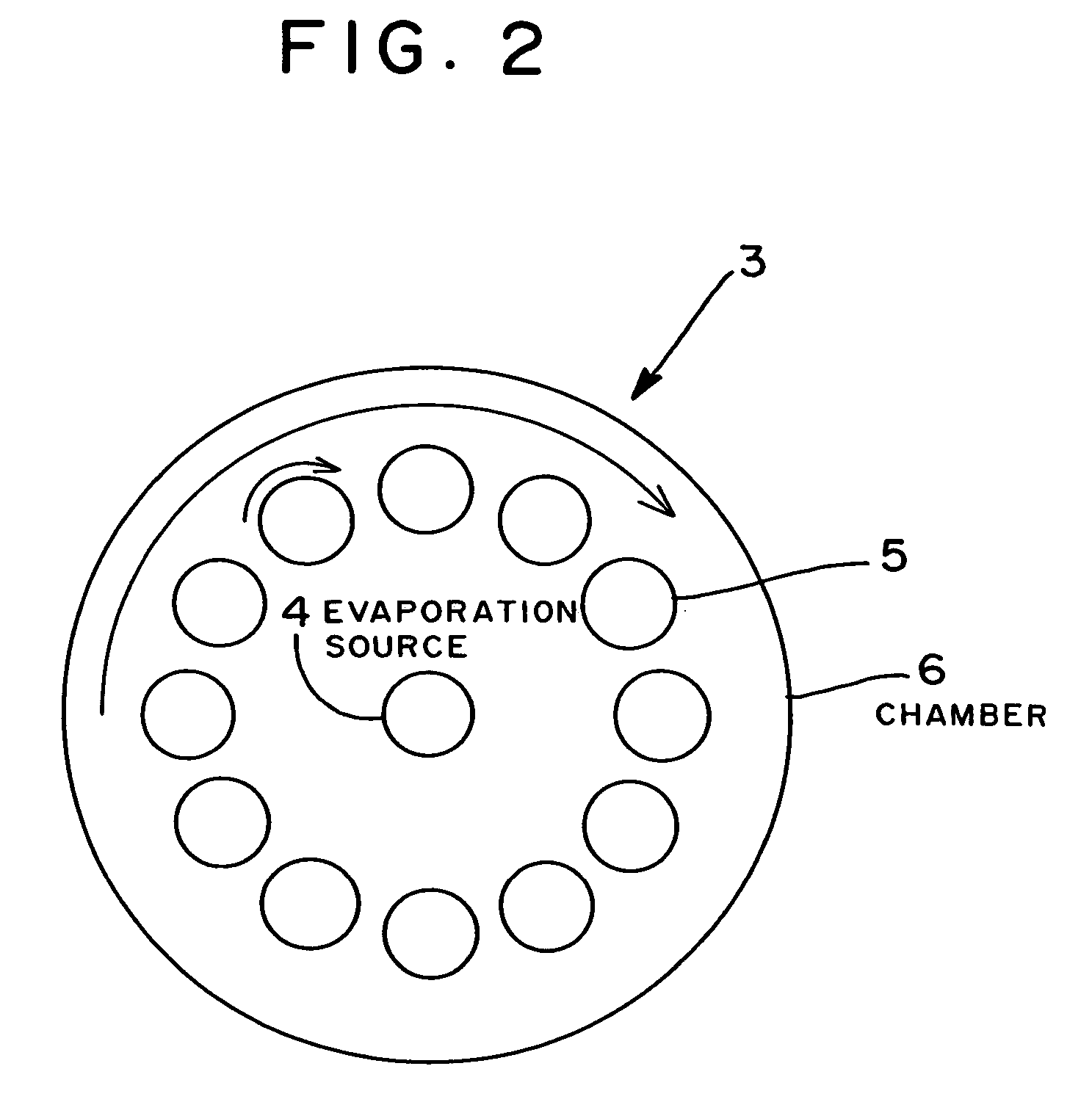
Particularly, when the hard film is formed by
ion plating,
ion plating equipment is expensive, the film forming speed is slow compared to that of other method such as electric plating or
thermal spraying and hence, the productivity is low.
Further, a target such as
chromium or
titanium is also expensive, the greater the film thickness, the piston ring becomes more costly.
However, as mentioned previously, when the compressive stress remains in the film, the film is deformed even at a temperature which the
microstructure change of the material does not occur and this deformation is remarkably large when the heat-resistant element in the substrate material is small in quantity.
To obtain the complete contact between the outer peripheral portion of the piston ring and the inner peripheral wall of the lapping sleeve, it takes a considerable time for lapping and, in a worst case, even when the other film is dissipated, the contact in the vicinity of the butt ends cannot be obtained.
Further, since an inner peripheral surface of the sleeve for lapping is worn out in that case, the lifetime of the sleeve for lapping is extremely shortened resulting in the manufacturing of costly piston ring.



 Login to View More