Check patentability & draft patents in minutes with Patsnap Eureka AI!

Photonic crystal microarray device for label-free multiple analyte sensing, biosensing and diagnostic assay chips

a microarray and label-free technology, applied in the field of optical and medical devices, can solve the problems of large sensitivity to changes in the refractive index of the ambient, poor quality, and design that is not suitable for the fabrication of microarrays for multiple analyte sensing, and achieve the effect of increasing the measurement throughput of the device and enhancing sensitivity

Active Publication Date: 2012-10-23
OMEGA OPTICS
View PDF10 Cites 3 Cited by
  • Summary
  • Abstract
  • Description
  • Claims
  • Application Information

AI Technical Summary

Benefits of technology

"The invention is a sensor that uses a special structure called a photonic crystal to detect and analyze biomolecules like proteins and nucleic acids. The sensor is made by etching holes in a semiconductor material and filling them with a low dielectric constant material to form a waveguide and microcavity structure. The sensor can be integrated with different biomolecules and does not require labeling, which reduces costs. It also increases measurement throughput by collecting and analyzing signals from multiple elements in a single measurement. The invention also avoids high temperature processes and preserves biomolecule functionality in aqueous phase at room temperatures or colder. Overall, the invention provides a compact, cost-effective, and efficient way to detect and analyze biomolecules."

Problems solved by technology

Tight confinement of the optical field in photonic crystal microcavities leads to a strong interaction with the surrounding ambient in the vicinity of the microcavity, thereby leading to large sensitivity to changes in refractive index of the ambient.
One dimensional photonic crystal microcavities, in addition to poor optical confinement, do not utilize the slow light effect due to reduced group velocity in two-dimensional photonic crystal waveguides that would otherwise enhance coupling efficiency and thereby improve signal-to-noise ratio of sensing.
In either case, the design is not suitable for the fabrication of microarrays for multiple analyte sensing.
The design demonstrated by Guillermain et al (see Guillermain E, Fauchet P. M., “Multi-channel sensing with resonant microcavities coupled to a photonic crystal waveguide,” JWA 45, CLEO Conference (2009)) in effect employs multiple photonic crystal waveguides and also employs microcavities with significantly poor quality factors that make the designs unsuitable for high sensitivity sensing.
At the very least, temperatures this high compromise or alter biological functionality, and at the very worst they may destroy its function.

Method used

the structure of the environmentally friendly knitted fabric provided by the present invention; figure 2 Flow chart of the yarn wrapping machine for environmentally friendly knitted fabrics and storage devices; image 3 Is the parameter map of the yarn covering machine
View more

Image

Smart Image Click on the blue labels to locate them in the text.
Viewing Examples
Smart Image
  • Photonic crystal microarray device for label-free multiple analyte sensing, biosensing and diagnostic assay chips
  • Photonic crystal microarray device for label-free multiple analyte sensing, biosensing and diagnostic assay chips
  • Photonic crystal microarray device for label-free multiple analyte sensing, biosensing and diagnostic assay chips

Examples

Experimental program
Comparison scheme
Effect test

Embodiment Construction

Detailed Description of the Invention

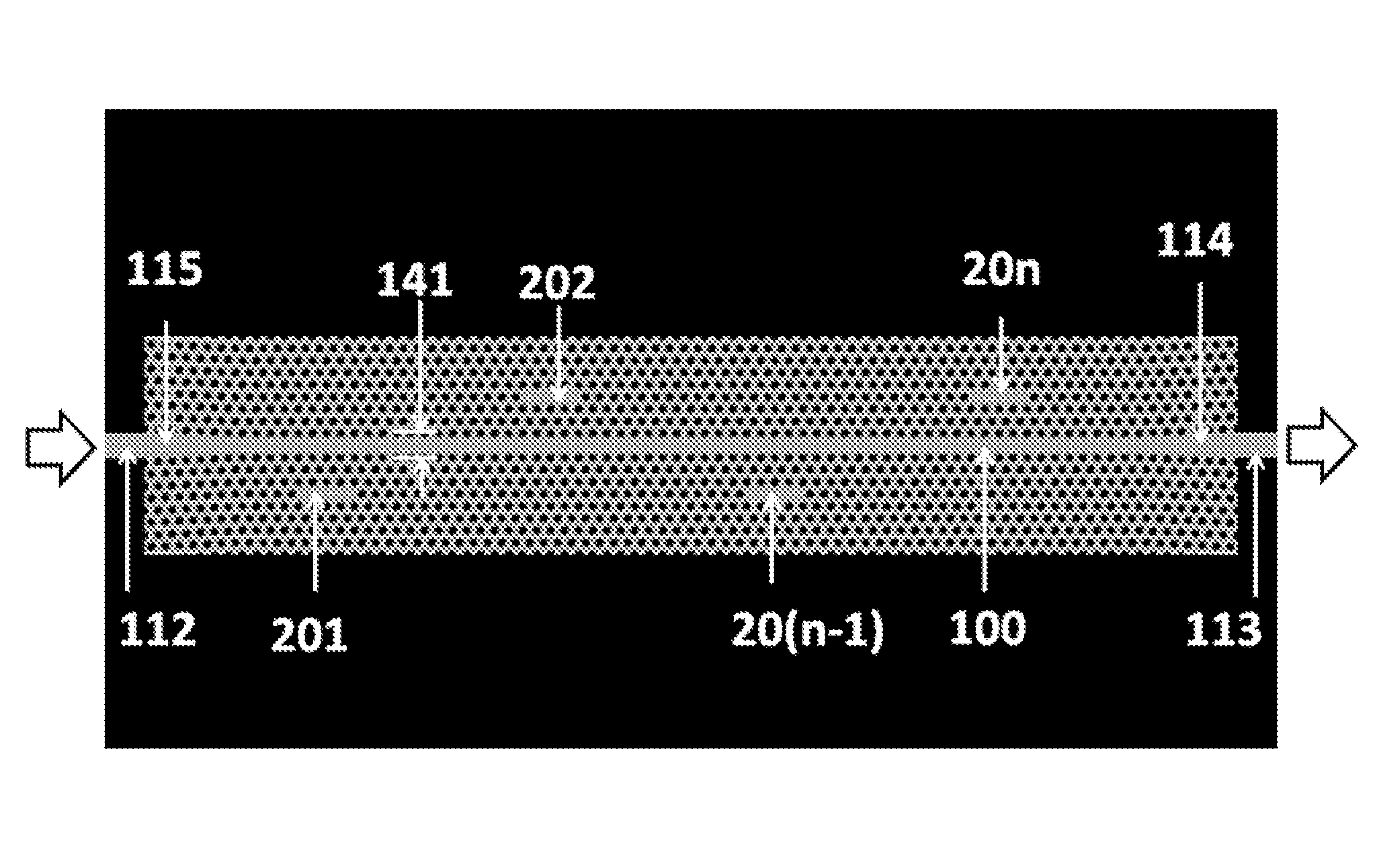
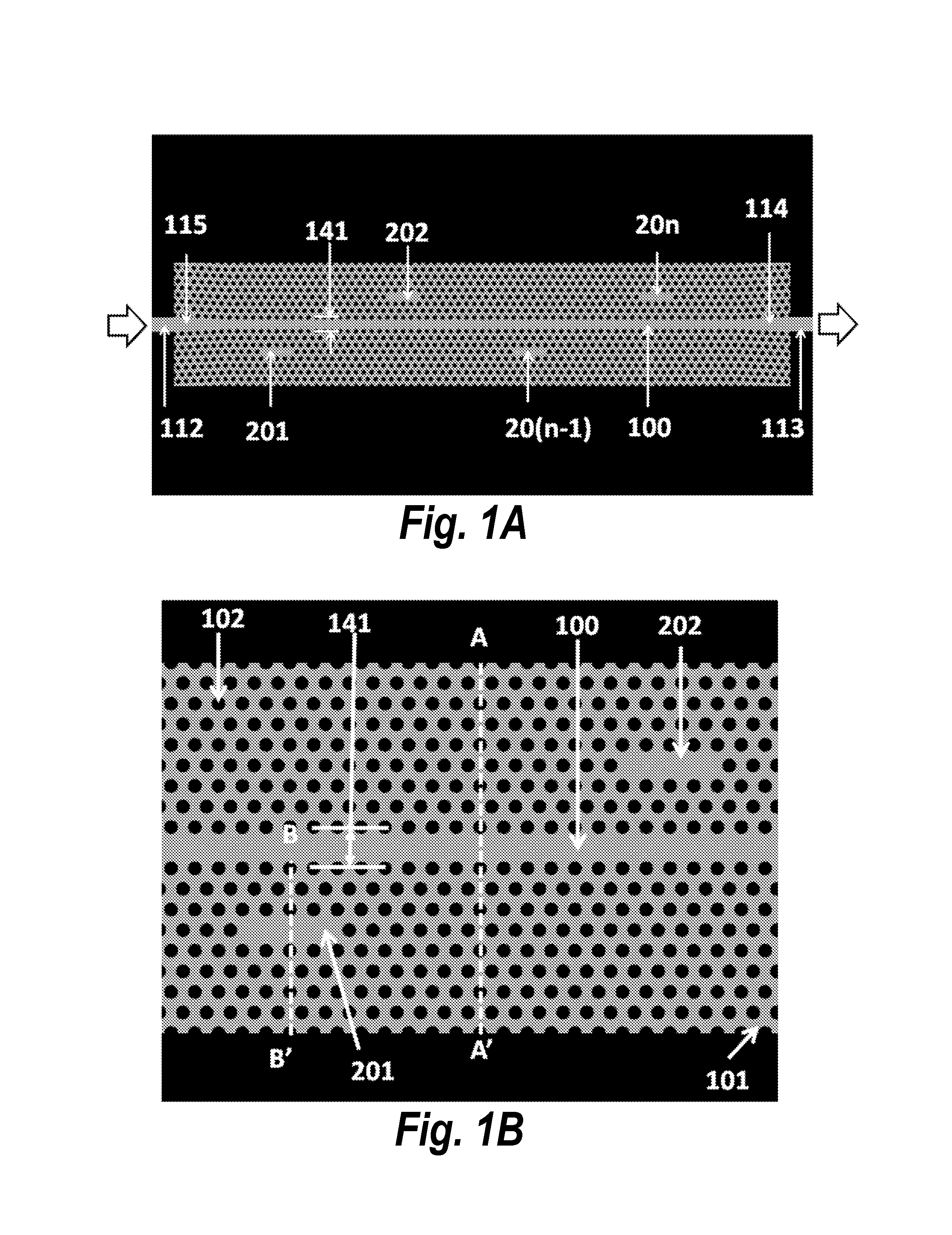
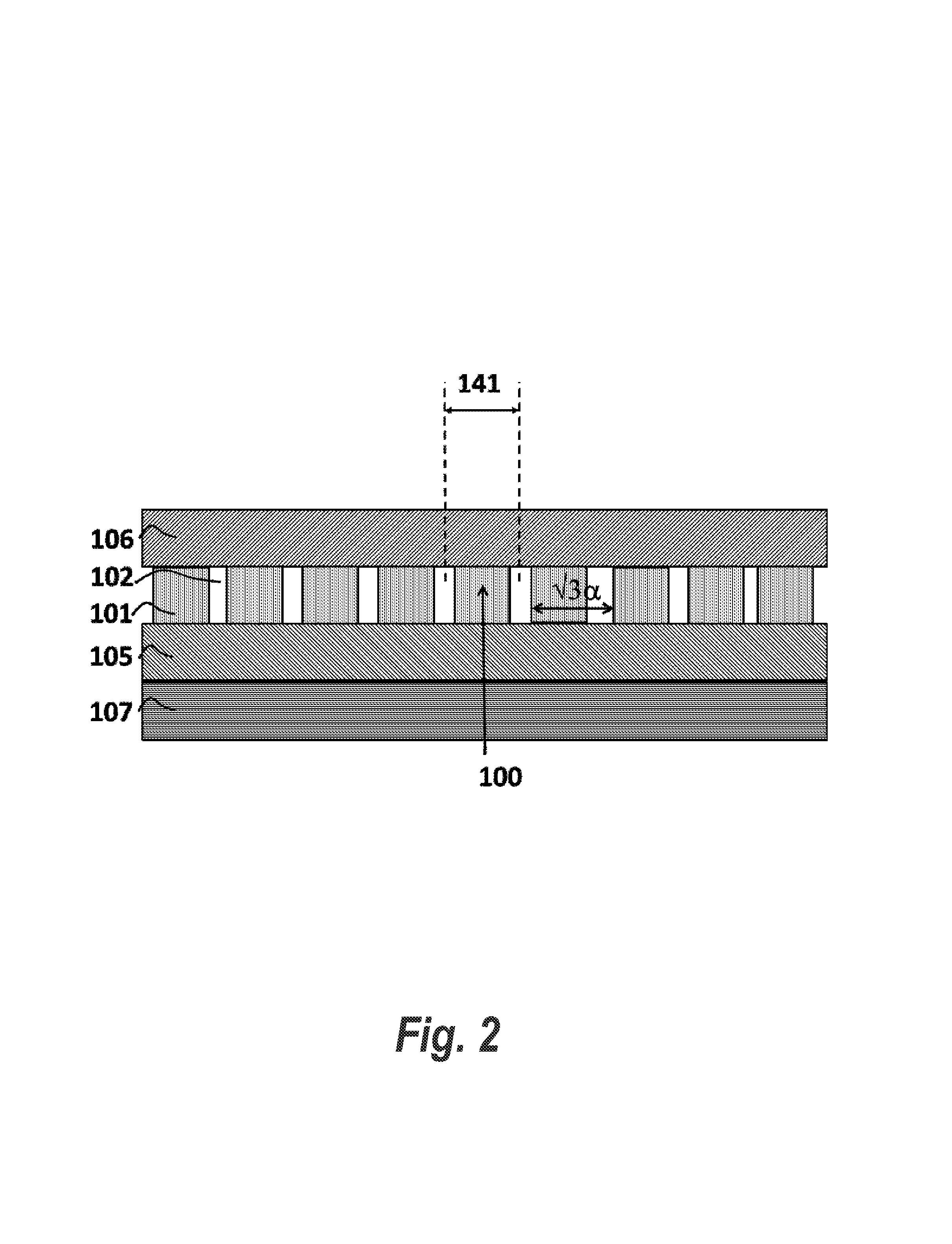
[0027]In accordance with a preferred embodiment of the present invention, a device for a microarray for personalized diagnostic applications comprises: a functional photonic crystal waveguide having a waveguide core along which light is guided, arrays of photonic crystal microcavities along the length of the photonic crystal waveguide each coated with a separate biomolecule specific to disease identification, an input and output photonic crystal waveguide with gradually changed group index before and after the functional photonic crystal waveguide, which can bridge the refractive indices difference between conventional optical waveguides and the functional photonic crystal waveguide. The sensor can be used to detect organic or inorganic substances such as proteins, DNA, RNA, small molecules, nucleic acids, virus, bacteria, cells, genes, without requiring labels such as fluorescence or radiometry. Light (from a broadband source or LED) coupled int...

the structure of the environmentally friendly knitted fabric provided by the present invention; figure 2 Flow chart of the yarn wrapping machine for environmentally friendly knitted fabrics and storage devices; image 3 Is the parameter map of the yarn covering machine
Login to View More

PUM

PropertyMeasurementUnit
temperatureaaaaaaaaaa
thicknessaaaaaaaaaa
Login to View More

Abstract

Methods and systems for label-free multiple analyte sensing, biosensing and diagnostic assay chips consisting of an array of photonic crystal microcavities along a single photonic crystal waveguide are disclosed. The invention comprises an on-chip integrated microarray device that enables detection and identification of multiple species to be performed simultaneously using optical techniques leading to a high throughput device for chemical sensing, biosensing and medical diagnostics. Other embodiments are described and claimed.

Description

BACKGROUND OF THE INVENTION[0001]1. Field of the Invention[0002]This invention relates generally to the field of optical and medical devices, and more specifically to an apparatus and method for microarray implementation for the detection of multiple analytes such as chemical agents and biological molecules using photonic crystals.[0003]2. Background of the Invention[0004]Label-free optical sensors based on photonic crystals have been demonstrated as a highly sensitive potential method for performing a large range of biochemical and cell-based assays. For background information on photonic crystals, the reader is directed to Joannopoulos, J. D., R. D. Meade, and J. N. Winn, Photonic Crystals, 1995 Princeton, N.J.: Princeton University Press. Tight confinement of the optical field in photonic crystal microcavities leads to a strong interaction with the surrounding ambient in the vicinity of the microcavity, thereby leading to large sensitivity to changes in refractive index of the am...

Claims

the structure of the environmentally friendly knitted fabric provided by the present invention; figure 2 Flow chart of the yarn wrapping machine for environmentally friendly knitted fabrics and storage devices; image 3 Is the parameter map of the yarn covering machine
Login to View More

Application Information

Patent Timeline
no application Login to View More
Patent Type & Authority Patents(United States)
IPC IPC(8): G01N21/00
CPCG01N21/253G01N33/54373
Inventor CHAKRAVARTY, SWAPNAJITCHEN, RAY T
Owner OMEGA OPTICS
Features
  • R&D
  • Intellectual Property
  • Life Sciences
  • Materials
  • Tech Scout
Why Patsnap Eureka
  • Unparalleled Data Quality
  • Higher Quality Content
  • 60% Fewer Hallucinations
Social media
Patsnap Eureka Blog
Learn More