In addition,
methane emissions, although necessary, still represent a significant potential feed efficiency loss of roughly five to ten percent of the animal's gross energy intake.
Under these conditions, it is difficult or impossible to individually monitor the health of each animal.
For example, many diseases if not diagnosed and treated quickly can rapidly create epidemics within a confined
herd.
However, by the time a problem is detected in the final products of an animal's
metabolism, it is often too late to avert the loss of an individual or to prevent the spread of
disease to others in the
herd.
Similarly, changes in
feed quality or composition that can occur when feed ingredients are modified or when cattle are moved to new pastures are likely to
impact both the fluxes and the ratios of metabolic
gas emissions.
However,
ethanol plants often use
sulfur-containing compounds to clean and disinfect
plant facilities.
Residue from these compounds can contaminate a distiller's grain.
If not recognized immediately, the result often is the death of the animal.
Individual monitoring to continually assess animal performance in rangelands can likewise be problematic.
It is often difficult for producers and operators to assess the quality and quantity of available
forage in pastures and to quantitatively determine changes in
forage that occur as
grazing progresses.
In rangelands, animals often are not easily approached and handled.
Therefore, routine and comparative diagnostic observations of animals to assess health and performance are relatively difficult and expensive.
In some rangelands, toxic substances, such as some
sulfur compounds, can accumulate in
vegetation and water supplies.
These substances can result in ruminant mortality.
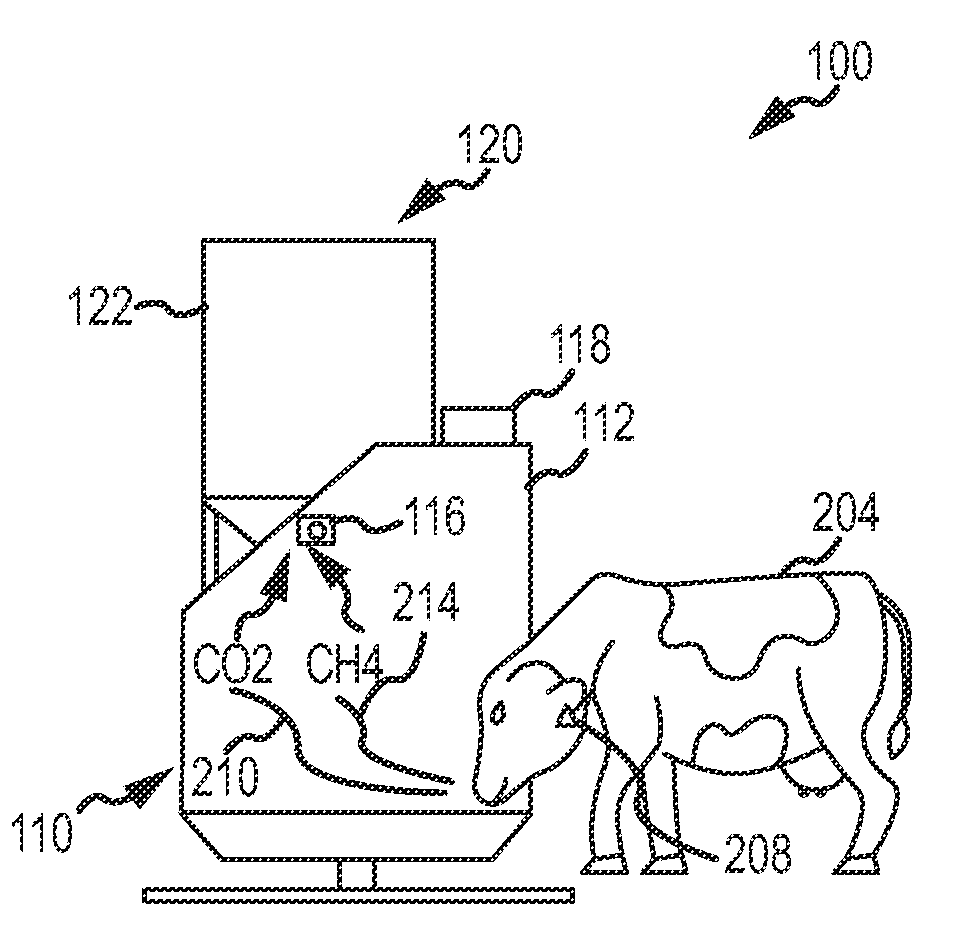
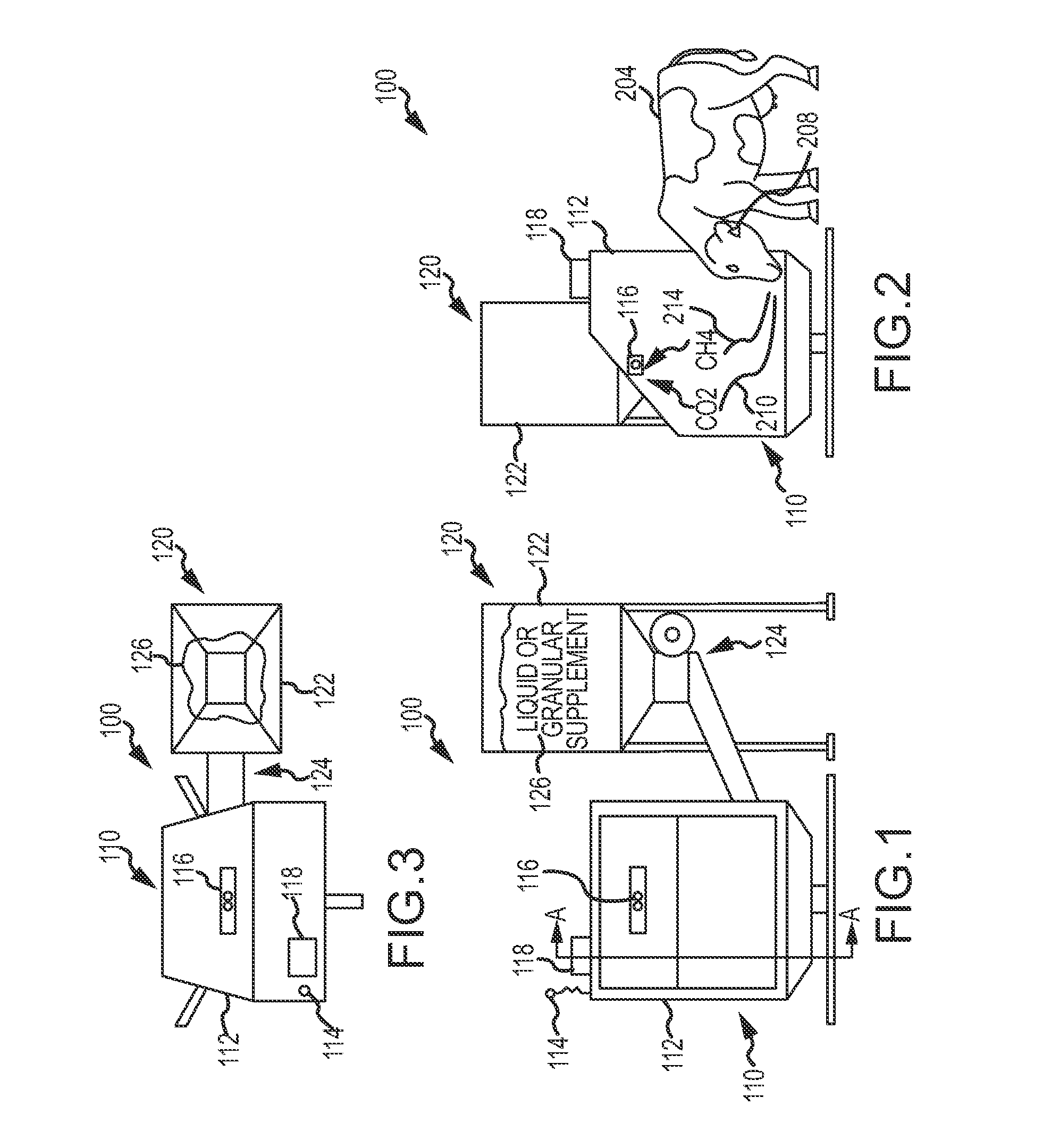
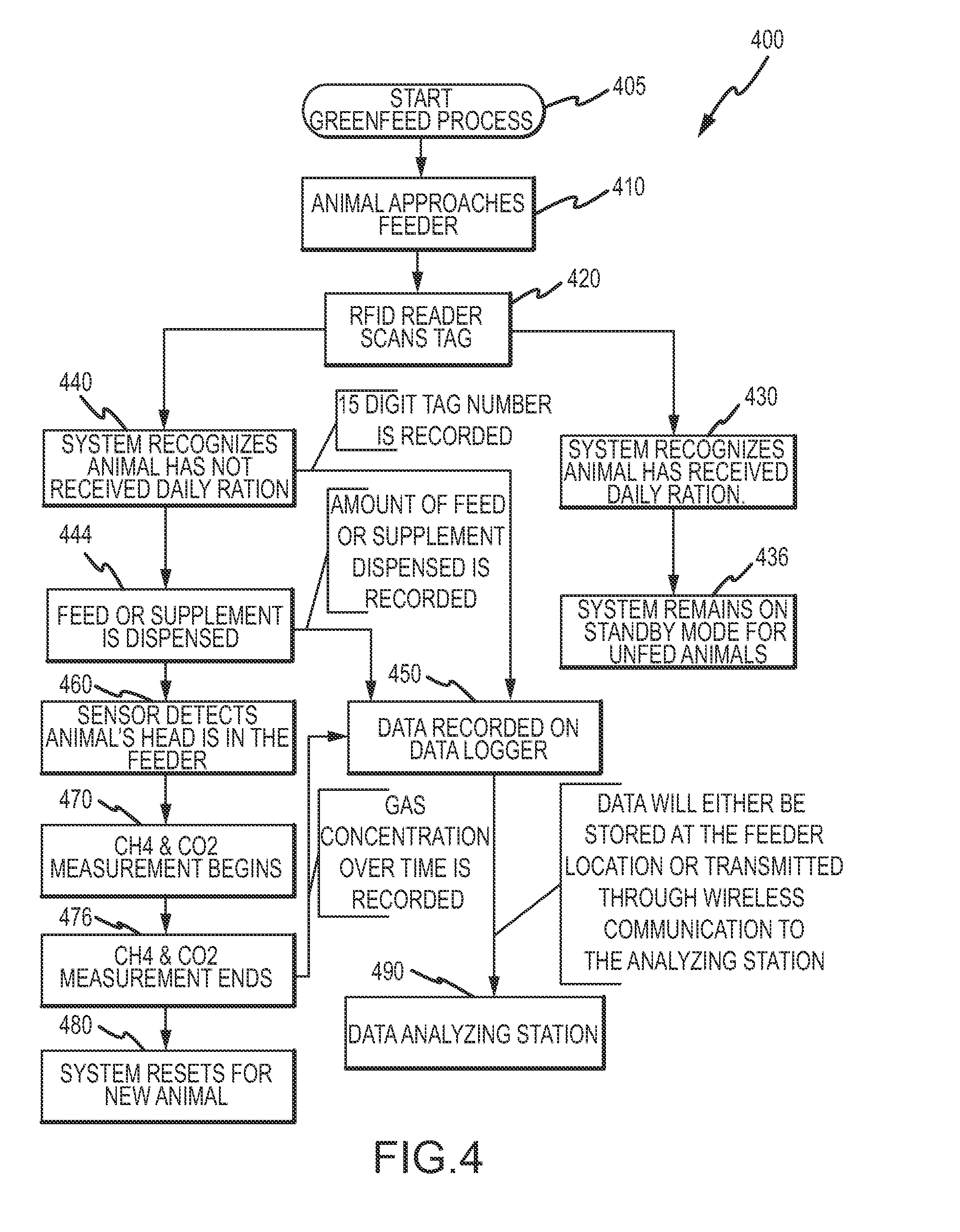
To date, efforts to measure and potentially remediate this source of GHG from ruminants have not been considered feasible or widely implemented in part because of high costs related to monitoring CH4 emission from ruminants in coordination or concurrently with measurement of supplement use.
The difficulties and expense of
current technology, even for scientists involved in this research, has made it impractical and not cost-effective to make more than a few measurements over relatively short time periods for only a few animals and in only strictly controlled research settings.
Therefore, since it is difficult to verify that mitigation plans actually result in decreased
methane emissions to the
atmosphere, few projects to generate carbon credits or
greenhouse gas reduction credits for sale in voluntary markets have been attempted.
Likewise, the development of GHG reduction programs for ruminant emissions in the regulated GHG markets of countries has also been inhibited because of the lack of suitable monitoring and
verification techniques.
The loss of methane is a significant
energy loss to the animal.
Globally this is equivalent to trillions of dollars of lost dietary efficiency.
When animals eat low quality
forage, it actually takes a longer time to pass through their gut.
Hence, the poorer the quality of forage, the longer it takes the animals to digest the forage, and this results in lower
weight gain but more
methane production.
However, since monitoring of changes in methane performance under actual
field conditions has been difficult or impossible to achieve in the past, it is not practical to modify forage composition to minimize methane losses nor to monitor and modify genetic factors that influence ruminant
methane production.
In addition, this technique is difficult to employ for metabolic gases such as
hydrogen sulfide or oxygenated organic compounds that degrade during storage in sample containers.
Moreover, it is not practical for animals that do not tolerate a halter, which may include large percentages of a ruminant
herd.
Also, the
system can only provide time-integrated values that represent average
rumen catabolic and respiratory processes.
The
system cannot be used to track short-term changes nor can it isolate
rumen processes from respiratory processes related to
catabolism.
Schemes to convert increased ruminant metabolic efficiency into marketable GHG offsets have not been financially viable.
Though mineral blocks, other effective nutrient supplements, and
rumen-modifying
antibiotics and ionophores are effective in reducing methane production and in many cases cost only a few cents per day, at the current value of
greenhouse gas (GHG) offsets, compliance,
documentation, and monitoring costs exceed the value of the GHG offsets that can be generated.



 Login to View More
  Login to View More