Common problems during construction are: 1) Necked piles, also known as bottlenecks, refer to the fact that the local
diameter of the pile body is smaller than the design
diameter. The main reasons are: a. Excessive
pore water pressure is generated due to strong disturbance and
extrusion. After the pile tube is pulled out, the excess
pore water pressure acts on the concrete pile body, reducing the local diameter of the pile body; b. Vacuum suction is generated in the pipe. If the amount of concrete in the pipe is small and the workability is poor at the same time, the concrete
diffusion effect will be poor and
necking will occur; c. If the pile spacing is too small, the pile body will shrink when it is squeezed by adjacent piles during construction; 2) Broken piles, Refers to the pile body cracks that are horizontal or inclined and run through the entire cross-section. They are often found at the junction of different soft and hard soil
layers 1-3 meters below the ground. The main reason is that the pile distance is too small, the concrete of the pile body is finally set soon, and the strength is low. When adjacent piles are sinking, the soil will be uplifted and squeezed, resulting in
horizontal force and vertical tension to break the concrete pile body; 3) Suspension foot pile, which means that the concrete at the bottom of the pile is suspended or mixed with sand to form a
soft layer at the bottom of the pile , the reason is that the pile tip is pulled up to a certain height along with the pile tube when the pipe is pulled out, and at this time the bottom of the hole has been filled with falling soil to form a hanging pile; When the pile tube is sunk into the layer, water or
sediment will often enter the pile tube. The reason is that the pile tip and the tube pile are closed and there is a large gap. The mixed
sediment and concrete will reduce the strength of the pile tip.
[0004]
Chinese patent CN103993598A provides a grouting pile with bagged
crushed stone and its construction method. Its disadvantages are: 1) the pile tip is prone to deflection during the lowering process, which leads to a decrease in the
bearing capacity of the pile; 2) before lowering the pile tip It is unavoidable that more or less backfill soil falls into the bottom of the pile hole, and these soils are only incompletely compacted by a part of the gravity of the pile itself, so the later settlement is relatively large. Although the strength of the pile body is high, However, it cannot effectively bear the load transmitted from the
superstructureChinese patent CN104131555A provides a kind of outsourcing permeable
reinforced concrete pipe gravel grouting pile and its construction method. Leading to the destruction of the
geotextile bag, and because the prefabricated pipe pile is made of permeable concrete, the combination of the two reasons will inevitably lead to the mixing of the imported concrete with
groundwater and
sediment, and the strength of the concrete will be reduced, thereby greatly reducing the
bearing capacity of the pile.
Chinese patent CN203594027U provides a kind of cloth bag expanded
extrusion concrete support disc pile, and its shortcoming is: 1) construction steps are numerous and varied, and cost is higher; Because after the high-
pressure grouting of the external support plate squeezes the bag, it will simultaneously generate pressure on the concrete pile core that has just been poured inside and the soil on the outside. Since the strength of the soil is higher than the strength of the concrete that has just been poured, the squeeze The result is that the deformation of the soil is not large, but the pile core is greatly squeezed and deformed, resulting in a sudden decrease in the cross-sectional area of the pile body and a decrease in the bearing capacity.
Chinese patent CN201202116Y provides a post-grouting pile made of geotechnical cloth bag loose material. Its
disadvantage is that the pile tip is made of steel plate, and no protective measures are set, so
corrosion will occur and the strength of the pile tip will decrease, thus affecting the overall stability of the pile.
carrying capacity 

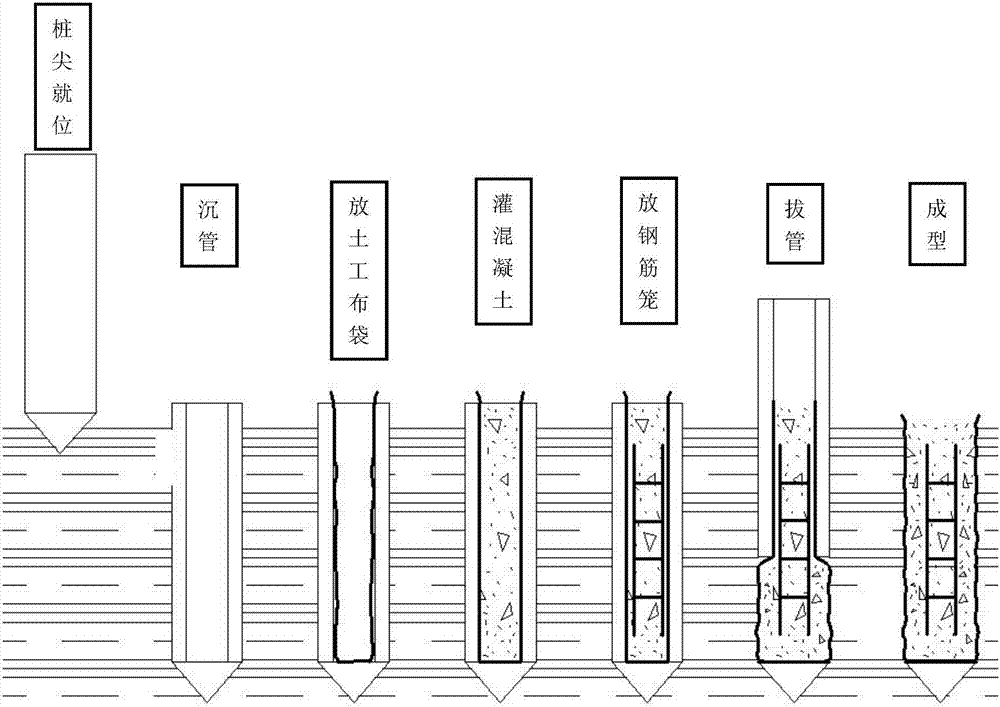
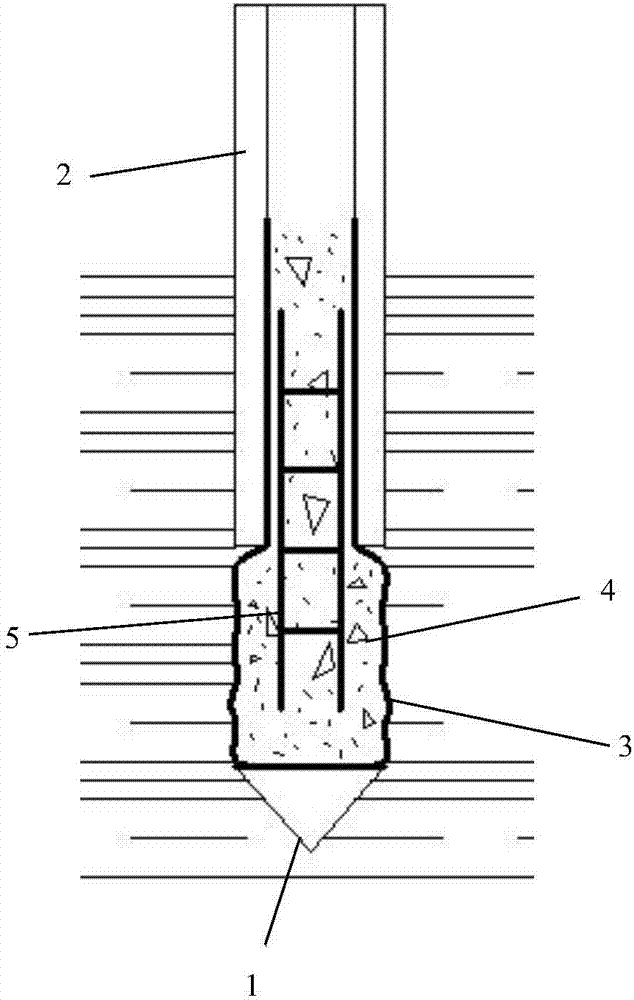
 Login to View More
  Login to View More