
Pseudomonas fluorescens as well as method for preparing hydroxamic acid type iron carrier by utilizing pseudomonas fluorescens and application thereof
A technology of Pseudomonas fluorescens and hydroxamic acid, which is applied in microorganism-based methods, biochemical equipment and methods, bacteria, etc., to achieve the effects of rapid bacterial reproduction and growth, low repair cost, and reduced organic matter content
- Summary
- Abstract
- Description
- Claims
- Application Information
AI Technical Summary
Problems solved by technology
Method used
Image

Examples
Embodiment 1
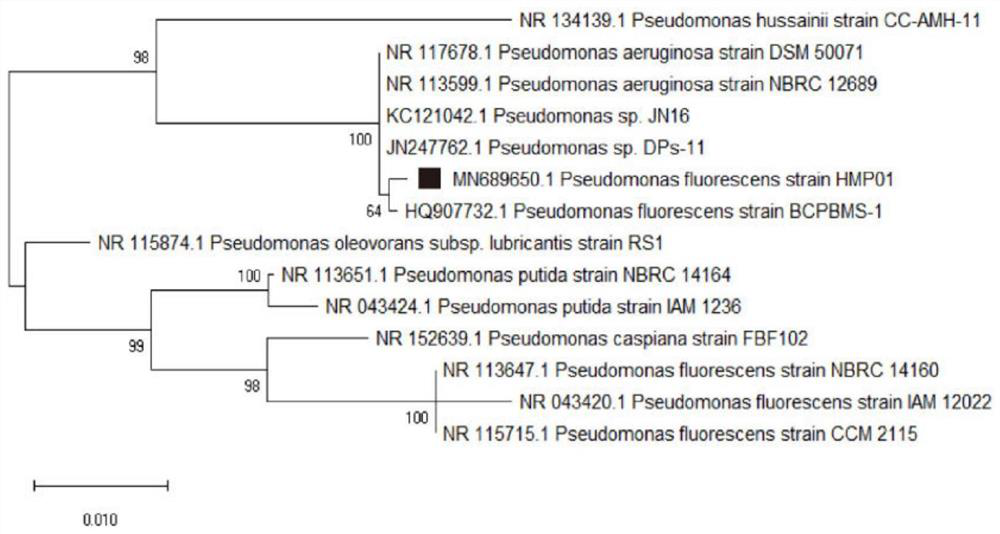
[0049] 16S rDNA gene sequence of Pseudomonas fluorescens strain HMP01 Features:
[0050] The bacterial genome DNA of the bacterial strain is extracted, and the 16SrDNA gene of the bacterial strain is amplified with universal primers 27F and 1492R using the genomic DNA of the bacterial strain as a template. The 16S rDNA product amplified by PCR was sent to Shanghai Bioengineering Co., Ltd. for sequencing. Sequencing results showed that the 16S rDNA partial sequence length of the strain was 1307bp, and its sequence characteristics were as follows:
[0051] CTAGGAATCTGCCTGGTAGTGGGGGATAACGTCCGGAAACGGGCGCTAATACCGCATAC GTCCTGAGGGAGAAAGTGGGGGATCTTCGGACCTCACGCTATCAGATGAGCCTAGGTCG GATTAGCTAGTTGGTGGGGTAAAGGCCTACCAAGGCGACGATCCGTAACTGGTCTGAGA GGATGATCAGTCACACTGGAACTGAGACACGGTCCAGACTCCTACGGGAGGCAGCAGT GGGGAATATTGGACAATGGGCGAAAGCCTGATCCAGCCATGCCGCGTGTGTGAAGAAGGTCTTCGGATTGTAAAGCACTTTAAGTTGGGAGGAAGGGCAGTAAGTTAATACCTTGCT GTTTTGACGTTACCAACAGAATAAGCACCGGCTAACTTCGTGCCAGCAGCCGCGGTAAT ACGAAGGGTGCAA...
Embodiment 2
[0055] Calculation of the binding ratio of heavy metals to hydroxamic acid type siderophore:
[0056] In the first step, take the siderophore with a concentration of 20 mg / L after purification and place it in a brown glass bottle, add Cd 2+ To the final concentration of 0, 0.001, 0.01, 0.05, 0.1, 0.5, 1, 2, 20, 100, 200, 300, 400, 500mg / L, 25ml constant volume, shake and mix for 30min, use a fluorescence spectrophotometer to measure Its maximum emission wavelength and its corresponding fluorescence intensity under the excitation wavelength of 400nm.
[0057] In the second step, on Cd 2+ Concentrations are 0, 0.001, 0.01, 0.05, 0.1, 0.5, 1, 2, 20, 100, 200, 300, 400, 500mg / L, and Cd 2+ The siderophore concentration is the abscissa, and the fluorescence intensity is the ordinate, draw a dotted line graph, and find the inflection point of the change to be 2 mg / L.
[0058] The third step, according to 1molCd 2+ Generate the reaction equation of 1mol complex with nmol sideropho...
Embodiment 3
[0060] Removal of heavy metals in soil polluted by chromium slag factories, soil polluted by pesticide factories, soil polluted by petrochemical industry, soil polluted by heavy metals in vegetable gardens, and soil polluted by heavy metal polycyclic aromatic hydrocarbons in paddy fields by biological eluents:
[0061] The soils used in the experiment were all collected in the field, among them, five kinds of soils, including chromium slag factory polluted soil, pesticide factory polluted soil, petrochemical polluted soil, heavy metal polluted vegetable soil, and heavy metal polycyclic aromatic hydrocarbon complex polluted paddy soil, contained Cd 2+ , Zn 2+ Both exceeded the standard, Cd 2 + Concentrations were 1.17, 1.30, 0.89, 1.13, 0.81mg / kg, Zn 2+ The concentrations were 464.81, 485.26, 326.24, 509.25, 475.91 mg / kg respectively. The pH values of the five soils were 7.56, 6.61, 6.18, 6.93, and 6.71, respectively.
[0062] In the first step, the soil to be washed is n...
PUM
 Login to View More
 Abstract
Description
Claims
Application Information
 Login to View More