Check patentability & draft patents in minutes with Patsnap Eureka AI!

A kind of composite material of nanocellulose/fiber fabric and preparation method thereof

A nanocellulose and fiber fabric technology, applied in plant fibers, fiber processing, textiles and papermaking, etc., can solve the problems of insufficient mechanical strength of the base material, difficult to further disperse, limited application fields, etc. The effect of tensile strength improvement and broad application prospects

Active Publication Date: 2022-04-15
BEIJING UNIV OF CHEM TECH +1
View PDF0 Cites 0 Cited by
  • Summary
  • Abstract
  • Description
  • Claims
  • Application Information

AI Technical Summary

Problems solved by technology

[0003] Most of the nanocellulose is usually easily dispersed in water or other polar solvents, but the nanocellulose containing carboxyl groups after TEMPO oxidation is difficult to further disperse in the medium after drying, which greatly limits its application field. Therefore, it can only be used as an additive, catalyst or surface coating
[0004] At present, the composite method of electrospun nanofiber substrate and nanocellulose is usually used. This composite method has extremely unstable binding force, difficult composite, and insufficient mechanical strength of the substrate, which is difficult to recycle.

Method used

the structure of the environmentally friendly knitted fabric provided by the present invention; figure 2 Flow chart of the yarn wrapping machine for environmentally friendly knitted fabrics and storage devices; image 3 Is the parameter map of the yarn covering machine
View more

Image

Smart Image Click on the blue labels to locate them in the text.
Viewing Examples
Smart Image
  • A kind of composite material of nanocellulose/fiber fabric and preparation method thereof
  • A kind of composite material of nanocellulose/fiber fabric and preparation method thereof
  • A kind of composite material of nanocellulose/fiber fabric and preparation method thereof

Examples

Experimental program
Comparison scheme
Effect test

Embodiment 1

[0079] This example provides a nanocellulose / fiber fabric composite material and its preparation method. This example makes nanofibers with grafted functional groups. It includes the following steps:

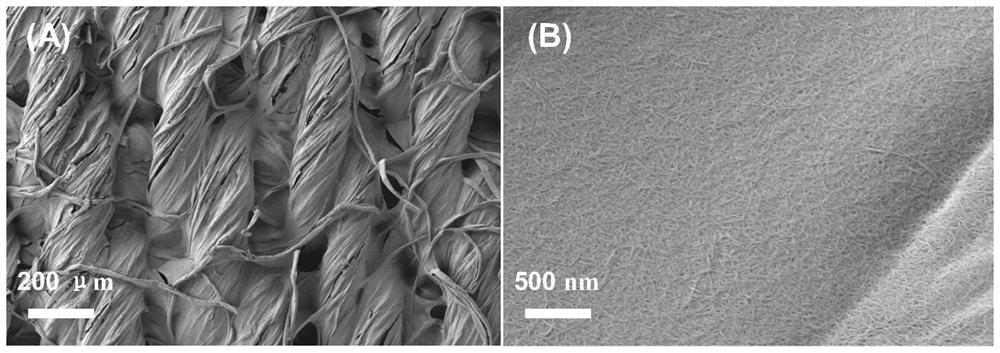
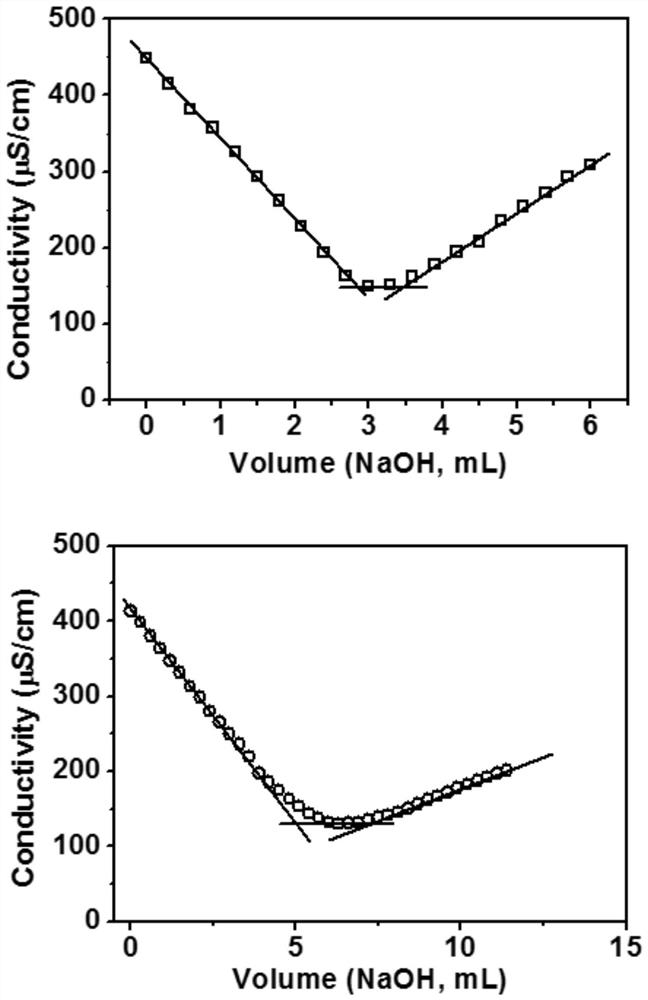
[0080] (1) Preparation of carboxylated nanocellulose. Mix 10 grams of cellulose (bamboo pulp) with 800 milliliters of deionized water, 2 grams of sodium bromide, and 0.4 gram of TEMPO in a 1000 milliliter beaker, stir and dissolve at room temperature. Then add 75 grams of sodium hypochlorite aqueous solution and continue stirring. Sodium hydroxide solution (1M) was added to adjust the pH of the solution to 10.7±0.7, stirred at room temperature for 2-3 days, and finally 80 ml of ethanol was added to terminate the reaction. The reaction mixture was centrifuged and washed. Add deionized water to dilute, then sonicate, and take the supernatant, which is the suspension of carboxylated nanocellulose.

[0081] (2) Preparation of aldehyde-based nanocellulose. Take 8 grams of carbox...

Embodiment 2

[0085] Compared with Example 1, the one selected in this example is the commercially available nanocellulose with grafted functional groups of TC-UCN-001 model.

[0086] Composite of nanocellulose and fiber fabric. Take 100mL of commercially available nanocellulose suspension (0.2wt%), soak 15 grams of fiber fabric (selected from cotton cloth) in it for 30 minutes, take it out and dry it at 120°C for 30 minutes to obtain nanocellulose and fiber Fabric composites.

Embodiment 3

[0088] Compared with Example 1, the only difference lies in the composite step of the fiber fabric. In this example, 100 mL of the oxidized nanocellulose suspension (0.5 wt %) in step (1) and step (2) were respectively taken, and 20 grams of fiber fabric (selected from linen cloth) were soaked in it for 30 minutes, and taken out After drying at 80° C. for 120 minutes, a composite material of nanocellulose and fiber fabric can be obtained.

the structure of the environmentally friendly knitted fabric provided by the present invention; figure 2 Flow chart of the yarn wrapping machine for environmentally friendly knitted fabrics and storage devices; image 3 Is the parameter map of the yarn covering machine
Login to View More

PUM

PropertyMeasurementUnit
diameteraaaaaaaaaa
lengthaaaaaaaaaa
Login to View More

Abstract

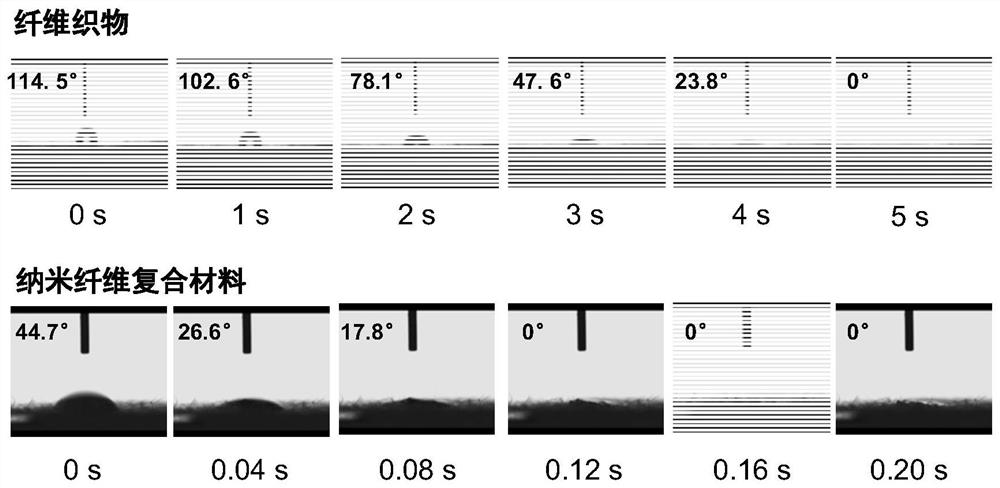
The invention discloses a nanocellulose / fiber fabric composite material and a preparation method thereof, and relates to the technical field of fiber fabric composite materials. In the invention, the nano cellulose and the fiber fabric are compounded through a covalent bond to form an interpenetrating network structure. Through the covalent bond, the mechanical strength of the composite material is improved, and the tensile strength of the obtained composite material in the warp direction and weft direction is greatly improved. At the same time, the composite material is renewable and can be reused through a desorbent. In addition, the composite material provided by the invention has better water wettability and faster adsorption rate. The composite material has the advantages of high throughput and high rejection rate, can selectively adsorb or simultaneously adsorb various dyes and heavy metal ions, and has broad application prospects in the fields of sewage treatment and heavy metal adsorption.

Description

technical field [0001] The invention relates to the technical field of fiber fabric composite materials, in particular to a nanocellulose / fiber fabric composite material and a preparation method thereof. Background technique [0002] Nanocellulose is a cellulose-based fiber with a diameter of 5-100 nanometers and a length of more than 200 nanometers, which is usually obtained from natural cellulose through chemical / mechanical treatment. Due to the introduction of chemical reactions (such as oxidation) during the preparation process, the surface of nanocellulose usually has functional groups such as hydroxyl, carboxyl, aldehyde and even amino groups. That is to say, nanocellulose has the dual advantages of nanometer size and surface functionalization, so it is used in various fields such as biomedicine, tissue engineering, liquid separation, and sensing. [0003] Most of the nanocellulose is usually easily dispersed in water or other polar solvents, but the nanocellulose con...

Claims

the structure of the environmentally friendly knitted fabric provided by the present invention; figure 2 Flow chart of the yarn wrapping machine for environmentally friendly knitted fabrics and storage devices; image 3 Is the parameter map of the yarn covering machine
Login to View More

Application Information

Patent Timeline
no application Login to View More
Patent Type & Authority Patents(China)
IPC IPC(8): D06M15/05D06M101/06
CPCD06M15/05D06M2101/06
Inventor 马洪洋许国栋邵凯周玉刚
Owner BEIJING UNIV OF CHEM TECH
Features
  • R&D
  • Intellectual Property
  • Life Sciences
  • Materials
  • Tech Scout
Why Patsnap Eureka
  • Unparalleled Data Quality
  • Higher Quality Content
  • 60% Fewer Hallucinations
Social media
Patsnap Eureka Blog
Learn More